
Large Desk
A large antique desk offers generous workspace and strong presence, anchoring a room with traditional craftsmanship and ample timber surfaces.
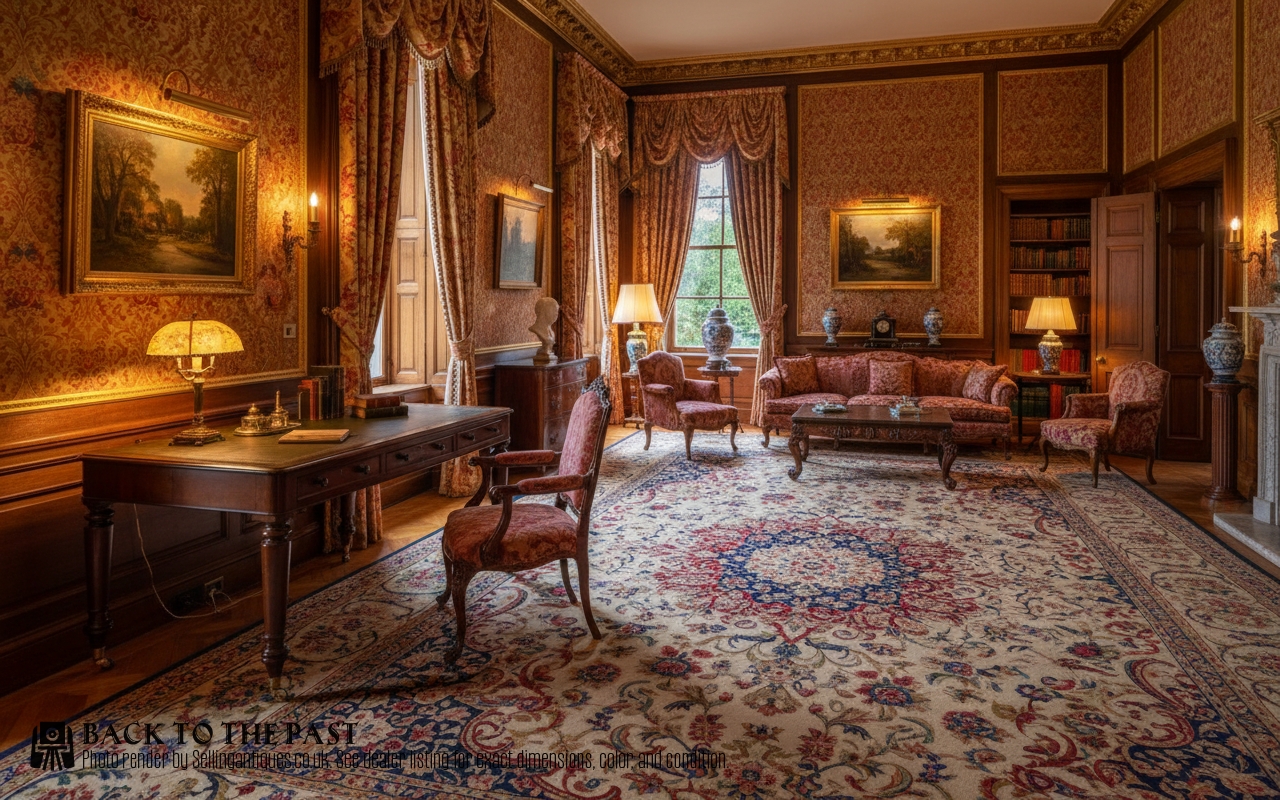
What a large antique desk is
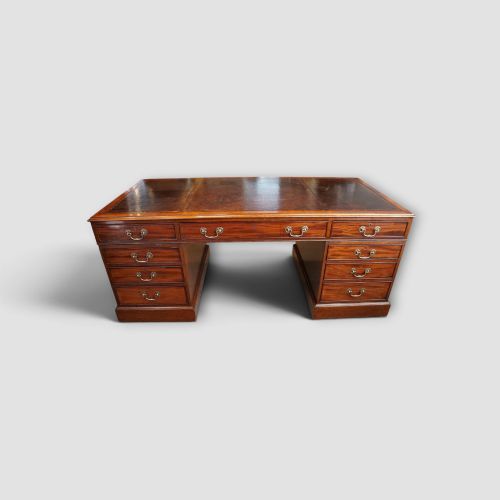
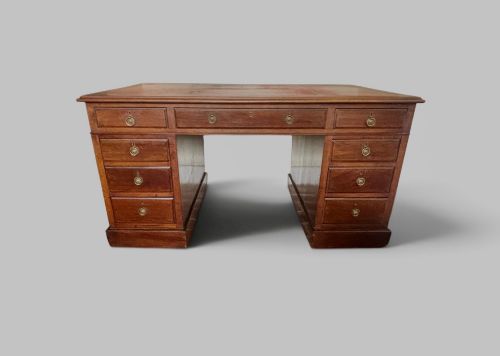
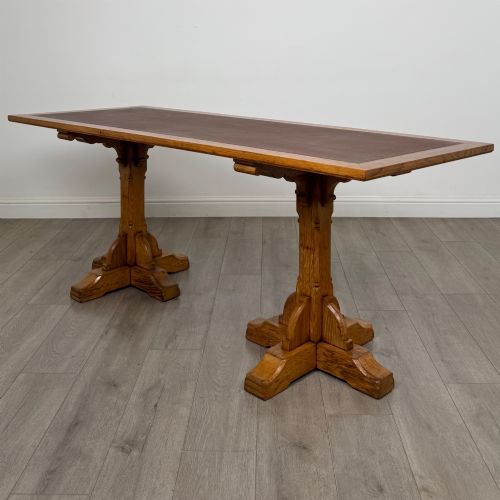
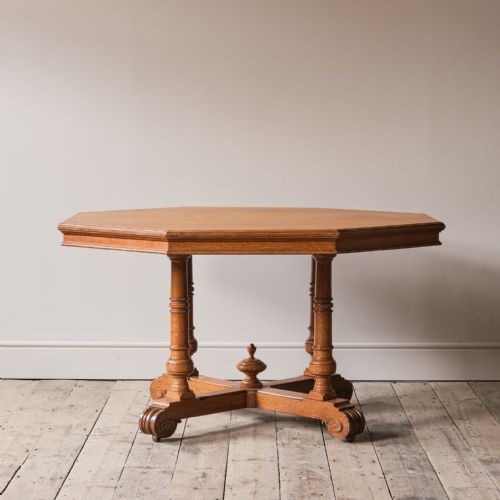
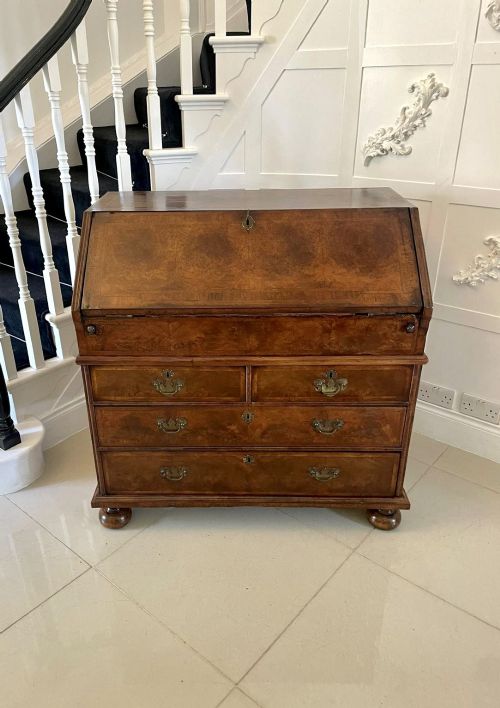
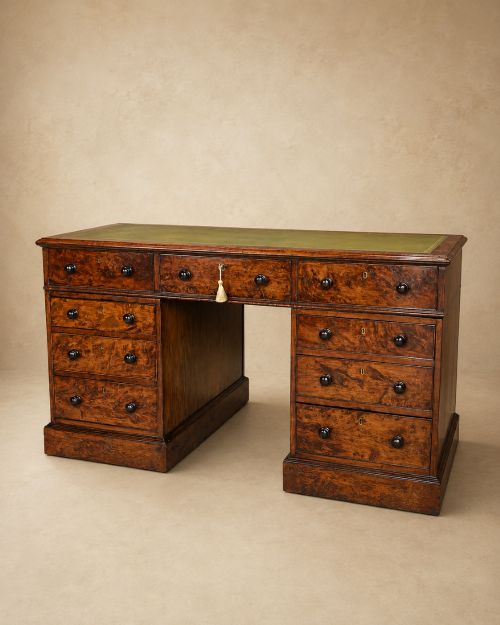
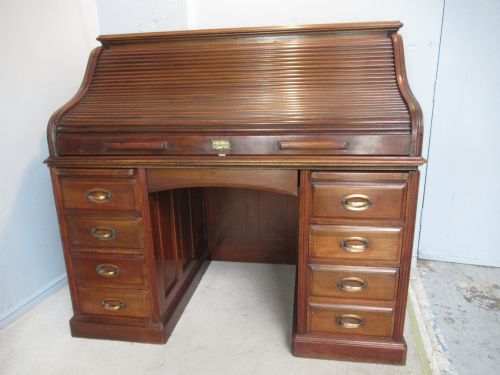
A large antique desk provides substantial surface area for writing and administrative work, often designed to stand freely in the middle of a room rather than against a wall. The examples found here span the eighteenth and nineteenth centuries, taking the form of partners desks, library tables, and twin pedestal formats.
Most pieces met on this page belong to the Victorian era and the Georgian period, built on a grand scale to accommodate voluminous paperwork and heavy ledgers. These larger writing surfaces often include banks of drawers or cupboards on both sides, allowing two people to work opposite one another.
Makers of these substantial pieces utilised classic proportions and robust timber frames to ensure stability across wide spans. Whether configured as a pedestal desk or a freestanding library table, the focus remains on utility combined with formal dignity.
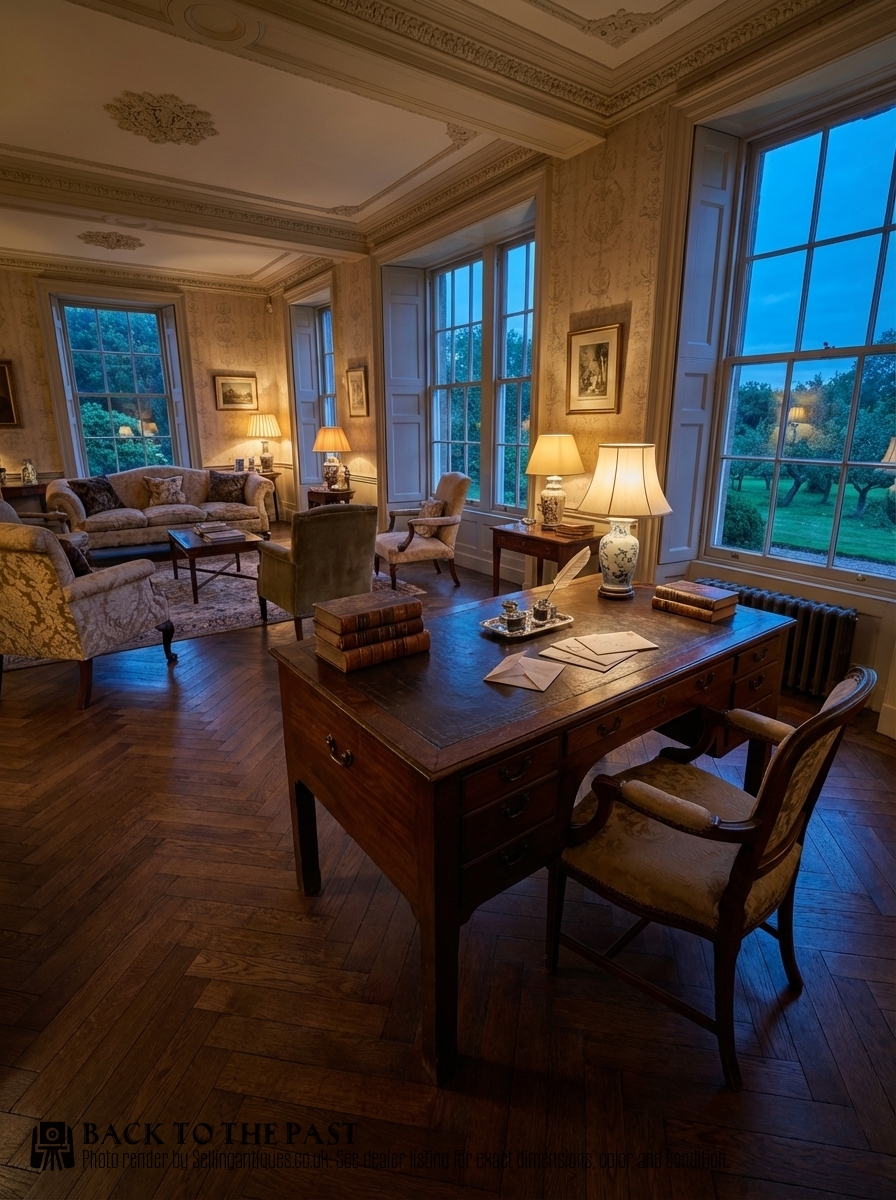
How they were made
Cabinet makers constructed these large pieces using dense hardwoods such as mahogany, walnut, and oak, often mounting leather writing surfaces into the top boards. Brass handles, key escutcheons, and occasional ormolu mounts provide functional hardware and decorative contrast to the dark timber.
Construction relies on traditional joinery techniques, including dovetail joints for drawer boxes and mortise and tenon frames for structural stability under heavy loads. French polishing was commonly applied to seal the wood and bring out the grain patterns in the mahogany and walnut veneers.
Retail Price Guide 2026
Typical UK retail prices for large desk, calculated from the Sellingantiques database of over a million retail prices indexed since 2003. This retail price guide relies exclusively on Sellingantiques data; no external sources or auction records are used, so the figures do not describe the wider market.
The archive of sold items shows a high proportion of Victorian and Edwardian oak and mahogany partners desks.
What varies in quality
Quality in a large antique desk is determined by the selection of figured timbers, the crispness of carved details, and the integrity of the original construction. Pieces featuring matched veneer panels across wide surfaces and heavy brass hardware stand apart from simpler utility items.
The degree of finishing on all four sides distinguishes freestanding partners desks meant to sit in the centre of a room from simpler wall-facing designs. Superior examples maintain symmetry and detailed drawer arrangements on both working faces.
The Large Desk Glossary
- Partners desk
- A large double-sided pedestal desk designed with drawers and cupboards on both faces so two people can sit opposite each other.
- Pedestal desk
- A heavy writing table supported by two vertical banks of drawers rather than four separate legs.
- Bureau plat
- A freestanding French writing table, typically featuring cabriole legs and decorative bronze or ormolu mounts.
- Library table
- A large freestanding rectangular table used historically for reading and sorting papers, often fitted with frieze drawers.
- Ormolu
- Gilded bronze ornamentation applied to the corners, legs, and aprons of high-status nineteenth-century French and English furniture.
Frequently Asked Questions
What is a partners desk?
A partners desk is a large double-sided writing table featuring drawers and cupboards on both faces. This layout allowed two people to work opposite each other in a study or library.
These pieces were traditionally used in professional offices, banks, and large country houses where administrators shared a single workspace.
Where should a large desk go?
Freestanding models are designed to sit in the centre of a room rather than pushed against a wall. Finished on all sides, they create a commanding focal point in a study or home office.
Ensure there is sufficient surrounding floor space to pull out chairs and access drawers comfortably from every angle.
How do I care for leather desk tops?
The inset leather writing surface should be cleaned gently with a slightly damp cloth and treated periodically with leather balm. Avoid harsh chemical cleaners that can strip the colour and dry out the hide.
Using blotters and desk pads helps protect the original leather from ink stains and deep scratches during daily use.
How do I date an antique desk?
Dating relies on examining the timber species, construction methods, hardware styles, and overall proportions. Hand-cut dovetails and secondary woods inside drawer boxes often indicate eighteenth or nineteenth-century origin.
Comparing the decorative vocabulary, such as Georgian bracket feet or Victorian carved mouldings, helps place the piece within a specific period.