

19th Century Library Table
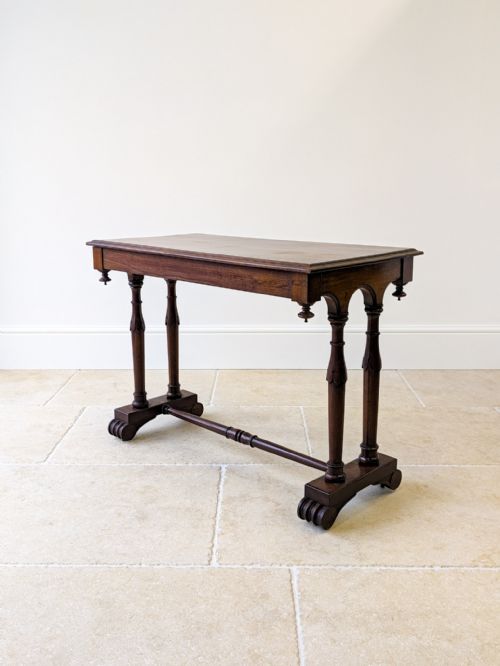
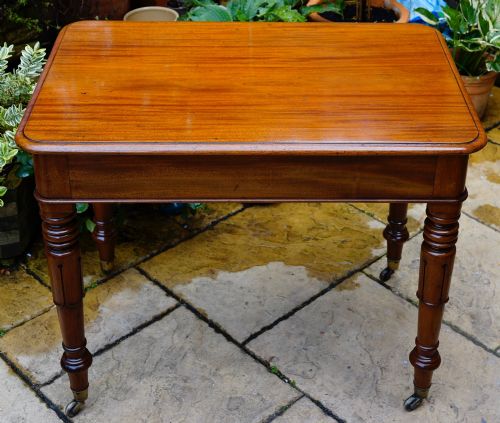
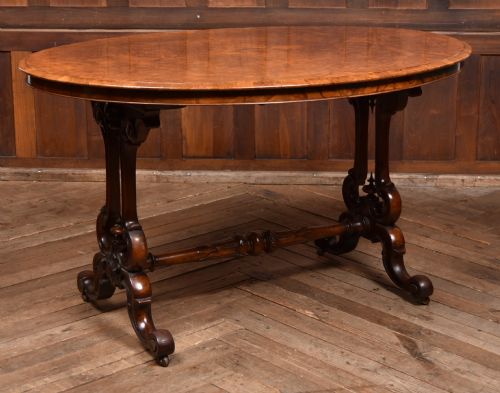
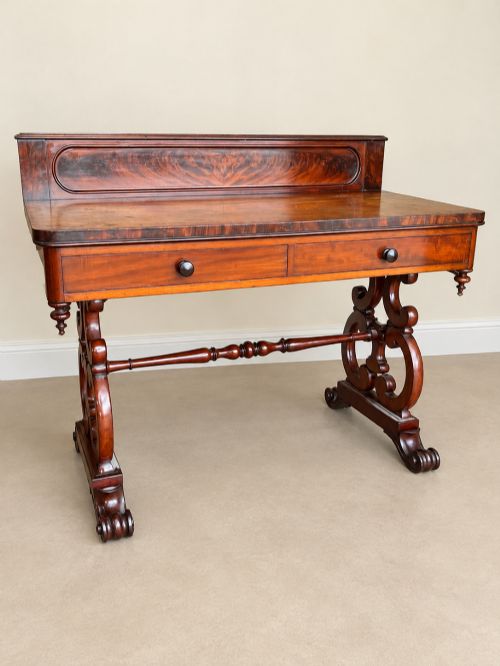
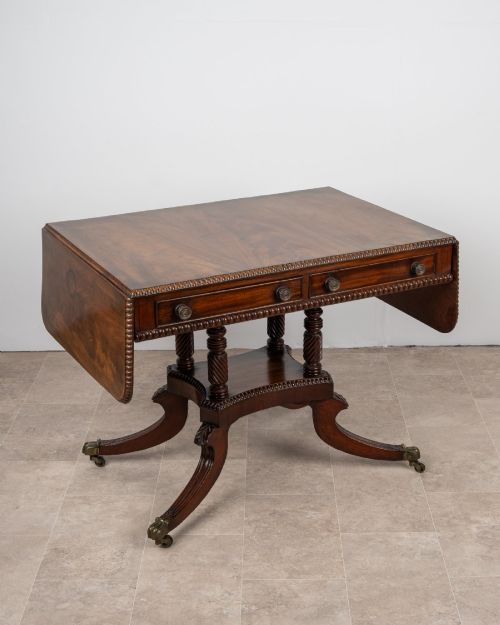
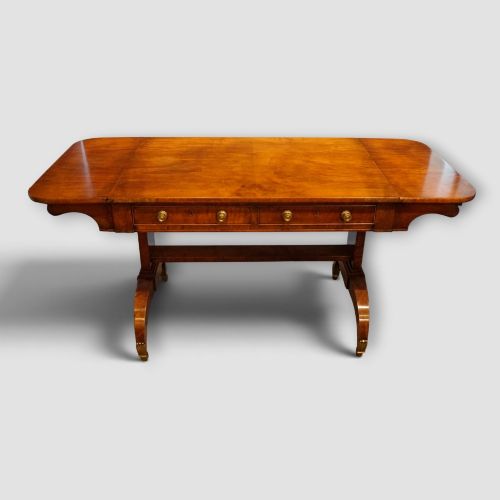
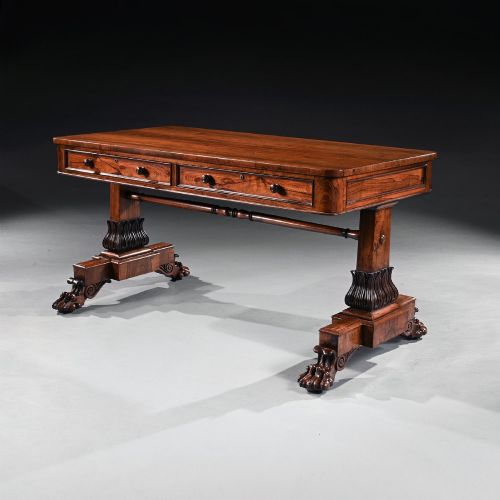
A 19th century library table offers a substantial freestanding workspace rooted in Victorian or Regency craftsmanship.

19th Century Library Table
When searching for a 19th century library table, buyers encounter large freestanding pieces designed to sit in the middle of a room rather than against a wall. The evidence shows these tables span the Victorian and Regency eras, frequently constructed to accommodate readers and writers on multiple sides.
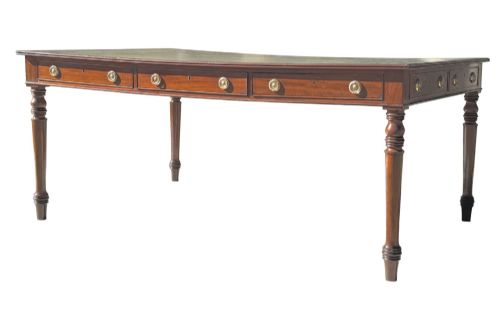
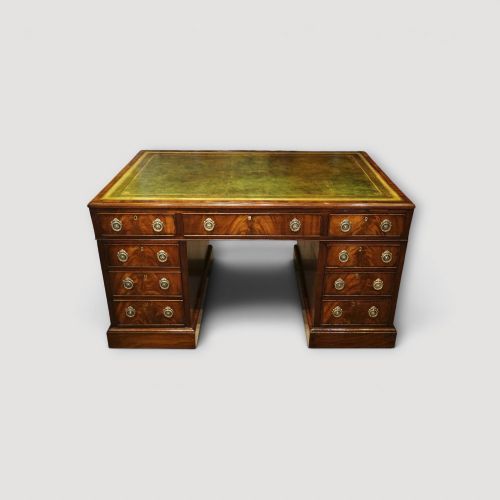
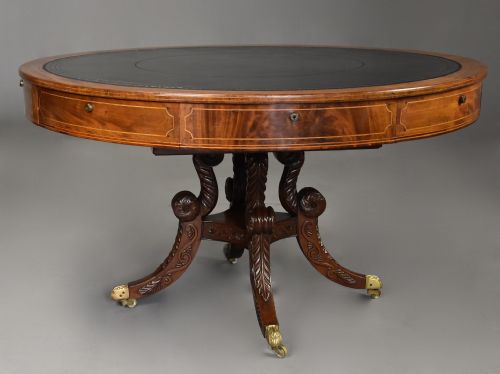
The dominant forms appearing across listings include rectangular writing tables, partners desks with drawers on opposing sides, and circular drum tables. Walnut, mahogany, and rosewood serve as the primary timbers encountered in these categories.
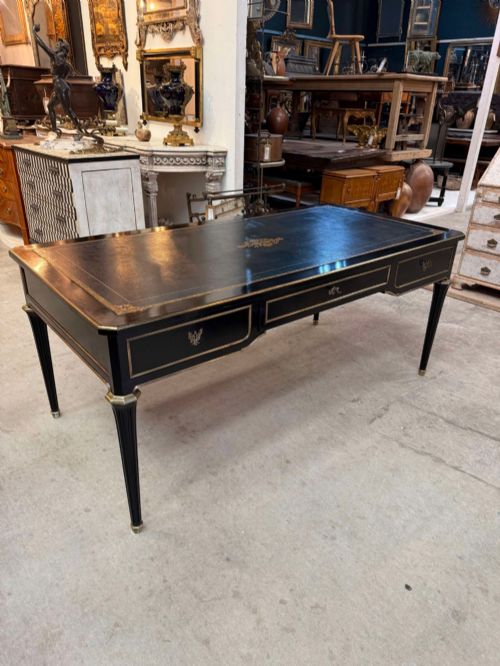
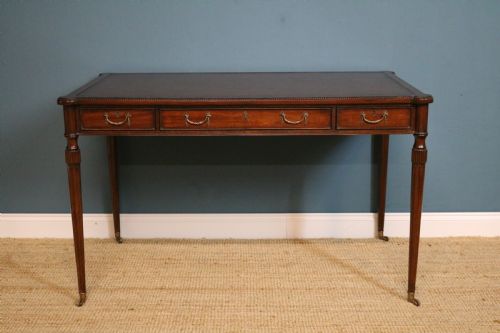
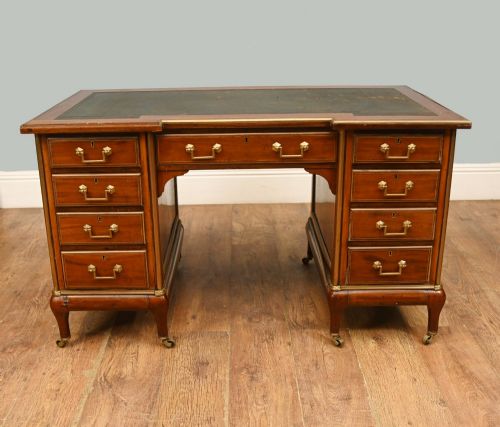
Makers often incorporated leather writing surfaces inset into the top, surrounded by moulded timber edges. These pieces reflect the functional demands of nineteenth-century studies and libraries, maintaining finished backs for complete spatial freedom.
Materials and construction
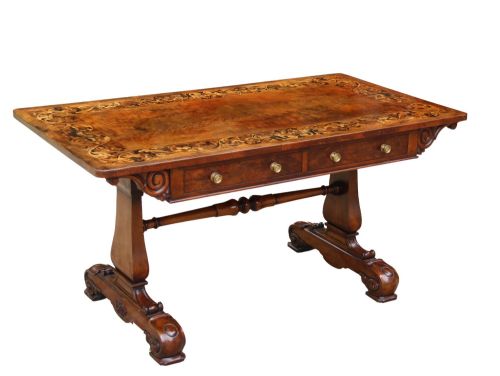
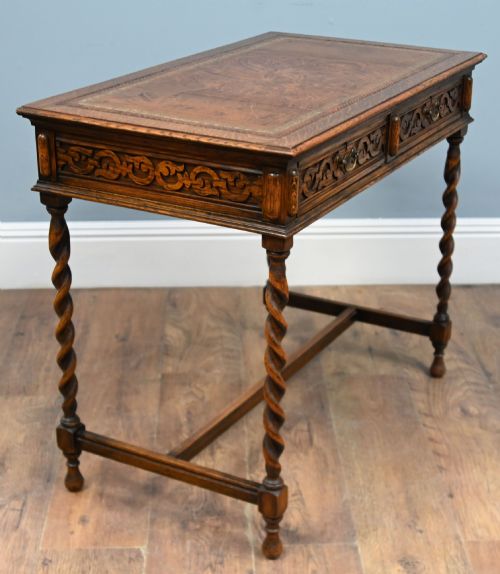
Cabinet makers built these tables using dense hardwoods like mahogany, rosewood, and oak, frequently applying highly figured veneers such as burr walnut, amboyna, or pollard oak to the primary surfaces. Solid timber frames provided structural integrity while decorative grain patterns added visual depth.
Makers integrated hand-tooled leather inserts into the writing surfaces, secured with gilt tooling around the perimeter. Drawers utilised traditional dovetail joints and operated smoothly within solid timber carcases.
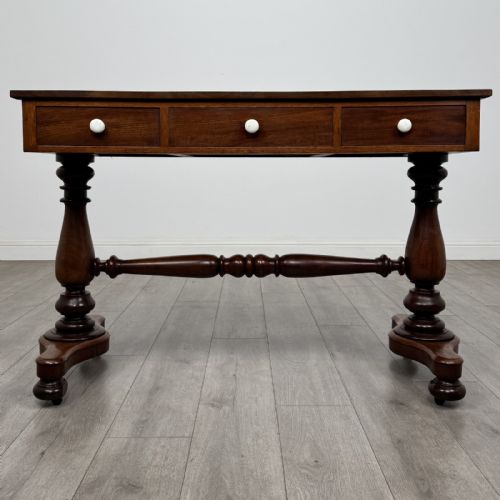
Ornaments such as cast brass handles, ormolu mounts, and turned or carved pedestal bases appeared on pieces influenced by Louis XV, Renaissance Revival, and Aesthetic Movement styles.
19th Century Library Table Retail Price Guide 2026
Typical asking prices for 19th century library table among the pieces listed under this phrase on Sellingantiques today, from the lower quarter to the upper quarter. They describe what is for sale here now, not the wider market.
Some nineteenth-century revolving drum tables allowed readers to spin their entire reference library without leaving the chair.
Judging quality and execution
Quality reveals itself in the selection of timber veneers and the precision of the cabinet work. Superior examples display symmetrical grain patterns across large surfaces and tightly fitted drawer construction without modern replacements.
The integration of secondary details, such as finely chased brass mounts or hand-tooled leather inserts, separates standard utility furniture from exceptional workshop production. Structural stability in large freestanding forms depends on robust internal framing and seasoned timber that resists warping.
Gillows·Edwards and Roberts·Holland and Sons·Trollope and Sons·Francois Linke
The 19th Century Library Table Glossary
- Partners desk
- A large double-sided desk fitted with drawers on opposite long sides to accommodate two users simultaneously. These pieces often feature deep pedestals or turned legs.
- Drum table
- A circular library table containing a deep frieze with alternating real and dummy drawers beneath a revolving or stationary top. They frequently stand upon a central pillar supported by tripod or platform feet.
- Ormolu
- Gilded bronze ornamentation applied to furniture, popular in French revival pieces of the period. It requires careful casting and chasing by hand.
- Parquetry
- Geometric wood inlay patterns arranged to form decorative surfaces on tabletops. Cabinet makers used contrasting timbers to achieve sharp visual contrast.
- Frieze
- The horizontal band situated directly beneath the tabletop, typically housing one or more drawers. This section often displays carving or inlay work.
19th Century Library Table: Frequently Asked Questions
What is a library table?
A library table is a heavy, freestanding nineteenth-century table designed with a finished back so it can sit in the centre of a room rather than against a wall.
They generally feature inset leather writing surfaces and drawers within the frieze, serving both reading and administrative functions.
Which woods were used most?
Mahogany and rosewood dominate the earlier Regency pieces, while walnut and oak become prevalent during the Victorian era.
Cabinet makers also utilised exotic veneers like amboyna, pollard oak, and burr walnut for high-status decorative surfaces.
Where should I place a drum table?
A drum table works best as a freestanding centrepiece in a room due to its circular footprint and drawers accessible around the entire circumference.
Its compact diameter suits smaller studies or libraries where a rectangular desk would overwhelm the floor plan.