
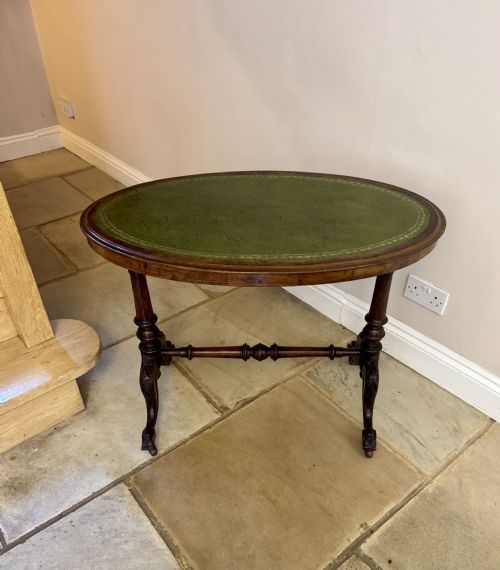
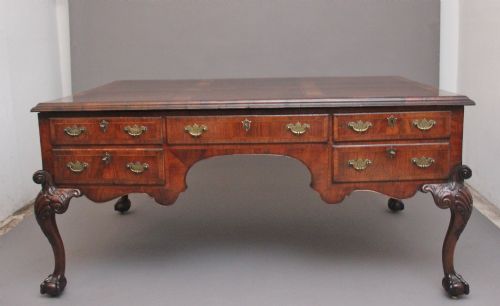
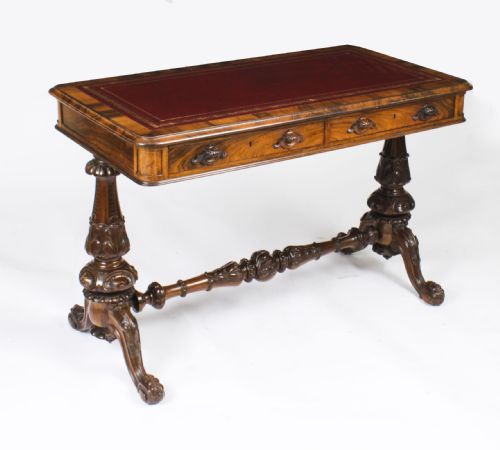
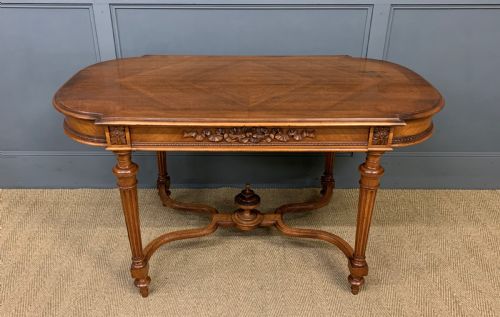


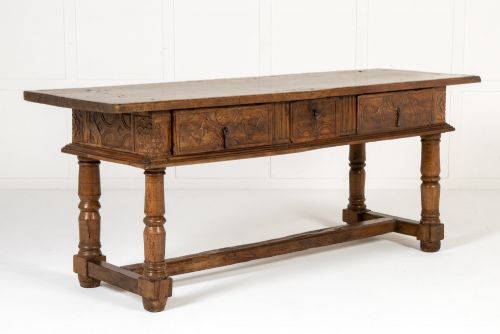
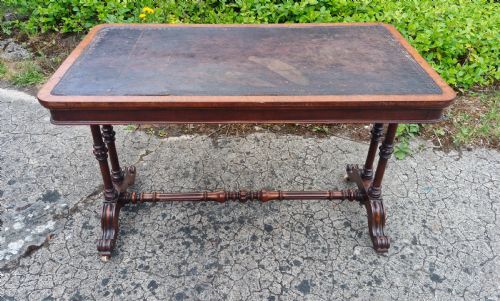
Carved Walnut Library Table
A carved walnut library table offers a substantial workspace with rich grain, appearing predominantly in Victorian and nineteenth-century forms.
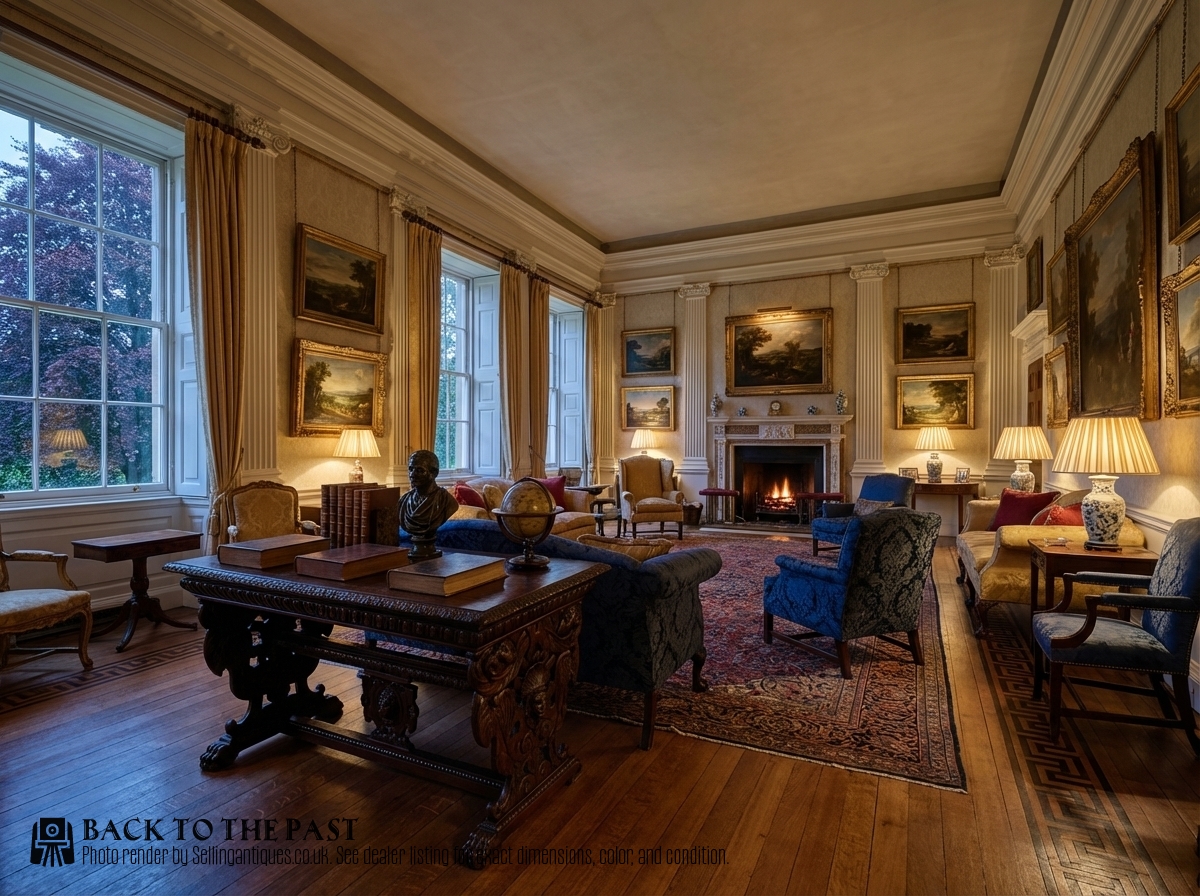
Carved Walnut Library Table
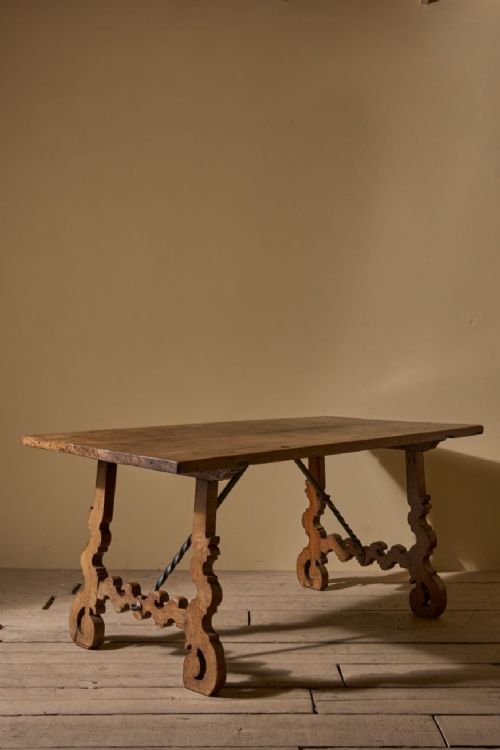
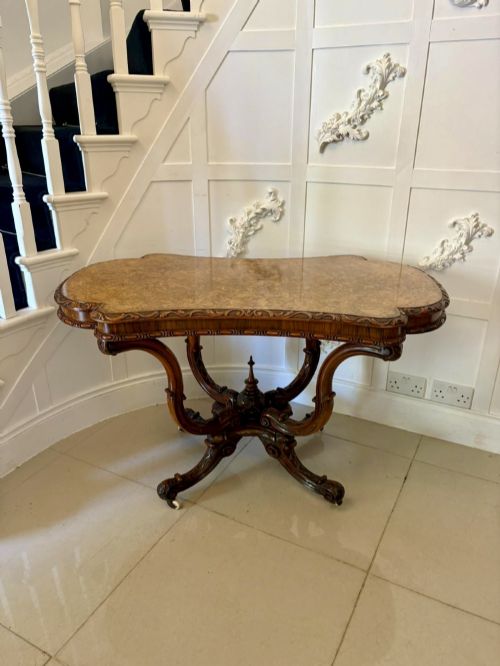
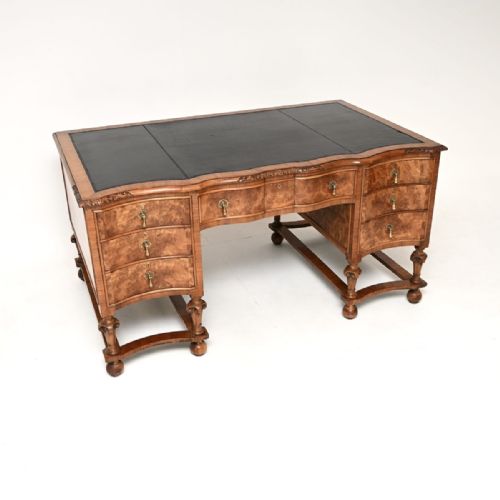
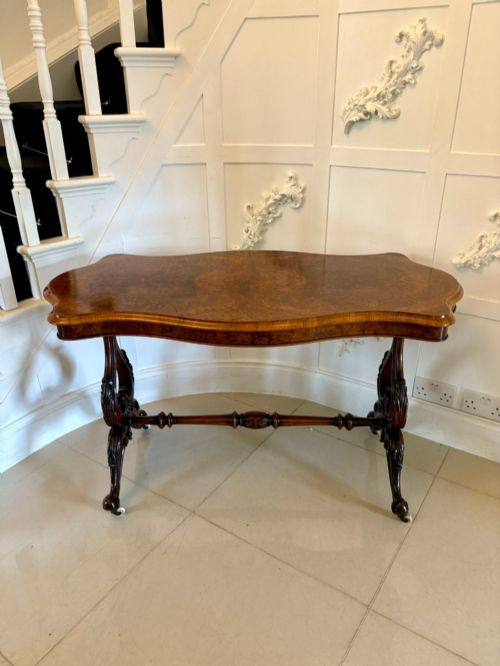
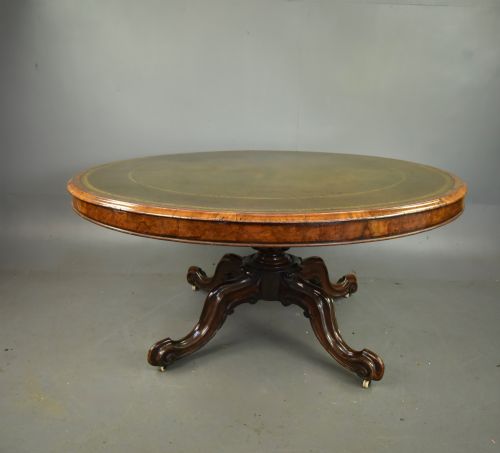
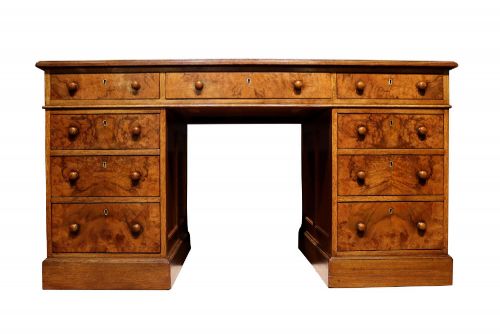
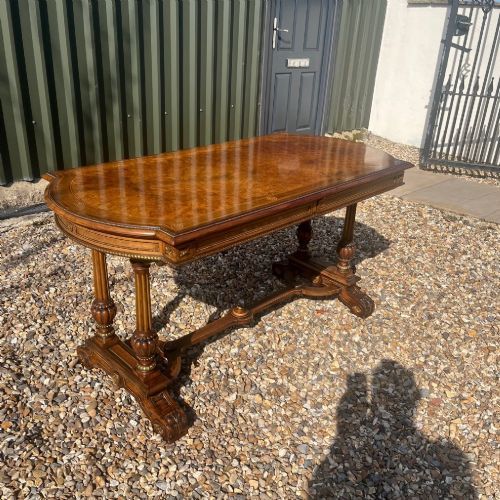
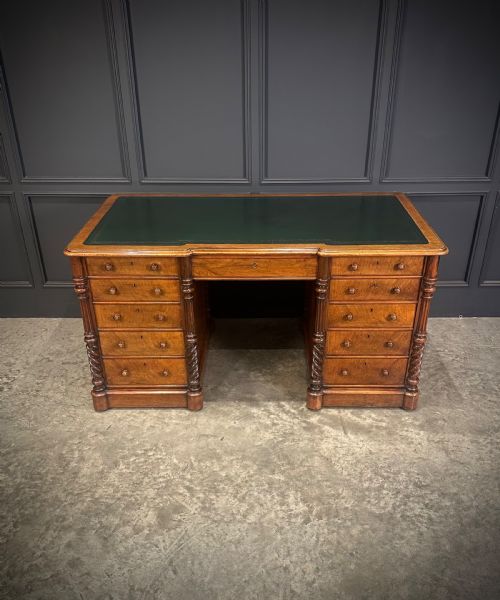
A carved walnut library table is a heavy, freestanding desk or centre table designed for domestic studies and formal rooms. When you browse this selection, you encounter pieces primarily from the nineteenth century, including Victorian centre tables, partners desks, and writing tables.
Many examples date from the mid-Victorian era around eighteen-fifty, alongside earlier eighteenth-century Spanish and Italian formats and later Edwardian designs. These pieces function as writing surfaces, desks, and central display tables in traditional interiors.

How They Were Made
Cabinet makers utilised solid walnut and burr walnut veneers applied over secondary timbers, often framing the surfaces with carved ornamentation. Workshops integrated inset leather writing pads, brass hardware, and ceramic castors into the heavy wooden frames.
Construction techniques include twin pedestal formats, stretcher bases, and freestanding centre tables supported by carved legs and structural stretchers. Artisans employed marquetry inlay and ormolu mounts to embellish the walnut surfaces on higher status commissions.
Carved Walnut Library Table Retail Price Guide 2026
Typical asking prices for carved walnut library table among the pieces listed under this phrase on Sellingantiques today, from the lower quarter to the upper quarter. They describe what is for sale here now, not the wider market.
Some nineteenth-century tables include hidden drawers originally designed to keep private correspondence safe from wandering eyes.
What Varies in Quality
The visual strength of the piece depends heavily on the choice of timber, with highly figured burr walnut veneers creating dynamic patterning across the top surfaces. The depth and crispness of the hand carving separate standard production furniture from the output of prominent workshops.
Construction integrity is visible in the stability of the freestanding frame, the integration of original leather inserts, and the precision of the joinery. Tables bearing maker signatures or stamps reflect documented cabinet-making standards of the period.
Maple and Co·Edwards and Roberts·Gillows Lancaster·Gill and Reigate·W J Mansell·Whytock and Reid
The Carved Walnut Library Table Glossary
- Burr Walnut
- A timber harvested from the warted growth of a walnut tree, yielding complex, swirling grain patterns. Cabinet makers prized this wood for decorative table tops and drawer fronts.
- Partners Desk
- A large double-sided desk designed for two people to work opposite one another. These tables feature drawers and cupboards accessible from both sides.
- Centre Table
- A freestanding table finished on all sides intended to stand in the middle of a room rather than against a wall. Victorian examples often served library and drawing room functions.
- Ormolu
- Gilded bronze ornamentation applied to furniture mounts and decorative accents. Makers used ormolu to highlight the corners and legs of fine tables.
- Marquetry
- The art of applying pieces of veneer to a structure to form decorative patterns and pictures. Craftsmen utilised contrasting woods to create intricate top surfaces.
Carved Walnut Library Table: Frequently Asked Questions
What is a library table?
A library table is a large, sturdy table designed for reading and writing, finished on all sides so it can stand in the middle of a room. These pieces provide an expansive surface area for books and documents.
Historically placed in studies or libraries, they often feature drawers beneath the top for storage while maintaining a formal architectural presence.
How do I care for burr walnut?
Burr walnut requires protection from direct sunlight and extreme humidity changes to prevent the delicate veneer from drying out or lifting. Regular dusting with a dry cloth keeps the surface clean without damaging the finish.
Applying a traditional beeswax polish occasionally maintains the natural lustre of the wood grain without building up heavy chemical layers.
Where were these tables placed?
These tables traditionally stood in the centre of libraries, studies, and grand reception rooms where people needed a freestanding surface for paperwork. Because they are finished on all sides, they were not pushed against walls.
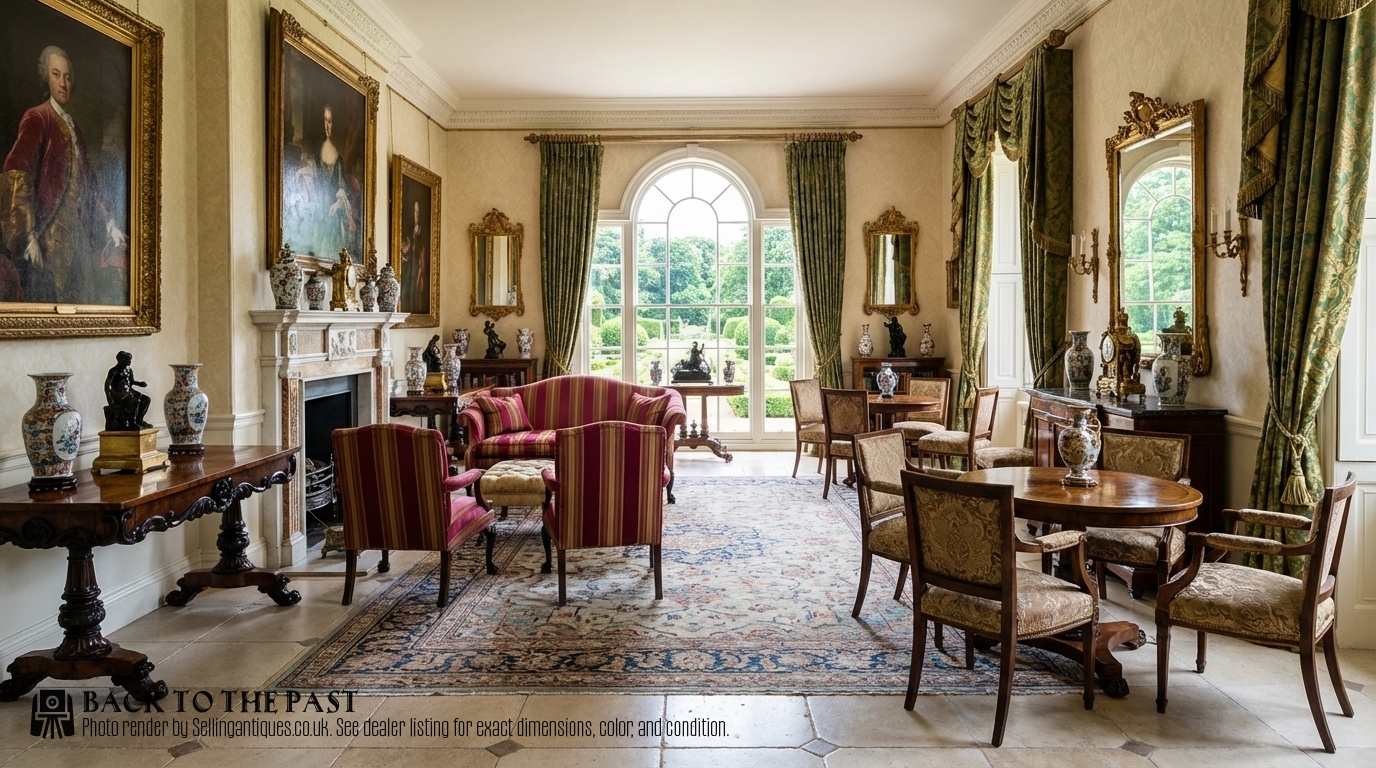
In modern homes, they function effectively as executive desks, hallway console tables, or large dining room sideboards.
How do I identify a Victorian table?
Victorian walnut tables typically display deep, rich colour tones, prominent burr walnut veneers, and robust construction methods like hand-cut dovetails and turned pedestals. Many incorporate inset leather writing surfaces.
Stylistic revivals such as Renaissance or Chippendale influences often appear in the carved details along the legs and apron.