
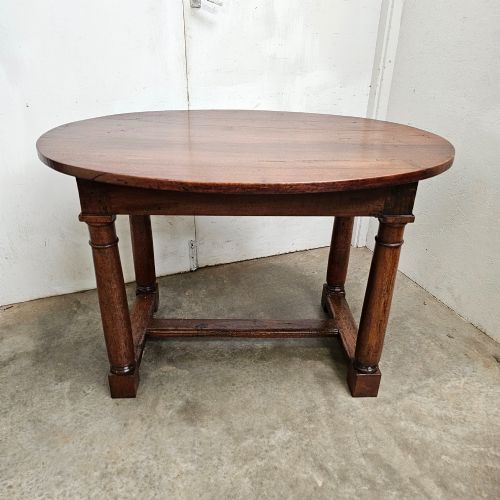
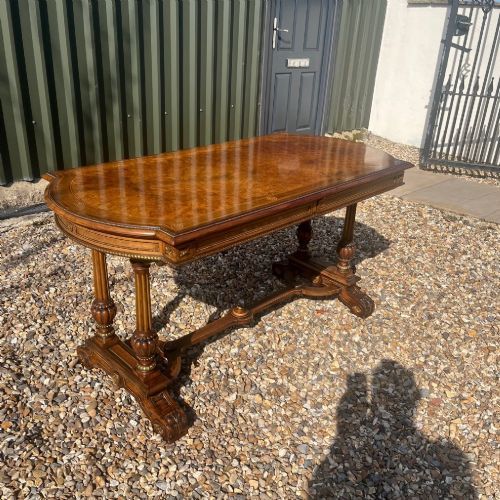


French Walnut Centre Table
When you search for a french walnut centre table, you encounter freestanding tables designed to command the middle of a room.
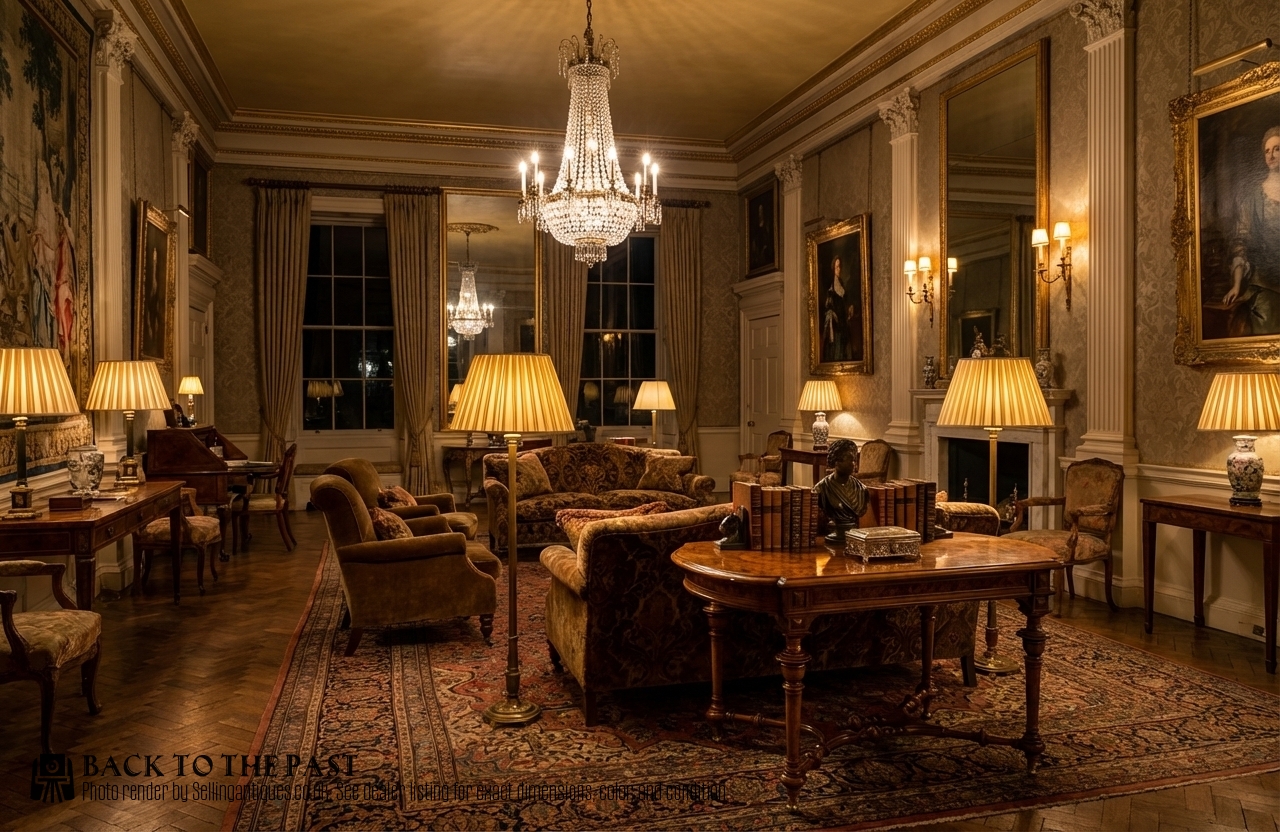
French Walnut Centre Table
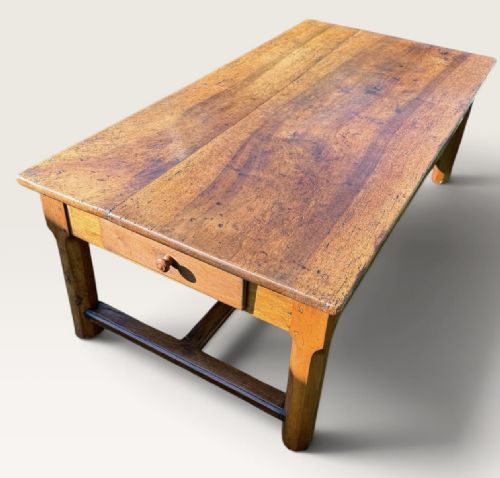
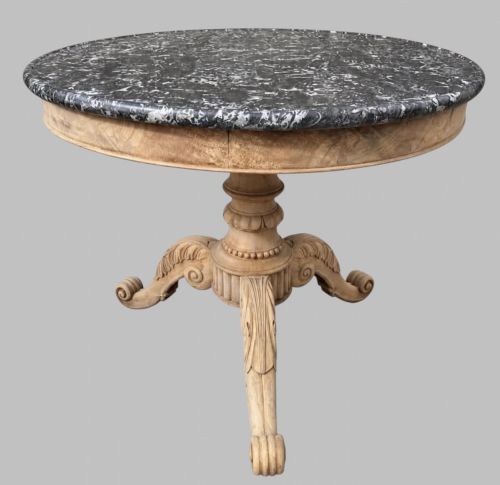
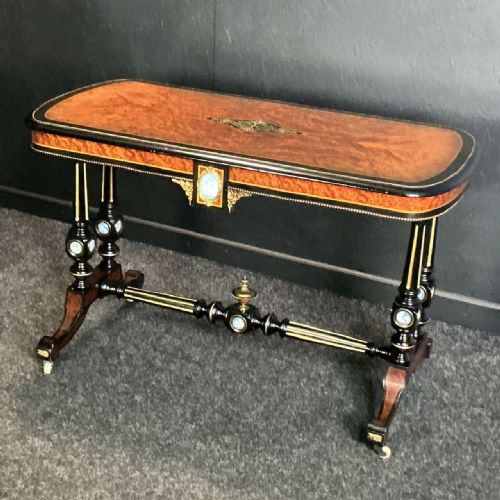
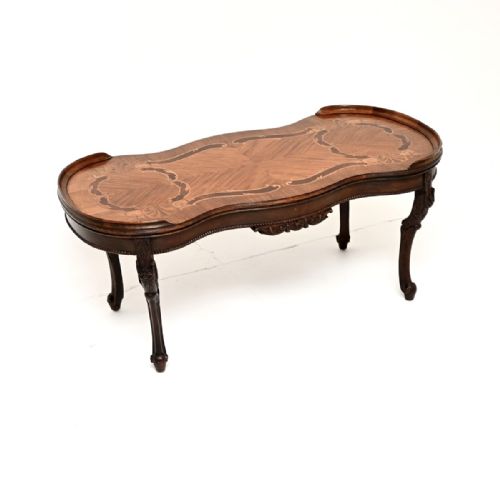
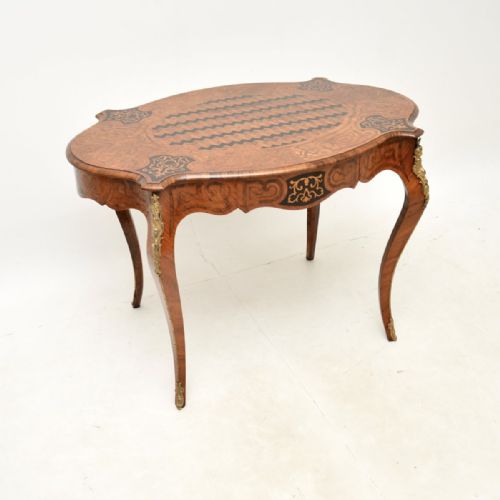
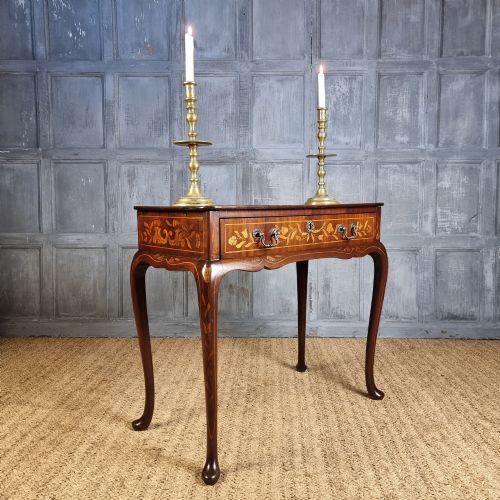
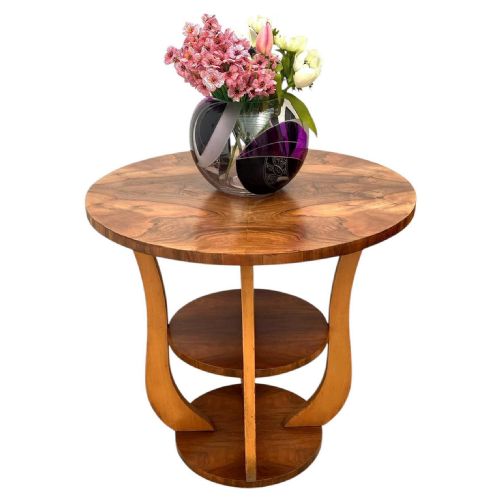
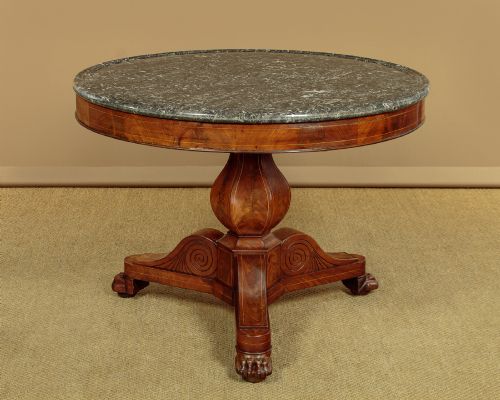
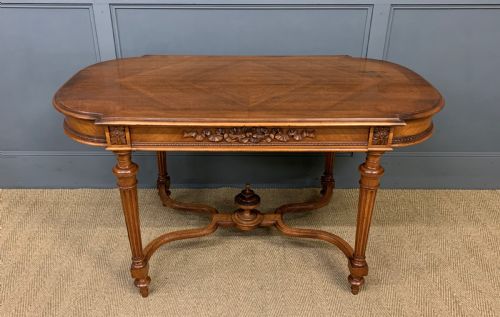
A french walnut centre table stands away from walls, finished with detail on all sides so it holds an open room. The selection spans the eighteenth century through to art deco pieces from nineteen thirty, taking the form of round gueridons, oval tables, and rectangular library or writing formats.
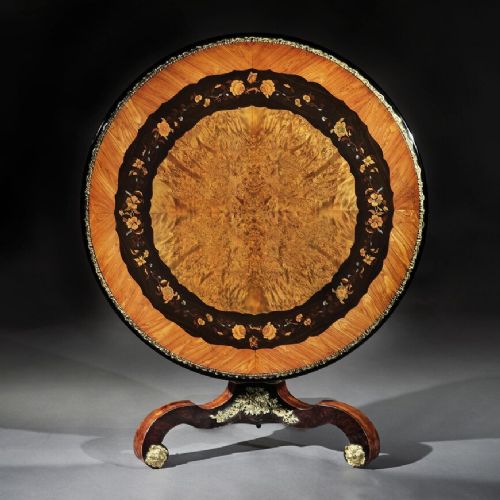
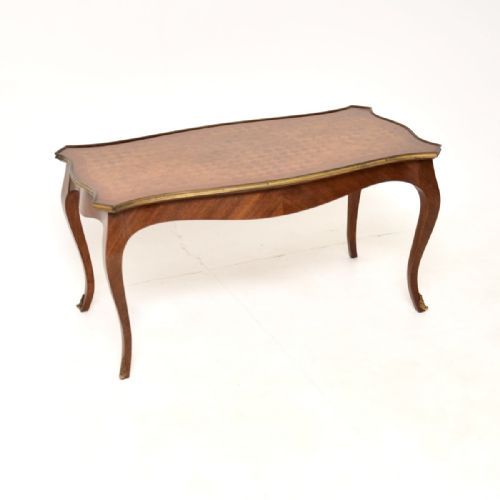
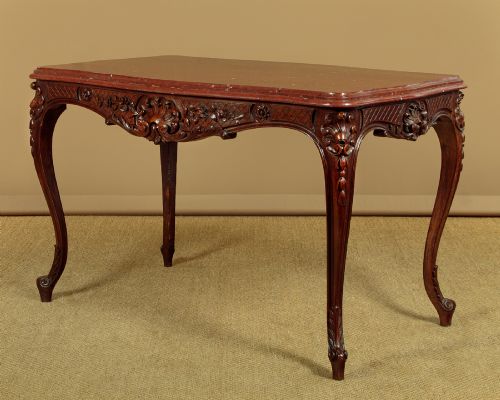
Makers drew on louis xv and louis xvi revivals, incorporating serpentine shapes and cabriole legs. Buyers meet variations with plain figured timber, marble tops, or intricate marquetry and parquetry surfaces.
The archetype functions as a primary focal point in a saloon or drawing room, offering a flat surface for lamps, displays, or correspondence. These pieces bridge decorative arts and utility, reflecting changing interior tastes across the nineteenth and twentieth centuries.
Materials and Construction
Cabinetmakers utilised solid walnut and burr walnut veneers over secondary timbers, exploiting the rich grain patterns for marquetry and parquetry inlay. Surfaces often display contrasting woods such as satinwood and kingwood alongside geometric or floral arrangements.
Mounts and hardware in cast ormolu, gilt bronze, and brass accent the structural lines of the aprons and legs. Marble inserts, including rouge and breccia varieties, provide heavy, smooth tops on round gueridons and occasional tables.
Some eighteenth-century walnut tables spent centuries hiding beneath heavy green baize before finally revealing their marquetry to the light.
Assessment of Quality
Depth of figure in the walnut veneer and the crispness of hand-carving on the cabriole legs determine the baseline of execution. Superior examples feature complex, multi-wood marquetry that remains flush and tightly joined across expansive surfaces.
The weight, chasing, and fire-gilding of ormolu mounts separate standard production from exceptional workshop output. Integration of heavy marble slabs and secondary timber selection reveal the original maker's commitment to durability and aesthetic balance.
Edward Holmes Baldock·Edward And Roberts·Gillows·Holland And Son
The French Walnut Centre Table Glossary
- Gueridon
- A small round table, frequently supported by a central pillar or three legs, designed for display or holding light objects.
- Marquetry
- The art of applying pieces of veneer to a structure to form decorative patterns and pictorial designs. Craftsmen cut various woods to fit together precisely before gluing them to the carcass.
- Ormolu
- Gilded bronze used for decorative mounts and furniture feet. The technique involves applying a mercury and gold amalgam to cast bronze.
- Parquetry
- Geometric mosaic woodwork used for floors and tabletops. It differs from marquetry by relying strictly on repeating angular shapes.
- Bureau Plat
- A flat-topped freestanding writing desk fitted with drawers. These tables often double as centre pieces due to their finished backs.
French Walnut Centre Table: Frequently Asked Questions
Where should a french walnut centre table go?
These pieces suit the middle of a room rather than a wall, functioning as a focal point for a library, hall, or drawing room. Their finished backs allow unobstructed viewing from any angle.
Position them beneath a central ceiling rose or chandelier to highlight the figured walnut grain and marquetry top.
How do I care for a marble top?
Wipe marble surfaces with a soft, damp cloth and avoid acidic liquids that can etch the polished stone. Use coasters under glasses to prevent staining.
Keep the timber base polished with appropriate wax, avoiding silicone sprays that damage antique finishes.
Are these tables sturdy enough for daily use?
Freestanding tables were built for formal entertaining and writing, meaning their joints handle normal weight like books and lamps. Avoid sitting on them or placing excessive loads on drop-leaf variants.
Moving the table requires lifting rather than dragging to protect cabriole legs and delicate foot mounts.