
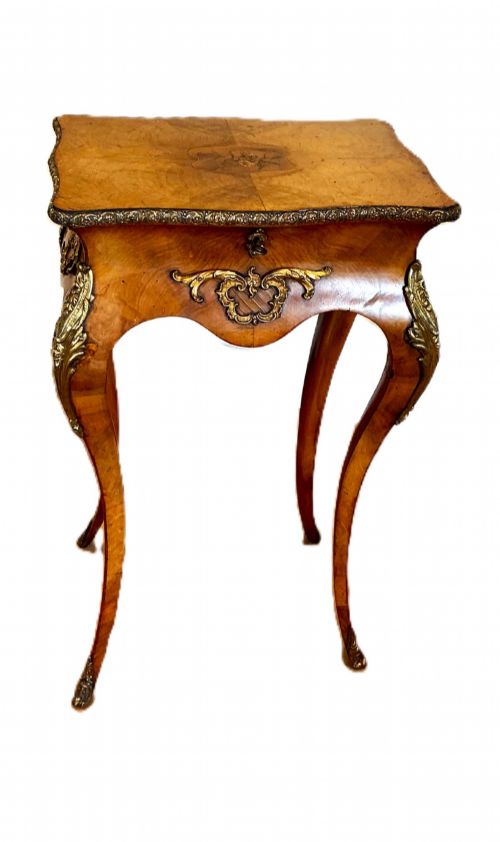
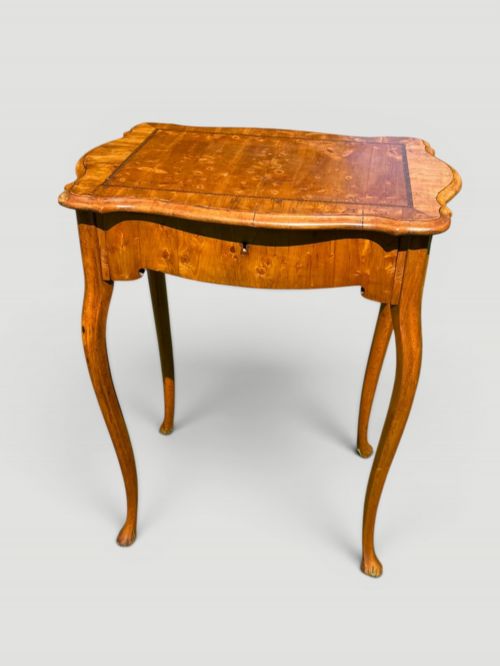


French Walnut Accent Table
A french walnut accent table brings continental warmth into a room, offering a convenient surface with distinct period character.
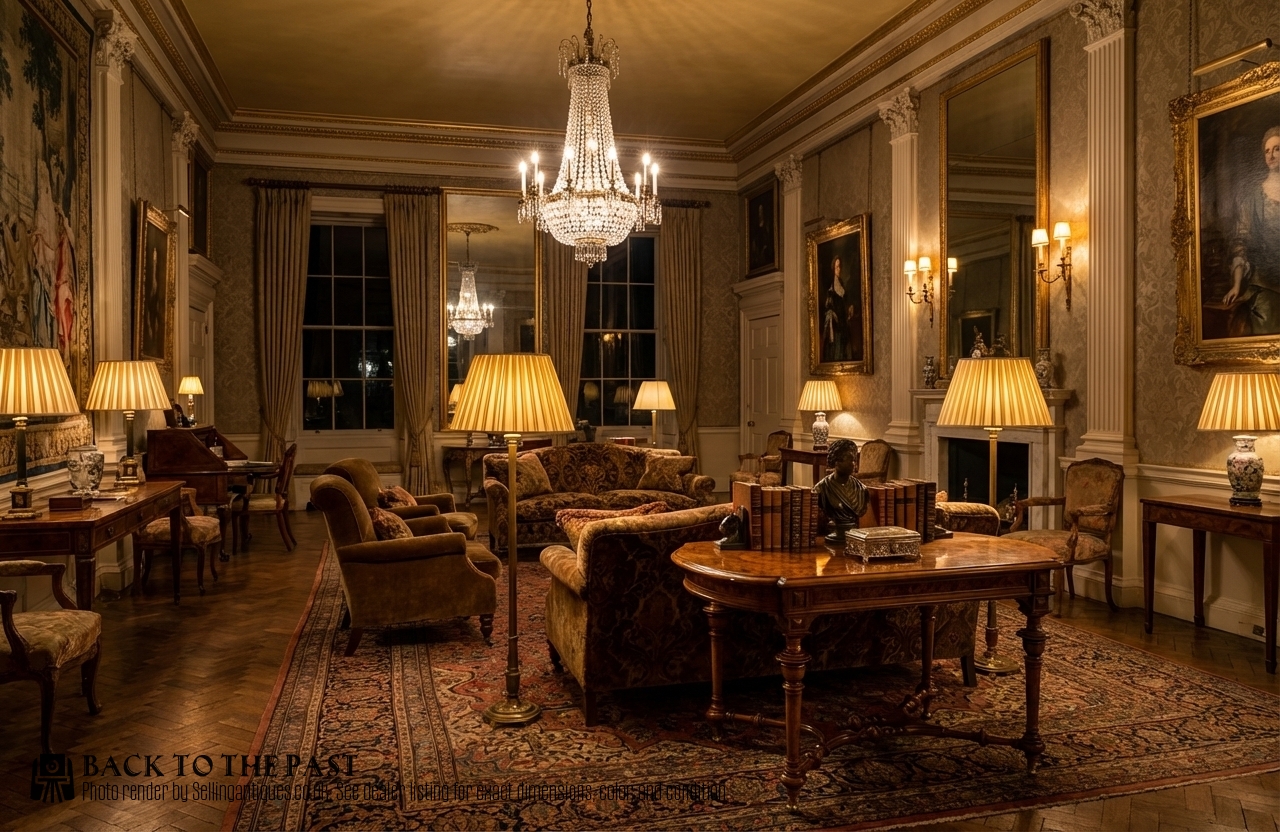
French Walnut Accent Table
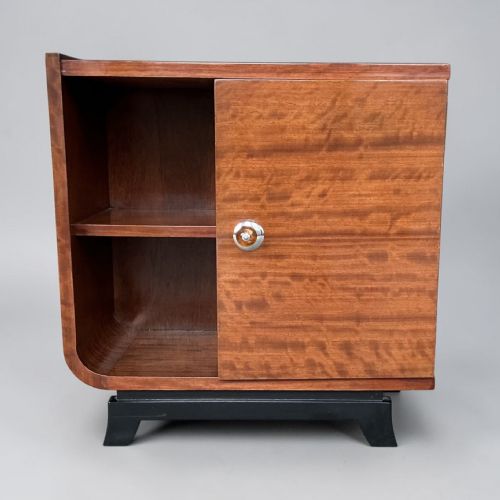
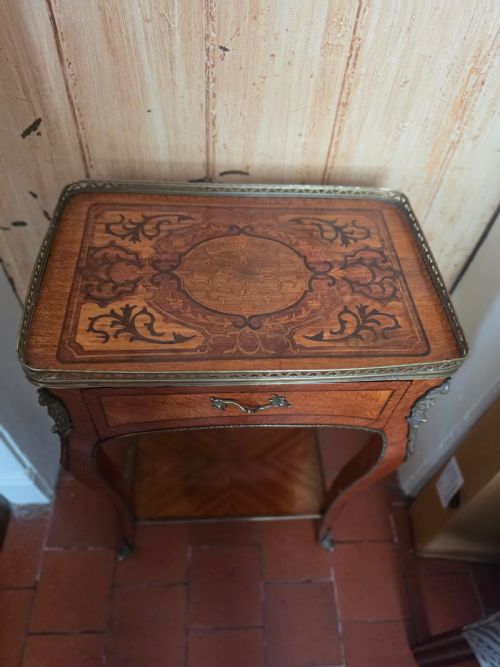
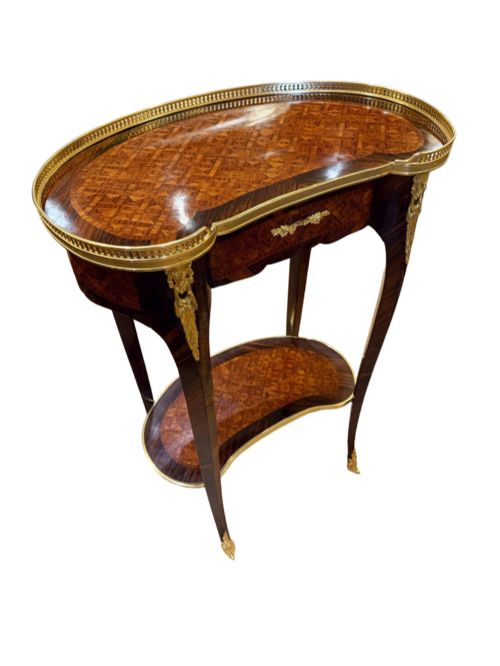
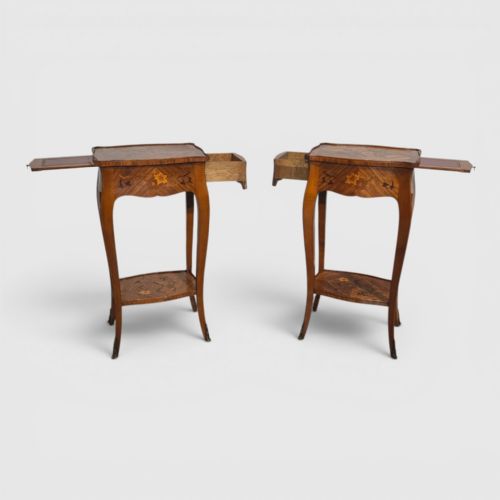
A french walnut accent table encompasses a variety of smaller occasional forms, primarily side tables, lamp tables, and gueridons designed to sit beside seating or in corners. These pieces frequently date from the nineteenth century into the art deco period of the early twentieth century.
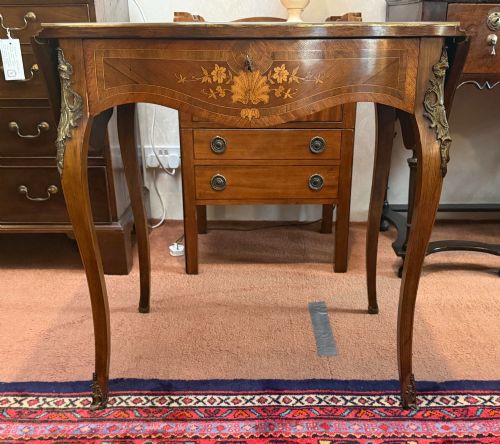
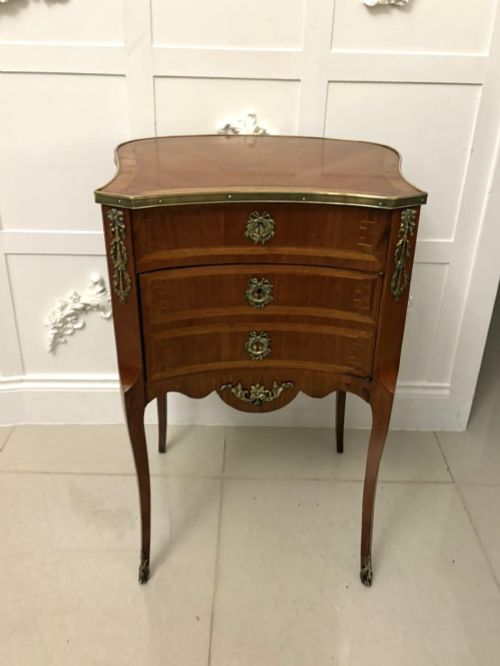
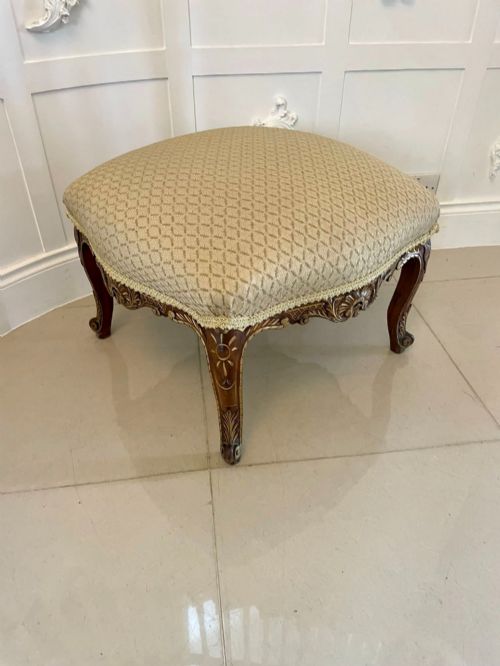
Makers drew heavily upon Louis XV revival and rococo styles, producing pieces with shaped tops, cabriole legs, and marquetry or parquetry inlays. Alongside these curvilinear designs, simpler provincial examples and later art deco models appear with clean lines and veneered surfaces.
The materials span solid walnut and burr walnut alongside walnut veneer, frequently accented with marble tops, brass, ormolu, and gilt bronze mounts. Buyers encounter pieces ranging from diminutive end tables to multi-tiered etageres and nests of tables.
The Measure of Quality
The distinction between ordinary and superior pieces lies in the precision of the parquetry and marquetry inlay, and the crispness of carved details on the cabriole legs. Better examples integrate their brass or ormolu mounts fluidly with the wooden structure rather than appearing merely affixed.
The choice of secondary materials elevates a piece, such as a heavy marble or onyx top fitted neatly into a galleried walnut rim, or select burr walnut veneers displaying rich figuring. The integrity of the timber movement and the subtlety of the French styling determine the overall standing of the table.
One unexpected nineteenth-century standing piece carries a distinctive automotive badge connection in its title alongside standard French walnut furniture.
The French Walnut Accent Table Glossary
- Gueridon
- A small round French table, often supported by a central pillar or slender legs. These originated in the seventeenth century and remained popular through the nineteenth century.
- Marquetry
- The art of applying pieces of veneer to a structure to form decorative patterns and pictures. Makers used various coloured woods to achieve tonal depth.
- Ormolu
- Gilded bronze applied to the mounts and feet of furniture. The technique involves treating brass or bronze with a mercury and gold amalgam.
- Parquetry
- Geometric wood inlay forming repeating patterns such as cubes or chequers. This technique differs from marquetry by strictly employing angular geometric tiles.
- Cabriole leg
- A furniture leg that curves outward and then tapers inward, mimicking an animal's limb. It typifies Louis XV and rococo revival designs.
French Walnut Accent Table: Frequently Asked Questions
Where should I place an accent table?
These small tables suit sitting rooms as lamp or side tables, or bedrooms as compact stands. Their modest proportions allow them to fit into alcoves and beside armchairs easily.
Position them away from direct heat sources to protect the walnut veneer and any fitted marble or onyx tops from thermal shock.
How do I clean marble top tables?
Wipe the marble surface gently with a damp cloth and mild neutral soap, avoiding acidic cleaners that etch the stone. Dry the surface thoroughly immediately afterward.
Treat the walnut wooden frame with a suitable furniture wax sparingly, buffing softly to maintain the natural sheen of the timber.
What distinguishes Louis XV revival style?
Louis XV revival pieces feature asymmetrical curves, scrolling motifs, and prominent cabriole legs. The style avoids straight lines in favour of flowing, organic contours.
Inlaid floral marquetry and ormolu mounts frequently accompany these undulating shapes, reflecting eighteenth-century French aesthetics.
Are these tables sturdy enough for daily use?
Most occasional tables serve well for holding lamps, books, or decorative objects rather than heavy loads. Their slender legs and intricate inlays require sensible placement.
Checking the joints beneath the top ensures the table remains stable for routine placement of everyday items.