





French Walnut Entry Table
These French walnut entry table pieces combine rich timbers and marble surfaces, offering practical display space and distinct period character for your hallway.
French Walnut Entry Table
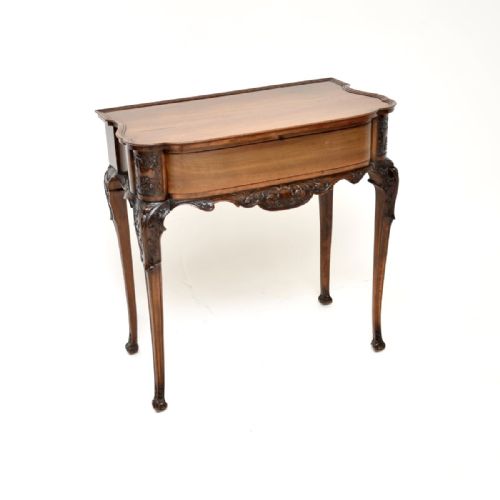
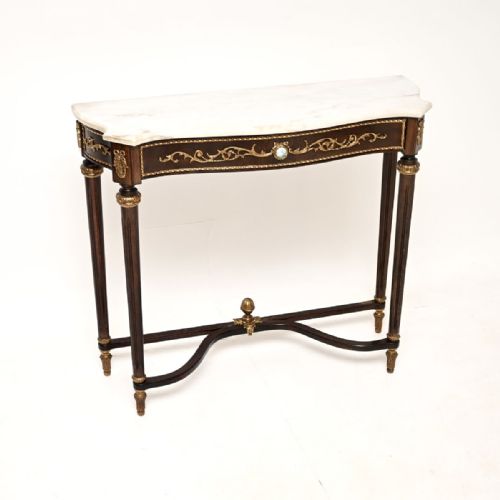
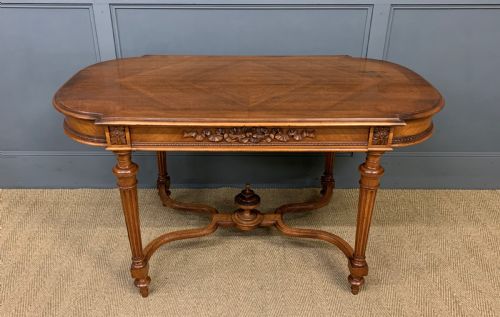
A French walnut entry table typically takes the form of a console table, side table, or centre table designed for hallway or reception placement. You will frequently encounter nineteenth-century examples alongside specific forms featuring marble tops.
The selection ranges from Louis Philippe and Empire styles to Art Deco iterations, demonstrating the shifting aesthetic preferences across French cabinet making. Console tables and pier tables dominate the current offerings, often paired with marble surfaces or mirror elements.
How they were made
Cabinet makers utilised solid walnut and burr walnut veneer over supportive carcase timbers, sometimes incorporating boxwood inlay for decorative contrast. Surfaces frequently received a polished finish to highlight the natural grain patterns of the wood.
Marble tops provide a durable and cool contrasting surface, while brass mounts and hardware add structural and visual highlights. Joinery techniques varied according to the period, supporting console and centre table forms with barley twist or classical column supports.
French Walnut Entry Table Retail Price Guide 2026
Typical asking prices for french walnut entry table among the pieces listed under this phrase on Sellingantiques today, from the lower quarter to the upper quarter. They describe what is for sale here now, not the wider market.
Materials appearing across current items include walnut, burr walnut veneer, marble, brass, glass, boxwood, and inlay.
What varies in quality
The refinement of the walnut veneer and the intricacy of any marquetry work set finer examples apart from simpler utilitarian pieces. Crisp detailing in brass mounts and the quality of the marble top indicate the original maker's investment in materials.
Proportion and structural balance define the better proportioned tables, where turned elements like barley twists or classical columns display precise execution. The integration of auxiliary components, such as pier mirrors, indicates higher-status commissions within the nineteenth-century groups.
The French Walnut Entry Table Glossary
- Console table
- A table designed to stand against a wall, frequently secured with brackets or resting on frontal legs. These pieces suit entryways and hallways where floor space is limited.
- Burr walnut
- A specialised timber cut from the abnormal growth of a walnut tree, yielding highly figured grain patterns. Cabinet makers utilised this veneer on prominent surfaces to create decorative visual impact.
- Gueridon
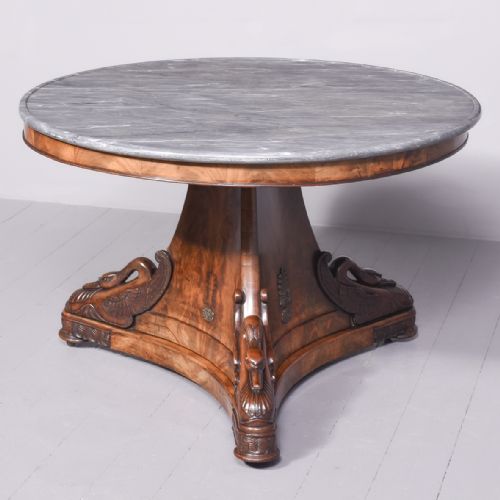
- A small French table, often round and supported by a central pillar or multiple legs. These frequently appear with marble tops in nineteenth-century interiors.
- Marquetry
- The art of applying pieces of veneer to a structure to form decorative designs. Boxwood and contrasting timbers were often employed in these patterns.
- Pier table
- A table designed specifically to fit against the wall space between two windows, frequently paired with a matching mirror above. Nineteenth-century examples often incorporated marble slabs.
French Walnut Entry Table: Frequently Asked Questions
What is a French walnut entry table?
A French walnut entry table is a decorative and functional piece of furniture designed for placement in a hallway or reception space. These items draw on nineteenth-century and early twentieth-century design traditions.
They appear in styles ranging from Louis Philippe to Art Deco. Many examples incorporate marble tops and distinctive wood veneers.
How were these tables used originally?
Historically, console and side tables served as decorative surfaces in entrance halls and principal rooms. They held lamps, decorative objects, or served as a place to leave correspondence.
Pier tables were specifically positioned beneath wall mirrors between windows. Centre tables stood independently in the middle of a room for general display.
How do I identify the period?
Dating relies upon stylistic markers such as the heavy classical proportions of Empire designs or the geometric lines of Art Deco pieces. Material choices like burr walnut veneer and boxwood inlay also offer clues to the era of manufacture.
Construction methods and hardware styles provide further evidence. Nineteenth-century examples frequently display revival influences like Louis XVI or Rococo.
How do I live with one?
Place your table against a hallway wall or in a reception space where its profile and surface can be appreciated. Ensure the timber is kept away from direct heat sources to protect the polish and veneer.
Marble surfaces require simple wiping with a damp cloth. The substantial nature of these tables makes them practical for everyday display use.