
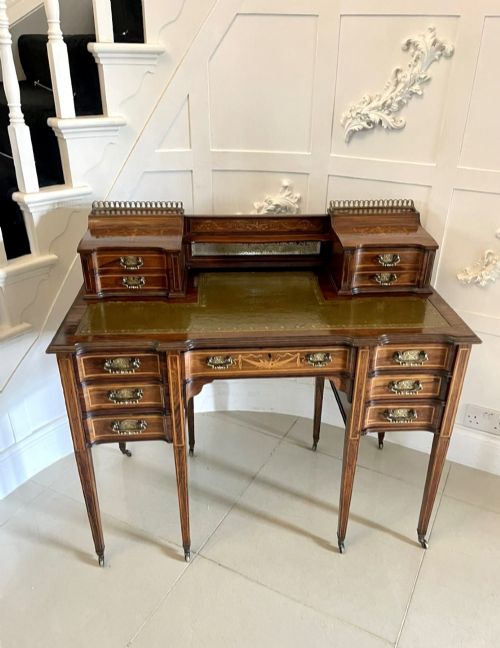
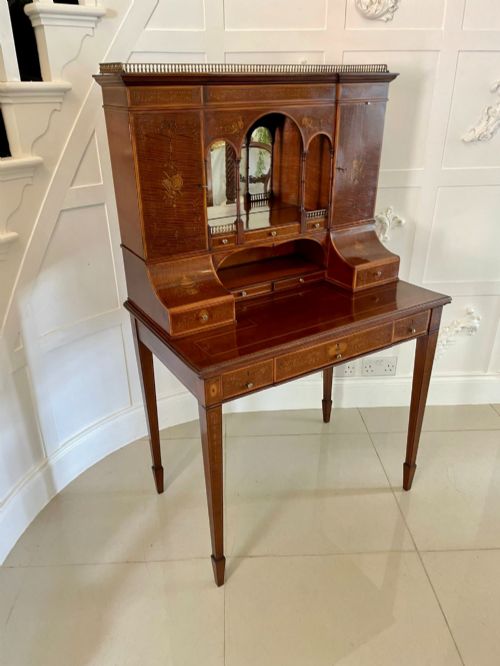
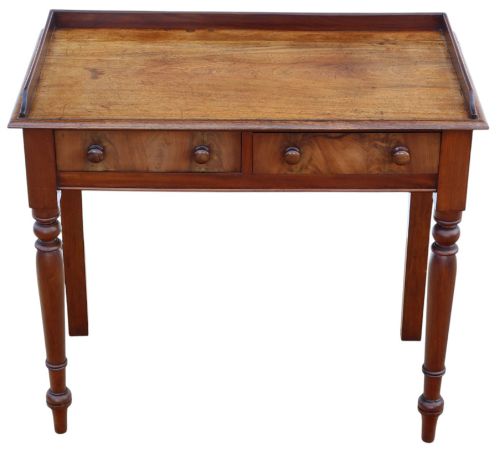
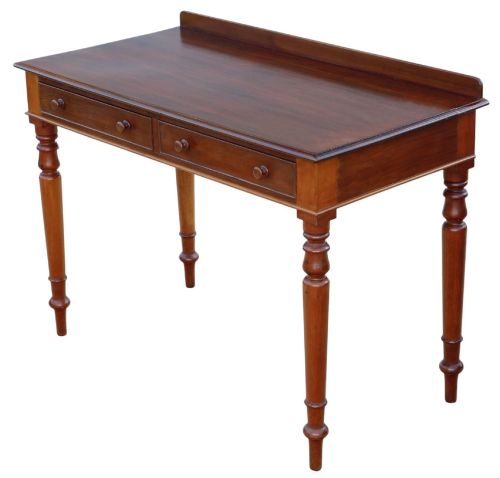
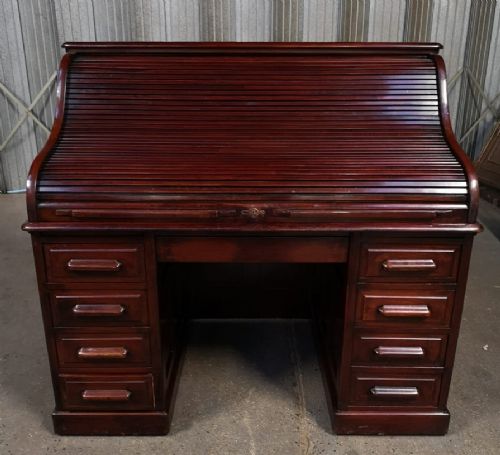
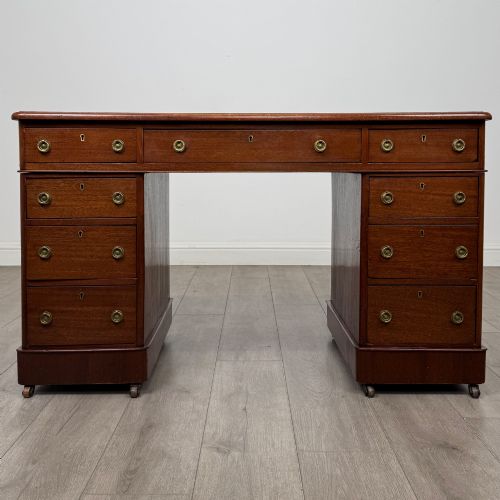
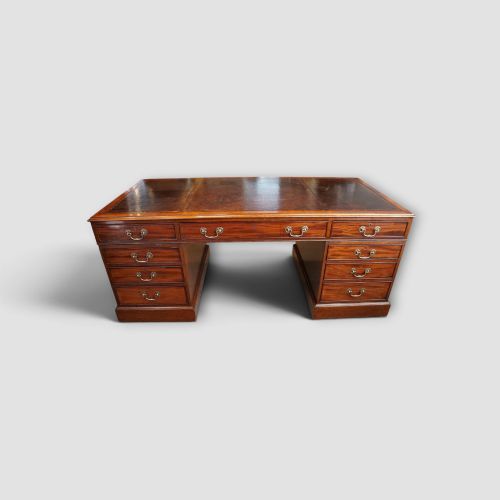
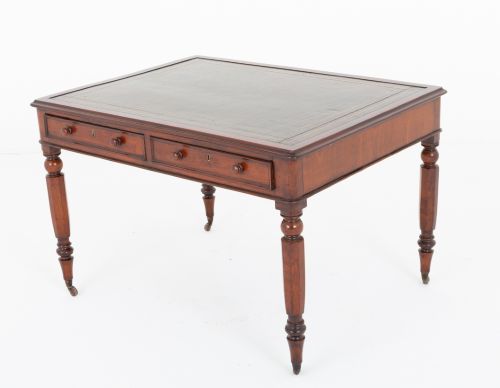


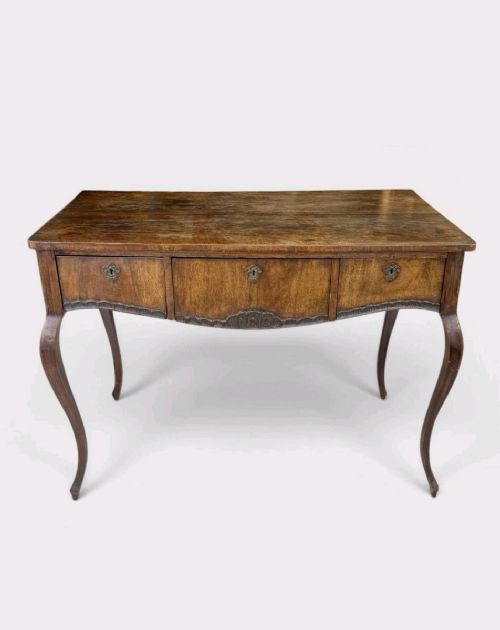
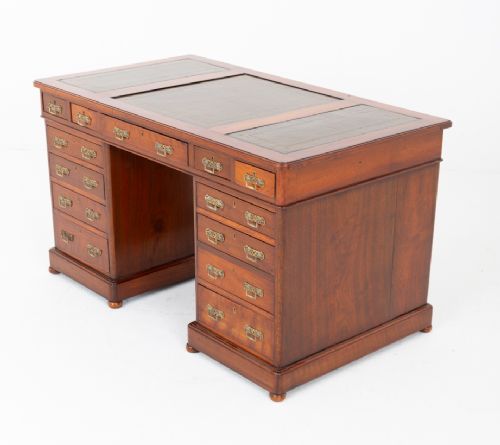
Victorian Mahogany Writing Table
A victorian mahogany writing table brings functional nineteenth-century craftsmanship into a modern study, offering deep timber grain and a practical leather writing surface.

Victorian Mahogany Writing Table
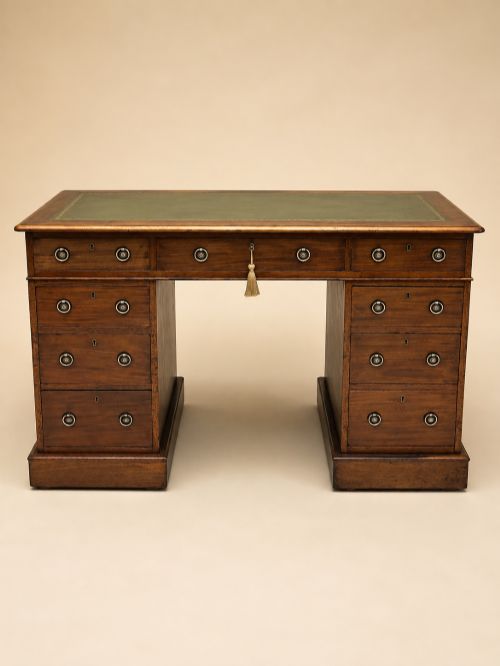
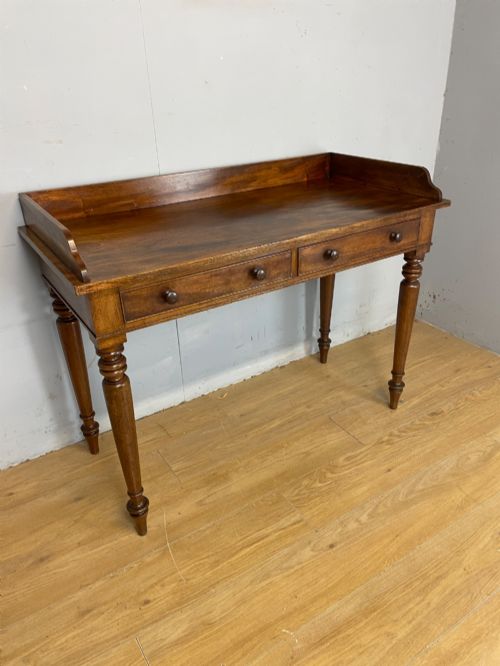
A victorian mahogany writing table is a dedicated piece of nineteenth-century furniture designed for correspondence and administrative work, commonly featuring multiple drawers and set upon pedestals or slender legs. These pieces range from simple two-drawer side tables and library desks to substantial partners desks built for simultaneous use from both sides.
Makers and workshops of the period often incorporated secondary timbers like satinwood and rosewood, applying brass hardware and tooled leather writing inserts. These tables reflect the varied domestic and institutional needs of the Victorian era, accommodating everything from casual letter writing to intensive clerical labour.

How They Were Made
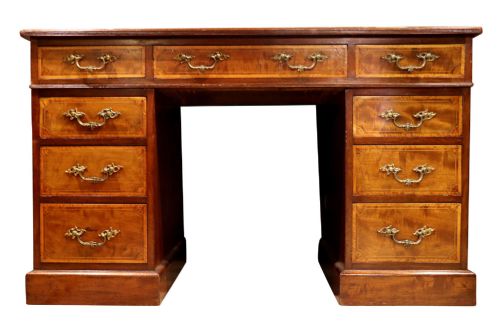
Cabinet makers constructed these tables using solid mahogany and flame mahogany veneers applied to sturdy framing timbers, often incorporating secondary woods like satinwood for contrast and inlay work. The structural joinery relied on traditional techniques that allowed the dense timbers to expand and contract naturally within domestic environments.
Surfaces were frequently finished with inset panels of black, green, or tan leather, which were commonly tooled with blind or gilt decoration to provide a smooth, durable writing plane. Hardware such as brass drop handles, knobs, and drawer pulls were securely fitted, with many pieces retaining their original nineteenth-century mounts.
Advanced workshops employed specialised framing to create freestanding library tables and partners desks finished on all sides, ensuring the timber grain matched harmoniously across drawer fronts and pedestals. Polish and shellac finishes were hand-applied to bring out the deep reddish-brown tones and natural figure of the mahogany.
Victorian Mahogany Writing Table Retail Price Guide 2026
Typical asking prices for victorian mahogany writing table among the pieces listed under this phrase on Sellingantiques today, from the lower quarter to the upper quarter. They describe what is for sale here now, not the wider market.
Some nineteenth-century writers relied on secret compartments hidden within pedestal drawers to guard their ink and private correspondence.
What Varies in Quality
The selection of timber grain largely distinguishes standard utility furniture from exceptional showroom pieces, with highly figured flame mahogany and crisp satinwood inlay indicating superior workshop output. Tables bearing documented attribution to prominent makers command distinct appreciation for their advanced cabinet-making techniques and refined proportions.
The treatment of secondary elevations defines the construction standard, particularly in partners and freestanding desks where the rear panels receive the same detailed attention and timber selection as the front. Superior examples retain original brass hardware, leather writing surfaces with intact tooling, and smoothly operating drawer mechanisms fitted with robust dovetail joints.
Proportional harmony and architectural restraint separate more ambitious revival pieces from simpler provincial items, reflecting the design ambitions of the cabinet maker. The integrity of the original polish and the preservation of secondary timbers without extensive modern intervention further mark the standing of individual tables.
Maple and Co·Heal and Son·Trollope and Sons·Edwards and Roberts·Johnstone and Jeanes·Charles Andrea Nosotti·Gillows·Hobbs and Co·Holland and Sons·Howard and Sons
The Victorian Mahogany Writing Table Glossary
- Partners desk
- A large double-sided pedestal desk designed for two people to work opposite one another, featuring drawers and cupboards on both faces. These pieces were often used in libraries, banking houses, and large estate studies.
- Flame mahogany
- A veneer cut from the fork of the mahogany tree where the branch joins the trunk, producing a distinctive, highly figured flame-like pattern. Cabinet makers utilised this premium veneer on primary drawer fronts and top surfaces to create visual impact.
- Kneehole desk
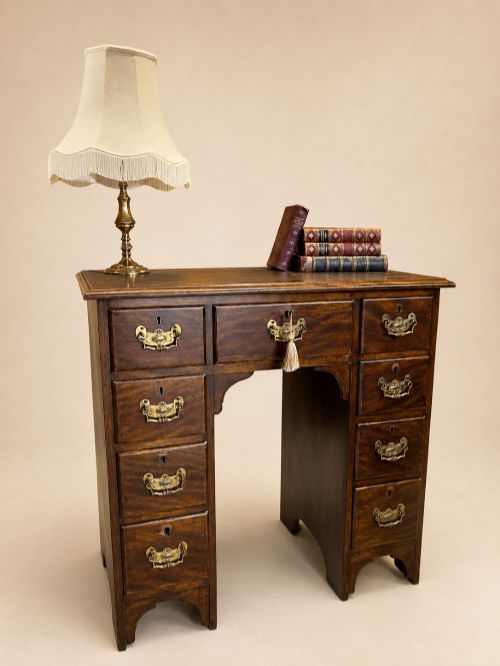
- A compact pedestal desk featuring a central recess for the user's legs, flanked by banks of smaller drawers. This form became widely popular during the nineteenth century for domestic studies and dressing rooms.
- Tooled leather
- Leather hide inset into the desktop and decorated around the perimeter with blind or gold-leaf stamped geometric patterns. It provided a traditional, durable writing surface that protected the underlying timber.
- Pedestal desk
- A heavy desk comprising two separate pedestals of drawers supporting a wide top slab, often built as a freestanding unit. They represent some of the most substantial writing furniture produced during the Victorian era.
Victorian Mahogany Writing Table: Frequently Asked Questions
What is a partners desk?
A partners desk is a large double-sided writing table designed with drawers and cupboards accessible from both the front and the back. This configuration allowed two individuals to work facing each other across the same piece of furniture in a library or study.
These substantial tables typically feature pedestals on either side of a wide kneehole. They represent some of the most ambitious cabinet-making produced during the nineteenth century.
How do I identify a Victorian table?
Victorian tables are generally identified by their use of dense mahogany timber, robust construction methods, and characteristic nineteenth-century proportions. Stylistic details often include turned legs, pedestal bases, and brass hardware associated with the period.
Many pieces also incorporate regional revival styles such as Georgian or Sheraton influences. Examining the secondary timbers and construction joinery helps confirm the nineteenth-century origin.
Are leather writing surfaces original?
Many Victorian writing tables retain their original leather tops, though heavily used surfaces were frequently replaced over the decades. Original leathers often show natural patination, wear, and subtle gold or blind tooling around the borders.
When a table retains its period leather insert in good condition, it adds significantly to the historical integrity of the piece. Replacements are common and are typically executed in traditional colours like green, brown, or black.
Where were these tables used?
These tables served primarily in private studies, libraries, drawing rooms, and administrative offices throughout the nineteenth century. Smaller side tables and dressing tables were often placed in bedrooms for correspondence and personal grooming.
Freestanding library tables were positioned centrally within large rooms rather than pushed against walls. This allowed access from all sides for reading, writing, and sorting documents.