
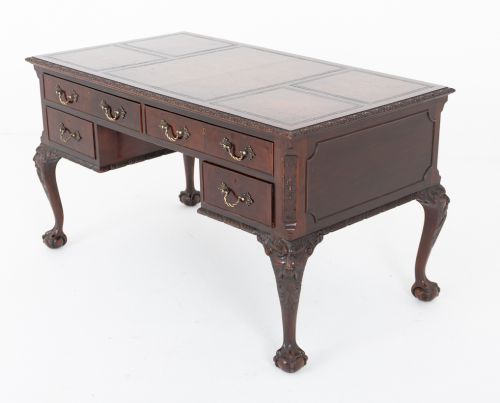

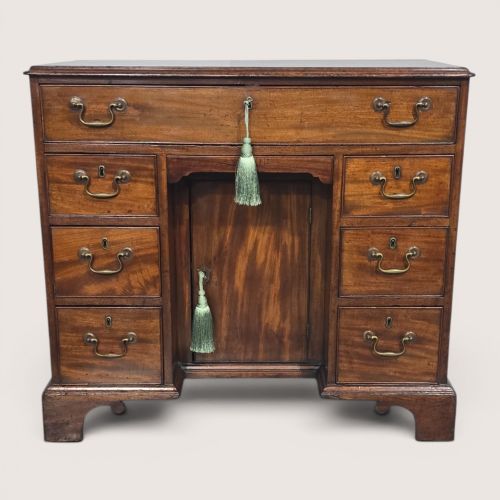
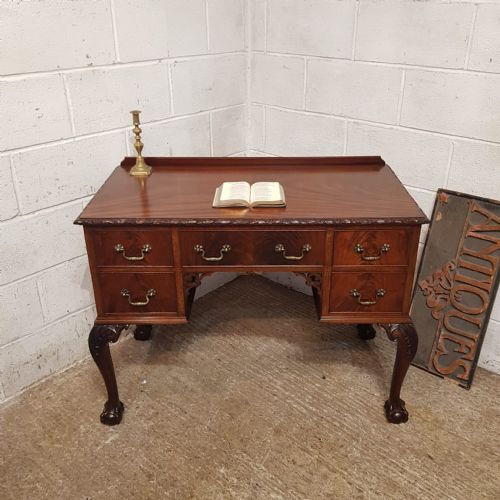

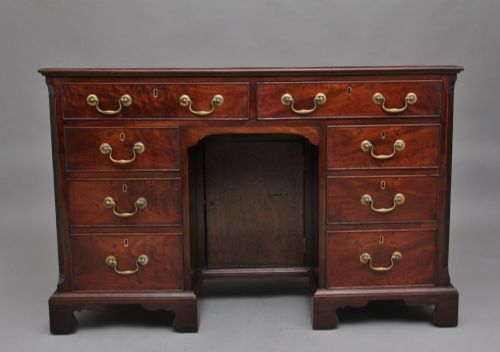
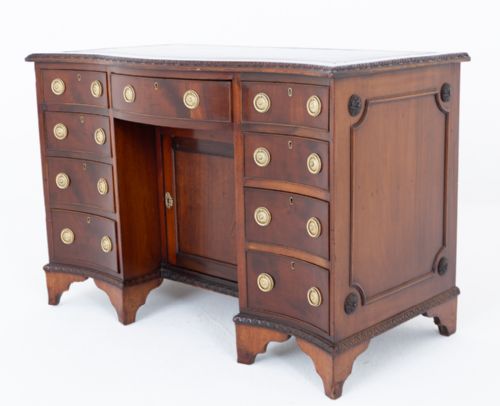


Chippendale Kneehole Desk
A chippendale kneehole desk brings understated proportion and fitted drawers to a study, built around a central recessed well for the chair.
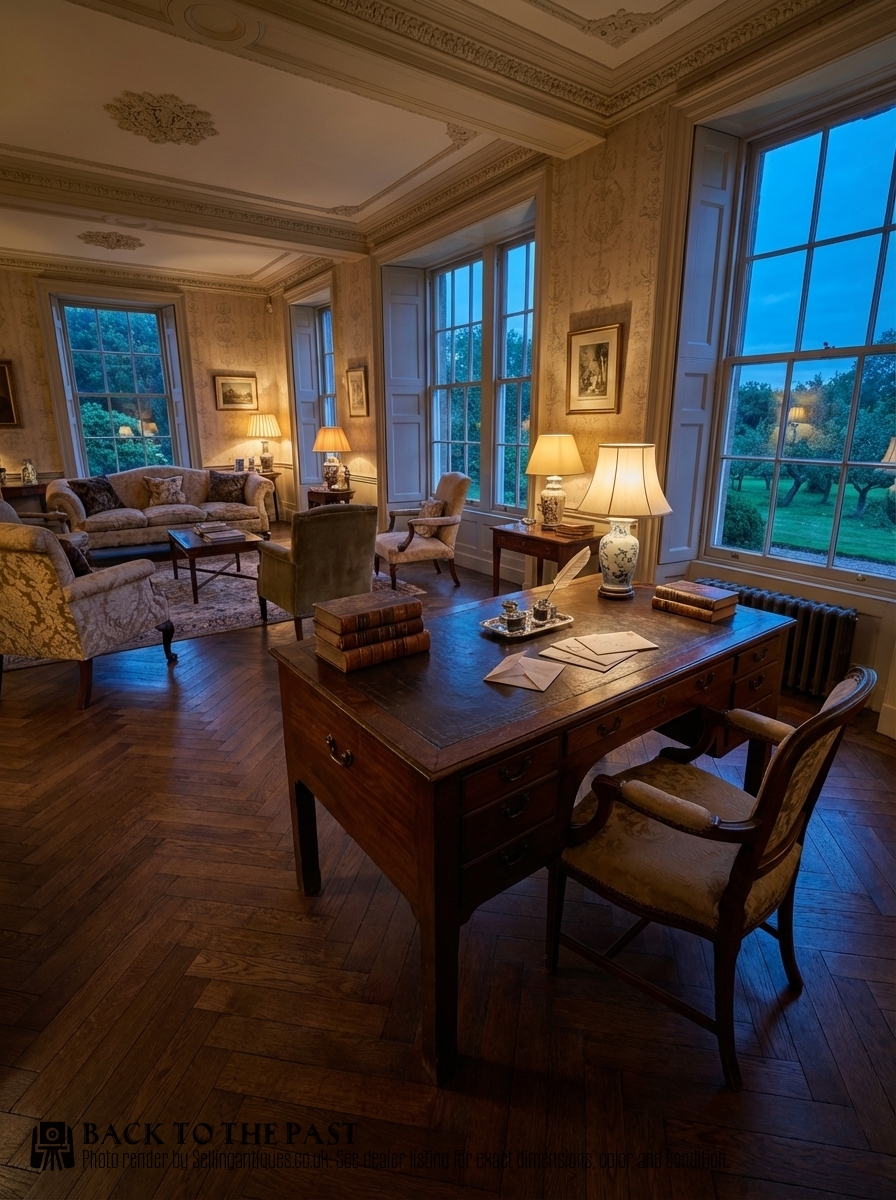
Chippendale Kneehole Desk
A chippendale kneehole desk is a compact writing or dressing piece typically organised with a central recess flanked by banks of small drawers, often topped by a long drawer just beneath the working surface. The selection spans authentic 18th Century and Georgian originals alongside later revivals from the Edwardian era and 1900.
Surviving examples range from straightforward mahogany writing tables and lowboys to serpentine fronts, Chinese Chippendale interpretations, and Gothic revival variants. Buyers frequently encounter pieces that double as dressing chests, complete with internal compartments or fitted mirror sections suited to polite 18th Century domestic life.
The layout prioritises private correspondence and personal administration, sitting neatly against a wall or standing freestanding in the middle of a library. Proportions remain restrained, making these forms adaptable to modern domestic interiors without dominating the room.
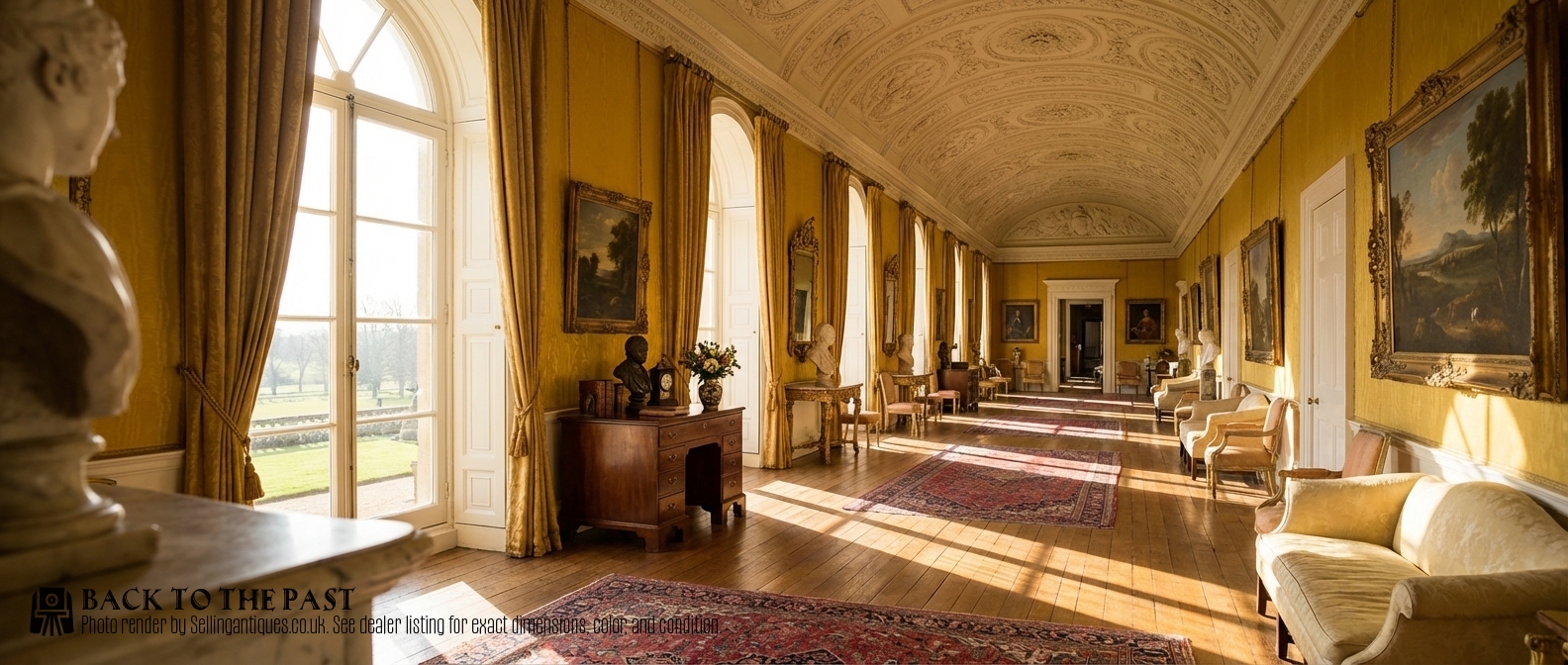
Markers of standard and execution
Quality rests in the crispness of the timber carving, the depth of the flame mahogany figuring, and the integrity of the original brass hardware. Pieces that retain their original secondary timbers and untouched timber surfaces command greater attention from discerning collectors.
Proportion and structural restraint differentiate master cabinet work from standard commercial output. Refined mouldings, tight corner dovetails, and balanced drawer arrangements separate the finest workshops from simpler domestic furniture.
Chippendale Kneehole Desk Retail Price Guide 2026
Typical asking prices for chippendale kneehole desk among the pieces listed under this phrase on Sellingantiques today, from the lower quarter to the upper quarter. They describe what is for sale here now, not the wider market.
Several kneehole desks include hidden central compartments behind the kneehole door, offering a secure space for private letters.
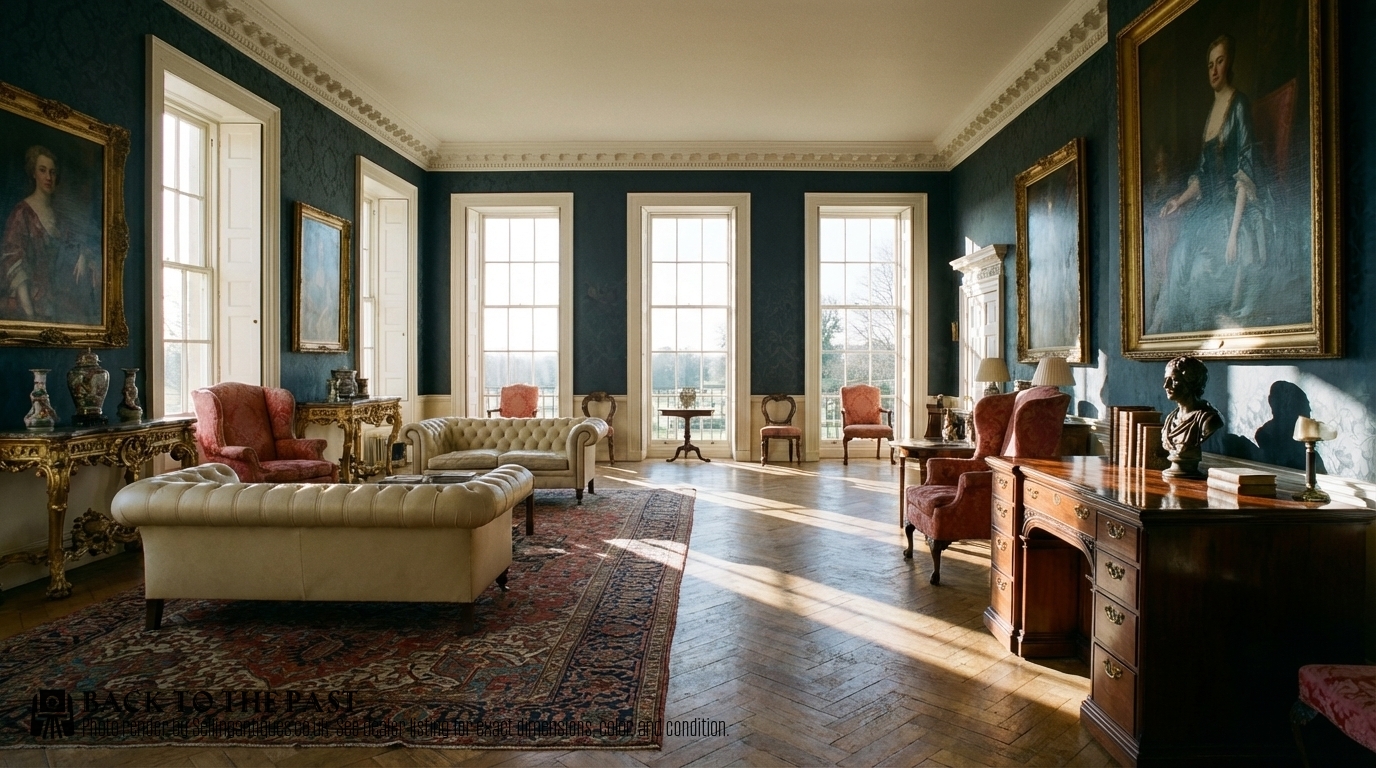
Druce and Co
The Chippendale Kneehole Desk Glossary
- Kneehole
- A recessed central space beneath a desk top, designed to accommodate the legs of a seated user. This void is usually flanked by pedestals of smaller drawers.
- Serpentine
- A front contour characterised by a gentle convex curve flanked by two concave sweeps, creating a rhythmic undulating line across the drawer fronts. This profile demands advanced woodworking skill.
- Lowboy
- A small side table or dressing table with one or more rows of drawers raised on relatively tall legs. They share stylistic traits with kneehole desks.
- Cockbeading
- A narrow half-round moulding applied to the edges of drawer openings to protect the timber and frame the individual drawers. It is a hallmark of careful cabinet construction.
- Partners desk
- A large double-sided desk configured with drawers and cupboards on both opposing faces, allowing two people to work opposite one another. These are substantial forms within the broader desk category.
Chippendale Kneehole Desk: Frequently Asked Questions
What is a kneehole desk?
A kneehole desk is a freestanding or wall-placed writing piece featuring a central recessed space for the legs, positioned between two vertical banks of drawers. A wider drawer usually spans the top above the recess.
Originally designed for private correspondence and accounts in the 18th Century, these compact desks allowed individuals to sit comfortably while keeping essential stationery close at hand.
How do I date a Chippendale desk?
Dating relies on examining the construction methods, timber choice, and hardware fixings used in the piece. Hand-cut dovetails, cedar or oak secondary woods, and dense Cuban mahogany point toward 18th Century Georgian origins.
Later revival pieces from around 1900 or the Edwardian period often display machine-assisted elements, different secondary timbers, or styling cues that lean heavily into Gothic or Chinese Chippendale revivals.
Were these desks used for writing?
Many served as writing tables, though several recorded examples functioned as dressing chests or lowboys with fitted interior compartments. The flat top provided adequate space for quill and paper.
Inside the top drawer, makers often incorporated sliding writing surfaces or small partitions to organise inkwells, sealing wax, and correspondence papers.
How do I fit a kneehole desk at home?
Due to their relatively modest footprint compared to massive partners desks, kneehole desks fit easily into studies, bedrooms, and quiet corners of living rooms. Their finished backs allow many examples to stand away from walls.
Pair the desk with a low-backed chair that slides easily into the central recess, ensuring the writing height aligns comfortably with your seating posture.