
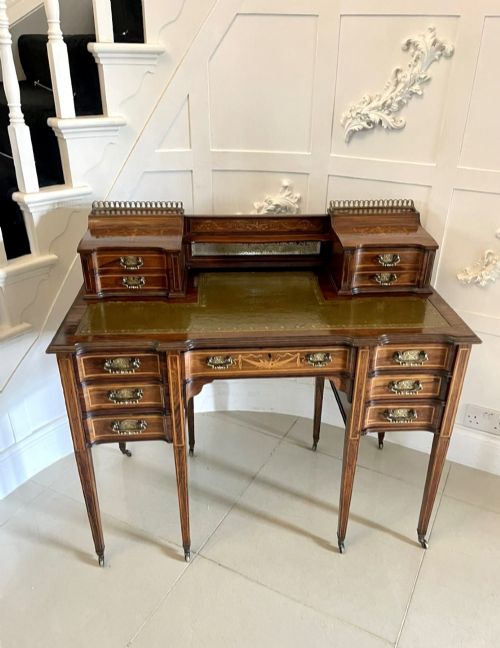
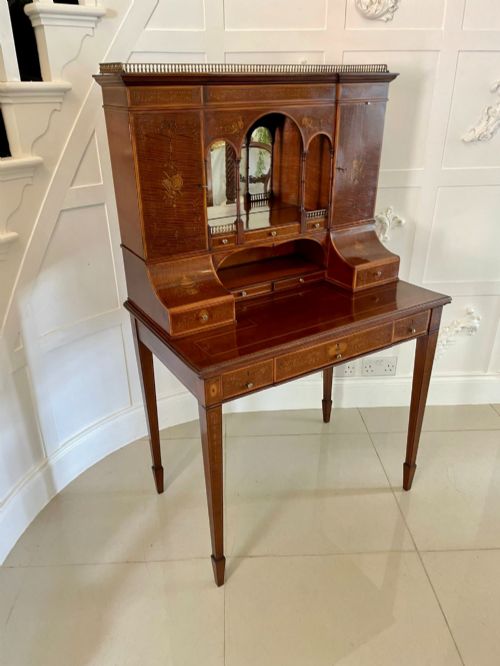
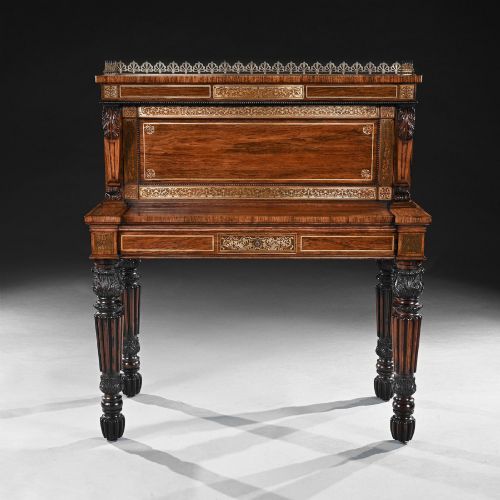
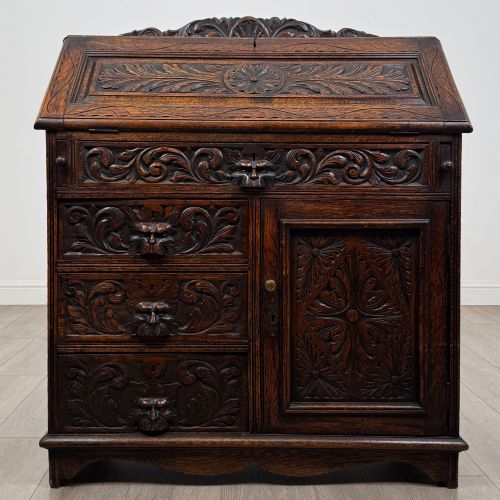


Antique Bureau Table
An antique bureau table brings working surfaces and concealed storage together, offering fitted compartments and drop fronts for correspondence.
Antique Bureau Table
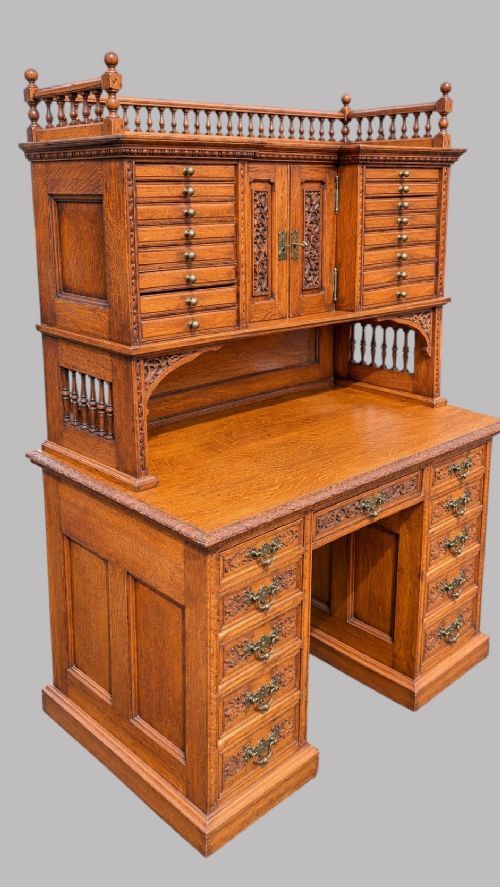
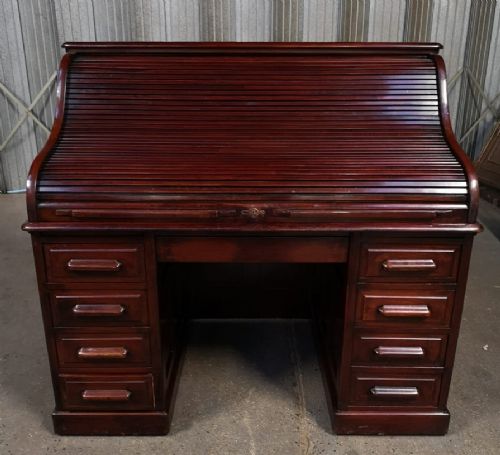
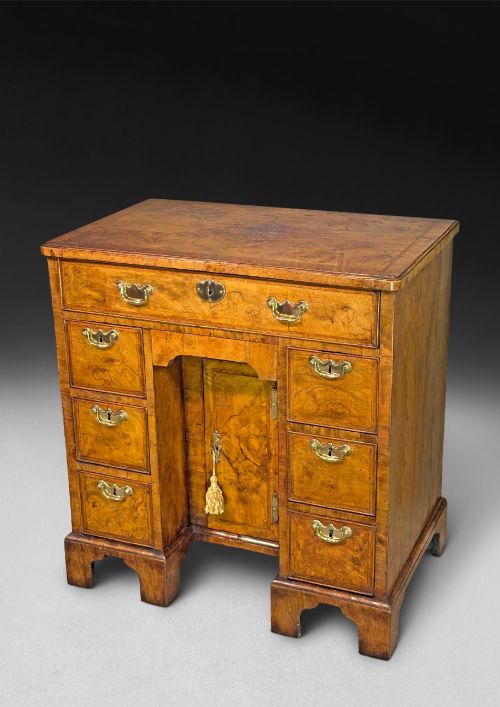
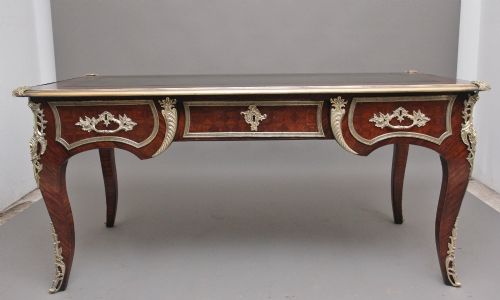
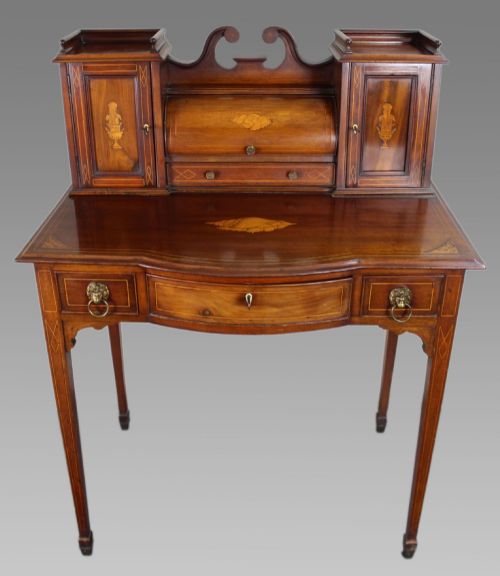
The term antique bureau table gathers writing surfaces, kneehole desks, fall-front bureaux and bureau plats spanning the Georgian, Victorian and Edwardian eras. Buyers encounter everything from compact satinwood table-top models to substantial freestanding mahogany and burr walnut pedestals.
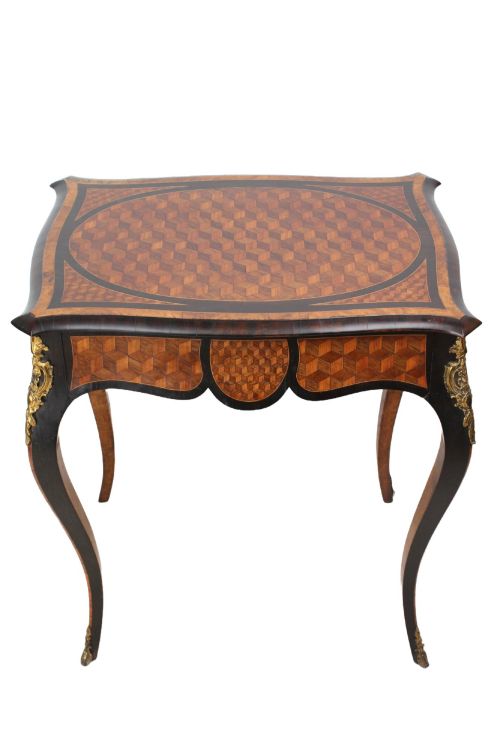
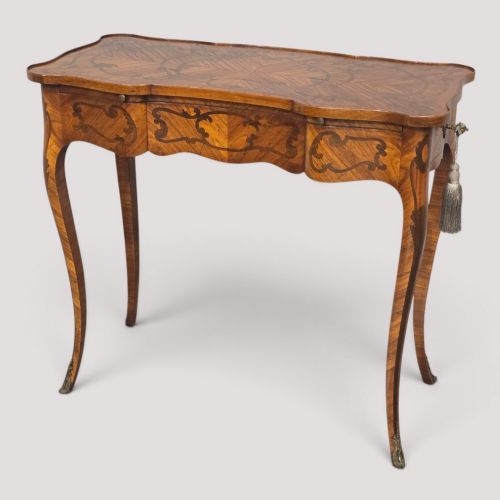
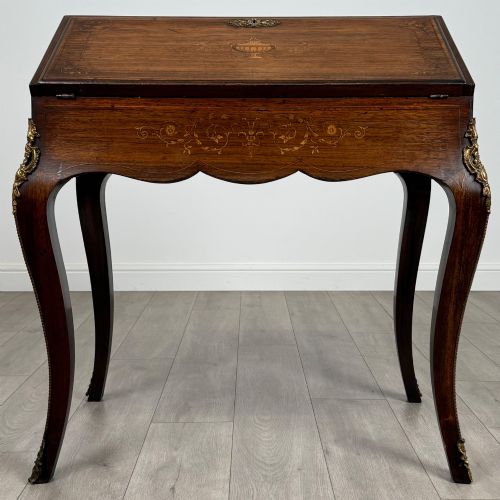
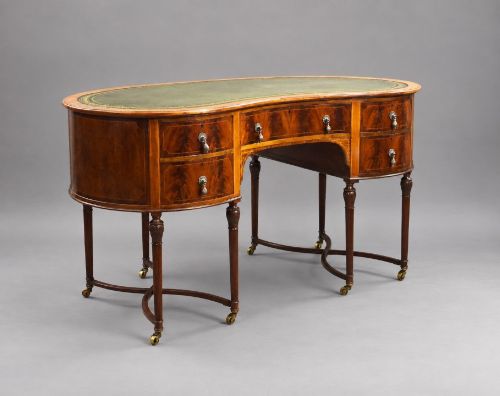
English iterations lean toward practical kneehole arrangements and fall-front writing boxes, whereas French bureau plat forms emphasise freestanding design with parquetry and ormolu mounts. Edwardian variations frequently incorporate satinwood stringing and kidney-shaped writing surfaces designed for domestic chambers.

How They Were Made
Cabinet makers built these pieces using solid timbers like mahogany, oak, walnut and yew, supplemented by decorative veneers including rosewood, kingwood and satinwood. Drawer linings typically employ oak or mahogany, joined with hand-cut dovetails that indicate period construction.
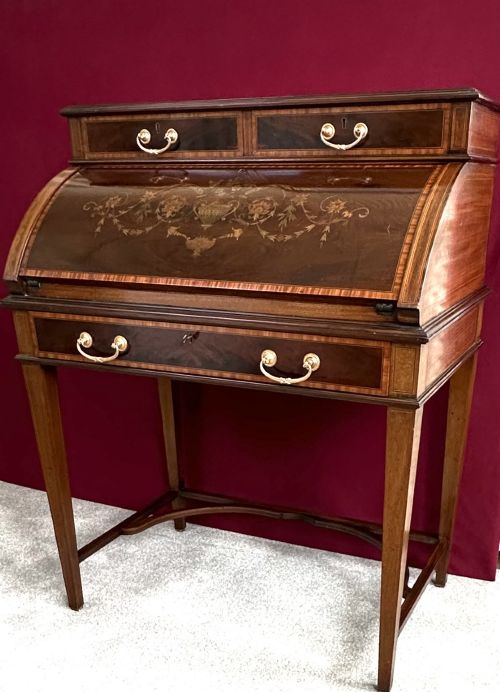
Surface ornamentation relies on marquetry, parquetry and brass or ormolu mounts, accompanied by tooled leather writing inserts. French workshops favoured intricate floral marquetry and gilt-bronze mounts, while English makers concentrated on figured wood grains and delicate string inlay.
Antique Bureau Table Retail Price Guide 2026
Typical asking prices for bureau table among the pieces listed under this phrase on Sellingantiques today, from the lower quarter to the upper quarter. They describe what is for sale here now, not the wider market.
Listings span eight decades from the Georgian period through the 1930s, utilising mahogany, walnut, oak, rosewood, kingwood, satinwood, brass and ormolu.
What Varies in Quality
Construction standards depend heavily on the selection of timber figures, such as matched burr walnut or flame mahogany veneers, paired with dense secondary woods. Superior examples maintain original brass hardware, fitted interior pigeonholes and functioning locks with matching keys.
The sophistication of the joinery and marquetry dictates the tier of the piece, distinguishing standard workshop production from signed items by notable makers. Precision in the parquetry patterns and the weight of the cast ormolu mounts mark the distinction between ordinary and exceptional specimens.
Gillows Oxford Street Workshop·JAS Shoolbred·Francois Linke·Edwards and Roberts·James Mein of Kelso·Paul Sormani·Hobbs and Co
The Antique Bureau Table Glossary
- Bureau plat
- A flat-topped freestanding writing table, typically with drawers along the frieze and often featuring leather writing inserts. This French form originated in the seventeenth century and gained widespread popularity during revival periods.
- Fall-front
- A writing surface hinged at the bottom edge that pulls down or opens forward to reveal an internal arrangement of small drawers and pigeonholes. It serves as a writing flap when open and conceals paperwork when closed.
- Ormolu
- Gilded bronze ornamentation applied to the corners, feet and friezes of furniture, particularly pieces influenced by French design. The technique involves applying a mercury and gold amalgam to cast bronze.
- Parquetry
- Geometric wood mosaic work formed by small veneer tiles arranged in patterns such as cubes or chequers. It creates structured decorative surfaces on the tops and sides of desks.
- Kneehole desk
- A compact pedestal desk featuring a central recess for the sitter's legs, flanked by banks of smaller drawers. Georgian and Victorian iterations often utilise figured walnut or mahogany.
Antique Bureau Table: Frequently Asked Questions
What is a bureau plat?
A bureau plat is a freestanding writing table featuring a flat top, often inset with leather, and one or more drawers across the frieze. These pieces were designed to stand away from walls in the centre of a room.
Originating in France, they frequently incorporate decorative veneers like kingwood or rosewood, accompanied by gilt-bronze or ormolu mounts along the legs and edges.
What woods were used for these desks?
Cabinet makers utilised a variety of primary timbers including mahogany, walnut, oak, satinwood and yew. Secondary woods inside drawers commonly consist of oak or pine.
Decorative surfaces frequently feature figured veneers such as burr walnut, rosewood, kingwood and flame mahogany, sometimes enhanced with parquetry or marquetry patterns.
How do I date an antique writing table?
Dating relies on stylistic markers, construction methods, timber choices and hardware. Georgian pieces display simpler structural lines in solid mahogany or walnut, while Victorian examples often embrace revival styles with heavier proportions and burr veneers.
Edwardian furniture tends to feature lighter satinwood inlay and delicate kidney-shaped forms, reflecting changing domestic interiors around the turn of the twentieth century.