

Dark Wood Study Desk
A dark wood study desk brings warmth and a working surface into a room, fashioned from rich timber made to last.
What these desks are
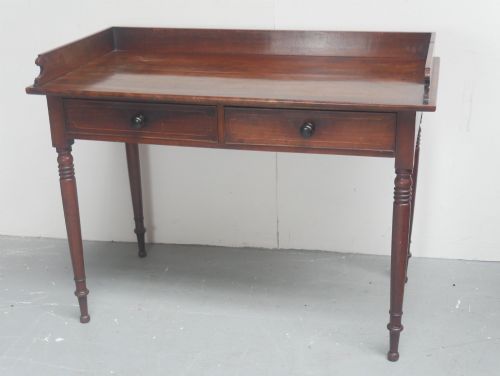
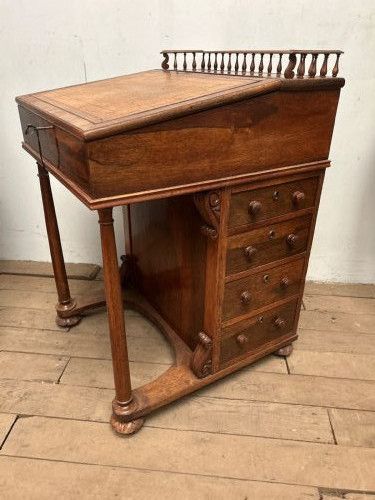
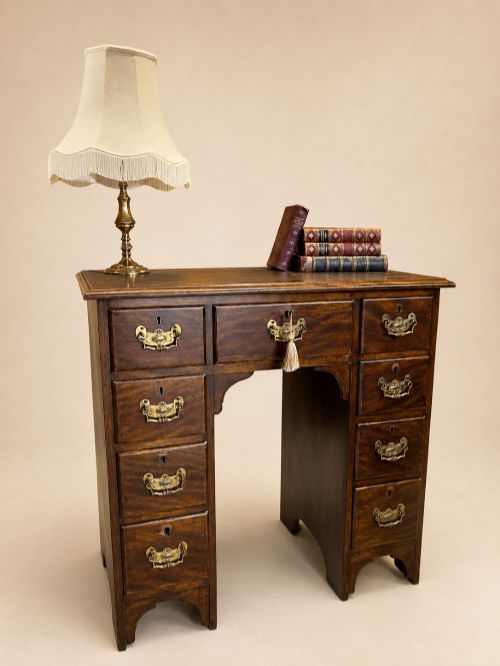
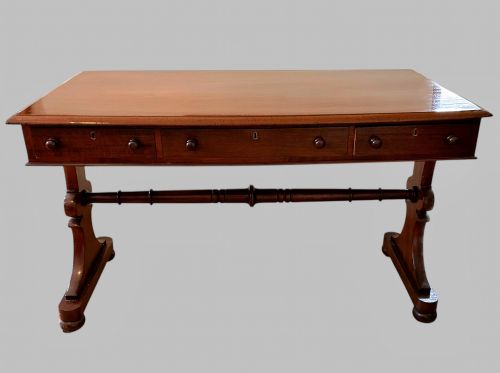
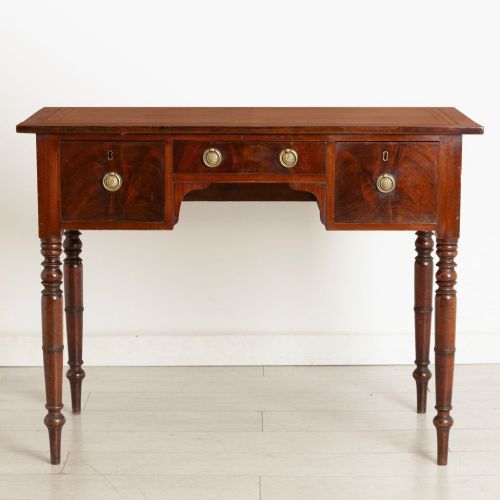
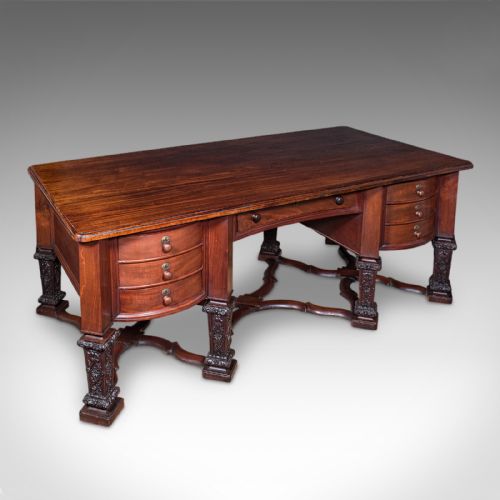
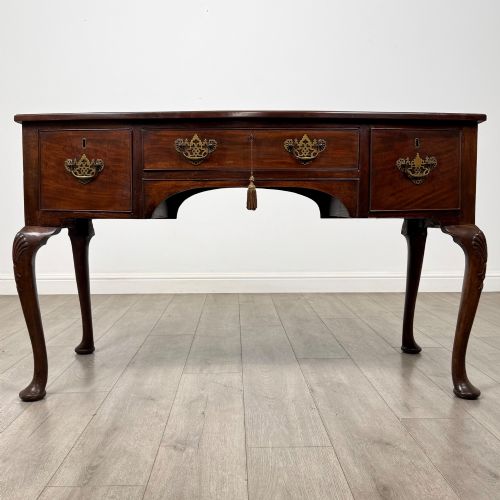
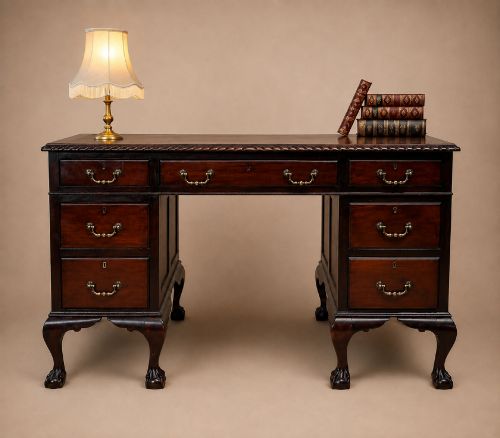
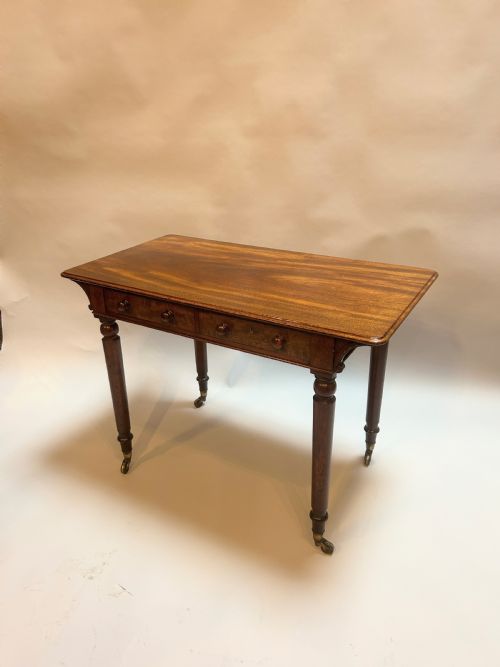
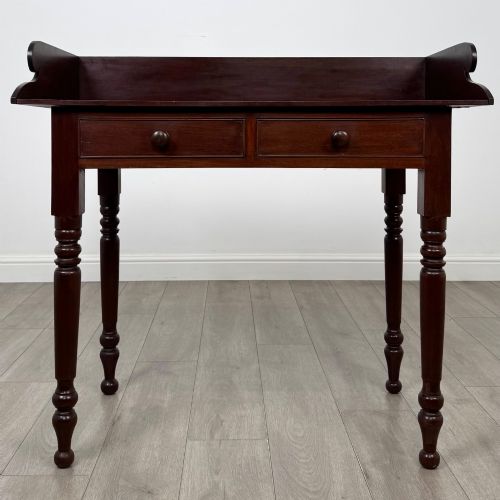
A dark wood study desk appears in several classic forms across this collection, ranging from substantial kneehole desks to simpler writing tables. These pieces originate from the Georgian and Victorian eras, carrying the traditional proportions of the eighteenth and nineteenth centuries.
The most common versions met here are writing tables and kneehole desks built with functional drawer spaces. They reflect the utilitarian yet refined requirements of historical studies and libraries.
How they were made
Cabinet makers constructed these desks primarily using solid mahogany, prized for its deep tone and robust grain. Brass hardware such as original handles adds functional detail, whilst inset leather surfaces provide traditional writing areas.
Joinery techniques from the Georgian and Victorian periods ensure sturdy construction without modern adhesives. Timber was selected and planed by hand to create smooth working surfaces and tightly fitted drawer boxes.
Retail Price Guide 2026
Typical UK retail prices for dark wood study desk, calculated from the Sellingantiques database of over a million retail prices indexed since 2003. This retail price guide relies exclusively on Sellingantiques data; no external sources or auction records are used, so the figures do not describe the wider market.
Many a Victorian writer owed their best prose to a slightly ink-stained kneehole drawer.
What varies in quality
Quality separates simple utility pieces from finer items through the crispness of the cabinet work and the choice of timber figure. The presence of original brass handles and intact leather inserts elevates a desk's authenticity.
Proportions and secondary timbers also signal distinction, where finer workshops employed superior drawer linings and more harmonious scaling. The overall integrity of the structure and the depth of the mahogany patina define the upper tier.
The Dark Wood Study Desk Glossary
- Kneehole desk
- A writing desk featuring a central recessed space for the legs, flanked by pedestals of small drawers. This form became popular in the eighteenth century for private studies.
- Writing table
- A freestanding table designed primarily for correspondence and paperwork, often fitted with one or more shallow drawers beneath the top. It differs from a bureau by having a fixed top rather than a sloping fall-front.
- Mahogany
- A durable, reddish-brown tropical hardwood widely used by British cabinet makers for its stability and rich grain. It takes a high polish and resists warping.
- Regency
- An English design style spanning the early nineteenth century, characterised by classical restraint and clean architectural lines. Pieces from this period often display subtle reeding or brass inlay.
Frequently Asked Questions
What is a kneehole desk?
A kneehole desk is a traditional form featuring a central recess for the user to sit comfortably, flanked by banks of small drawers. This design provides ample enclosed storage while maintaining a compact footprint in a study.
Historically used for private correspondence, these pieces offer a formal appearance suitable for period and contemporary interiors alike.
How do I care for a mahogany desk?
Maintenance involves dusting with a soft cloth and occasionally feeding the timber with traditional beeswax to preserve the finish. Avoid placing the desk in direct sunlight or near heat sources to prevent the wood from drying out.
Leather tops require gentle cleaning with a damp cloth rather than chemical solvents to maintain their suppleness.
Are these desks suitable for daily use?
These historical desks were built for regular writing and administrative tasks, making them practical for modern laptop use or paperwork. Their solid mahogany construction provides the durability needed for everyday tasks.
Care should simply be taken to protect the historical leather or polished wood surfaces with appropriate desk pads.
How do I date a Victorian desk?
Dating a Victorian desk involves examining the construction methods, drawer linings, and hardware styles typical of the nineteenth century. Makers during this reign often utilised machine-sawn timber components alongside hand-finished details.
The presence of specific Victorian brass handles and distinct proportions helps separate these pieces from earlier Georgian examples.