

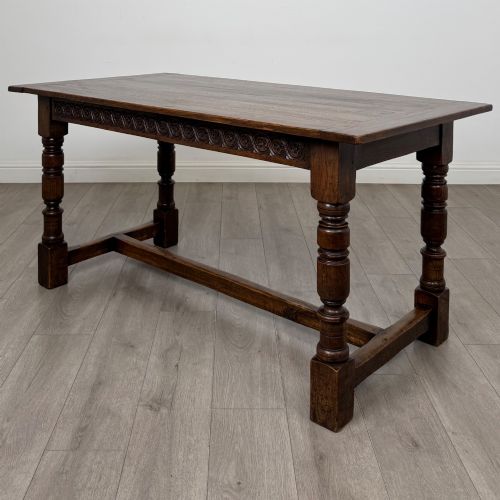
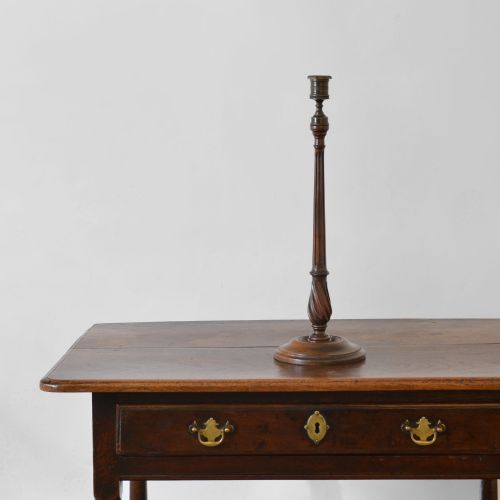
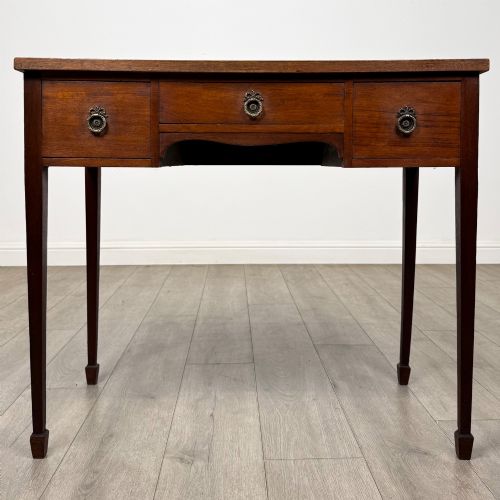

Traditional Timber Desk
A traditional timber desk is a foundational piece of antique furniture built from solid woods like mahogany, offering enduring workspace and storage.
Understanding the Forms
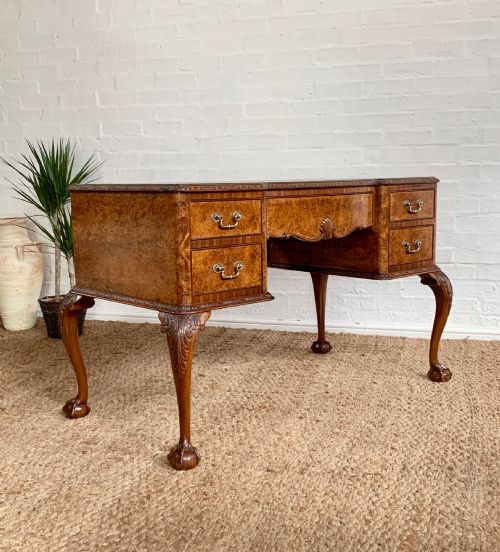
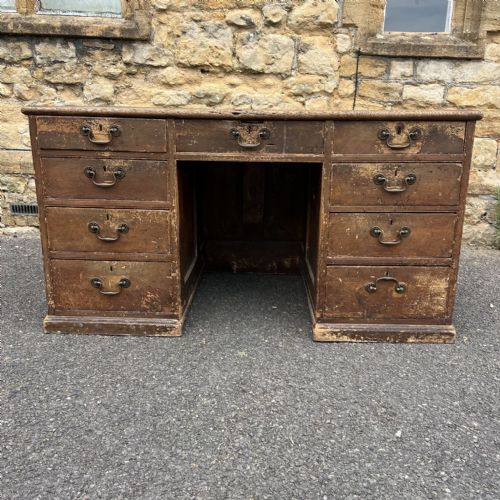
A traditional timber desk encompasses various forms such as pedestal writing desks, kneehole desks, and partners desks designed for domestic and office use. These pieces typically originate from the Georgian, Victorian, Edwardian, and 1930s eras, reflecting the cabinet-making standards of their respective times.
Buyers browsing this selection will most frequently encounter nineteenth-century mahogany pedestal desks featuring multiple drawers and inset writing surfaces. Regency and Georgian revival styles also appear, alongside Edwardian writing tables and pieces by known makers like Trollope & Sons.
The construction of a traditional timber desk prioritizes both utility and formal reception rooms or studies. Proportions range from compact writing tables to substantial nine-drawer pedestals capable of housing extensive correspondence.
Materials and Construction
Makers constructed these desks predominantly from mahogany, often utilising figured or golden varieties to enhance the visual depth of the timber. Drawer linings, secondary woods, and structural frames were selected for stability and long-term durability.
Hardware typically consists of brass handles, escutcheons, and pulls that complement the dark tones of the polished wood. Writing surfaces frequently incorporate inset leather panels, providing a suitable texture for penmanship.
Joinery methods evident in these pieces include traditional dovetailing for drawers and robust framing for pedestal cabinets. Cabinet-makers balanced structural integrity with refined exterior finishes that aged gracefully over decades of use.
Retail Price Guide 2026
Typical UK retail prices for traditional timber desk, calculated from the Sellingantiques database of over a million retail prices indexed since 2003. This retail price guide relies exclusively on Sellingantiques data; no external sources or auction records are used, so the figures do not describe the wider market.
Partners desks allowed Victorian solicitors to supervise junior clerks simply by glaring across the mahogany.
Indicators of Excellence
Quality in a traditional timber desk rests largely on the choice of timber and the fidelity of its proportions. Pieces with fine proportions and well-figured golden mahogany sit at the higher end of the range, showing careful selection of grain across primary surfaces.
The integration of hardware, such as solid brass fittings and cleanly executed drawer construction, separates standard utility pieces from finer examples. Maker attribution, as seen in stamped drawer edges or documented cabinet-work, further distinguishes exceptional pieces.
Trollope & sons
The Traditional Timber Desk Glossary
- Pedestal desk
- A freestanding desk comprising two supporting banks of drawers with a central recess for the user. These units often feature panelled sides and substantial top surfaces.
- Kneehole desk
- A compact desk featuring a central recessed space beneath the desktop, flanked by smaller drawers. This form allows the user to sit comfortably closer to the centre of the piece.
- Partners desk
- A large double-sided desk designed for two people to work opposite one another simultaneously. Drawers and cupboards are duplicated on both long sides.
- Mahogany
- A durable tropical hardwood valued for its rich reddish-brown colour and stability in furniture construction. It accepts polish exceptionally well.
Frequently Asked Questions
What is a partners desk?
A partners desk is a large double-sided writing table designed for two people to work facing each other. These pieces feature duplicate drawer arrangements on both long sides.
They were traditionally used in libraries, banks, and large estate studies where two administrators required shared access to workspace and storage.
How do I care for a mahogany desk?
Maintain mahogany surfaces by dusting regularly with a soft, dry cloth and avoiding placement near direct heat sources or strong sunlight. Timber can dry out and fade if exposed to extreme environmental shifts.
Apply traditional beeswax polish occasionally to nourish the wood and preserve the depth of the polished finish without building up heavy residue.
Are these desks suitable for daily computer work?
These desks accommodate modern technology well, provided equipment dimensions align with historical drawer clearances and desktop depths. Many users place laptops and monitors directly onto the timber or leather writing surfaces.
Care should be taken with cables and modern peripherals to protect the antique finish from unnecessary wear or accidental impact.
How can I tell a Victorian desk from a Georgian one?
Victorian desks generally exhibit heavier proportions, darker finishes, and often feature nine-drawer pedestal layouts with golden or figured mahogany veneers. Georgian pieces tend to show lighter, more restrained architectural lines and earlier joinery techniques.
Examination of secondary woods inside the drawer boxes and the style of the brass hardware helps confirm the specific period of manufacture.