
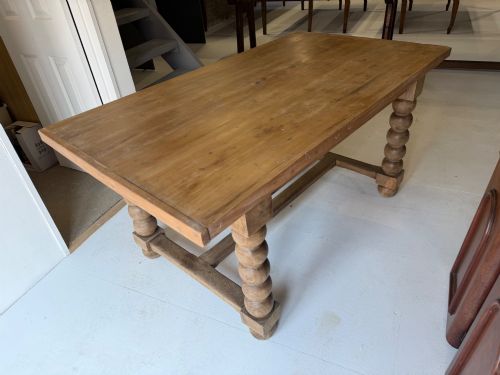
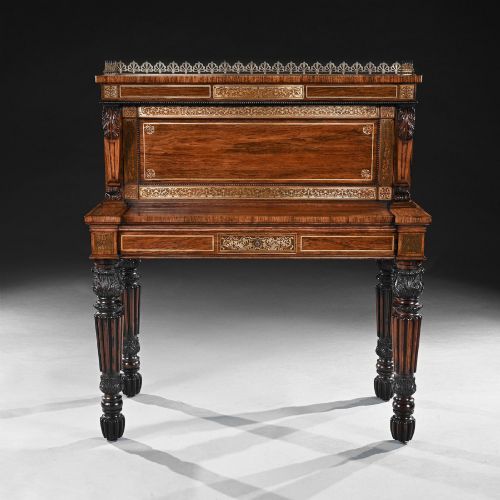
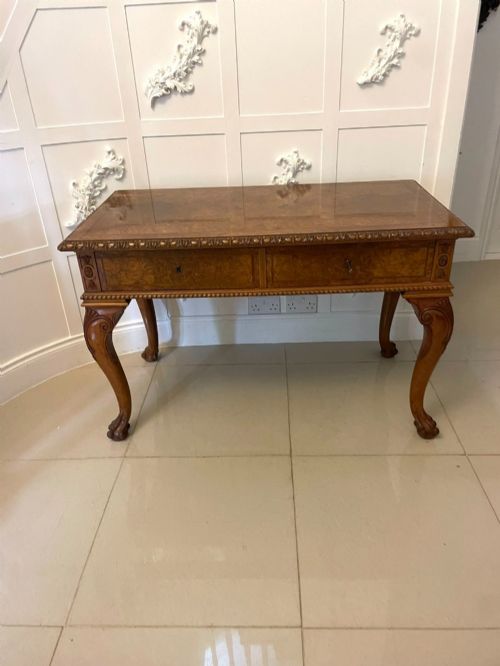
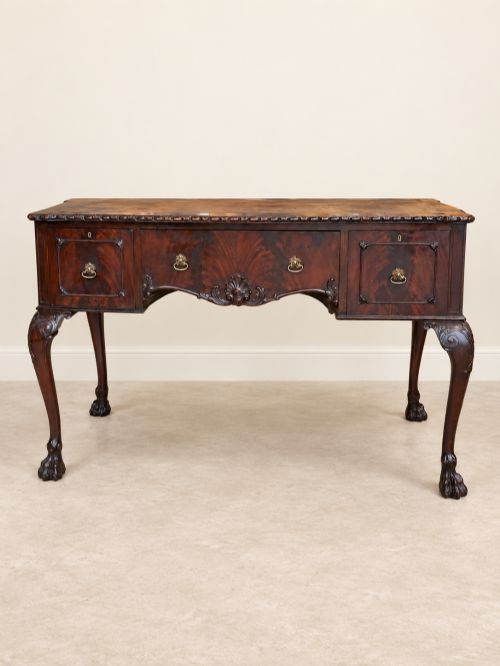

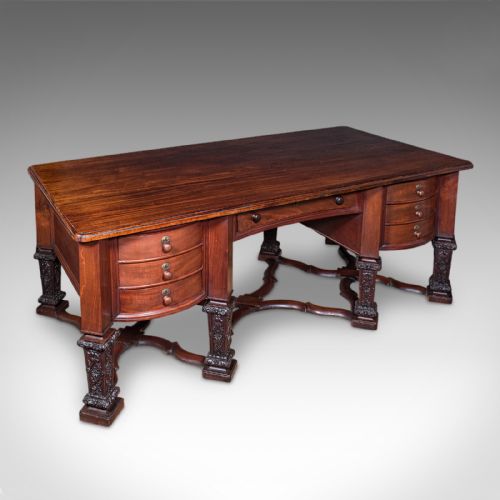
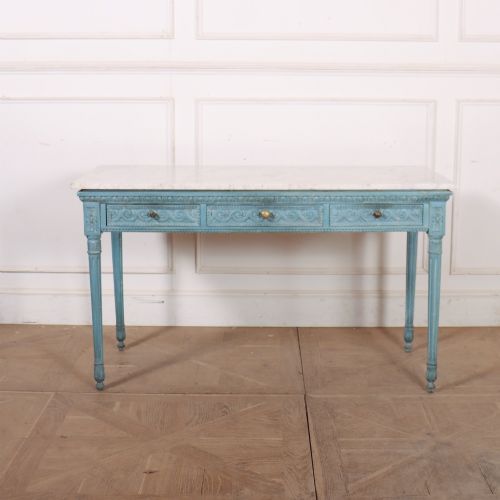
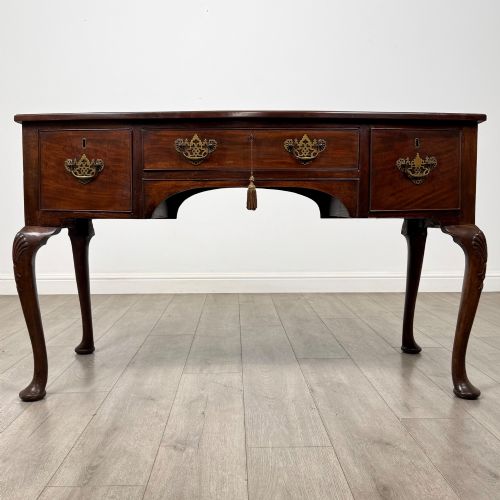
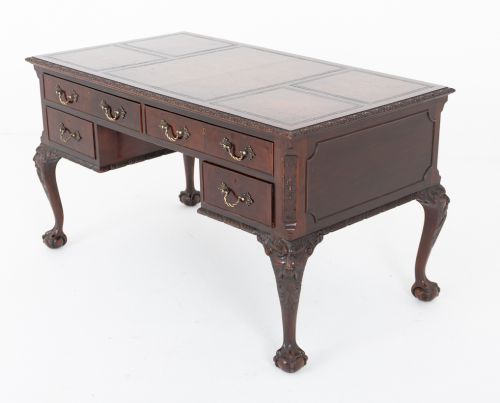
Carved Leg Writing Desk
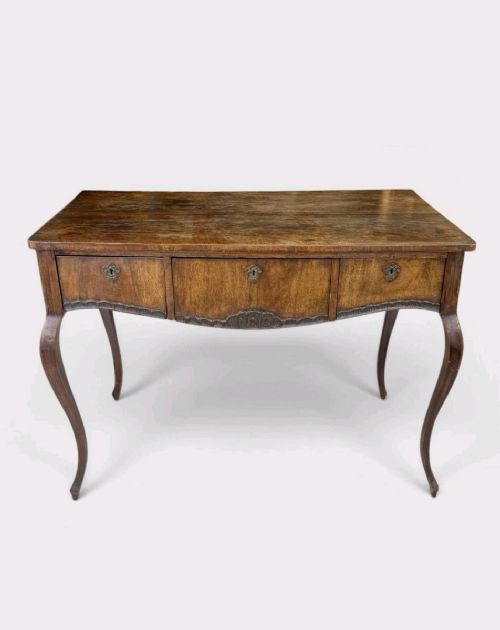
A carved leg writing desk brings sculptural timberwork and a practical writing surface together, bridging the study and the salon.
Carved Leg Writing Desk
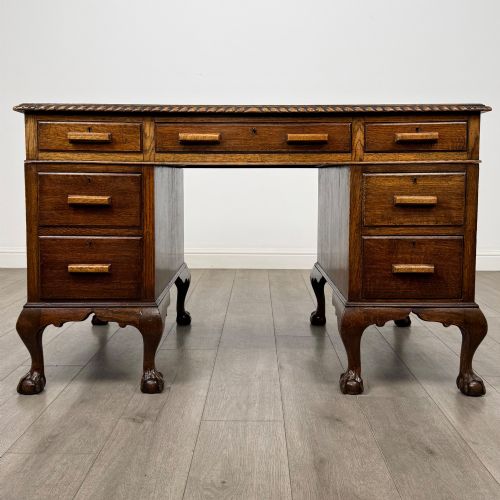
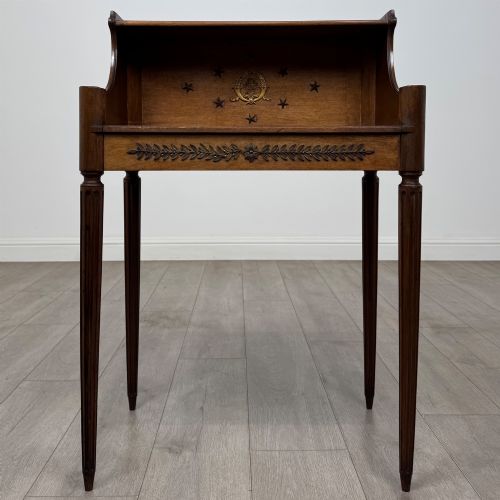
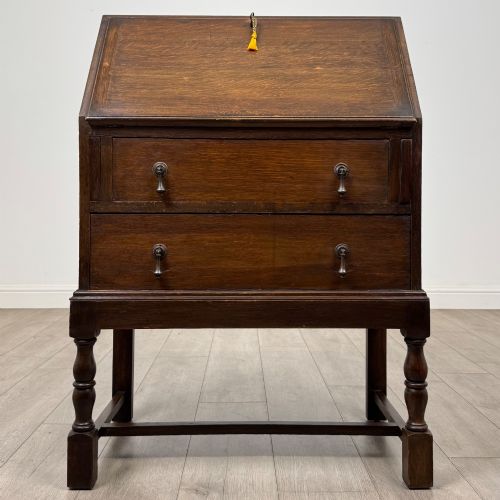
A carved leg writing desk combines domestic utility with decorative woodwork, drawing from periods such as the Georgian, Victorian, and Edwardian eras. These pieces emerge in diverse formats including pedestal desks, writing tables, library tables, and bureaux.
The Victorian and Edwardian examples dominate the selection, often rendered in walnut, mahogany, or oak. Stylistic revivals run deep through the pieces, citing Queen Anne, Chippendale, and Louis XIV aesthetics.
Lower forms such as the lowboy and side table frequently double as compact writing surfaces. Freestanding console tables and partner's desks round out the broader typology seen on the floor.
Judging the standard
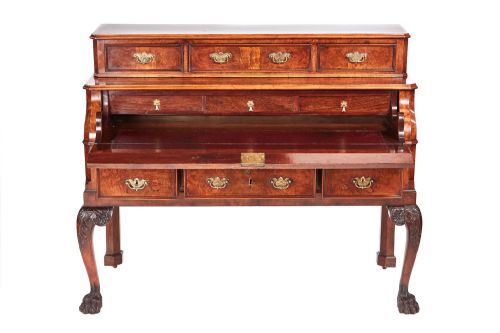
The refinement of the carving dictates much of the distinction between standard and superior pieces. Crisp detailing on wooden paws or turned members separates workshops of note from everyday production.
Timber selection drives the hierarchy of quality, moving from plain utility oaks to richly figured flame mahogany and burr walnut veneers. Integration of secondary materials, such as heavy brass inlays and quality leather surfaces, elevates the final execution.
The inventory spans the eighteenth, nineteenth, and early twentieth centuries, featuring desks and tables in oak, mahogany, walnut, and rosewood.
Gillows Oxford Street Workshop·Wylie & Lochhead Glasgow·James Mein of Kelso
The Carved Leg Writing Desk Glossary
- Lowboy
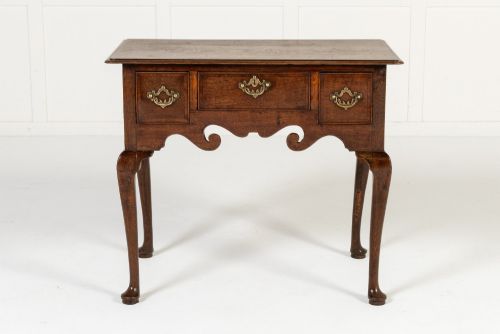
- A small oak or walnut table with drawers, often standing on tall cabriole or carved legs. This form predates the standard pedestal desk and served various domestic writing or dressing purposes.
- Bureau
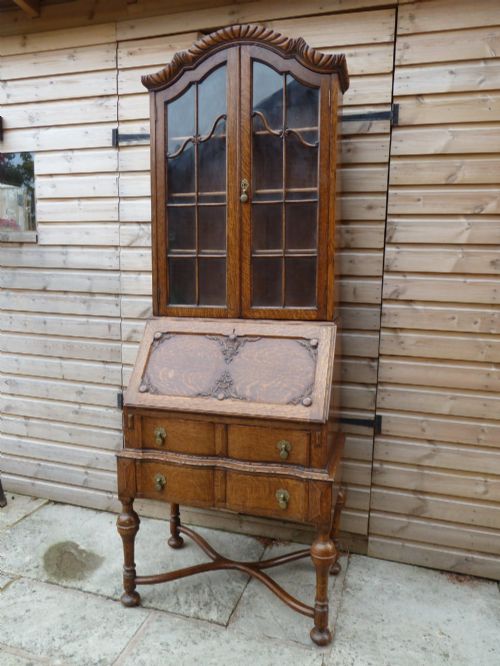
- A desk featuring a sloping fall-front that opens to reveal internal compartments and pigeonholes. These items frequently incorporate structured drawer arrangements below the writing flap.
- Partners desk
- A large double-sided desk designed for two people to work opposite one another. These substantial tables usually feature banks of drawers on both sides.
- Pedestal desk
- A form comprising a top writing surface supported by two independent banks of drawers. They often incorporate inset leather writing panels.
- Console table
- A table designed to stand against a wall, sometimes adapted for writing or display purposes. Many examples exhibit prominent carving along the front legs and apron.
Carved Leg Writing Desk: Frequently Asked Questions
How do I date a carved leg writing desk?
Examine the primary timber, hardware, and structural joinery to gauge the period of construction. Stylistic revivals often mimic earlier Georgian or Queen Anne forms while retaining later Victorian or Edwardian manufacturing traits.
Compare the secondary woods inside the drawer boxes and the wear patterns on the writing surface against known historical eras. The presence of specific revival markers often points towards late nineteenth or early twentieth-century production.
What is the difference between a writing table and a pedestal desk?
A writing table typically stands on four legs with one or more shallow drawers built into the frieze beneath the top. It offers an open, lighter silhouette within a room.
A pedestal desk rests on two substantial columns of drawers rather than open legs, providing considerably more enclosed storage capacity. This heavier format suits larger studies and partner configurations.
How were lowboys used historically?
Lowboys served flexible roles in domestic interiors as compact dressing tables, side tables, or writing desks. Their modest proportions allowed them to sit comfortably in bedrooms and smaller parlours.
The single row of drawers provided storage for papers, inkwells, or personal items while keeping the footprint small.
Are partner's desks double-sided?
Yes, partner's desks feature working drawers and cupboards accessible from both the front and the back. This mirrored layout allowed two individuals to sit face-to-face and work simultaneously.
They represent some of the largest freestanding writing furniture produced during the nineteenth century.