

Blonde Wood Desk
A blonde wood desk brings pale, figured timber and clean grain into a room, offering a bright surface for writing.

Blonde Wood Desk
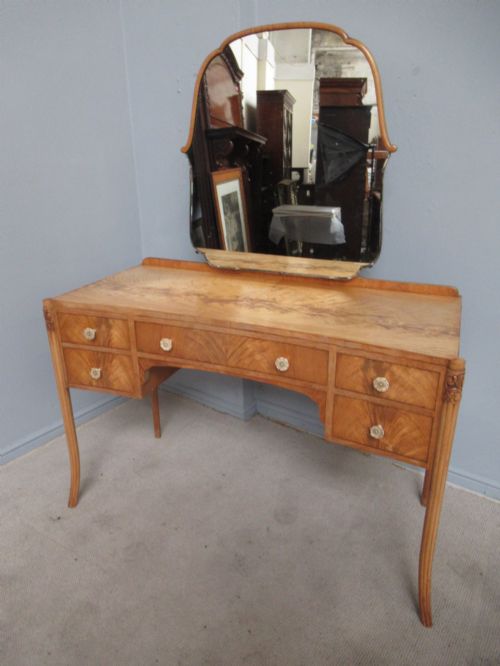
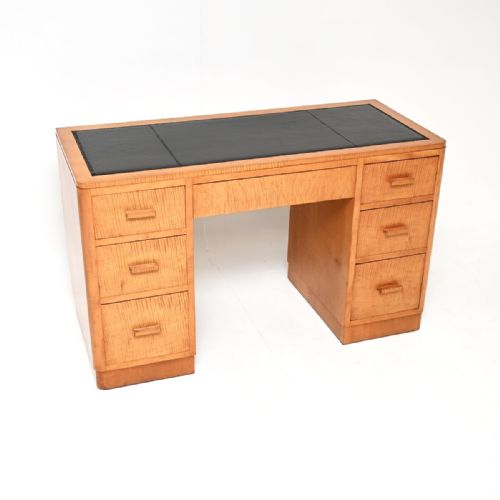
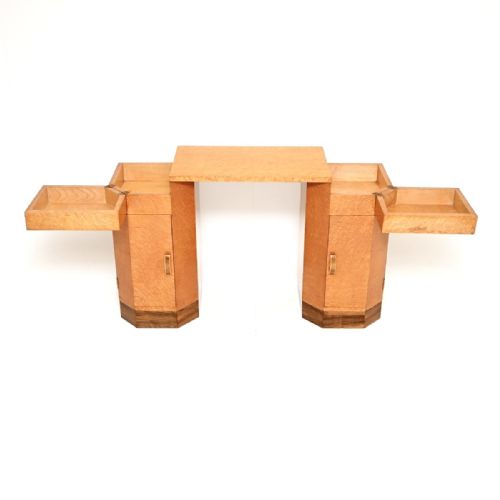
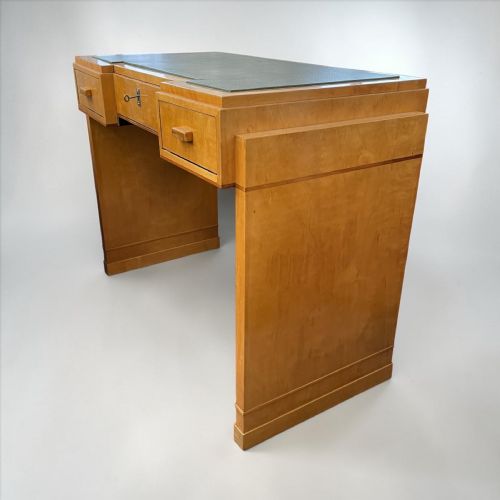
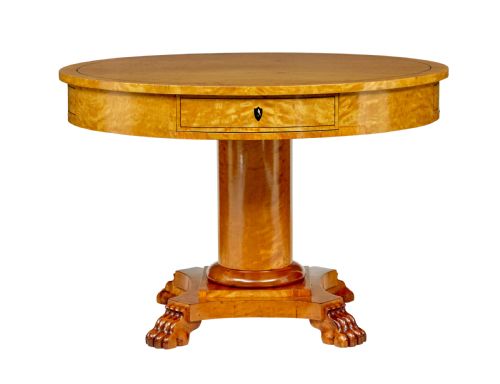
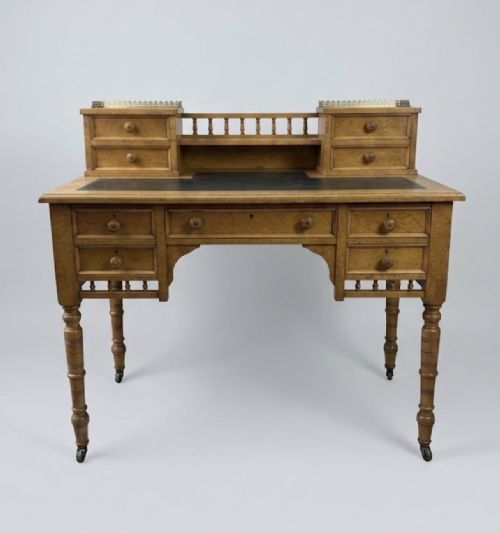
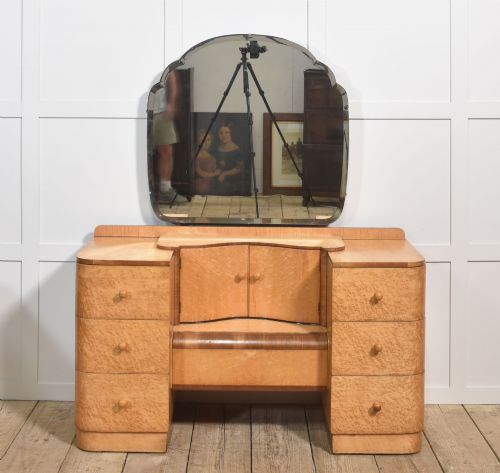
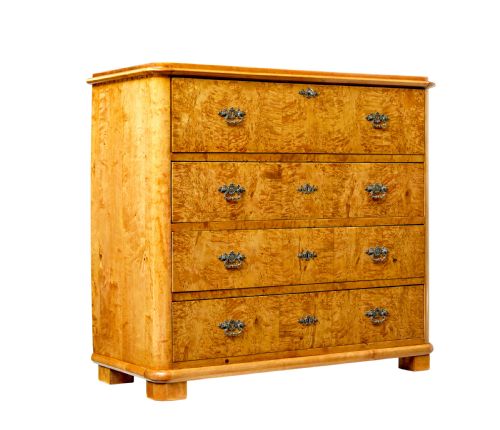
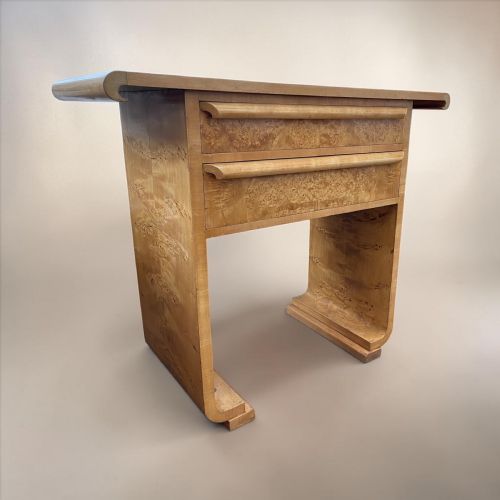
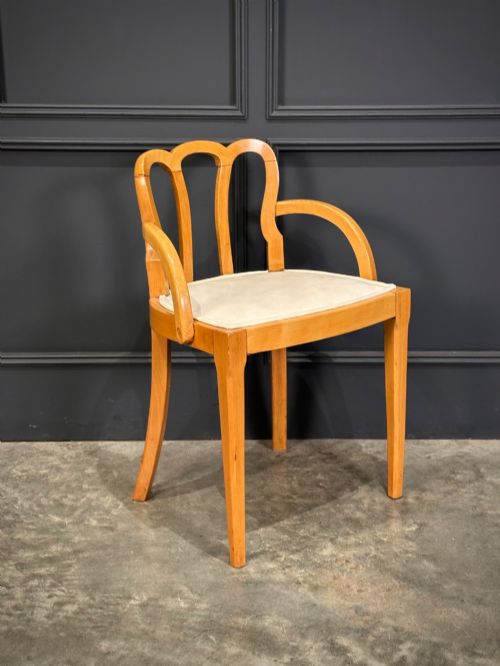
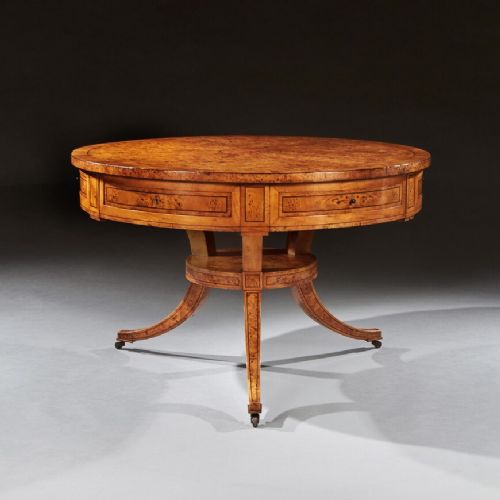
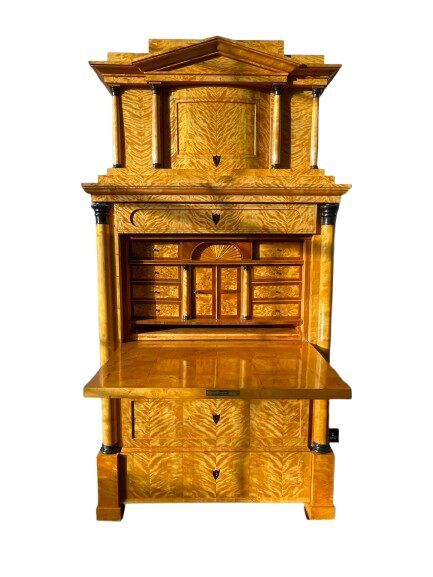
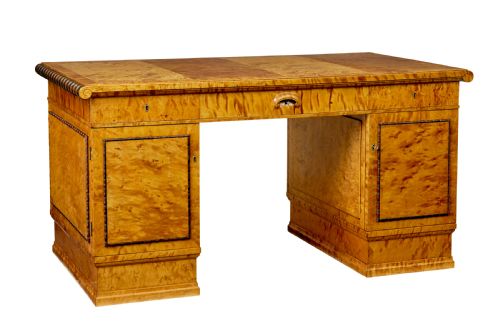
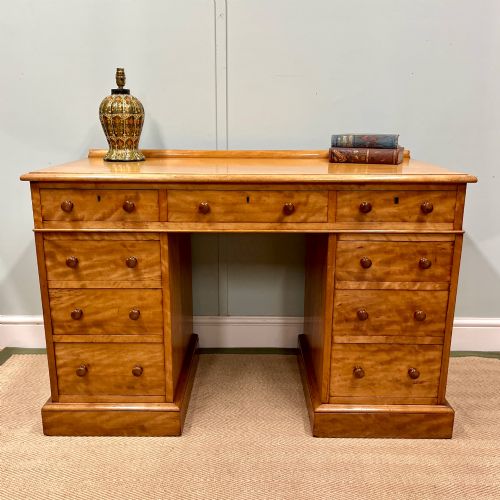
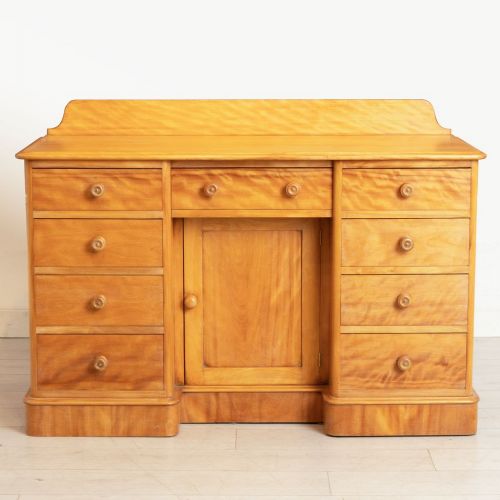
When you search for a blonde wood desk, you encounter pieces spanning from the nineteenth century into the nineteen-thirties, utilising pale timbers like satin birch, maple, and sycamore. The selection ranges from Victorian kneehole desks to streamlined Art Deco pedestal desks and Scandinavian pieces.
The most common formats on this page are pedestal desks, writing tables, and dressing tables that function equally well for writing. These items draw on styles such as Biedermeier, Art Deco, and Victorian cabinet-making traditions.
Nineteenth-century examples frequently showcase figured veneers like birdseye maple or burr birch, while later twentieth-century iterations lean towards the geometric simplicity of the Art Deco period. Origins stretch across Britain, France, and Scandinavia, reflecting regional preferences for lighter woods.
Materials and Construction
Cabinet-makers constructed these pieces using solid timbers and carefully selected veneers applied to secondary woods, bringing out the natural figure of satin birch, maple, and ash. Brass fittings, leather inserts, and glass elements appear as secondary materials on working surfaces and hardware.
Joinery methods include dovetail construction for drawer boxes and structural framing for pedestals and superstructures, ensuring stability for daily use. Surfaces received polishes and finishes that protect the pale wood while highlighting the grain patterns.
Blonde Wood Desk Retail Price Guide 2026
Typical asking prices for blonde wood desk among the pieces listed under this phrase on Sellingantiques today, from the lower quarter to the upper quarter. They describe what is for sale here now, not the wider market.
Listings feature blonde wood desks and tables in birch, maple, and ash from Victorian and Art Deco periods.
Assessing the Pieces
The degree of figuration in the timber and the precision of the veneer matching across drawer fronts and tops set the standard for visual appeal. Desks with intact leather writing inserts and original brass hardware retain higher integrity than those with later replacements.
Structural joinery, drawer movement, and the preservation of the original surface finish distinguish standard utilitarian pieces from those produced by notable makers and workshops.
Fortnum and Mason·Heal and Son·Harry and Lou Epstein·Hille·John Taylor of Edinburgh·Betty Joel
The Blonde Wood Desk Glossary
- Pedestal desk
- A freestanding desk comprising two supporting pedestals of drawers with a central writing surface. This form provides substantial storage underneath while maintaining a finished back.
- Kneehole desk
- A compact desk featuring a central recessed space for the legs, flanked by banks of drawers. It typically sits flush against a wall or in the centre of a room.
- Birdseye maple
- A figured timber showing small, swirling eyes caused by depressions in the growing annual rings. Cabinet-makers prized this veneer for its decorative surface pattern.
- Satin birch
- A light-coloured timber with a silky sheen and subtle grain variation. It served as a primary material in Scandinavian and Victorian furniture.
- Secretaire
- A cabinet or desk incorporating a drop-front writing flap that conceals small drawers and pigeonholes. It combines cabinet storage with a fold-down writing surface.
Blonde Wood Desk: Frequently Asked Questions
What is a blonde wood desk?
A blonde wood desk is a writing surface constructed from pale timbers such as birch, maple, ash, or sycamore. These pieces appear in finishes and grains that maintain a light, natural tone.
They span periods from the mid-nineteenth century through the Art Deco era of the nineteen-thirties, encompassing British, French, and Scandinavian designs.
How do I date a satin birch desk?
Dating involves examining the construction methods, drawer dovetails, and stylistic markers of the period. Victorian examples often feature turned legs and brass pulls, while nineteen-thirties pieces tend toward geometric Art Deco lines.
Secondary woods and hardware styles also provide clues to the decade of manufacture.
Are these desks suitable for daily work?
Most antique writing tables and pedestal desks offer sturdy construction and functional drawer space for modern writing and computer work. Their surface heights and kneehole clearances generally accommodate standard seating.
Care should be taken with vintage leather inserts and polished wooden surfaces to protect them from daily wear.
What is Biedermeier style?
Biedermeier is a Central European style from the nineteenth century emphasising clean lines, minimal ornamentation, and the natural beauty of blonde veneers like birch and ash. It prioritises domestic comfort and utility.
Pieces from this tradition integrate smoothly into contemporary interiors due to their restrained geometric forms.