



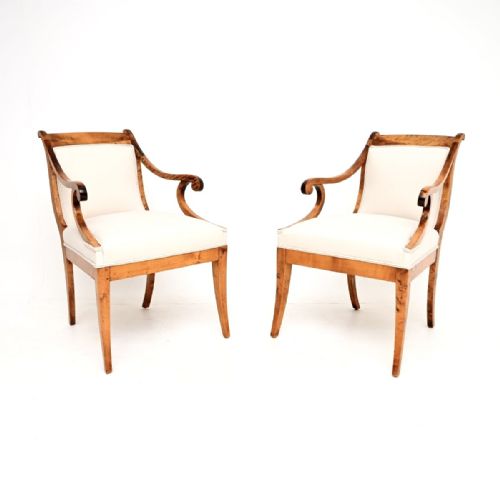
Satin Birch Furniture
Satin birch furniture brings a pale, figured timber to desks, chests and seating from the nineteenth and twentieth centuries.
Satin Birch Furniture
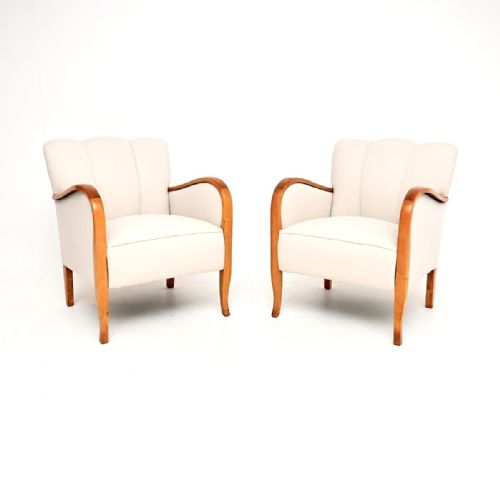
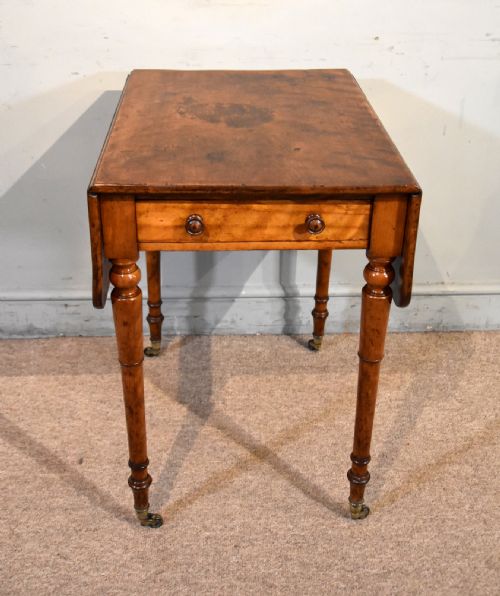
Satin birch furniture encompasses nineteenth-century Victorian pieces and twentieth-century Scandinavian designs. Buyers encounter chests of drawers, writing desks, bedside tables and armchairs finished in this pale timber.
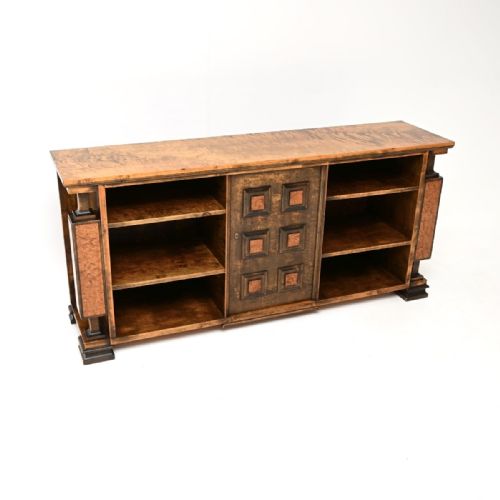
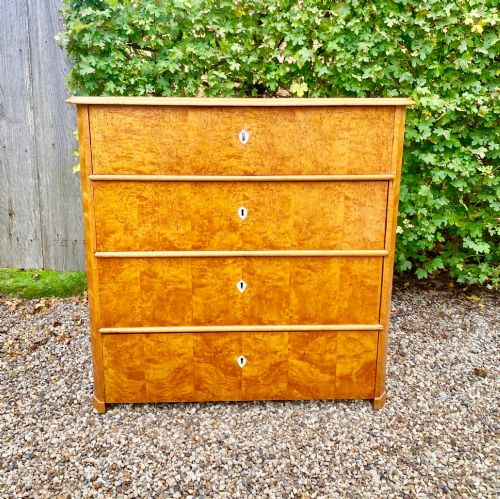
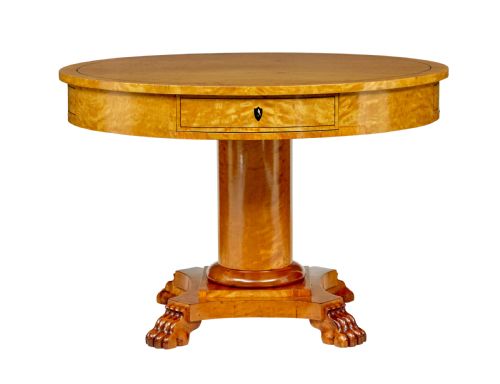
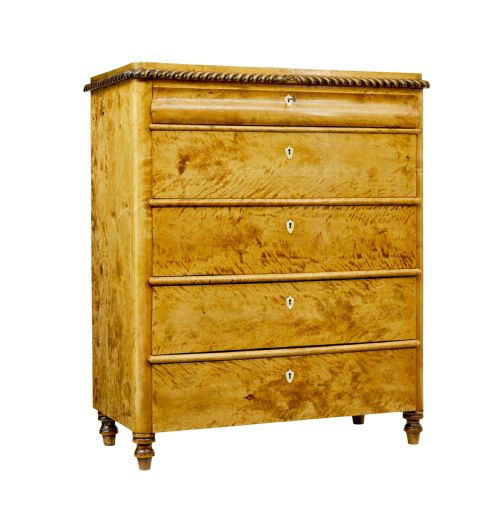
Nineteenth-century British examples appear alongside Swedish Biedermeier and Art Deco forms. Chests of drawers and writing tables form the core of the available domestic items.
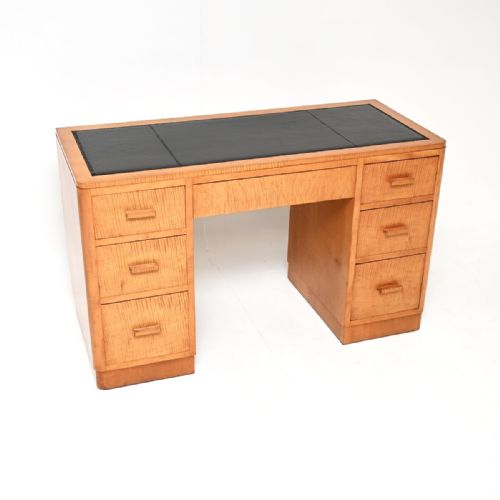
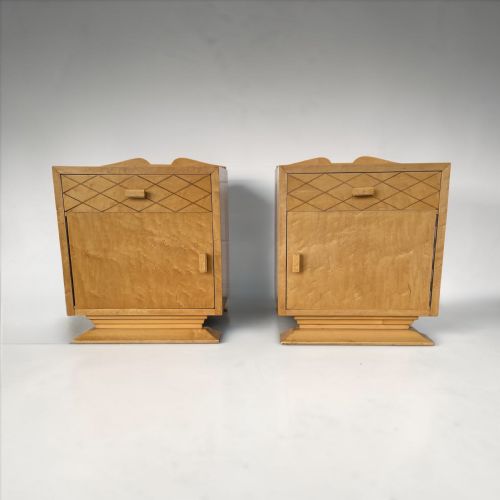
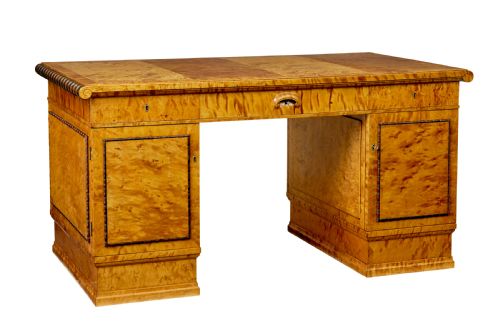
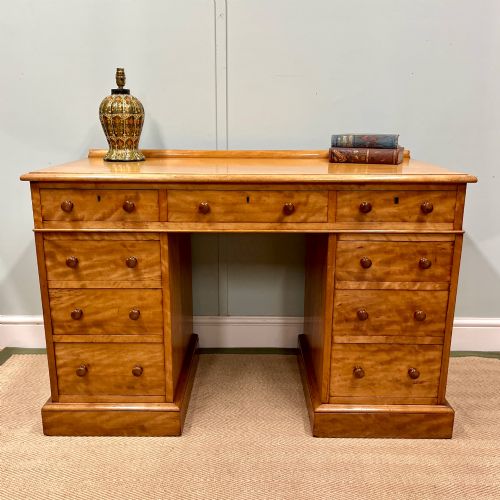
Makers utilised the distinctive grain for both compact bedside cabinets and larger pedestal desks. The timber lends itself to clean lines in Swedish design and traditional proportions in Victorian workshop pieces.
Materials and construction methods
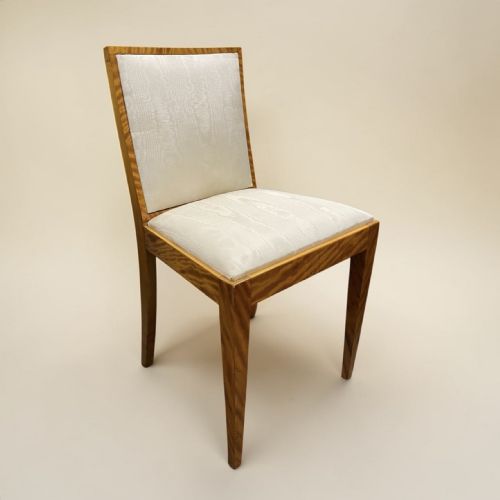
Cabinet makers applied figured birch veneers over pine or secondary timbers to achieve smooth, patterned surfaces on drawer fronts and tabletops. Solid birch formed structural elements, legs and frames for seating.
Workshops incorporated brass hardware, leather writing inserts and marble tops into desks and cabinets. Glass panels appeared in bookcases and display shelves.
Joinery techniques combined traditional framing with veneered panels, allowing makers to showcase the natural figure of the wood across large flat surfaces like cupboard doors and chest drawers.
Listings feature pieces spanning the nineteenth century through the Art Deco period, incorporating brass, leather and marble.
Distinctions in quality
Quality rests in the choice and matching of the birch grain across prominent surfaces. Finer pieces display a uniform, chatoyant figure that catches the light evenly.
The precision of the cabinet work, particularly around drawer dovetails and the integration of secondary woods like pine, separates standard workshop production from finer maker-attributed pieces.
Bath Cabinet Makers·Johnstone and Jeanes·Heal and Son·J Shoolbred·Howard and Sons·Sandberg and Co
The Satin Birch Furniture Glossary
- Satin birch
- A timber derived from the birch tree featuring a lustrous, rippled grain pattern. It was favoured by nineteenth and twentieth-century cabinet makers for its pale, golden tone.
- Biedermeier
- A central European design style spanning the nineteenth century characterised by utilitarian comfort and clean geometric forms. It often highlights native timbers such as birch without excessive ornamentation.
- Pedestal desk
- A freestanding writing table supported by two pillars of drawers. These pieces frequently feature leather-insets on the writing surface.
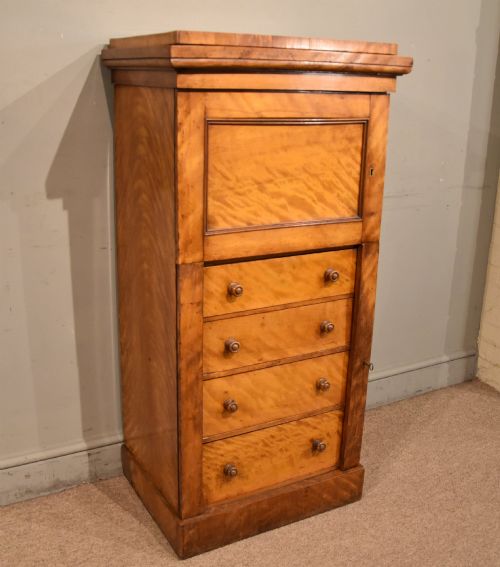
- Wellington chest
- A tall, narrow chest of drawers secured by a hinged locking stile on one side. This form gained popularity in the nineteenth century for efficient storage.
Satin Birch Furniture: Frequently Asked Questions
How do I clean satin birch furniture?
Dust surfaces regularly with a soft, dry cloth to prevent accumulation of grit.
Avoid chemical polishes and keep pieces away from direct heat sources to protect the wood and veneer.
Are these pieces English or Swedish?
The selection includes both British Victorian examples and Scandinavian pieces from the nineteenth and twentieth centuries.
Swedish workshops frequently utilised birch for Biedermeier and Art Deco forms, while British makers produced Victorian desks and chests.
What is the difference between solid birch and veneer?
Solid birch consists of timber milled directly from the tree, used for structural frames, legs and mouldings.
Veneer involves thin slices of figured wood applied over a secondary timber like pine to create decorative patterned surfaces.
How do I date a satin birch desk?
Examine the construction methods, secondary woods and hardware styles to determine the period.
Nineteenth-century examples show traditional dovetailing and Victorian proportions, whereas twentieth-century pieces align with Art Deco and Swedish design movements.