
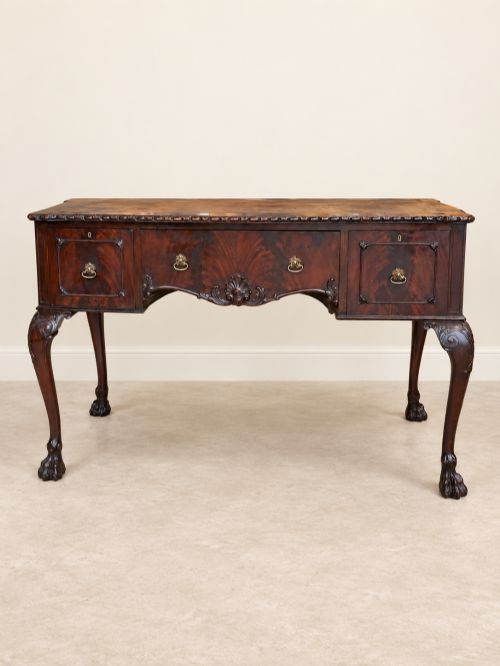
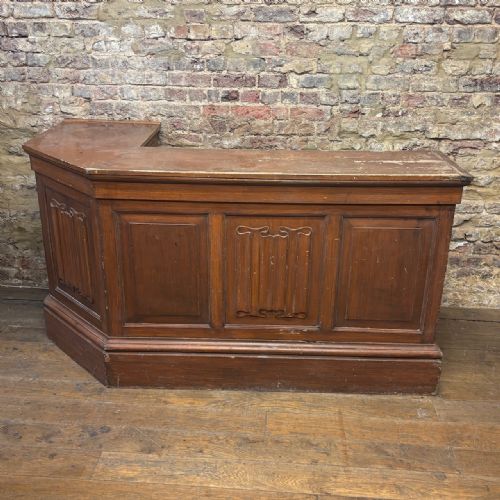
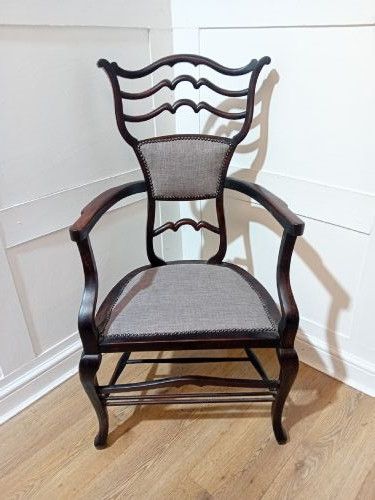
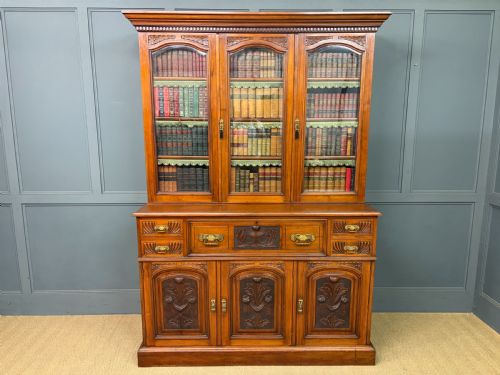


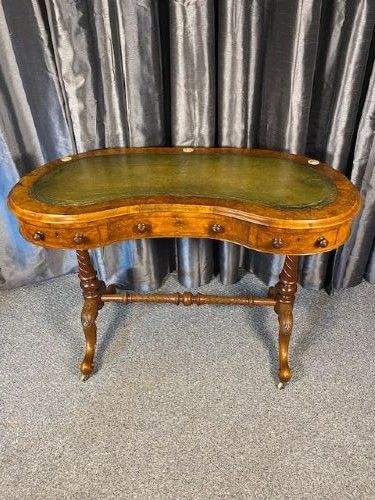
Edwardian Carved Desk
An Edwardian carved desk brings refined Edwardian craftsmanship to your study, offering both period character and practical workspace.
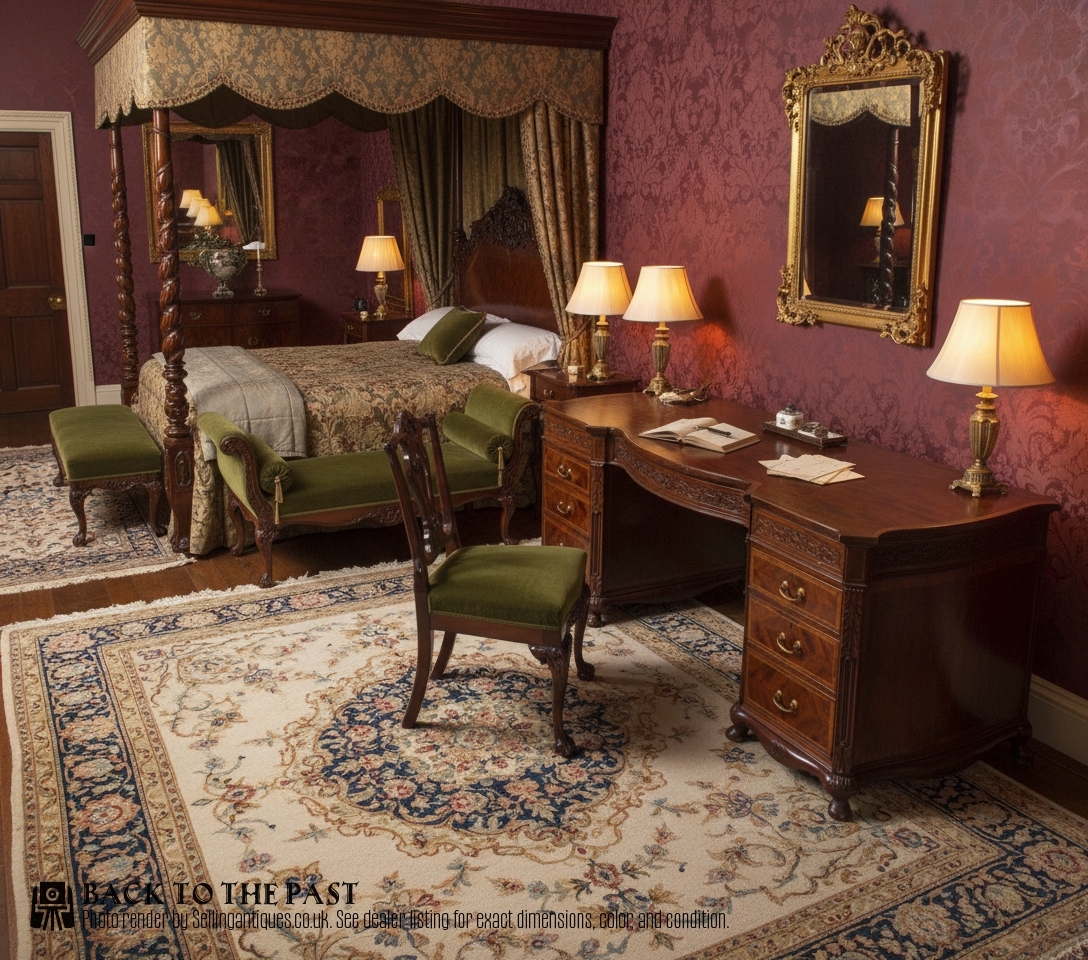
Edwardian Carved Desks
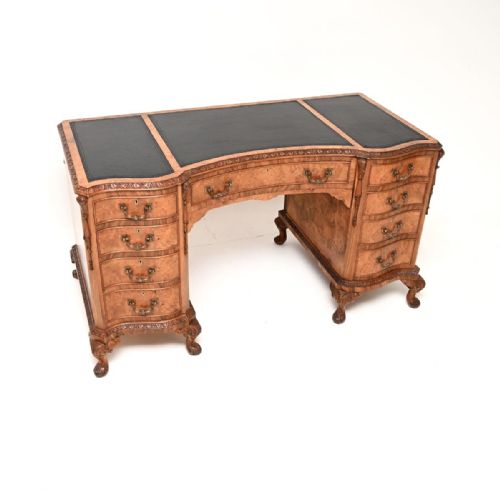
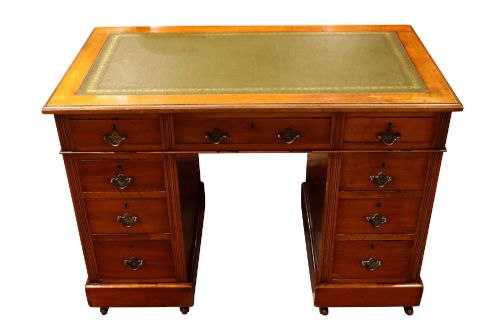
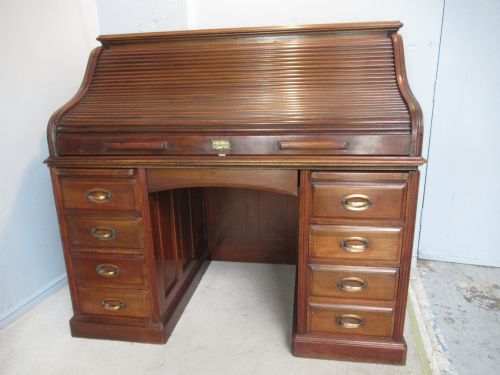
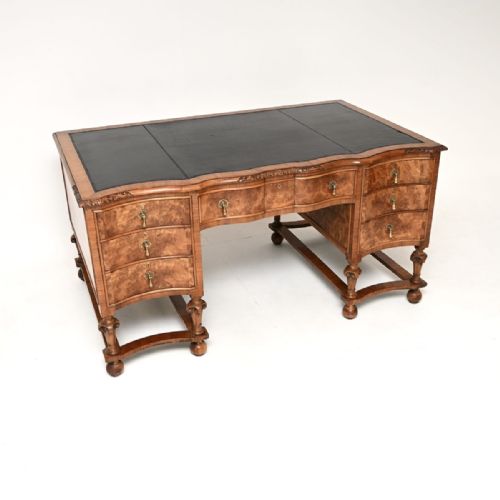
An Edwardian carved desk encompasses freestanding kidney shapes, serpentine fronts, kneehole pedestals, writing bureaus, and davenport desks. These pieces span the Edwardian period, 1900, and 1890, reflecting the transition from late Victorian tastes into early twentieth-century elegance.
The version you are most likely to meet on this page is an Edwardian oak kneehole pedestal desk or a mahogany writing table. These forms serve everyday study needs while displaying period carved details.
Makers and craftsmen of this era adapted earlier aesthetics, producing items in Edwardian, Tudor Revival, Chippendale Revival, and Victorian styles. Each form demonstrates the enduring appeal of traditional desk architecture.

Materials and Construction
The pieces on record utilise solid mahogany and oak, paired with brass hardware and leather writing surfaces. Workshops built these desks using traditional joinery alongside detailed surface carving.
Cabinet makers shaped timber into serpentine fronts and kidney contours, applying carved ornamentation to drawers, pedestals, and panels. Selected examples incorporate fitted interiors for writing equipment.
Retail Price Guide 2026
Typical UK retail prices for edwardian carved desk, calculated from the Sellingantiques database of over a million retail prices indexed since 2003. This retail price guide relies exclusively on Sellingantiques data; no external sources or auction records are used, so the figures do not describe the wider market.
Every kneehole desk conceals a secret space where knees meet wood.
Judging Quality
Quality rests on the depth and crispness of the carving, the selection of timber figures in the mahogany or oak, and the integration of secondary materials like brass and leather. Desks with free-standing kidney shapes or serpentine fronts generally demonstrate more ambitious carpentry than standard rectangular forms.
The distinction between standard utilitarian desks and finer examples lies in the proportion of the proportions, the symmetry of the kneehole configuration, and the retention of original hardware and writing surfaces.
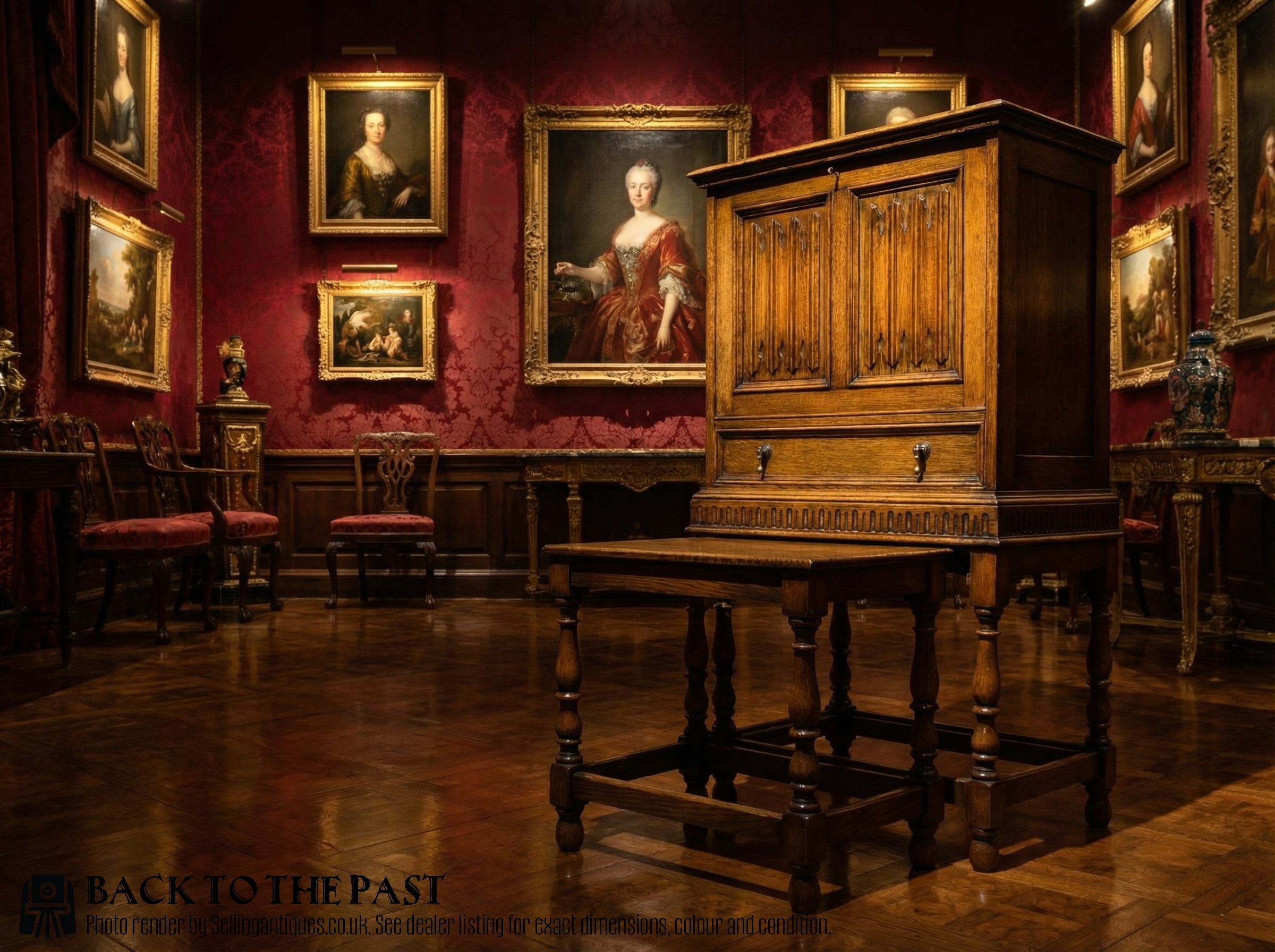
The Edwardian Carved Desk Glossary
- Kidney shaped desk
- A writing table with a curved, kidney-like top designed to fit the user. This free-standing form allows placement away from walls.
- Kneehole desk
- A pedestal desk featuring a central recess for the legs beneath the writing surface. This configuration typically includes banks of drawers on either side.
- Serpentine front
- A furniture front characterised by a concave central section flanked by two convex curves. It requires precise woodworking to achieve the undulating profile.
- Writing bureau
- A desk featuring a sloping fall-front that opens to reveal internal pigeonholes and small drawers. These pieces combine storage with a compact writing surface.
- Davenport desk
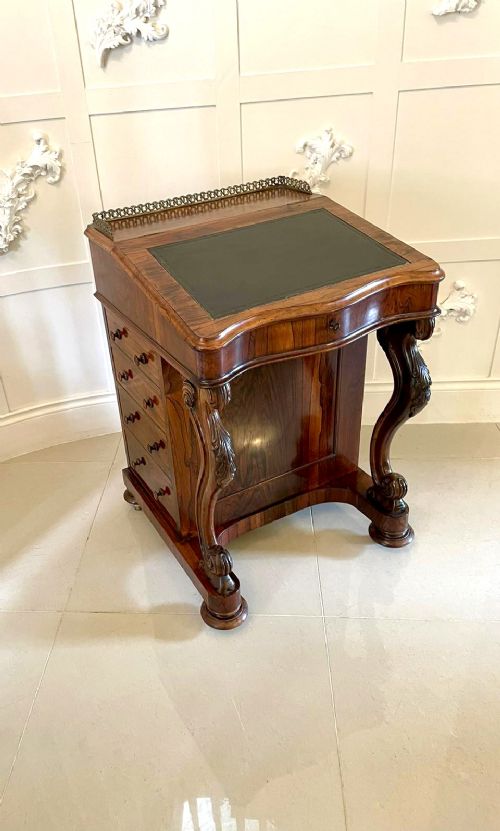
- A small compact writing desk with a sloped top and drawers accessed from the side. They often incorporate decorative carving on the supports.
Frequently Asked Questions
How were these desks used?
These desks served as functional writing surfaces for correspondence, bookkeeping, and household administration. Bureau models concealed stationery within internal compartments behind a sloping fall-front.
Pedestal and kidney-shaped variants provided ample surface area for ledgers and writing implements, often positioned centrally in a room or against a wall.
How do I live with an Edwardian desk?
Living with an Edwardian carved desk involves placing it in a study or living space where its timber grain and carved details can be appreciated. Regular dusting and conditioning of the mahogany or oak preserve the finish.
Protecting leather writing surfaces from direct sunlight and moisture helps maintain the condition of the materials over time.
How do I tell periods and styles apart?
Distinguishing periods and styles relies on identifying characteristic construction details, wood types, and decorative motifs. Pieces from 1890 often retain late Victorian heaviness, while Edwardian examples tend toward lighter proportions.
Revival styles incorporate historical motifs like Tudor linenfold or Chippendale fretwork, contrasting with simpler Edwardian forms.