





Edwardian Vanity Table
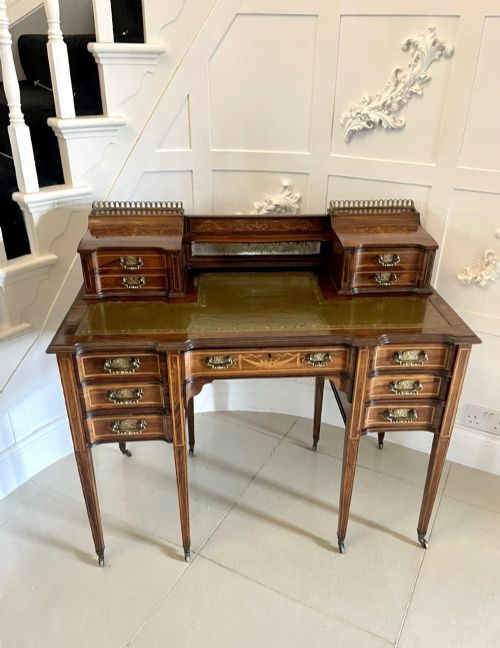
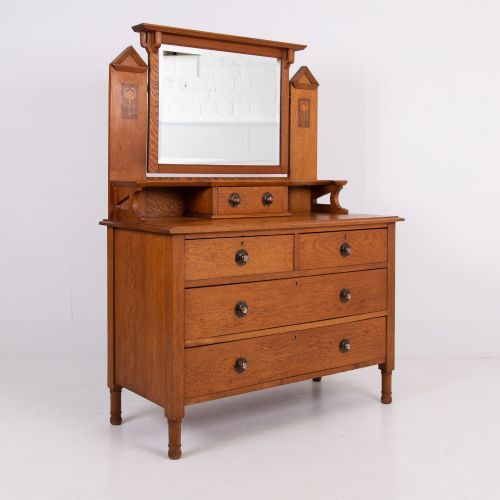
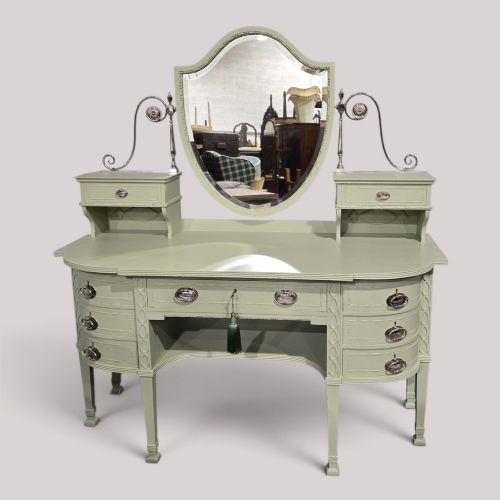
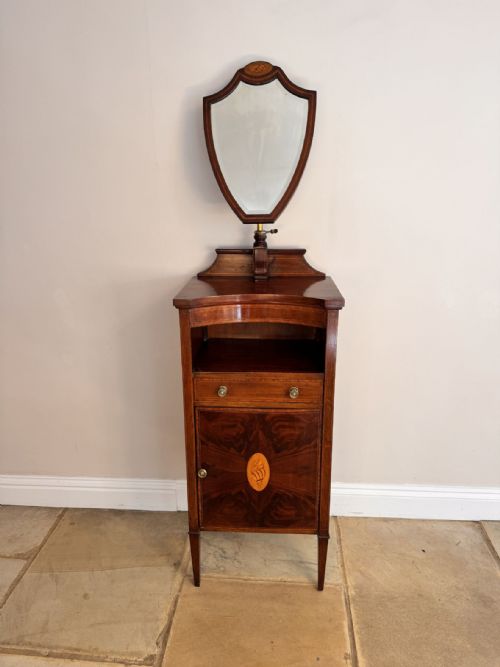
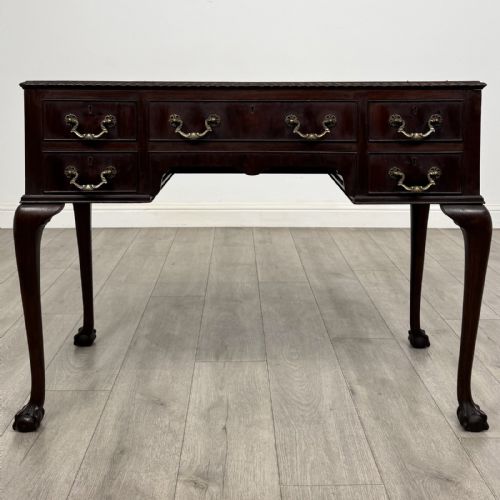
An edwardian vanity table combines practical mirror work with fitted timber storage, giving a bedroom both period presence and functional daily service.
Edwardian Vanity Table
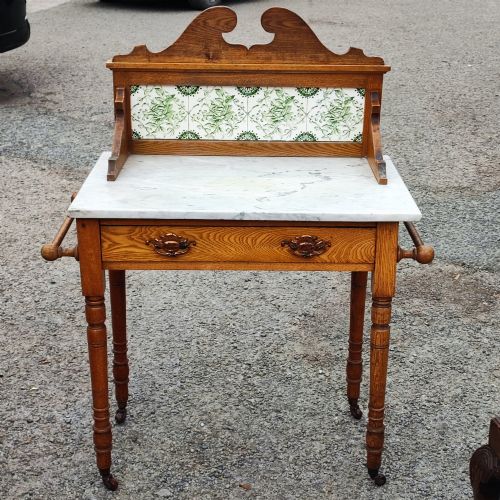
An edwardian vanity table encompasses dressing pieces, writing combinations, and mirrored chests designed for personal grooming during the early twentieth century.
The selections here frequently draw on mahogany, satinwood, oak, and walnut, appearing alongside associated dressing table mirrors and matching stools.
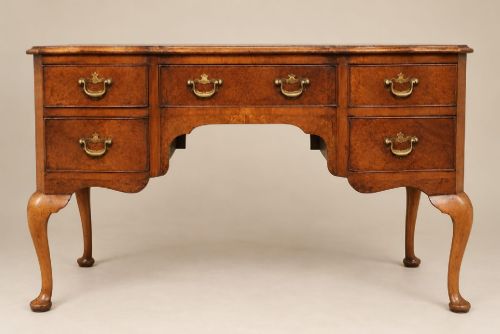
Makers of the period adapted Georgian and Victorian forms, resulting in pieces with clean proportions, kneehole arrangements, and integrated triple mirrors.
How they were made
Cabinet makers utilised solid timbers alongside figured veneers such as burr walnut and satinwood, applying traditional joinery methods to frame drawers and supports.
Surface finishing relied on hand-polished shellac or oil to bring out the natural grain of the wood without heavy artificial staining.
Associated fittings incorporated cast brass handles, bevelled mirror glass, and structural elements shaped with cabriole legs or square tapered supports.
Edwardian Vanity Table Retail Price Guide 2026
Typical asking prices for edwardian vanity table among the pieces listed under this phrase on Sellingantiques today, from the lower quarter to the upper quarter. They describe what is for sale here now, not the wider market.
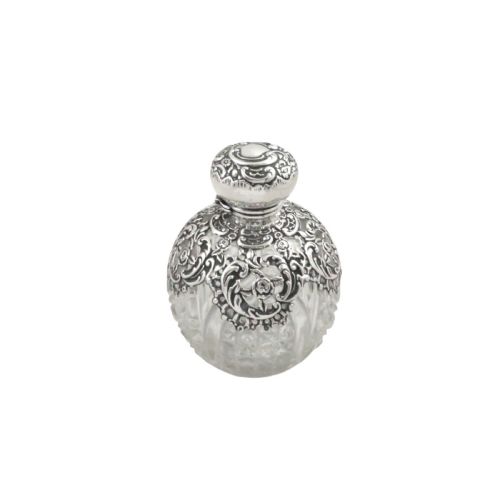
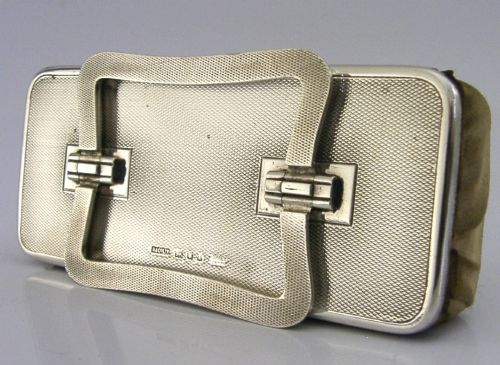
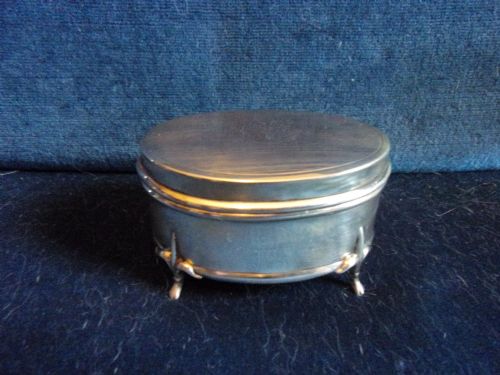
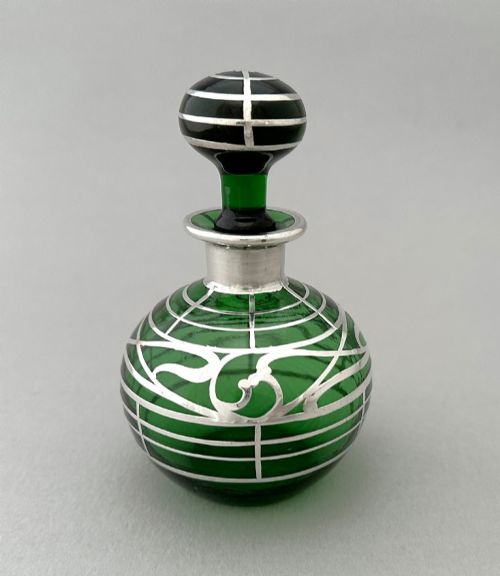
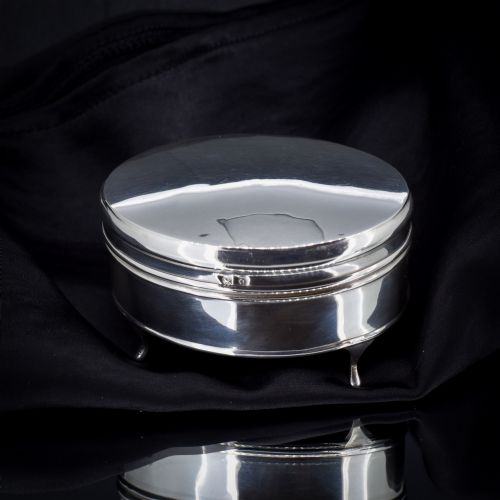
Several items include travelling cologne bottle trios and solid silver button hooks, showing Edwardian grooming involved serious transportable equipment.
What varies in quality
The refinement of a piece depends on the choice of timber and the precision of the veneer matching across drawer fronts and top surfaces.
Superior examples exhibit original bevelled mirror plates, intact brass hardware, and secondary framing timbers of equal grade to the primary show wood.
Heal and Son·Maples of London and Paris·Wylie and Lochhead Glasgow·Ray and Miles·Henry Clifford Davis·Ollivant and Botsford·A Bromet and Co
The Edwardian Vanity Table Glossary
- Satinwood
- A pale, hard timber with a natural sheen, frequently utilised for fine inlay and decorative banding on late nineteenth and early twentieth century furniture.
- Cabriole leg
- A furniture leg that curves outward in an arc and tapers inward toward a pad or claw foot, drawing inspiration from classical design.
- Kneehole
- A recessed central space beneath a desk or dressing table top, flanked by banks of small drawers for storage.
- Bevelled mirror
- A mirror plate with edges cut and polished at an angle, catching the light and adding depth to the reflection.
- Guilloché
- A decorative engine-turned engraving technique creating intricate, repetitive geometric patterns often found beneath transparent enamel on silver accessories.
Edwardian Vanity Table: Frequently Asked Questions
How do I identify an authentic Edwardian piece?
Look for construction traits typical of the era, such as oak drawer linings paired with mahogany or walnut primary timbers, alongside lighter proportions than heavy Victorian furniture.
Hardware styles, dovetail construction quality, and registration marks on associated silver or glass elements help confirm the period.
Can I replace a missing mirror?
Replacing a lost mirror requires matching the timber frame style, whether satinwood, oak, or mahogany, and sourcing appropriate vintage bevelled glass.
Many tables were designed to accept adjustable or swinging mirror superstructures secured with brass pivot screws.
How should I care for the wood finish?
Maintain timber surfaces by dusting with a dry, soft cloth and applying a quality beeswax periodically to nourish the grain without building up a sticky residue.
Keep these tables away from direct sunlight and radiators to prevent the wood veneers from drying out or splitting.
Were these tables used only for grooming?
Many examples served a dual purpose as writing desks or bureau tables, incorporating shallow drawers for stationery alongside cosmetic storage.
This versatility made them practical additions to smaller bedrooms and dressing rooms of the period.