
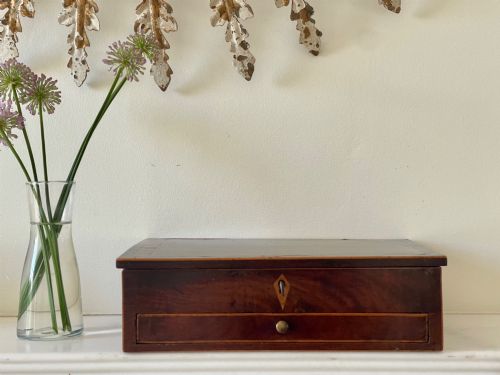
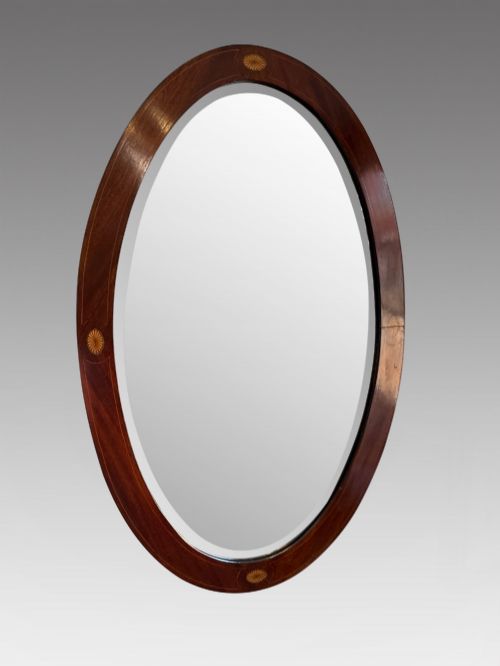
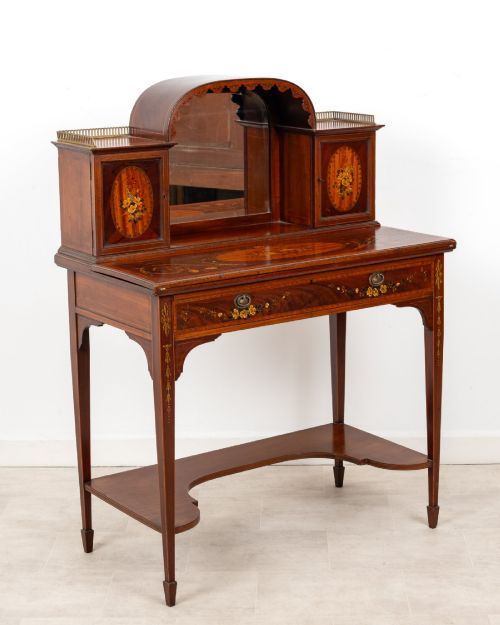
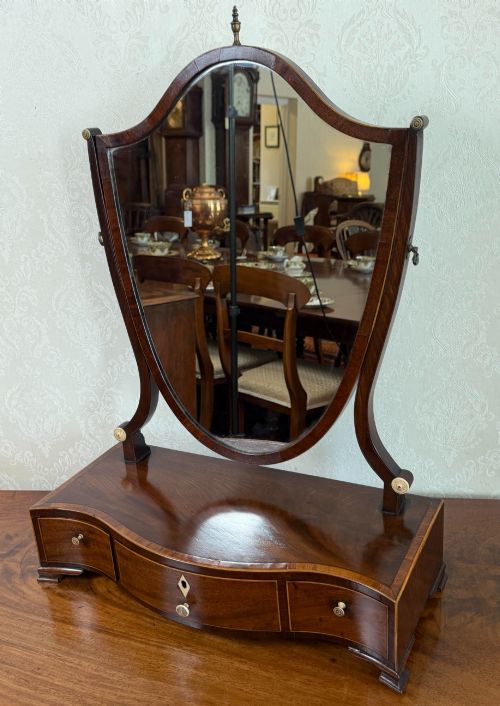

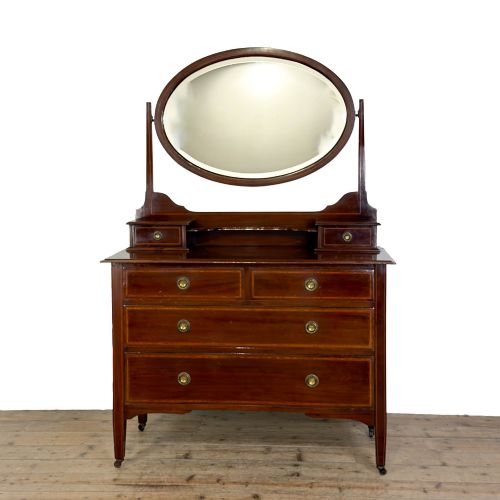


Inlaid Mahogany Vanity
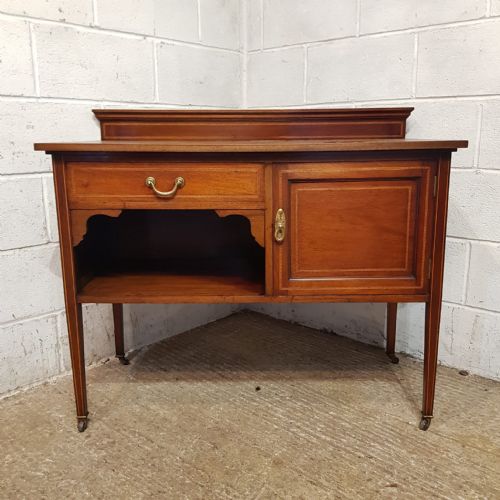
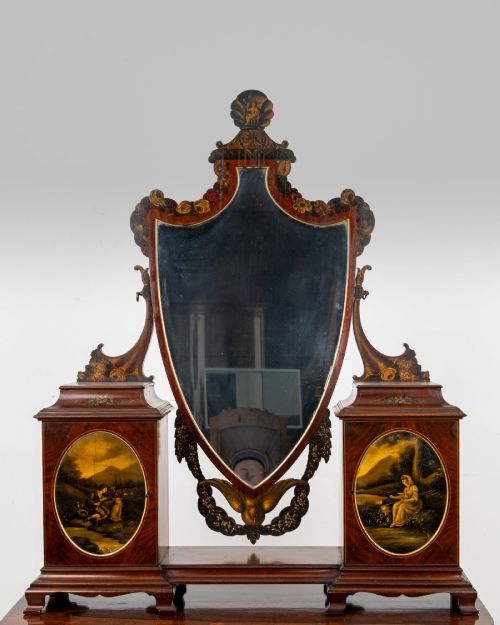
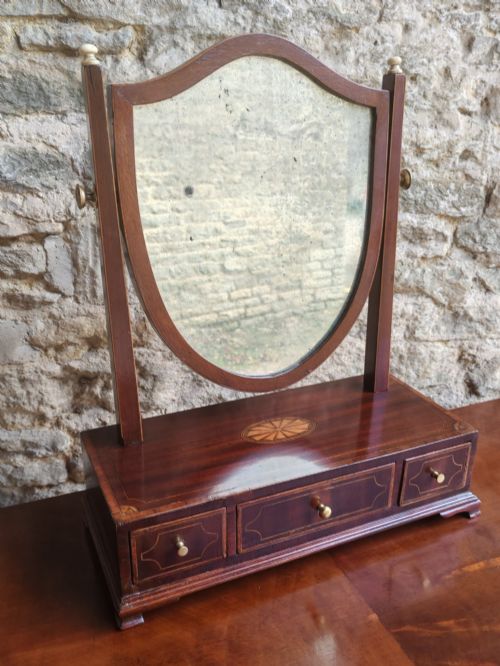
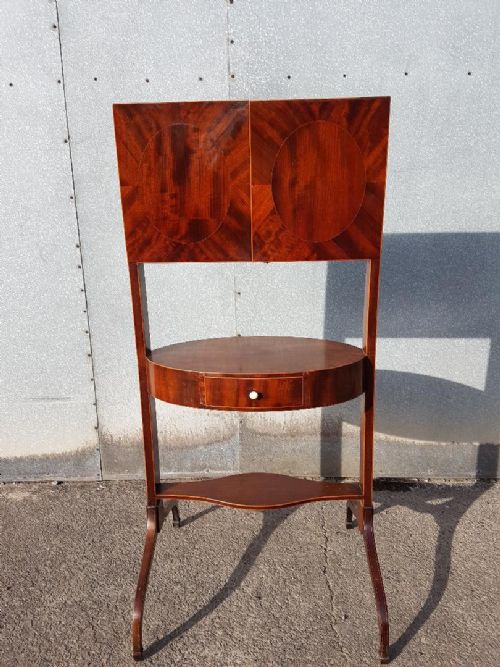
These inlaid mahogany vanity pieces are refined dressing and writing tables from the Victorian and Edwardian eras, prized for their elegant satinwood details.
What an inlaid mahogany vanity is
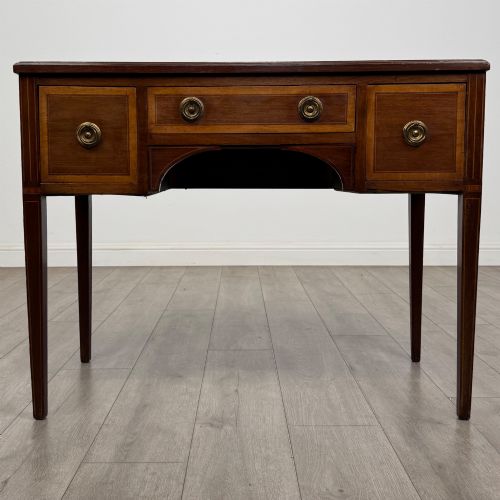
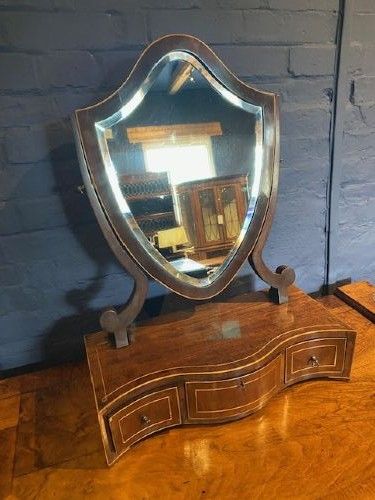
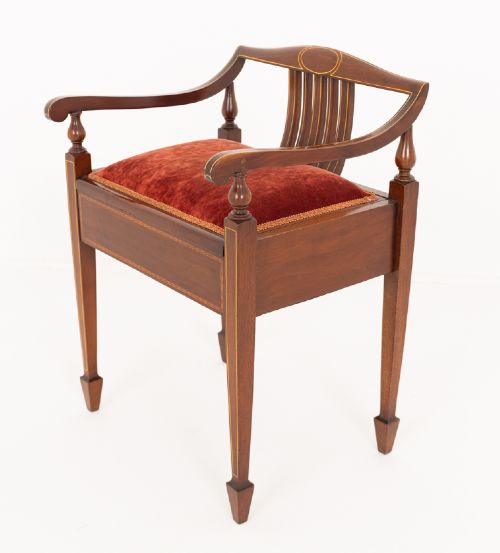
An inlaid mahogany vanity is primarily represented here by dressing tables and combined writing tables dating from the Victorian and Edwardian periods, including Sheraton Revival examples. These pieces serve as functional bedroom and boudoir furniture designed for grooming and correspondence.
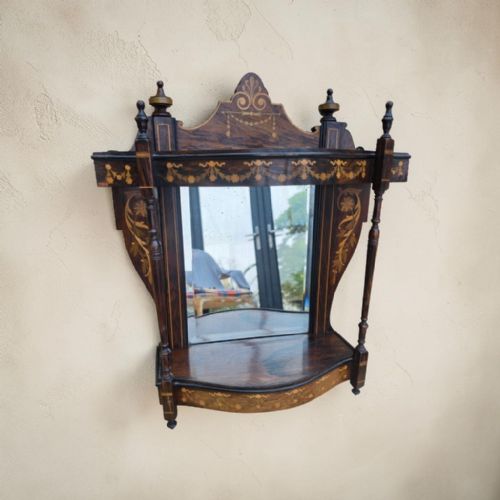
The most common forms on this page span the late nineteenth century up to nineteen hundred. They integrate surfaces for daily use with decorative marquetry and contrasting timber details.
How they were made
Maker construction relies heavily on solid mahogany and mahogany veneers, enriched with satinwood inlay and marquetry decoration. Additional structural and decorative elements incorporate brass, glass, and leather.
Cabinetmakers combined traditional joinery with intricate surface ornamentation to achieve the distinctive Sheraton Revival and Victorian aesthetic.
Retail Price Guide 2026
Typical UK retail prices for inlaid mahogany vanity, calculated from the Sellingantiques database of over a million retail prices indexed since 2003. This retail price guide relies exclusively on Sellingantiques data; no external sources or auction records are used, so the figures do not describe the wider market.
Current listings span the Victorian and Edwardian periods, featuring mahogany, satinwood inlay, brass, glass, and leather.
What varies in quality
Quality is determined by the precision of the satinwood inlay, the crispness of the marquetry, and the overall choice of mahogany timber. Finer examples exhibit meticulous handcraftsmanship in their decorative banding and brass fittings.
The sophistication of the design, particularly within Sheraton Revival and Victorian pieces, separates standard utility furniture from exceptional decorative works.
Edwards and Roberts
The Inlaid Mahogany Vanity Glossary
- Mahogany
- A durable tropical hardwood prized for its rich reddish-brown tone and stability in fine cabinetmaking. It forms the primary structural and visual base for these tables.
- Satinwood
- A lustrous, pale yellow timber used extensively for contrasting inlay and decorative banding. It provides a sharp visual balance against the darker mahogany body.
- Marquetry
- The art of applying pieces of veneer to a structure to form decorative patterns and pictures. On these tables, it often adorns the main surfaces with floral or geometric motifs.
- Sheraton Revival
- A late nineteenth-century design style inspired by the neoclassical furniture of George Sheraton. It emphasises refined proportions, satinwood inlays, and classical symmetry.
- Edwardian
- Pertaining to the period from nineteen hundred to nineteen ten, characterised by lighter forms and revivals of earlier eighteenth-century styles.
Frequently Asked Questions
What is an inlaid mahogany vanity?
An inlaid mahogany vanity is a dressing or writing table produced during the nineteenth and early twentieth centuries. These tables combine practical surfaces with decorative satinwood inlay and marquetry.
They function as both grooming stations and writing desks, reflecting the refined tastes of the Victorian and Edwardian eras.
How do I date these tables?
Dating relies on stylistic markers such as Victorian marquetry versus lighter Edwardian and Sheraton Revival forms. The presence of specific construction materials and historical design revivals helps place a piece within the nineteenth century or around nineteen hundred.
Examining the secondary timbers and the style of inlay provides further chronological clues.
Where were these pieces used?
These tables were designed primarily for bedrooms, dressing rooms, and private boudoirs. They provided a dedicated space for personal grooming and writing letters.
Today, they adapt well into modern bedrooms or studies as functional desks and dressing units.
What materials are used?
The primary material is mahogany, frequently enhanced with satinwood inlay. Associated components include brass hardware, glass elements, and leather inserts.
These materials work together to create the distinctive decorative finish seen across the period.