

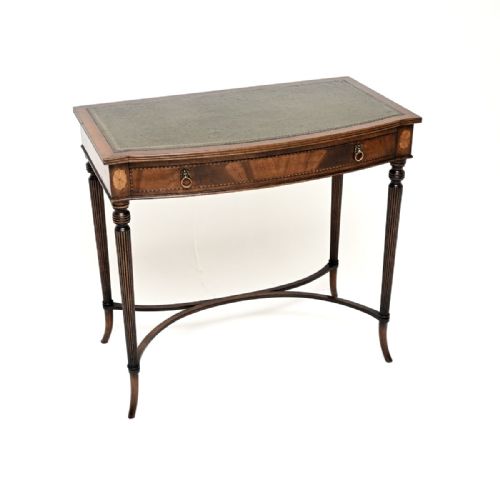
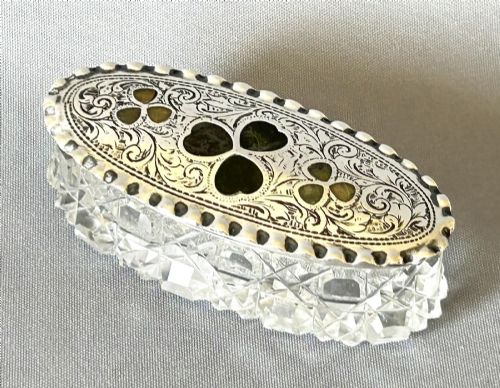
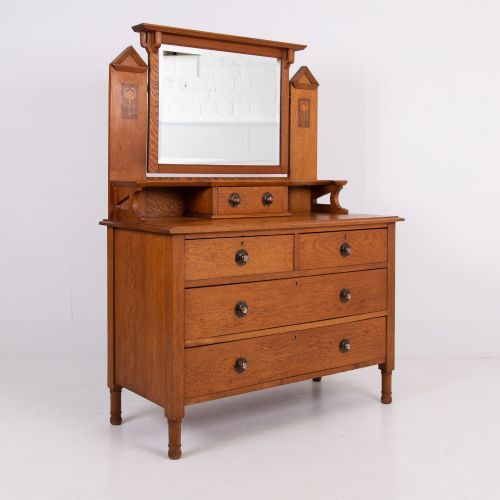
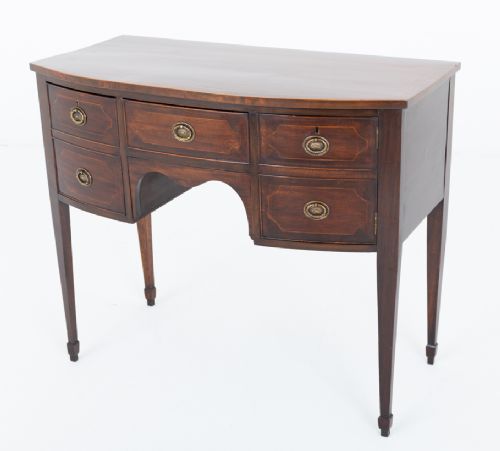
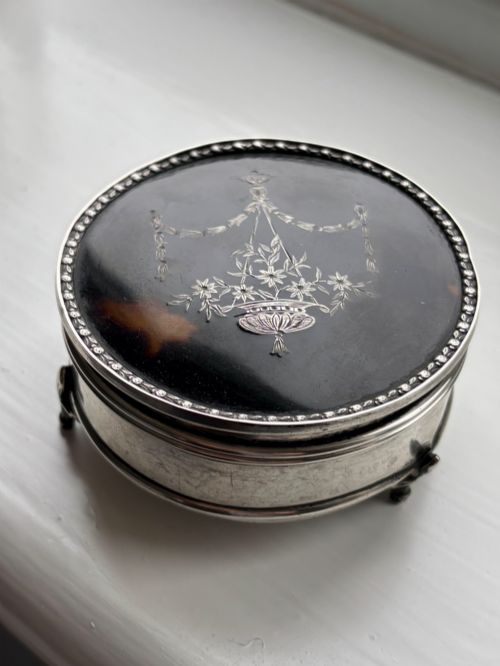
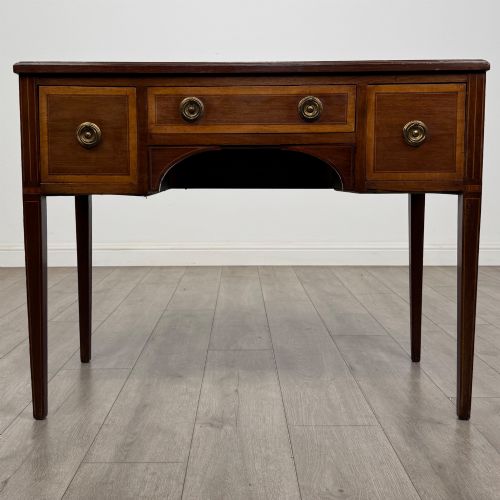
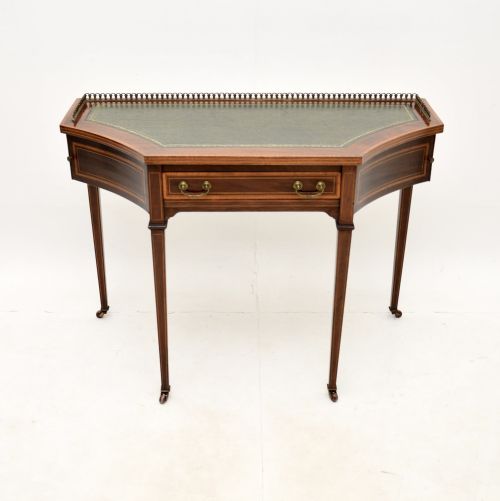
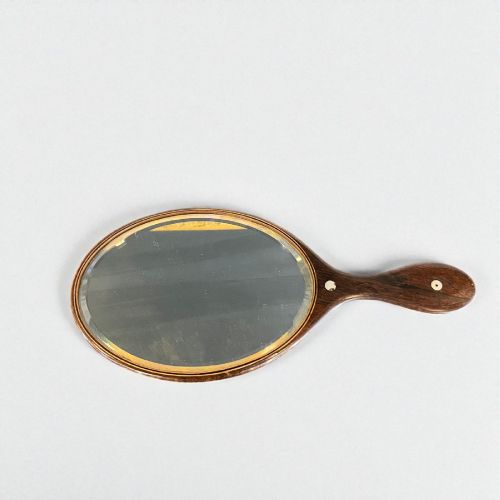
Edwardian Inlaid Dressing Table
These pieces combine the refined proportions of the early twentieth century with delicate woodwork, giving an edwardian inlaid dressing table its characteristic lightness.
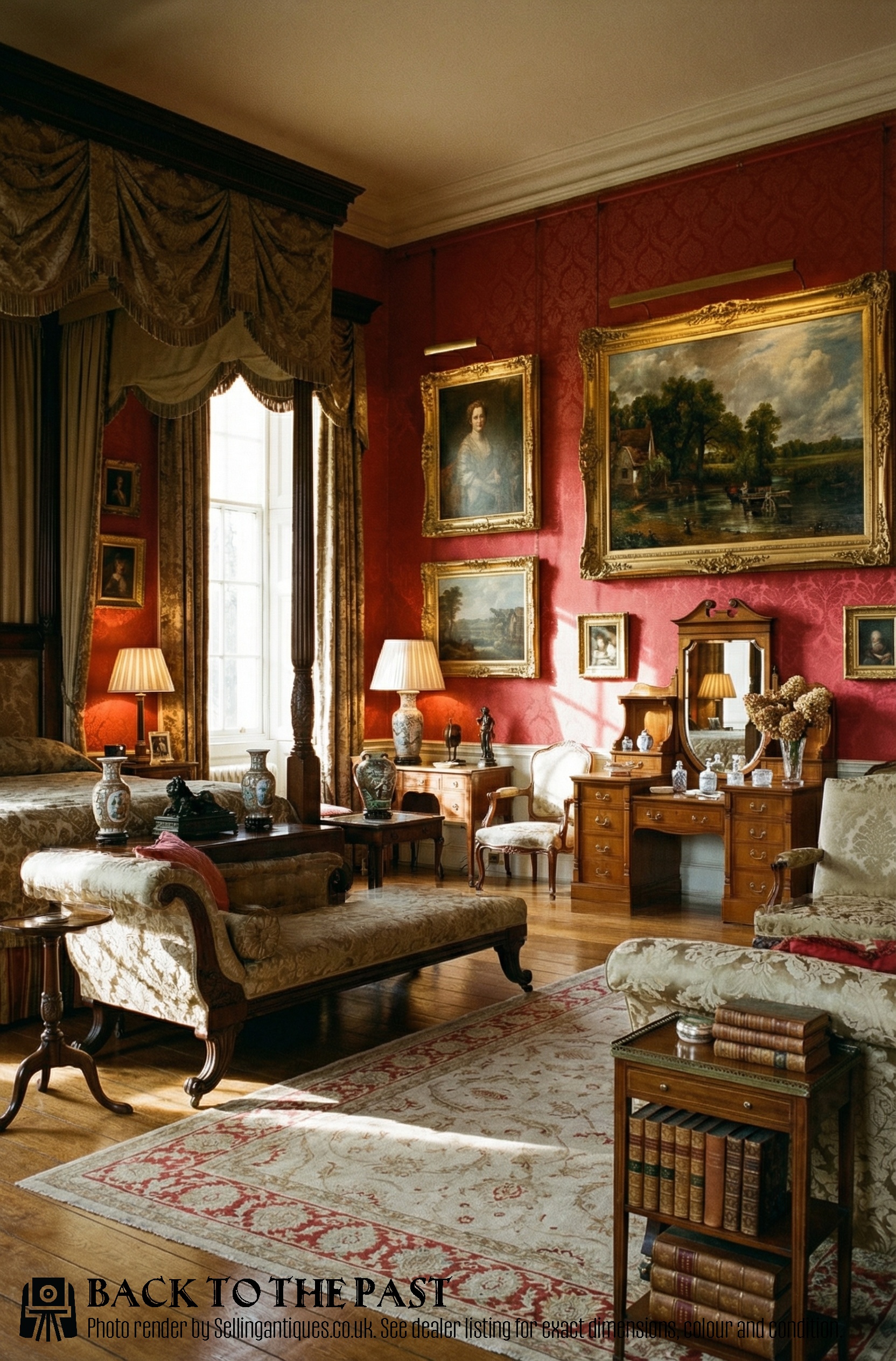
Edwardian Inlaid Dressing Table
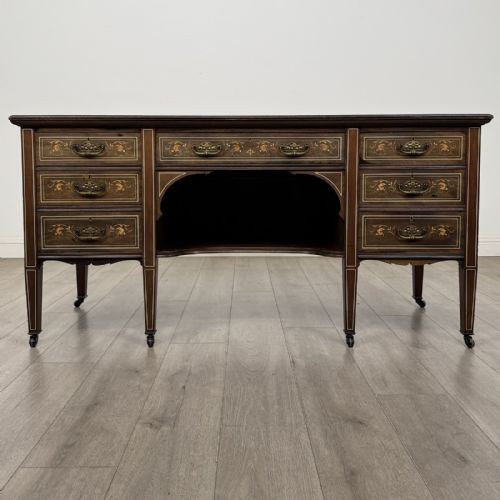
An edwardian inlaid dressing table sits firmly in the domestic architecture of the early twentieth century, combining utility with ornamental grace. Most examples encountered here date from around nineteen hundred to nineteen ten, reflecting a period of prolific cabinet making.
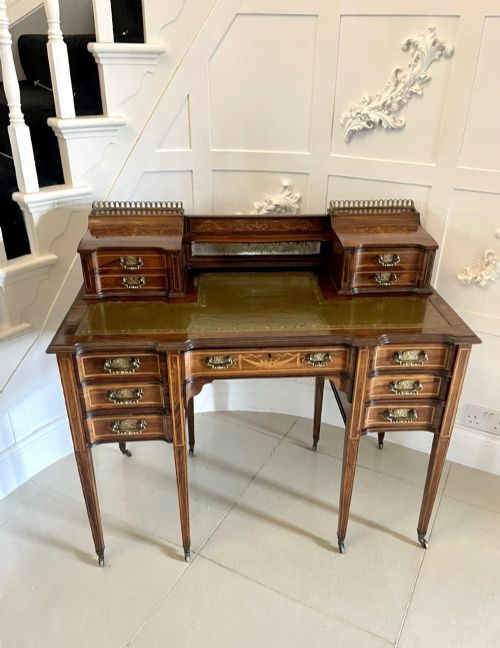
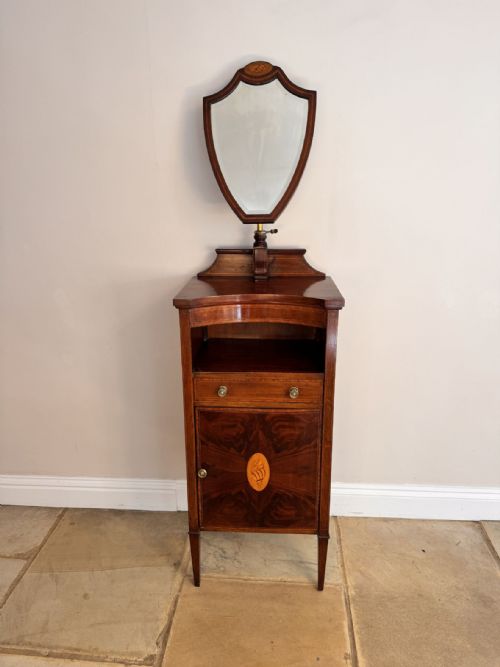
The form typically incorporates a low chest base surmounted by tilting mirrors and small jewellery drawers. Makers frequently paired these dressing units with matching washstands and chairs to furnish contemporary bedrooms.
How they were made
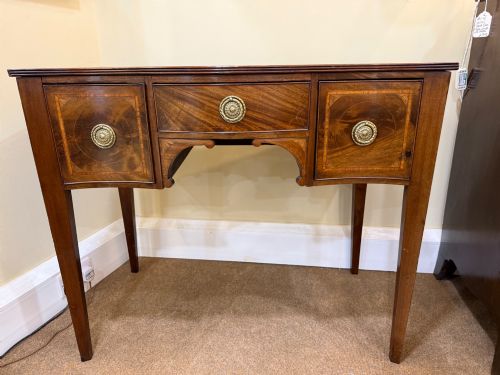
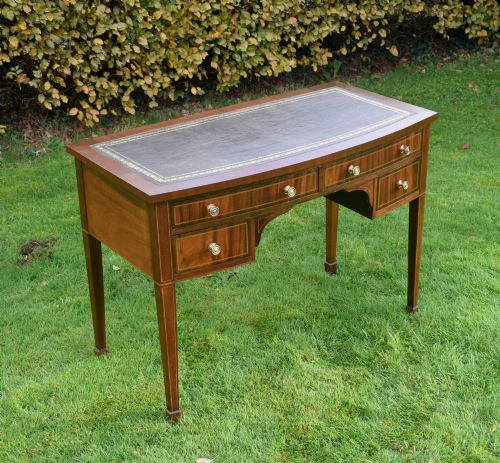
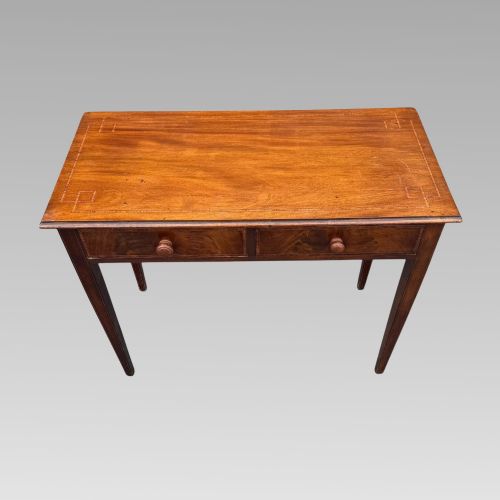
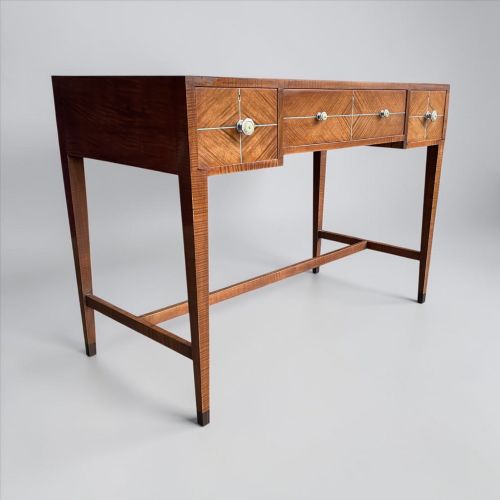
Workshops relied heavily on solid mahogany and satinwood as primary timber foundations, overlaid with fine veneers. Craftsmen applied contrasting boxwood and wood inlay to create geometric lines, floral motifs, and classical urns across drawer fronts and surfaces.
Structural integrity depended on traditional joinery methods, supplemented by turned supports and brass hardware. Mirrors were frequently framed in matching woods and mounted on adjustable pivots above the main carcase.
Edwardian Inlaid Dressing Table Retail Price Guide 2026
Typical asking prices for edwardian inlaid dressing table among the pieces listed under this phrase on Sellingantiques today, from the lower quarter to the upper quarter. They describe what is for sale here now, not the wider market.
Current listings feature mahogany, satinwood, and oak alongside decorative brass and glass elements.
What varies in quality
The sophistication of the marquetry and stringing largely dictates the distinction between standard production and masterwork pieces. Complex pictorial inlays executed in multiple contrasting timbers require significantly greater skill than simple symmetrical banding.
Timber selection and secondary wood usage also separate workshops, with premier makers employing richly figured mahogany and satinwood throughout the interior drawer linings rather than cheaper secondary conifers.
Shapland & Petter·Heals·Edwards & Roberts·James Shoolbred·Wright & Hunter·Ollivant & Botsford·Asprey & Co.
The Edwardian Inlaid Dressing Table Glossary
- Inlay
- The technique of inserting contrasting pieces of wood into a recessed surface to form a decorative pattern. This defines the primary surface ornamentation on these bedroom pieces.
- Satinwood
- A pale, lustrous timber native to India and Ceylon, prized for its golden sheen. Cabinet makers used it for veneers and crossbanding on high-status furniture.
- Cheval mirror
- A full length mirror suspended on a vertical frame allowing it to swing. Smaller table top versions appear frequently among dressing furniture.
- Stringing
- Very narrow strips of contrasting wood inlaid into channels cut into the surface. It creates delicate framing lines around drawer edges and table tops.
Edwardian Inlaid Dressing Table: Frequently Asked Questions
How do I care for the wood finish?
Keep these surfaces away from direct sunlight and excessive moisture to prevent the delicate veneers and boxwood stringing from lifting over time.
Apply a traditional beeswax polish sparingly and buff gently with a soft cloth to maintain the natural lustre of the timber.
Were mirrors originally detachable?
Most dressing table mirrors were built to be removable for ease of transport during house moves. They typically secured into slotted wooden supports on the rear surface.
Original brass pivot screws allowed the user to tilt the glass plate to the desired angle during daily grooming.
Can I use this as a desk?
The presence of kneeholes in certain pedestal formats makes them adaptable for light writing use, though drawer depth varies significantly.
Standard dressing chests lack knee space entirely, requiring you to sit slightly to the side if attempting to write at the surface.
How do I distinguish Edwardian from Victorian?
Edwardian examples generally exhibit lighter proportions, paler secondary timbers, and less heavy ornamentation than their late nineteenth century predecessors.
The inlay work on Edwardian pieces tends towards refined neoclassical revival motifs rather than the denser, darker marquetry typical of earlier decades.