
Mahogany Toilet Table
These mahogany toilet table pieces range from compact Georgian swing mirrors to grand Victorian dressing units designed for daily grooming.
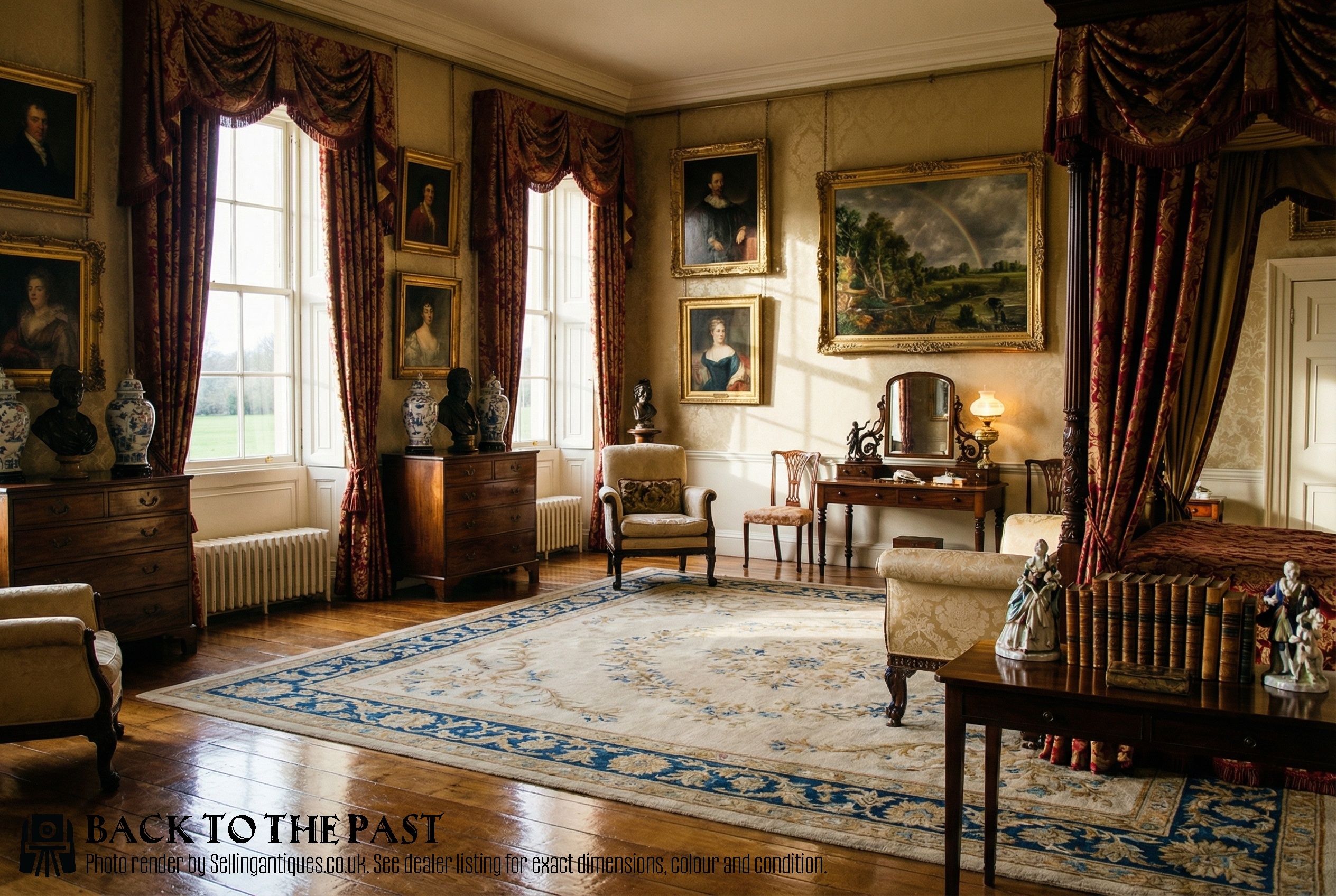
What mahogany toilet table pieces are
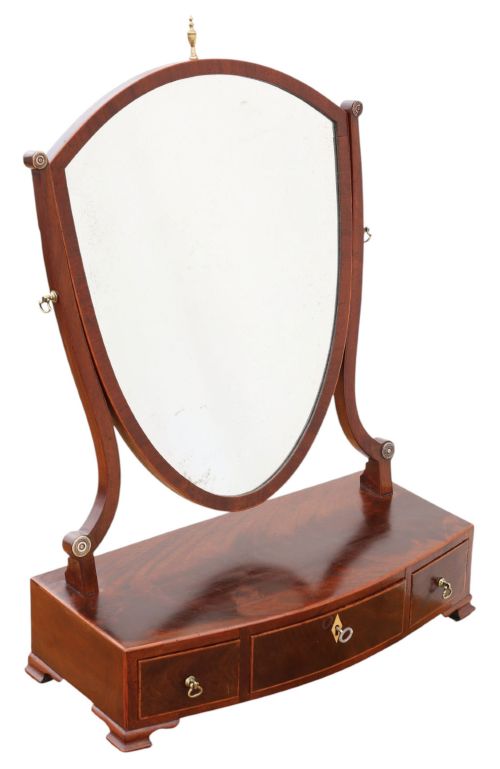
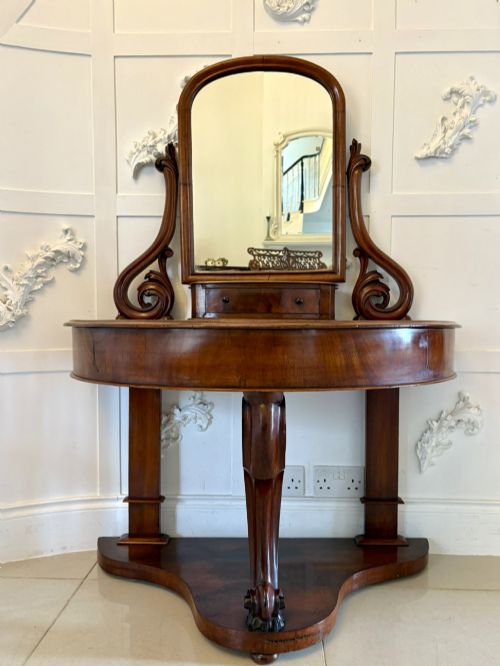
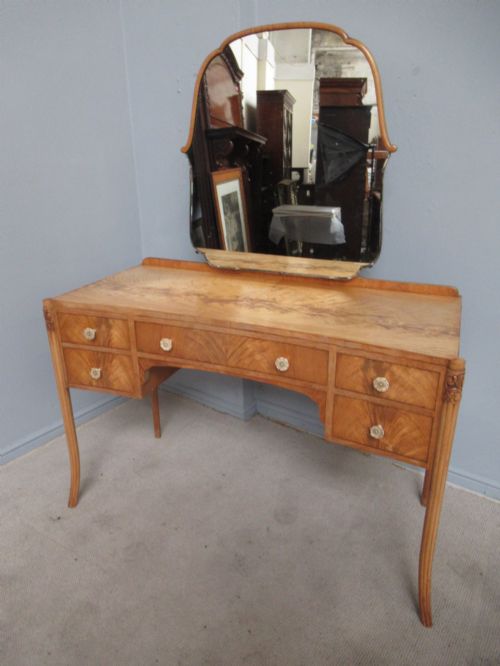
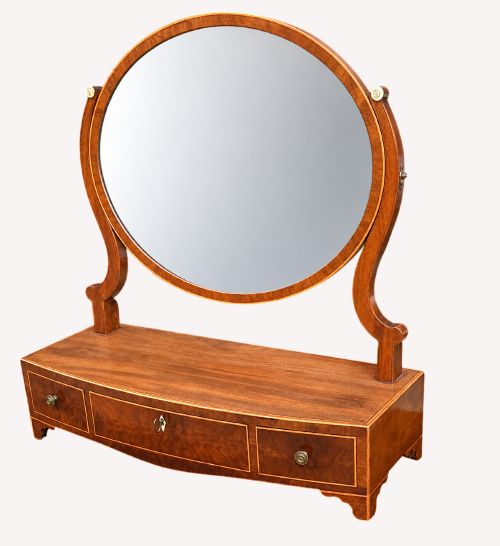
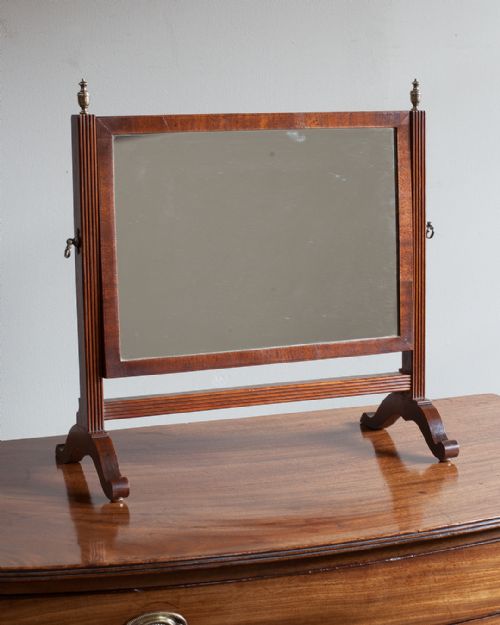
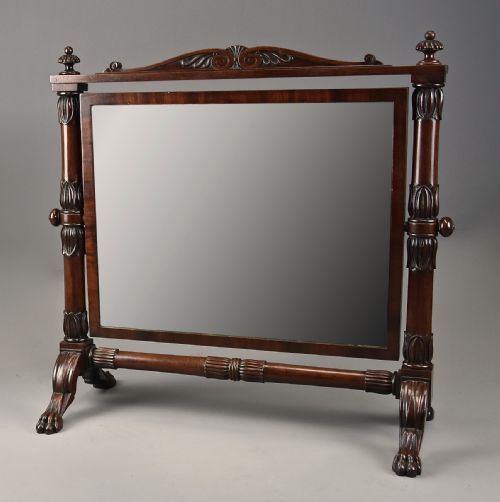
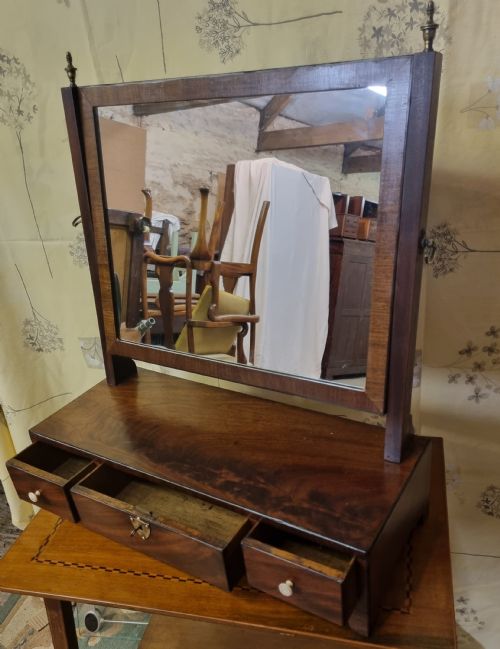
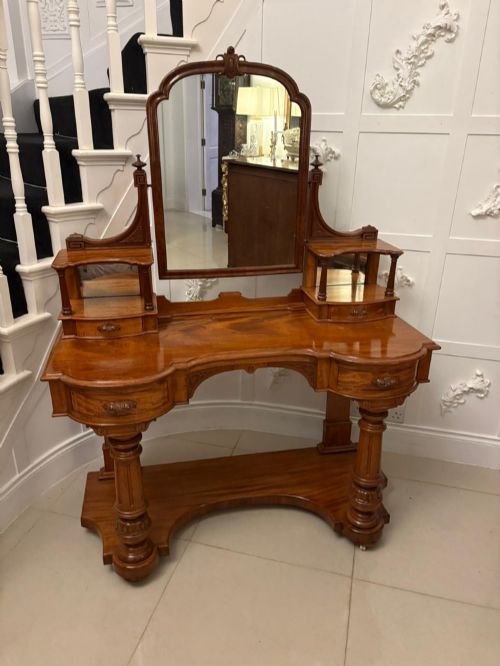
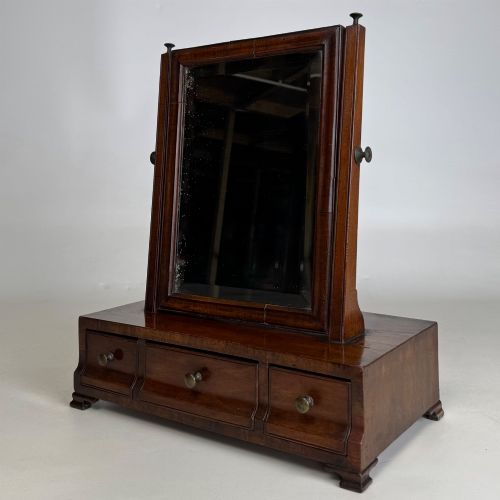
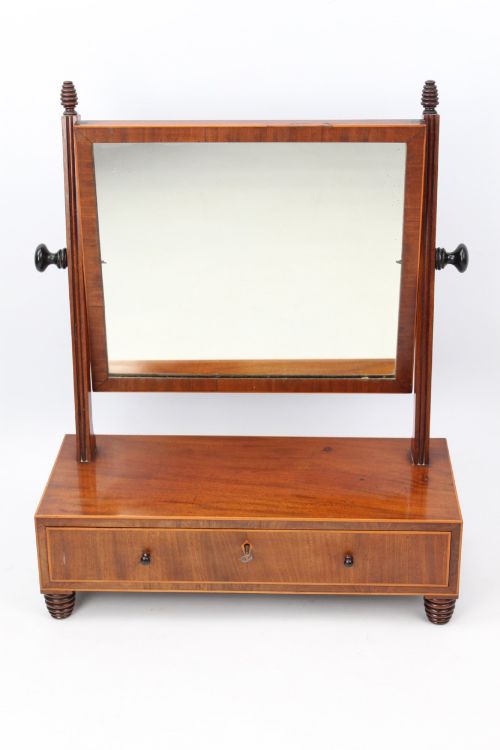
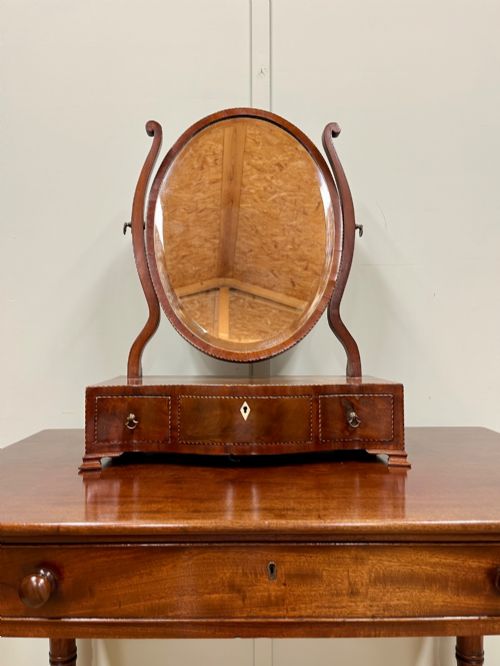
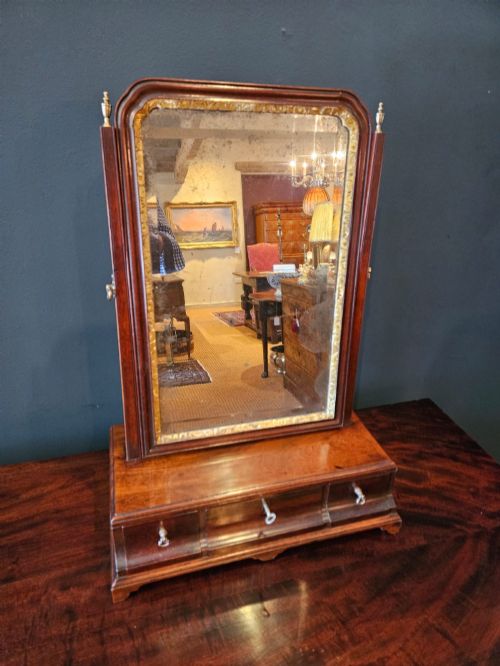
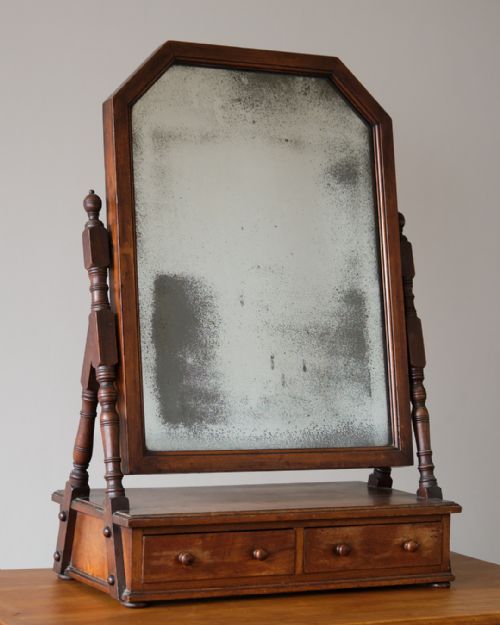
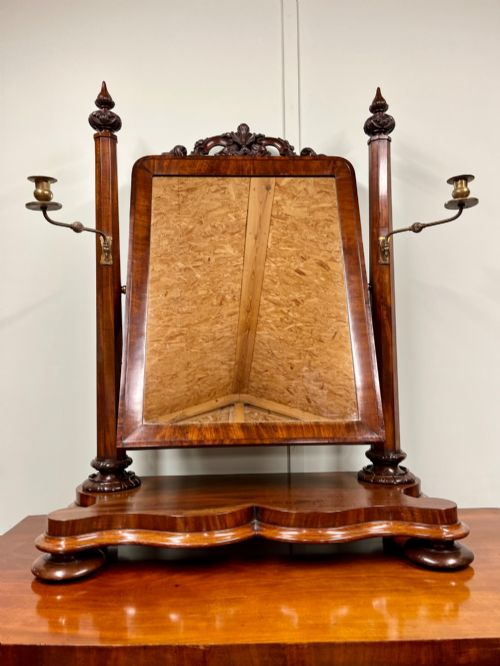
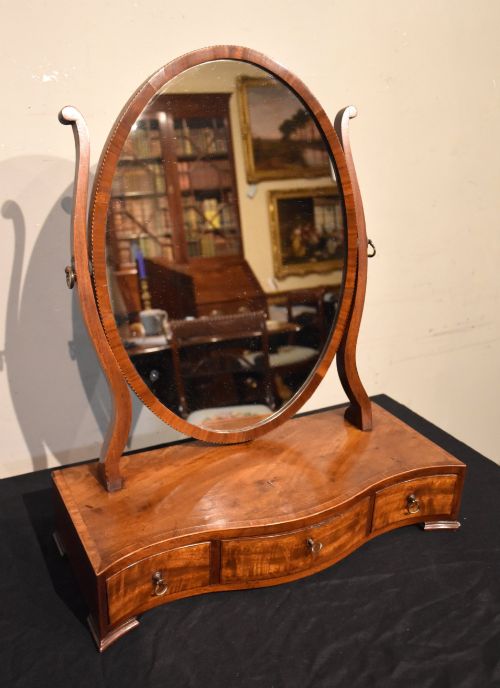
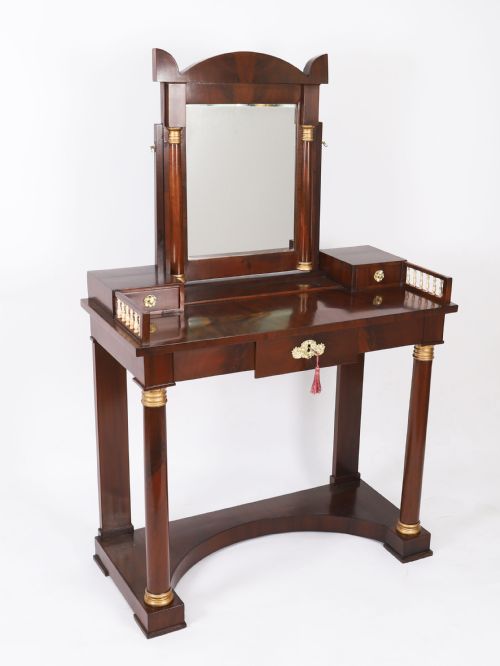
A mahogany toilet table serves as a dedicated station for personal grooming, appearing in forms ranging from tabletop swing mirrors to larger freestanding pieces with multiple drawers. The pieces on this page span several distinct eras, encompassing compact Georgian boxes, Regency platforms, William IV designs, and expansive Victorian dressing tables.
Buyers most frequently encounter smaller toilet mirrors meant to sit atop a chest or separate table, alongside larger duchess and grand carved dressing tables. These objects combine practical utility with refined cabinetmaking, using rich timbers to anchor bedroom or dressing room interiors.
Origins stretch from the Georgian period through the 19th Century, Victorian era, and Edwardian period. Each era brings subtle shifts in proportion and detail, moving from plain platforms to elaborate carved frames and inlaid satinwood.
What varies in quality
The selection of timber dictates much of the visual impact, with striking flame grain mahogany and crisp satinwood inlay marking out superior examples. Plain surfaces give way to exceptional carved detail and substantial brass or ormolu mounts on finer pieces.
Structural integrity and the retention of original mirror glass and hardware separate standard items from truly distinguished ones. Proportions remain balanced on better examples, where the swing mechanism and supporting uprights show careful turning and secure joinery.
Retail Price Guide 2026
Typical UK retail prices for mahogany toilet table, calculated from the Sellingantiques database of over a million retail prices indexed since 2003. This retail price guide relies exclusively on Sellingantiques data; no external sources or auction records are used, so the figures do not describe the wider market.
Campaign shaving variants remind us that Georgian gentlemen packed their mirrors into travel boxes before setting off across the empire.
The Mahogany Toilet Table Glossary
- Mahogany
- A durable, reddish-brown tropical hardwood prized by cabinetmakers for its rich grain and stability. It forms the primary structural material for these dressing tables and mirrors.
- Swing mirror
- A reflective glass plate mounted on pivots between two upright posts, allowing the user to tilt the angle. This component defines the traditional toilet mirror.
- Flame grain
- A decorative wood veneer pattern resembling flickering flames, created by cutting across the branch junction of the tree. It adds striking visual depth to drawer fronts and mirror frames.
- Serpentine
- A gently undulating curved line forming the front edge of a table or platform. This shape requires advanced woodworking skill to execute cleanly.
- Cheval mirror
- A full-length freestanding swing mirror supported by a frame with four legs. It provides an expanded view compared to smaller tabletop toilet mirrors.
Frequently Asked Questions
What is a mahogany toilet table?
A mahogany toilet table is a piece of antique furniture designed for personal grooming, combining a storage box or dressing surface with an adjustable mirror.
These items range from small tabletop swing mirrors of the Georgian period to large freestanding Victorian dressing tables equipped with multiple drawers.
How do I date a toilet table?
Dating relies on observing structural characteristics, wood choices, and decorative details like inlay or carving style.
Georgian pieces often feature clean lines and platform boxes, while Victorian examples lean towards heavier carved frames, larger dimensions, and turned supports.
Where were these tables placed?
Original placement was typically in bedrooms, dressing rooms, or private chambers where grooming took place.
Tabletop versions sat securely on top of existing chests of drawers or side tables, while grander Victorian dressing tables stood independently against bedroom walls.
Are the mirror plates original?
Many antique mirrors retain their original glass, which often exhibits subtle oxidation, minor foxing, or slight distortion.
Replacement glass does appear in some pieces due to the fragile nature of old mirror plates over centuries of use.