

Antique Inlaid Writing Table
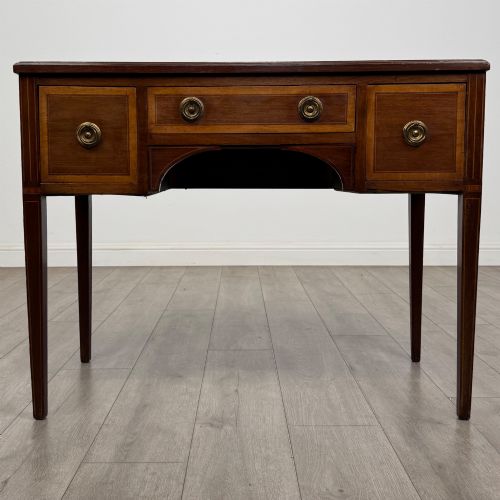
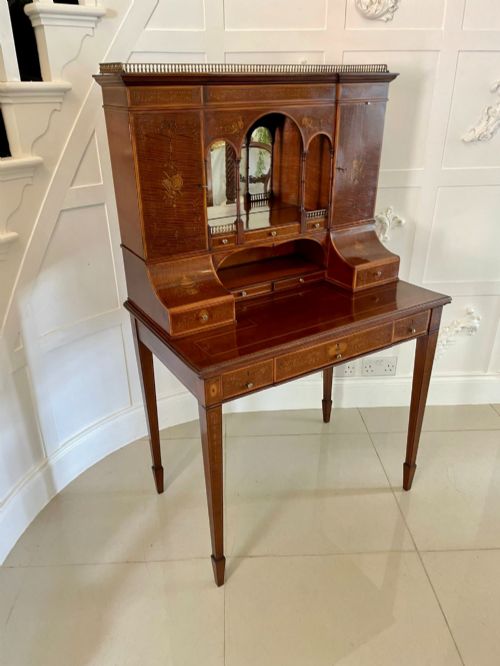
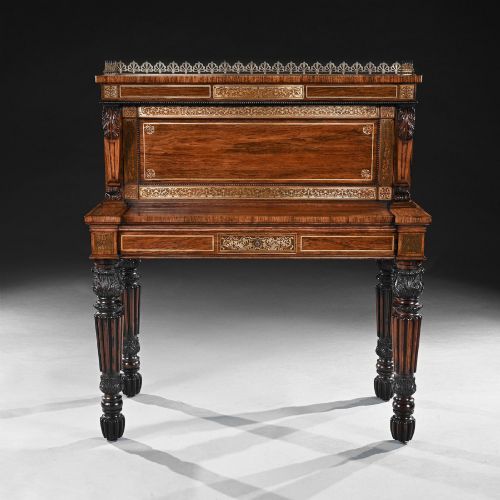
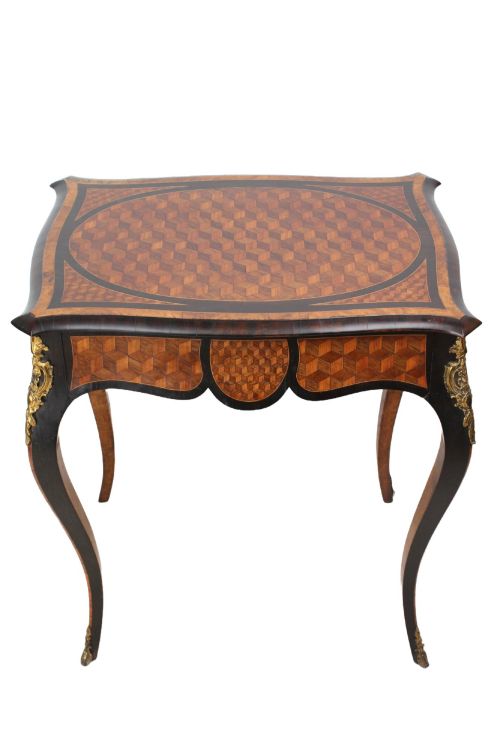
An antique inlaid writing table offers a designated surface for correspondence, uniting functional timber forms with decorative banded surfaces.
Forms and Origins
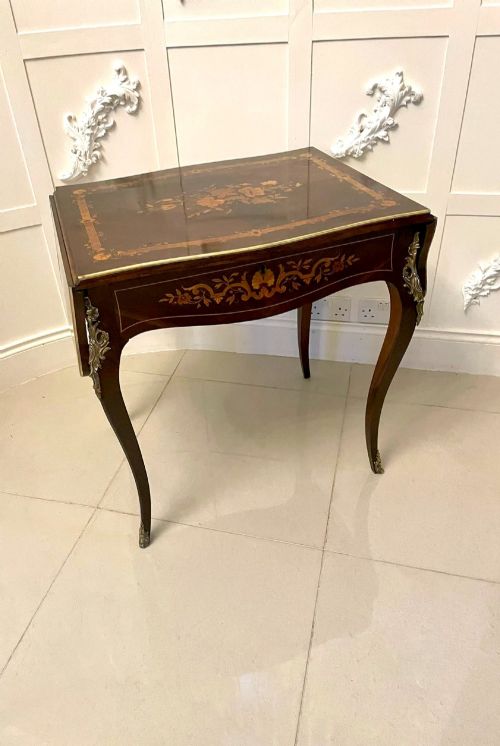
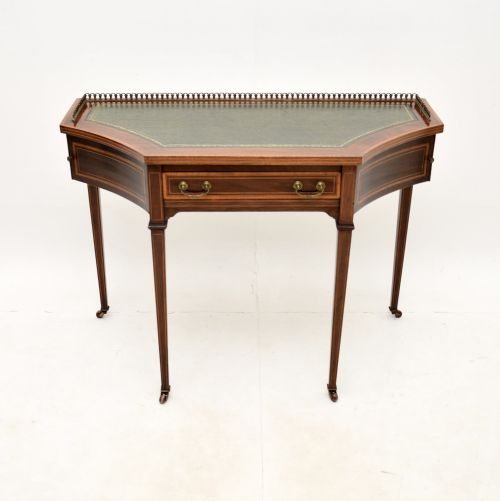
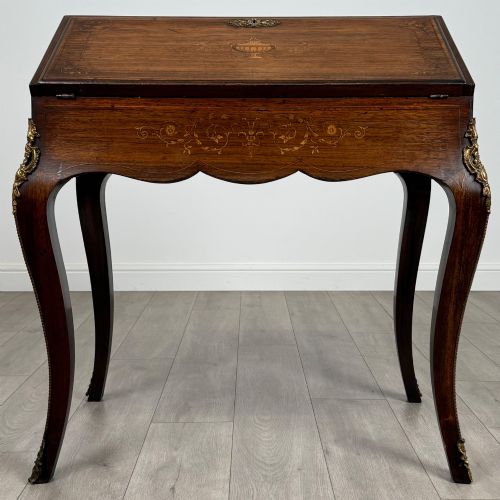
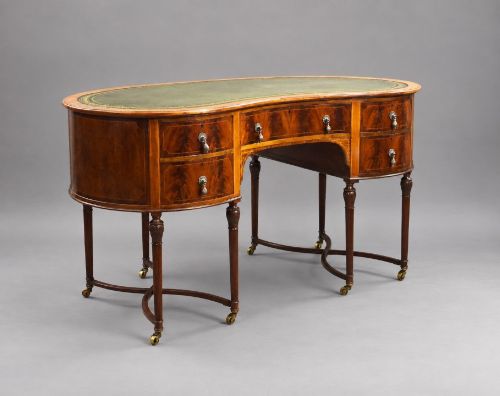
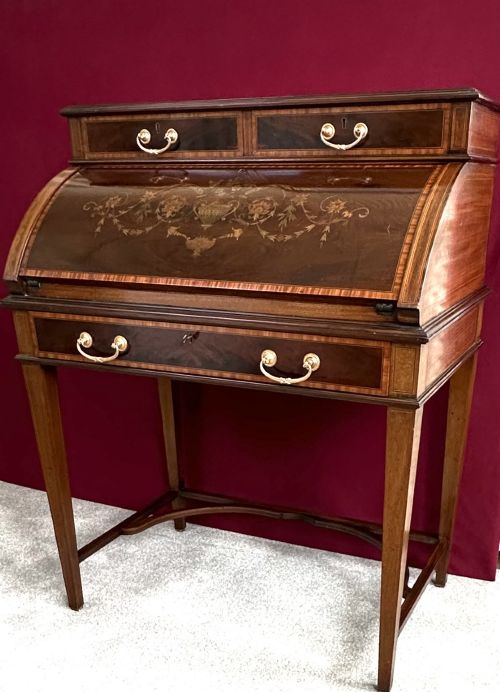
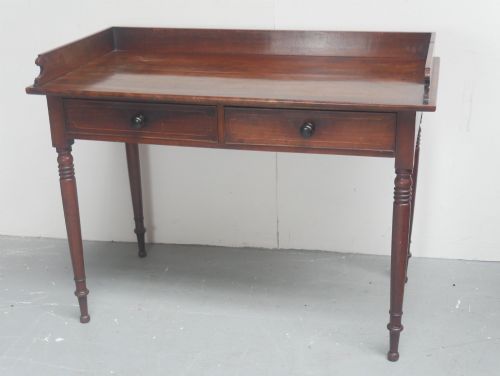
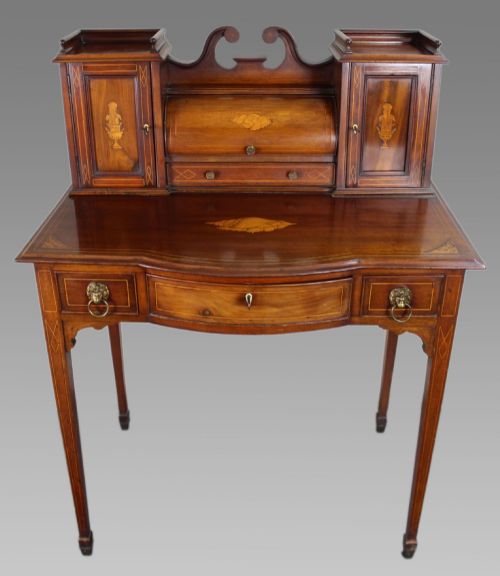
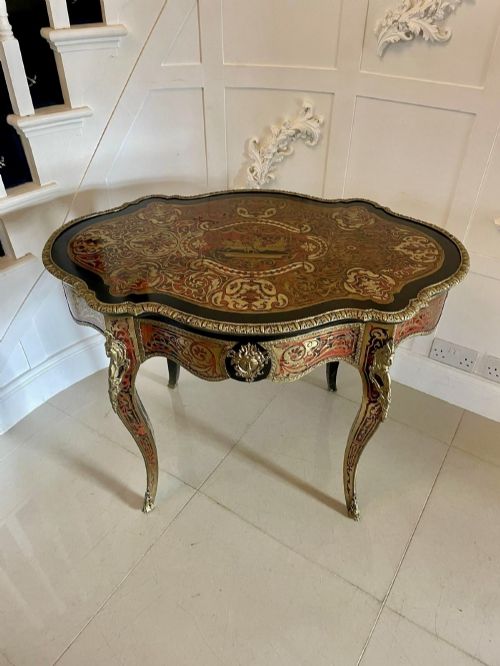
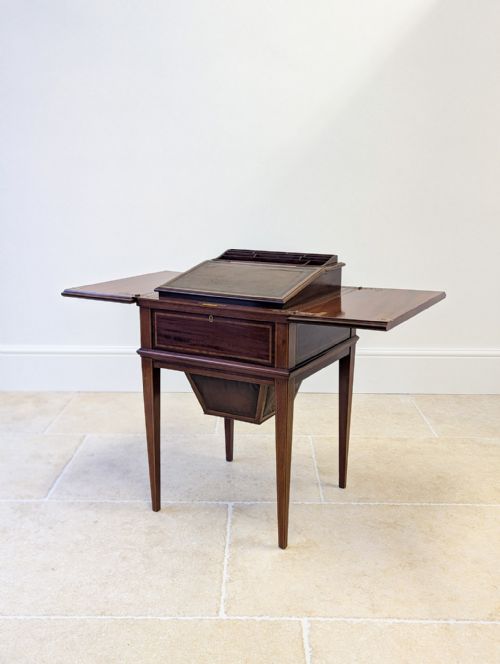
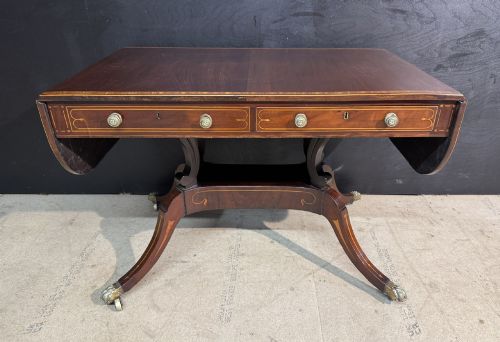
An antique inlaid writing table spans Georgian, Victorian and Edwardian eras, appearing in freestanding, side, kidney and pedestal formats designed for domestic use. The pieces on this page lean heavily towards Edwardian mahogany and Victorian burr walnut examples.
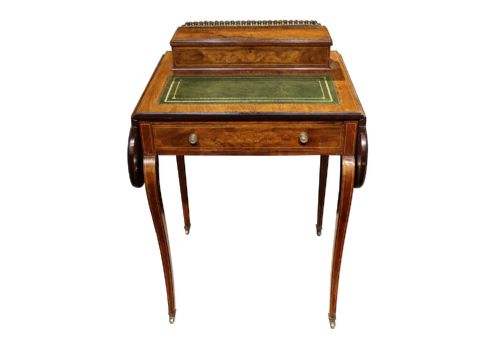
Makers adapted the form from simple writing desks to elaborate satinwood and rosewood pieces equipped with leather inserts. Buyers encounter everything from compact side tables to twin pedestal desks fitted with drawers.
The stylistic influence of Sheraton and Victorian Rococo Revival guides much of the output seen across these listings. Origin points include English workshops as well as French cabinet makers.
Assessing the Workmanship
The standard of a writing table rests upon the crispness of the boxwood inlay and the selection of figured veneers like burr walnut. Finer pieces demonstrate precise marquetry alignment and substantial timber depth rather than thin surface laminates.
Construction details such as dovetailed drawer linings and the retention of original leather writing inserts distinguish superior examples. Maker attribution also elevates certain pieces above standard vernacular workshop production.
Retail Price Guide 2026
Typical UK retail prices for inlaid writing table, calculated from the Sellingantiques database of over a million retail prices indexed since 2003. This retail price guide relies exclusively on Sellingantiques data; no external sources or auction records are used, so the figures do not describe the wider market.
Many a Victorian letter writer relied on these curved desks while trying to ignore the scratching of an iron-gall ink nib.
Jas Shoolbred·Edwards and Roberts·Maple and Co
The Antique Inlaid Writing Table Glossary
- Inlay
- The technique of inserting pieces of contrasting material into a recessed wooden surface to form a decorative design. This method defines the primary ornamentation of the tabletop.
- Marquetry
- An elaborate form of inlay using thin veneers to create pictorial or geometric motifs across the entire surface. Cabinet makers assembled these intricate patterns by hand.
- Satinwood
- A hard, durable timber with a natural golden sheen utilised extensively in Edwardian decorative furniture. It provides a bright contrast against darker woods.
- Burr Walnut
- Wood taken from the warted growths of walnut trees, yielding a swirling, highly figured grain pattern. It appears frequently on Victorian writing tables.
- Ormolu
- Gilded bronze mounts applied to the angles and legs of French and English tables. This decorative metalwork adds architectural definition to the piece.
Frequently Asked Questions
Where were antique writing tables placed?
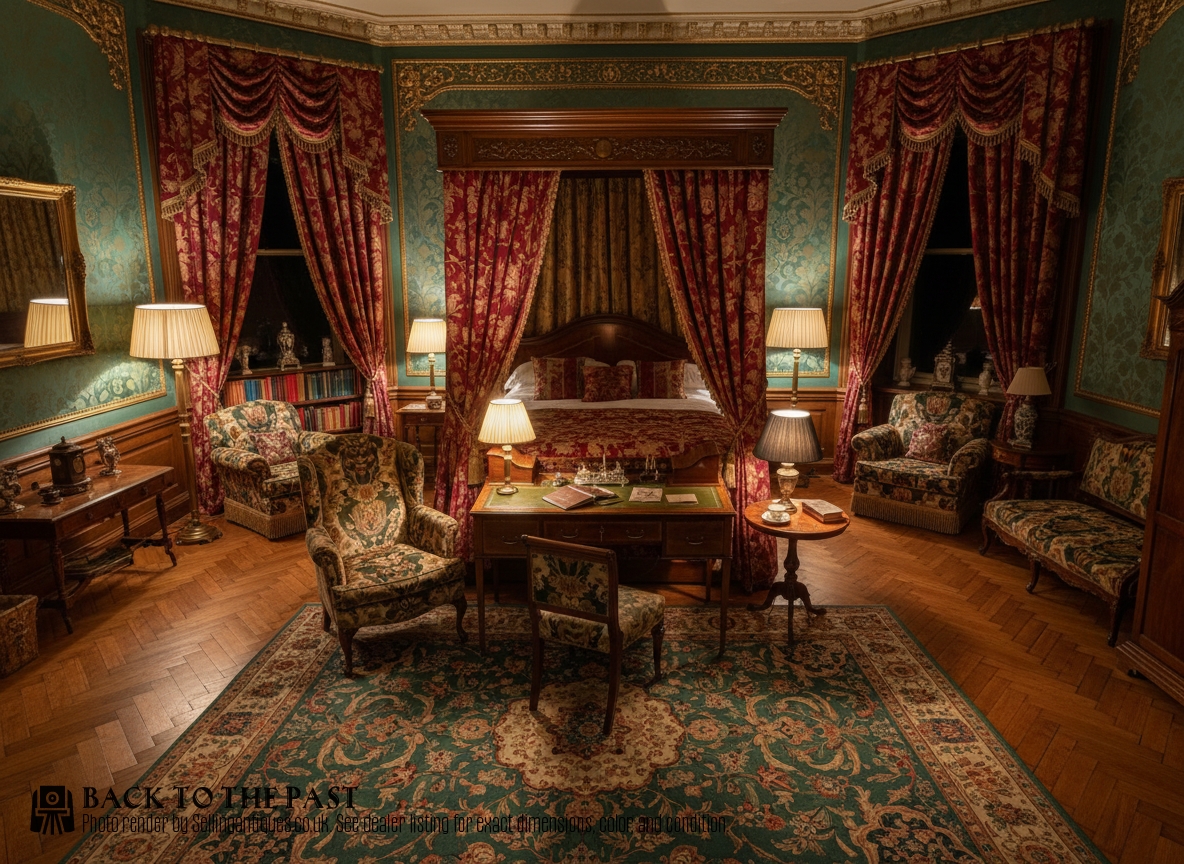
These tables typically stood in drawing rooms, libraries or bedrooms for private correspondence and administrative tasks. Freestanding kidney shapes allowed placement in the centre of a room.
Smaller side variants often sat against walls or in window recesses where natural light fell across the leather writing surface.
How do I care for leather inserts?
Original leather writing surfaces require gentle cleaning with a dry cloth and occasional application of appropriate leather balms to prevent cracking. Avoid using excessive moisture or household detergents.
Protect the surrounding wood veneer from direct sunlight and sharp objects to maintain the integrity of the surrounding inlay.
How do I distinguish Edwardian from Georgian pieces?
Georgian writing tables usually exhibit heavier proportions, solid mahogany construction and restrained stringing in line with early neoclassical design. The timber patination tends to be darker.
Edwardian interpretations often utilise lighter satinwood, delicate marquetry and Sheraton Revival motifs with brighter contrast veneers.