


Victorian Carved Stretcher Table
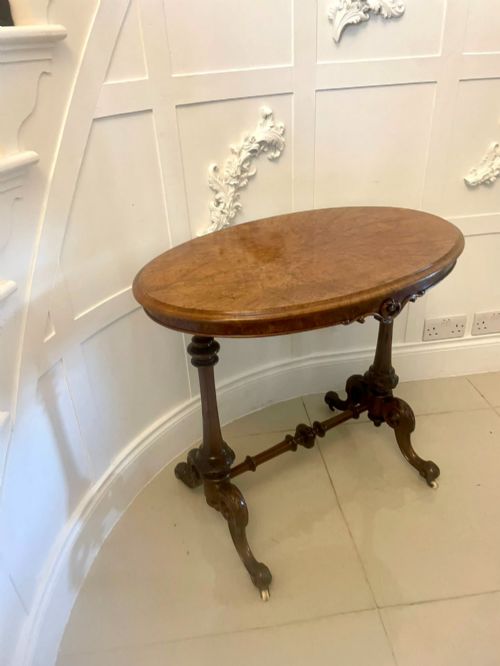
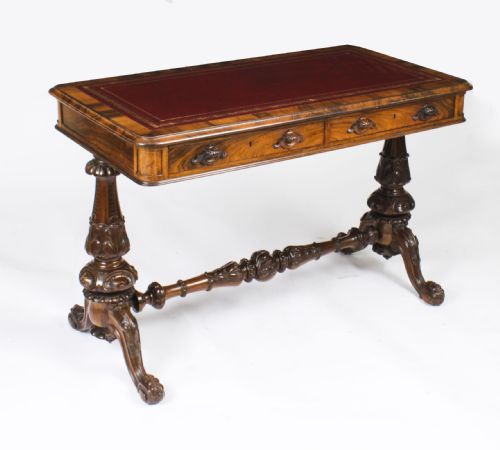
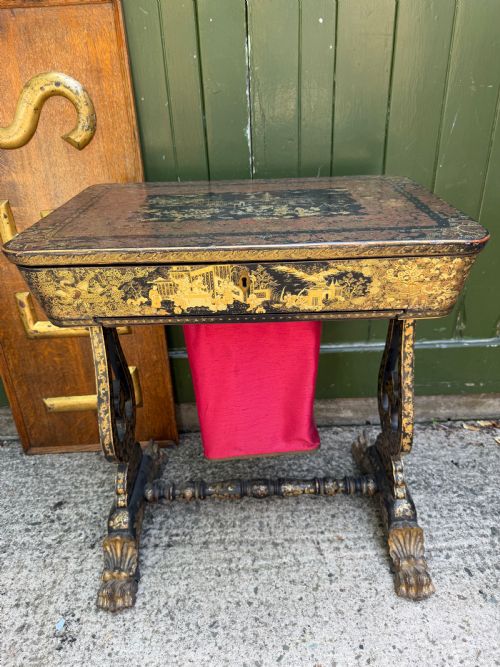
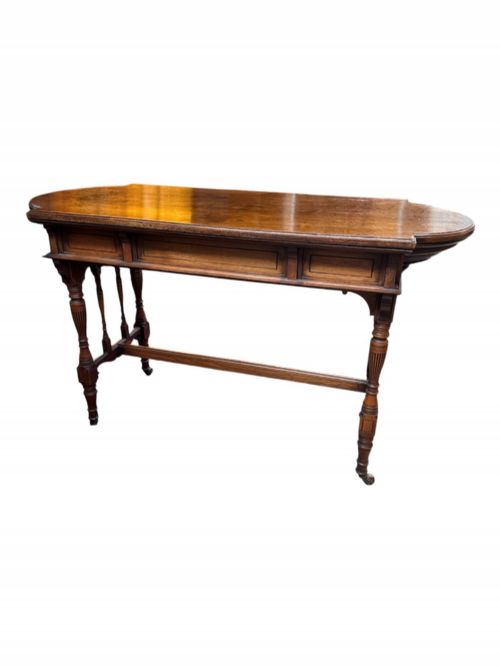
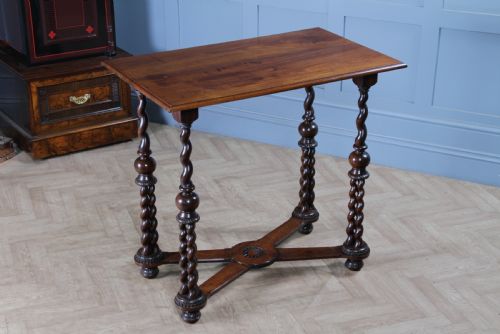
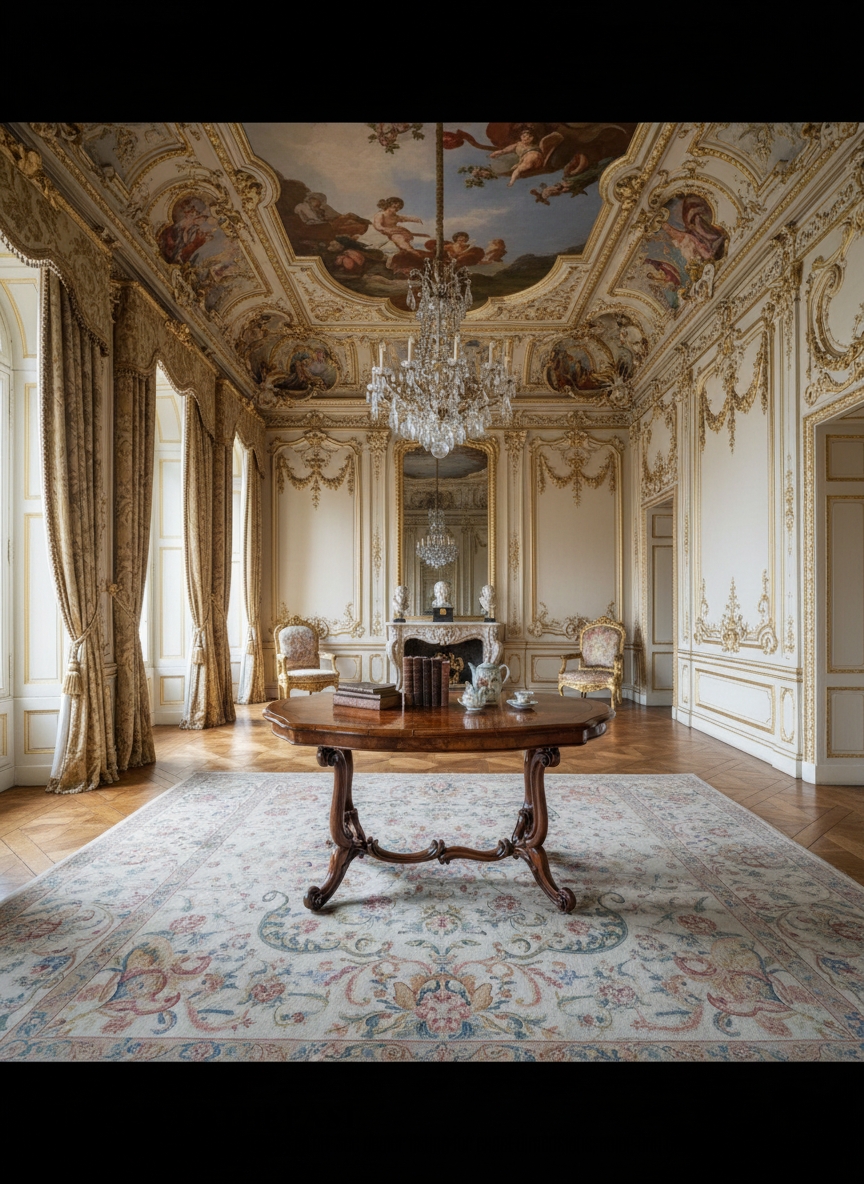
A Victorian carved stretcher table brings robust nineteenth-century carpentry and rich timber grains into a room, offering a sturdy base linked by traditional cross-framing.
Victorian Carved Stretcher Table
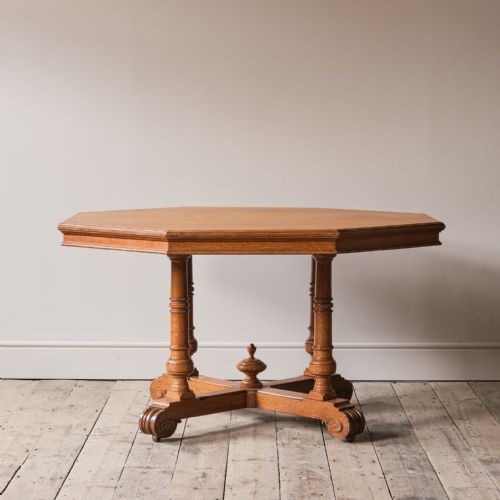
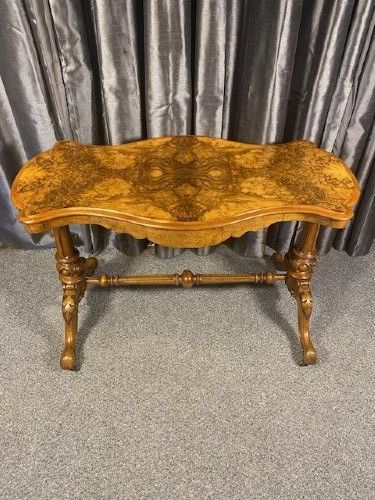
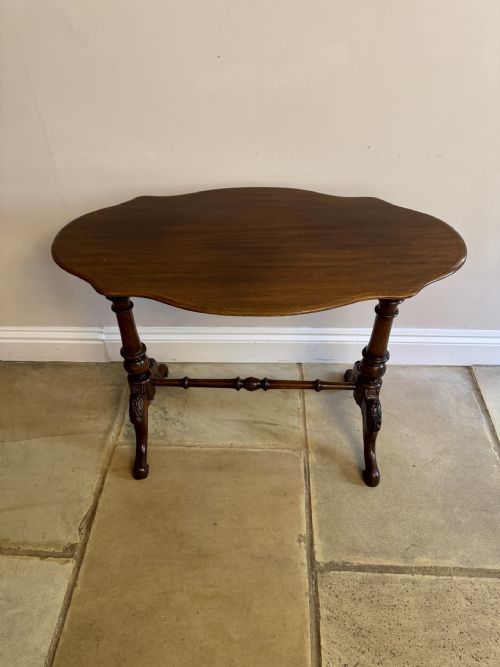
A Victorian carved stretcher table is a nineteenth-century timber piece defined by lower framing that connects the legs for stability. You meet these most often in walnut, burr walnut, and oak, spanning centre tables, side tables, and library forms.
The surviving examples show diverse stylistic influences ranging from Gothic Revival to plain mid-nineteenth-century domestic forms. Makers utilised rich figured veneers alongside solid carved supports, creating practical surfaces designed to stand freely in a room.
How they were made
Cabinet makers built these tables using dense hardwoods such as walnut, oak, mahogany, and rosewood, often applying burr walnut veneers to top surfaces for distinctive grain patterns. Brass components and leather inserts appear on specific writing and library variations.
Joinery relied on traditional framing techniques where lower stretchers braced the legs to prevent lateral movement. Carved details were hand-chiselled directly into the solid timber components, particularly around the legs and connecting rails.
The recorded construction dates span from the 1850s through to the early twentieth century, capturing the height of Victorian cabinet making.
What varies in quality
The grade of timber veneer dictates much of the visual appeal, with heavily figured burr walnut commanding attention over plain surfaces. Crispness in the hand-carved stretcher supports and the depth of the timber finishing separate standard production pieces from finer workshop outputs.
Edwards & Roberts·W J Mansell
The Victorian Carved Stretcher Table Glossary
- Burr Walnut
- A specialised timber veneer harvested from the wart-like growths on walnut trees, prized for its swirling, highly figured grain patterns. Makers utilised it on prominent top surfaces.
- Centre Table
- A freestanding table designed to be viewed from all sides and placed in the middle of a room rather than against a wall. Many nineteenth-century library and lamp tables share this format.
- Gothic Revival
- A nineteenth-century design movement drawing inspiration from medieval architecture, noted in furniture through pointed arches, heavy oak construction, and formal carved tracery.
Victorian Carved Stretcher Table: Frequently Asked Questions
Where should I place a stretcher table?
These tables work well as freestanding centrepieces in a hallway or principal room where the detailed base remains visible from all angles. Their sturdy stretcher framing provides the physical stability needed for daily domestic use.
Smaller variants function effectively as lamp or side tables beside seating. Ensure the room dimensions allow clearance around the lower framing so the proportions of the base can be appreciated.
How do I care for nineteenth-century walnut surfaces?
Protect the timber from direct sunlight and steady heat sources to prevent the burr walnut veneer from drying or splitting over time. Regular dusting with a soft, dry cloth maintains the finish without chemical buildup.
Apply a traditional beeswax polish sparingly when the wood appears dry, buffing gently along the grain. Avoid placing damp items directly onto the polished surface to protect the historic finish.
What defines the Victorian Gothic style?
Victorian Gothic furniture draws directly upon medieval architectural motifs, featuring robust oak timbers, pointed arches, and deep chamfered edges. These pieces often display heavier proportions and solemn, architectural presence.
The carving is typically bold and structural, integrating the stretcher supports firmly into the overall medieval aesthetic rather than applying delicate surface ornamentation.
How do I identify a library table?
Library tables generally offer generous proportions with substantial writing surfaces and stable stretcher bases designed for heavy volumes. They often incorporate functional drawers beneath the top surface for papers and writing implements.
Unlike occasional tables meant for light display, these pieces were built for sustained daily utility in studies and reading rooms, resulting in heavier timber construction.