
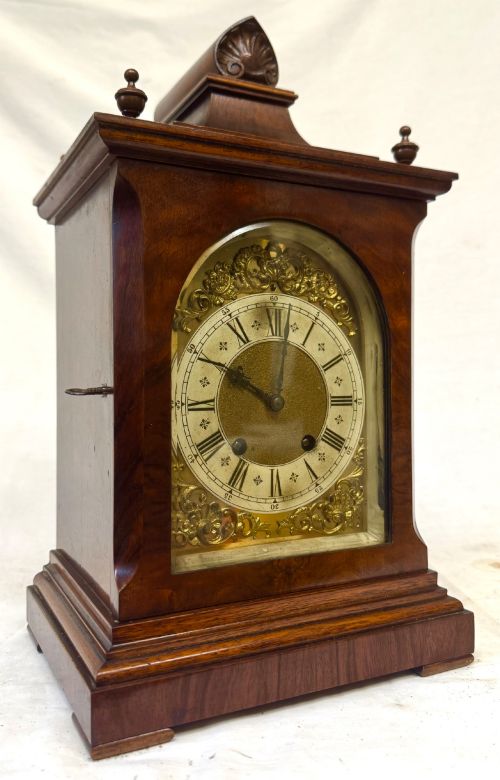
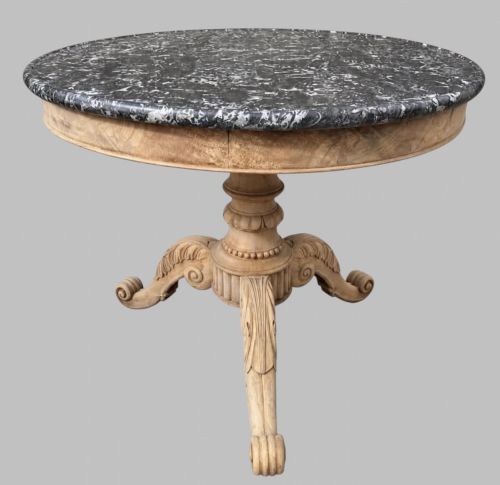
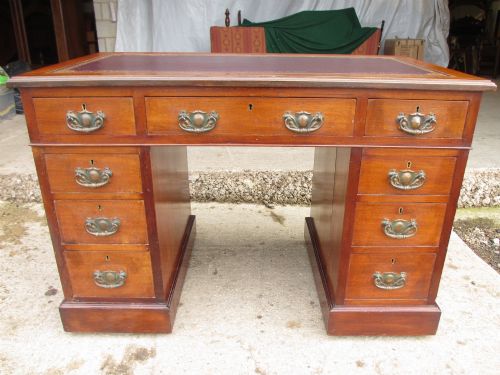
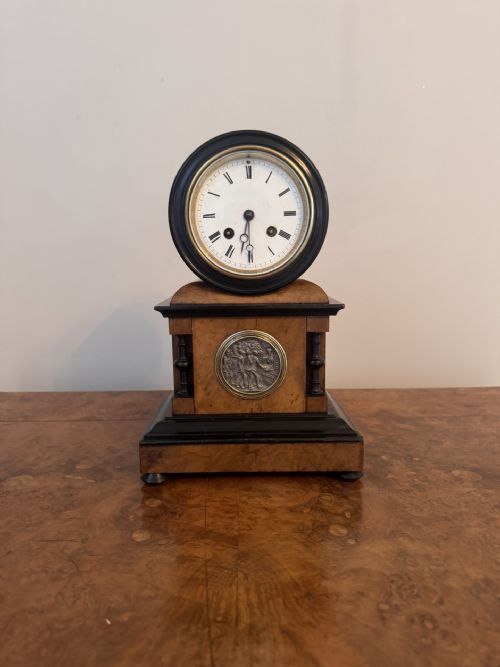
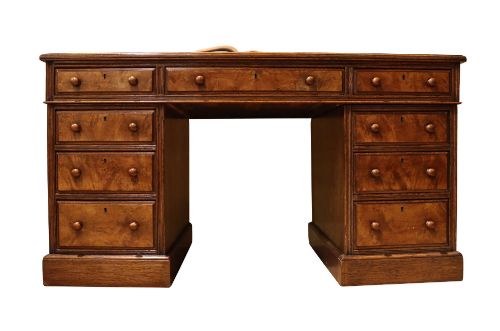
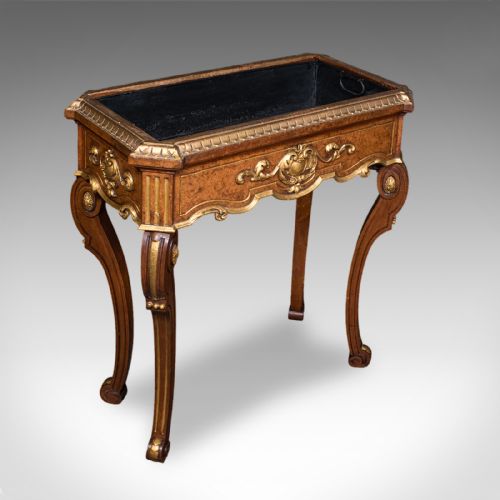
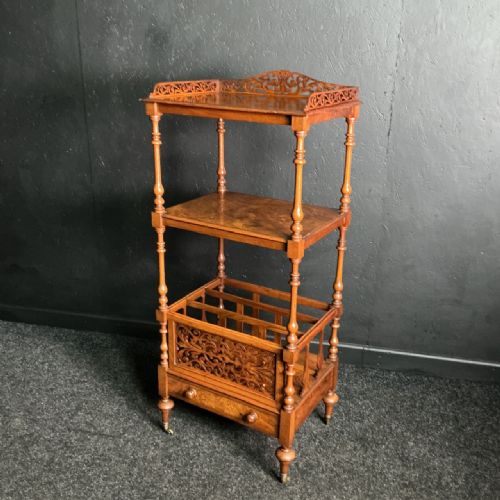
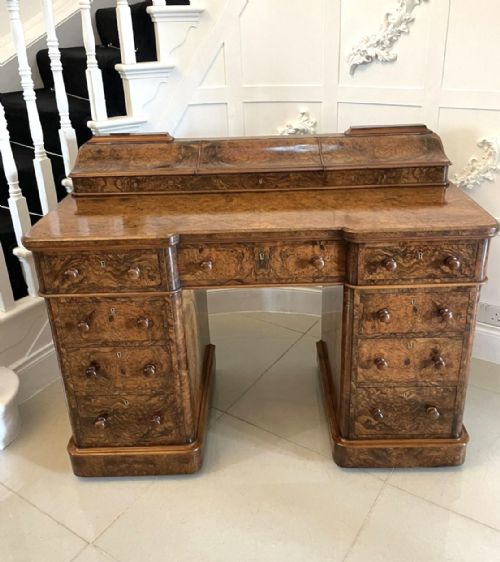
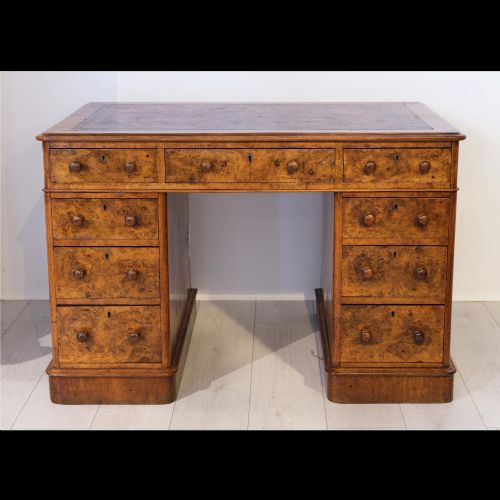
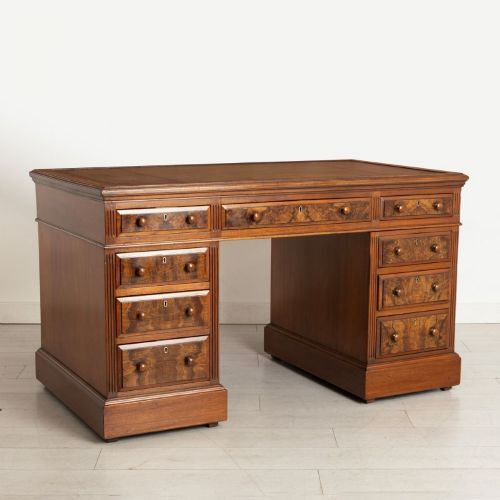
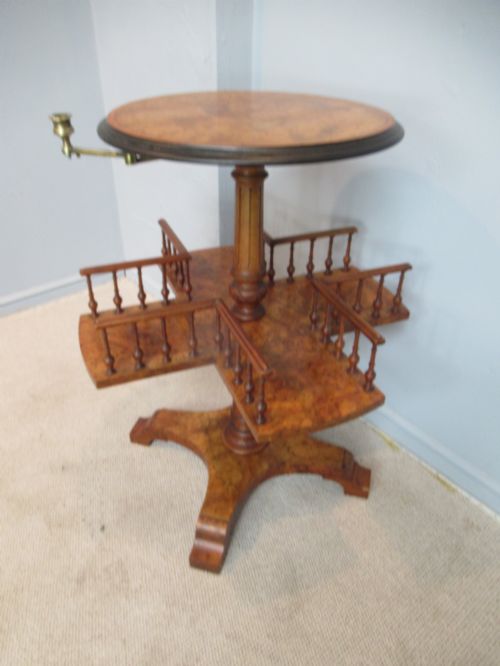

Nineteenth Century Walnut Table
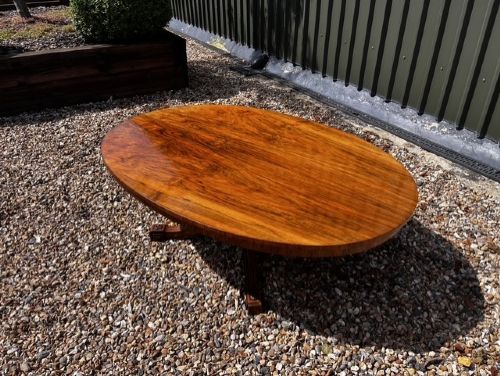
A nineteenth century walnut table brings rich timber grain and classic Victorian or continental craft straight into a room.
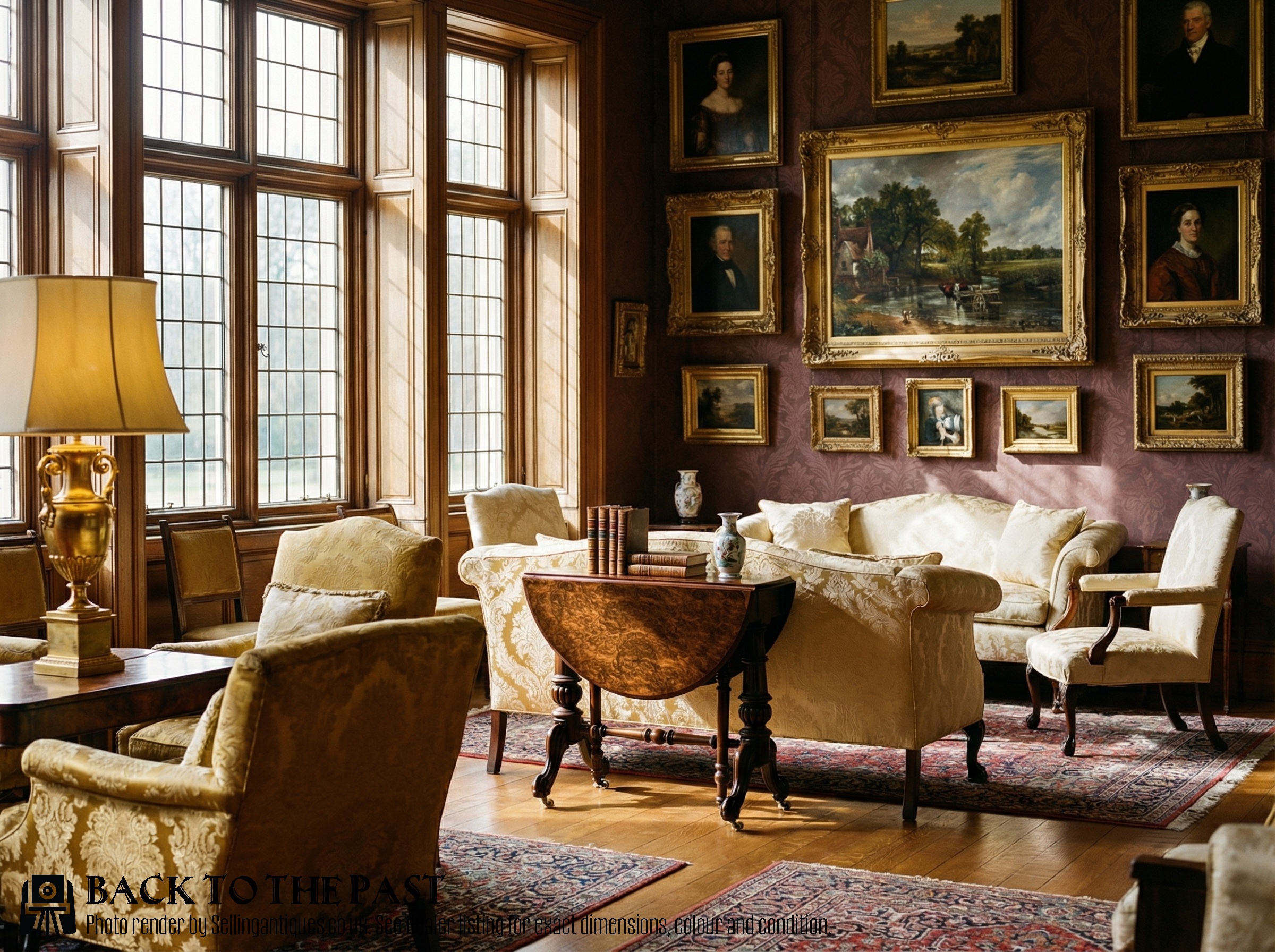
What a nineteenth century walnut table is
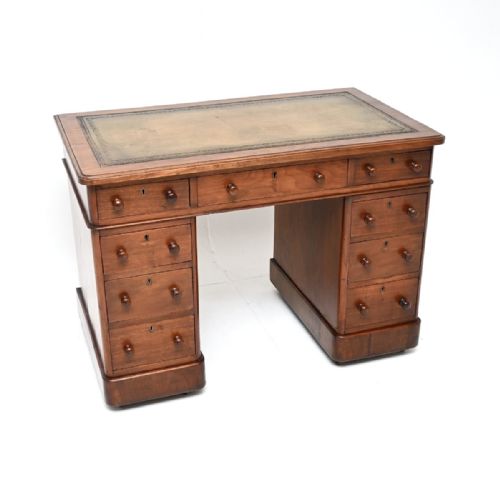
When you search for a nineteenth century walnut table, you encounter a varied group of side, centre, occasional, and coffee tables dating from the Victorian era up to around eighteen ninety. These pieces range from simple rectangular designs to more elaborate forms featuring marquetry, inlaid wood, or segmented tops.
How they were made
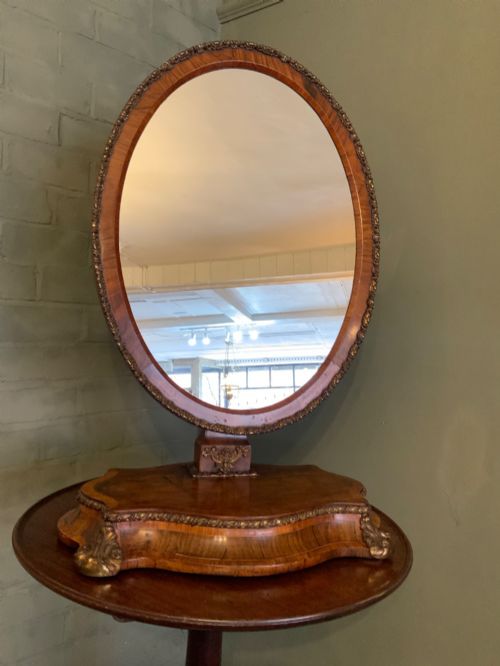
Cabinet makers utilised solid walnut alongside burr walnut veneer, applying boxwood inlay and marquetry decoration to create patterned surfaces. Brass and ormolu mounts provide structural and decorative accents on select pieces.
Construction techniques involve careful timber selection and veneering over secondary woods, sometimes paired with glass inserts or marble tops on dressing and occasional tables.
Retail Price Guide 2026
Typical UK retail prices for nineteenth century walnut table, calculated from the Sellingantiques database of over a million retail prices indexed since 2003. This retail price guide relies exclusively on Sellingantiques data; no external sources or auction records are used, so the figures do not describe the wider market.
The listings combine British Victorian items with French provincial pieces, spanning side, coffee, and centre table forms.
What varies in quality
The sophistication of the timber preparation largely separates the ordinary from the exceptional, particularly in the choice and matching of burr walnut veneer across a tabletop. Finer examples display intricate marquetry and precise inlay work in boxwood rather than simpler plain surfaces.
Structural refinement also marks the higher tiers, where balanced proportions, subtle ormolu or brass mounts, and clean joinery elevate tables like the Victorian centre table or French provincial pieces above standard utility items.
The Nineteenth Century Walnut Table Glossary
- Burr walnut
- A prized timber cut from the abnormal growths on walnut trees, yielding richly patterned and swirling grain figures. It was frequently sliced into veneers for tabletops.
- Marquetry
- The art of forming decorative patterns by fitting together small pieces of wood veneer of different colours and types. This technique appears on Victorian centre and side tables.
- Ormolu
- Gilded bronze mounts applied to furniture for decorative effect. It is found on select continental examples listed in the archive.
- Crossbanding
- A strip of veneer applied around the border of a tabletop with the grain running perpendicular to the centre. This frames the main timber panel.
- Sutherland table
- A narrow drop-leaf table with hinged flaps supported by pivoting legs. The baby version represents a compact Victorian development of this form.
Frequently Asked Questions
What is a burr walnut table?
A burr walnut table utilises veneer cut from the gnarled growth of the walnut tree. This produces a swirling, highly decorative grain pattern across the surface.
Cabinet makers in the nineteenth century favoured this timber for display pieces, combining it with polished finishes to highlight the natural figuring.
How do I identify a Victorian table?
Victorian tables often feature rich walnut timbers, turned or carved legs, and sometimes elaborate marquetry or boxwood inlay. Dating relies on stylistic cues like Victorian Rococo Revival forms or typical nineteenth century proportions.
Makers of this era balanced domestic utility with decorative flourishes, producing versatile side and centre tables for the parlour.
Where were these tables made?
Origin evidence points to British workshops as well as French provincial centres. Continental pieces often incorporate distinct regional characteristics like marble tops or ormolu mounts.
British makers focused heavily on domestic forms such as occasional and Sutherland tables, utilising local and imported walnut stocks.
How do I care for antique walnut?
Antique walnut requires gentle cleaning with a soft, dry cloth and protection from direct sunlight and extreme humidity changes. This preserves the delicate veneers and polished finishes.
Avoiding excessive moisture prevents warping and maintains the integrity of nineteenth century boxwood inlay and marquetry details.