




Burr Walnut Drop Leaf Table
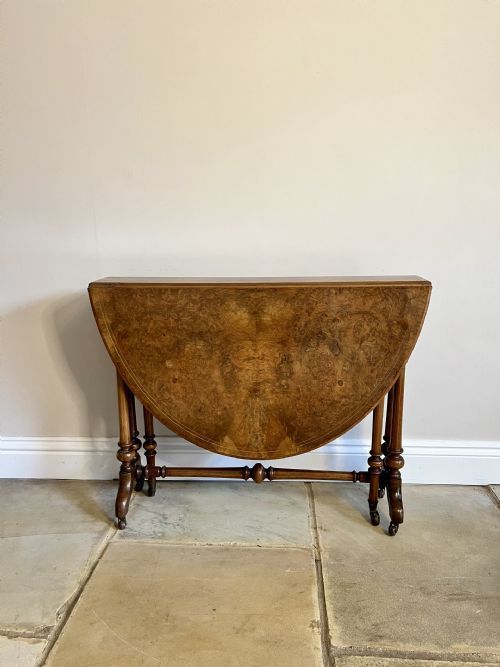
A burr walnut drop leaf table brings rich, swirling grain and clever folding leaves to compact spaces.
Burr Walnut Drop Leaf Table
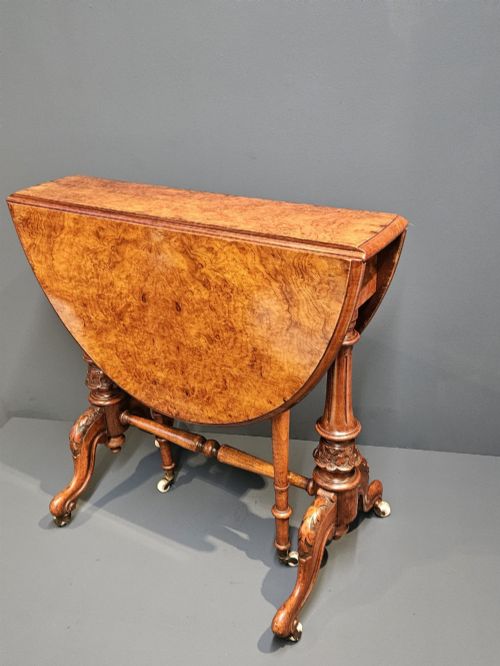
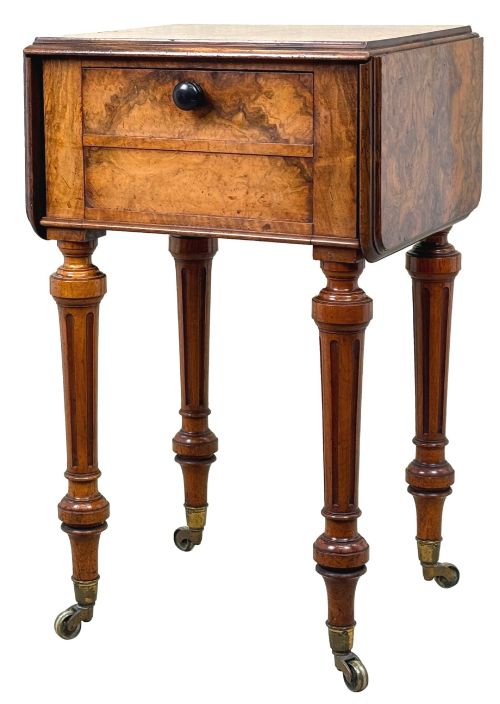
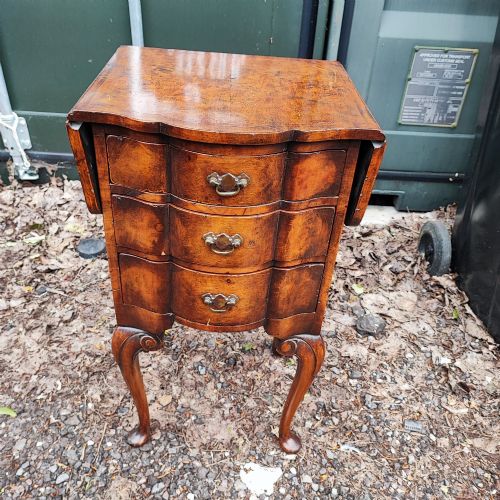
When you search for a burr walnut drop leaf table, you encounter practical occasional pieces designed to expand when needed and fold away neatly. The selection centres heavily on Victorian Sutherland tables, alongside sofa tables, work tables and occasional tables spanning the nineteenth and early twentieth centuries.
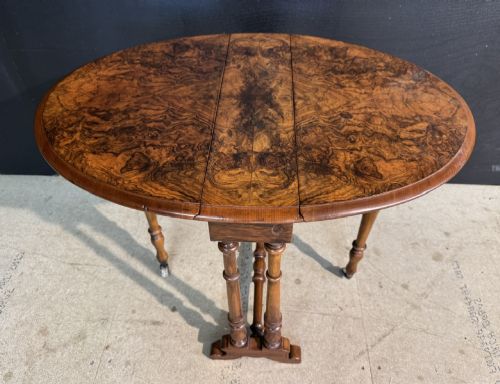
Most examples you meet take the form of Sutherland tables with characteristic slender scissor actions and drooping leaves that drop almost vertically. Makers constructed these versatile items in Victorian, Edwardian and Georgian revival styles, frequently incorporating oval or rectangular tops intended for afternoon tea or bedside use.
Materials and construction
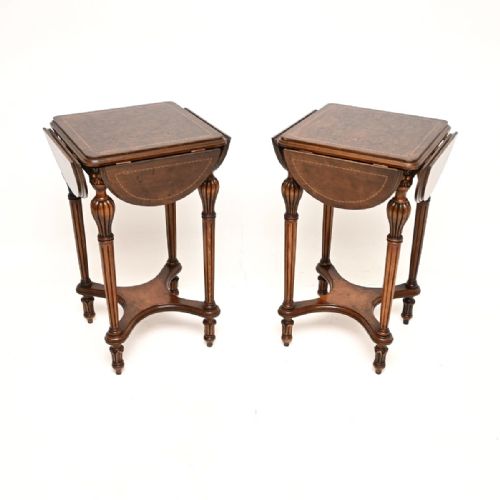
Craftsmen utilised figured burr walnut veneers over solid timber carcasses like mahogany to achieve deeply patterned, swirling decorative surfaces on the folding leaves. Many pieces incorporate subtle floral marquetry and wood inlay, finished with brass fittings and occasionally ceramic castors on the supporting legs.
The distinctive folding mechanism relies on hinged flaps supported by swing-out gatelegs or pivoting frames. Cabinetmakers balanced the thin, highly figured veneers against stable secondary woods to prevent warping across the expanding joints of the drop leaves.
Burr Walnut Drop Leaf Table Retail Price Guide 2026
Typical asking prices for burr walnut drop leaf table among the pieces listed under this phrase on Sellingantiques today, from the lower quarter to the upper quarter. They describe what is for sale here now, not the wider market.
Current listings feature burr walnut drop leaf tables spanning the Victorian, Edwardian and Georgian periods alongside materials like brass, ceramic and mahogany.
Indicators of distinction
Superior examples display exceptionally dense and symmetrical burr walnut grain patterns across both the main top and the folding leaves without awkward patches or mismatched sections. The complexity of the marquetry inlay and the crispness of the turned woodwork on the scissor action reveal the hand of a more accomplished workshop.
Structural integrity in the drop leaf hinges and folding gatelegs separates better pieces from lesser ones, ensuring the leaves remain level when raised. The depth of the polished finish and the preservation of the original wood colour without heavy restoration dictate the standing of an individual table.
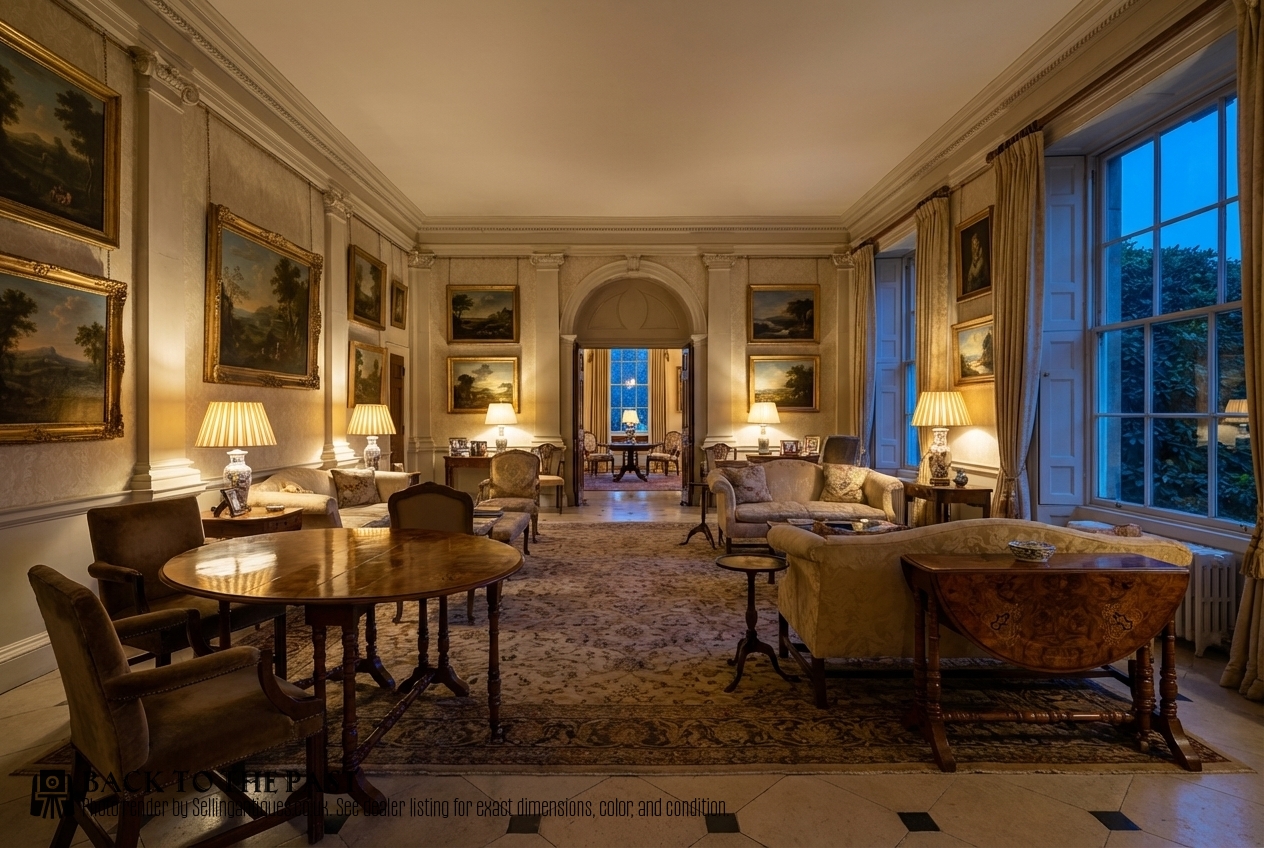
The Burr Walnut Drop Leaf Table Glossary
- Burr walnut
- A veneer sliced from the gnarled growth or burl of a walnut tree, prized for its intricate, swirling grain patterns. It creates a highly decorative surface on table tops.
- Sutherland table
- A narrow drop leaf table invented in the nineteenth century featuring exceptionally slender folding leaves supported by pivoting gatelegs. The design allows the table to fold down flat for storage against a wall.
- Marquetry
- The art of applying decorative pieces of veneer to a structure to form intricate floral or geometric designs. It appears frequently on Victorian table surfaces.
- Scissor action
- A cross-frame leg construction that opens and closes in a scissor-like motion to support the drop leaves. This mechanism is characteristic of Sutherland tables.
- Occasional table
- A small, versatile table intended for light, intermittent use around a room such as beside a chair or lamp. These pieces form a significant portion of walnut dining and sitting room furniture.
Burr Walnut Drop Leaf Table: Frequently Asked Questions
What is a Sutherland table?
A Sutherland table is a specific type of drop leaf table with hinged leaves that fold down almost vertically and a narrow central frame. The clever gateleg action supports the extended leaves securely while maintaining a very slim profile when closed.
Victorian makers produced these tables extensively for parlours and drawing rooms where space was at a premium. They served primarily for tea service or casual reading before folding away against the wall.
How do I care for burr walnut furniture?
Burr walnut requires gentle cleaning with a soft, dry cloth and protection from direct sunlight and excessive heat. Maintaining stable indoor humidity prevents the delicate veneers from drying out or lifting over time.
Avoid using silicone polishes or harsh chemical sprays on antique polished surfaces. Occasional application of quality beeswax helps nourish the wood and preserve the depth of the grain.
How can I date a walnut drop leaf table?
Dating relies on examining the construction methods, leg styles, and secondary woods visible beneath the table. Victorian pieces often feature turned legs with ceramic castors, while Edwardian or later examples show different stylistic revivals.
Makers working in the nineteenth century utilised specific joinery techniques and hinge designs that evolved from earlier Georgian proportions. Comparing the hardware and internal framing against documented period examples clarifies the manufacturing era.
Where were drop leaf tables used?
Drop leaf and Sutherland tables found places in sitting rooms, bedrooms and parlours as versatile multi-purpose furniture. Their ability to expand instantly made them ideal for serving afternoon tea or holding bedside lamps.
Homeowners moved these lightweight pieces easily around the house depending on daily requirements. The folding mechanism ensured they occupied minimal floor space when not in active use.