

Small Gateleg Table
These small gateleg table examples combine space-saving drop-leaf utility with centuries of timber craftsmanship.
What a small gateleg table is
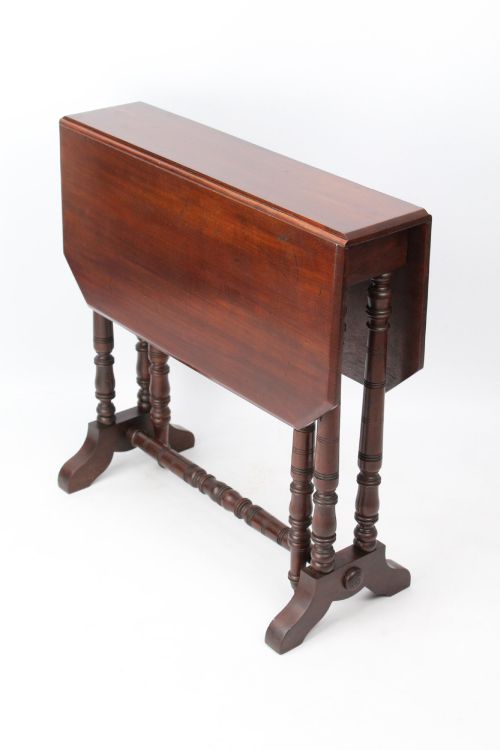
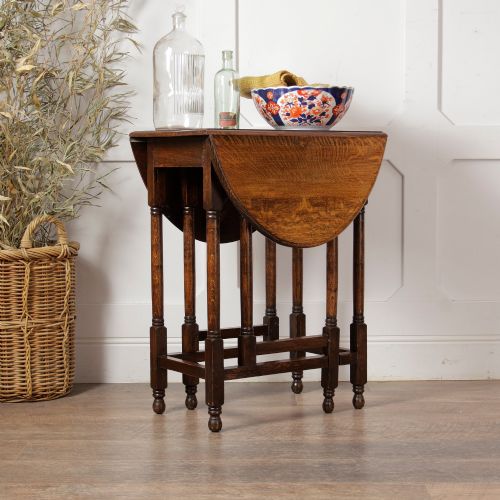
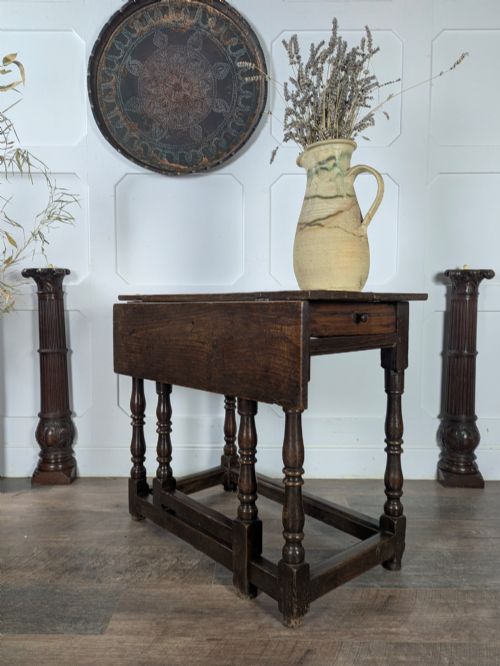
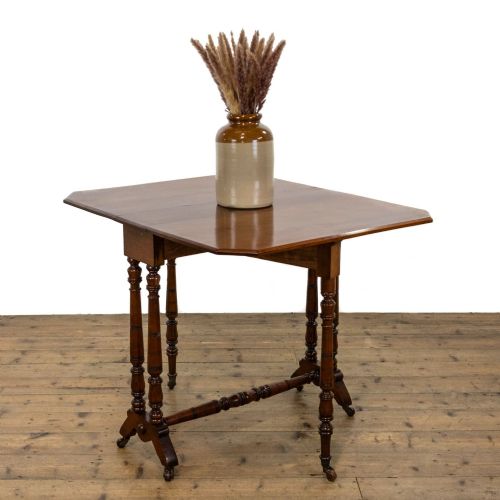
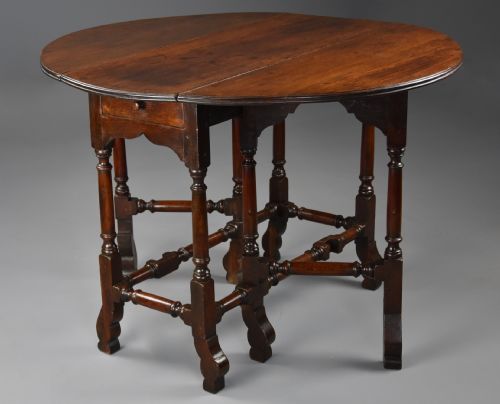
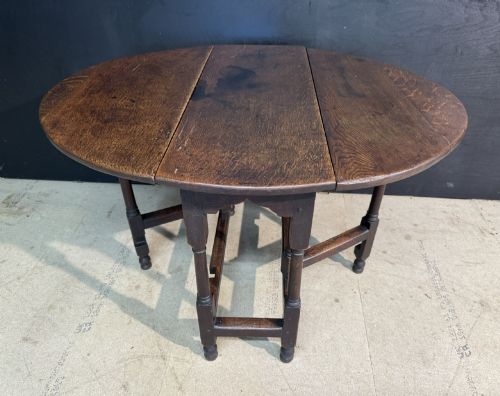
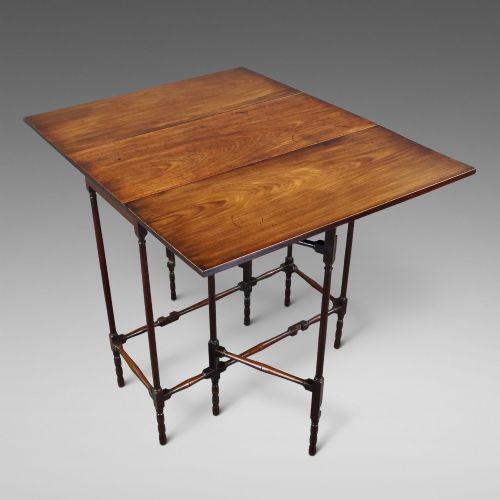
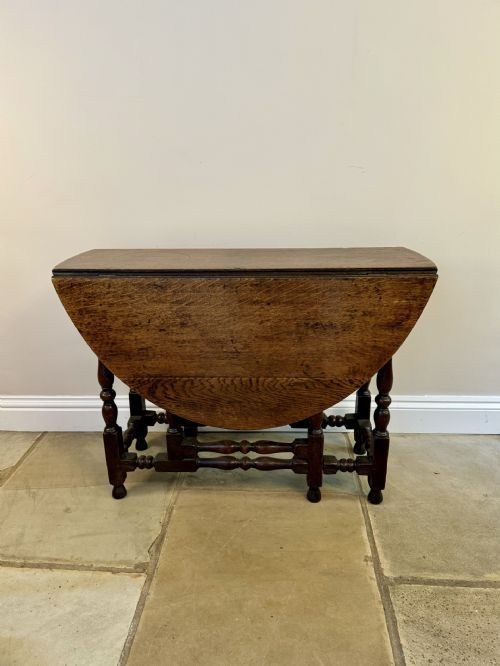
A small gateleg table serves as a compact surface featuring hinged leaves supported by swinging legs. The selection spans sturdy seventeenth-century country pieces through to refined Georgian walnut and mahogany forms.
Oak dominates the archive alongside walnut, elm, yew and mahogany. Buyers frequently encounter seventeenth-century country dining tables and later occasional variants.
The format adapts easily to smaller rooms, functioning equally as a side table, breakfast surface or compact dining option.
Materials and construction
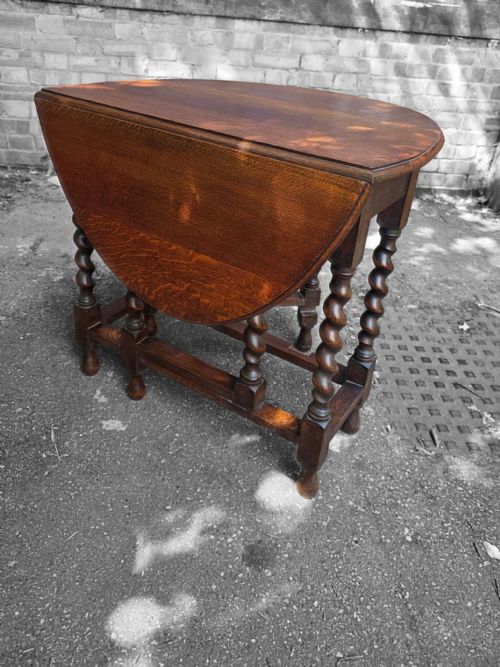
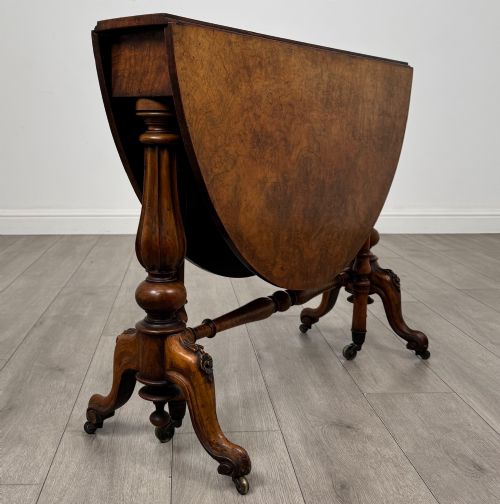
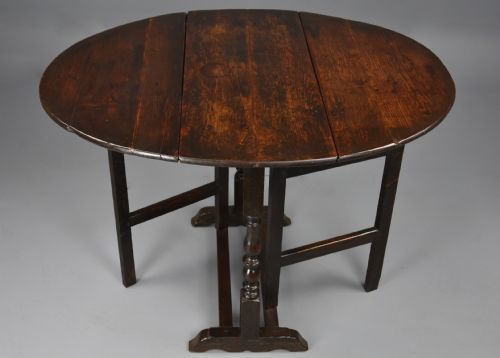
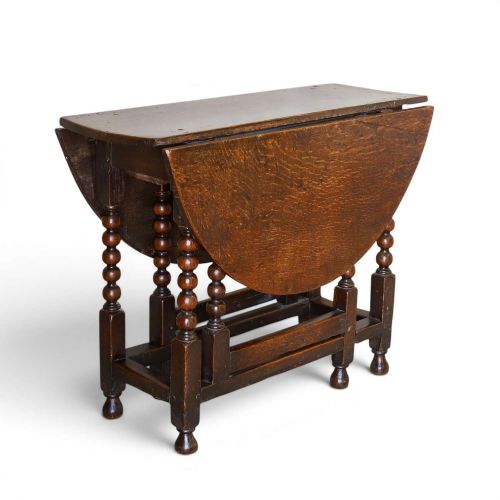
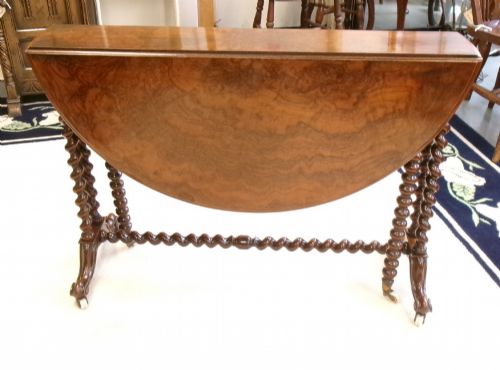
Joiners built these tables primarily from native timbers like oak, elm and yew, later adopting exotic woods such as Cuban mahogany and burr walnut. Surfaces often feature turned supports, including barley-twist legs and sledge or trestle bases.
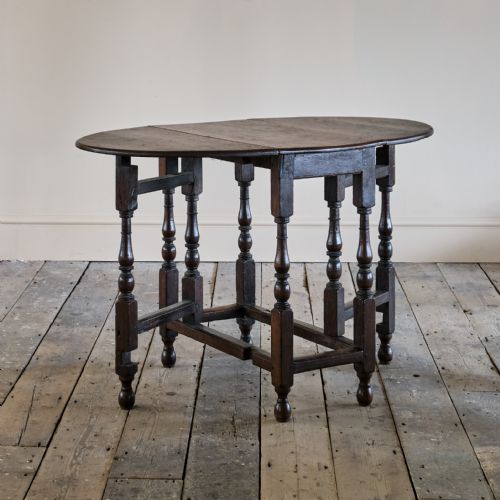
Hinged drop leaves rely on pivoting gate legs that swing outward to support the extended flaps. Craftsmen joined structural elements using traditional pegged joints and turned stretchers for rigidity.
Listings feature timbers spanning oak, walnut, mahogany, elm, yew, brass, and ceramic across periods from the seventeenth century to the twentieth.
Judging quality and proportion
Quality rests in timber selection, originality of surface patination and the crispness of turned leg details. Early examples with untrimmed proportions and untouched colour command greater interest.
The integrity of the pivoting gate mechanism and the snug fit of the drop leaves when open indicate superior cabinet-making skill.
The Small Gateleg Table Glossary
- Gateleg table
- A table with hinged leaves supported by one or more legs that swing outward like a gate. This clever design allows the surface area to expand or contract according to space requirements.
- Drop-leaf
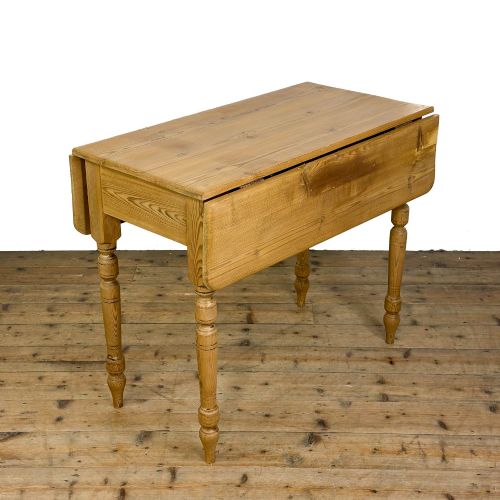
- A table top configuration comprising a fixed centre section and hinged flaps on either side. These leaves drop down vertically when not in use.
- Barley-twist
- A type of decorative turning resembling a spiral rope. This technique appears frequently on seventeenth and early eighteenth-century table legs and stretchers.
- Patina
- The surface sheen and colour developed by timber over centuries through age, use and waxing. A desirable patination shows authentic depth without artificial polishing.
Frequently Asked Questions
How do I use a small gateleg table today?
These tables fit easily into compact spaces as occasional side surfaces or impromptu dining spots.
Drop the leaves to tuck the piece against a wall when floor space is tight.
What woods were used for these tables?
Early examples rely predominantly on native English oak, elm and yew.
Later eighteenth and nineteenth-century pieces incorporate mahogany, walnut and burr walnut veneers.
How can I tell a seventeenth-century table from a later one?
Examine the timber colour, tool marks and the construction of the frame and joints.
Seventeenth-century pieces typically feature pegged oak joinery and deeper surface patination than later revivals.
What is a barley-twist base?
It is a decorative wood-turning style shaped like a spiral or twisted rope.
This specific form is commonly found on seventeenth-century and revival gateleg table legs.