





Walnut Sutherland Table
When you buy a walnut sutherland table, you choose a compact drop-leaf occasional piece built for flexible living rooms and tea services.
Walnut Sutherland Table
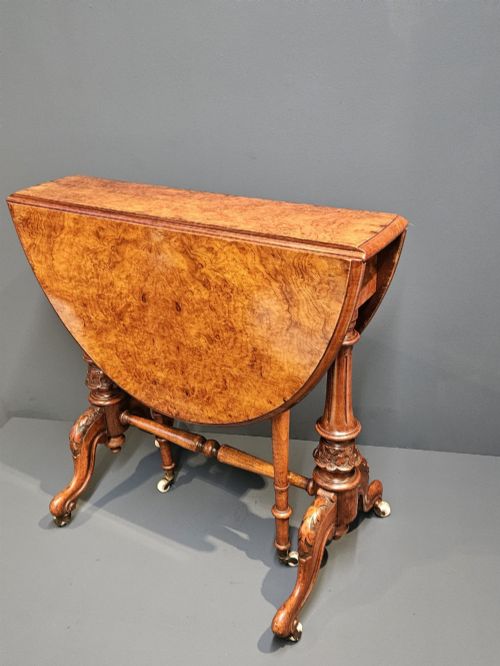
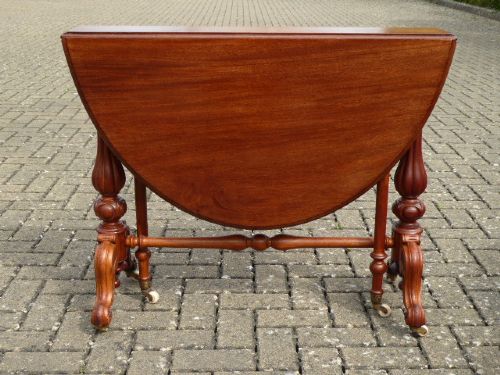
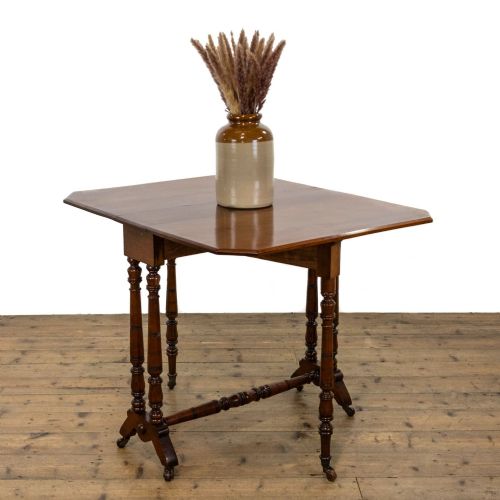
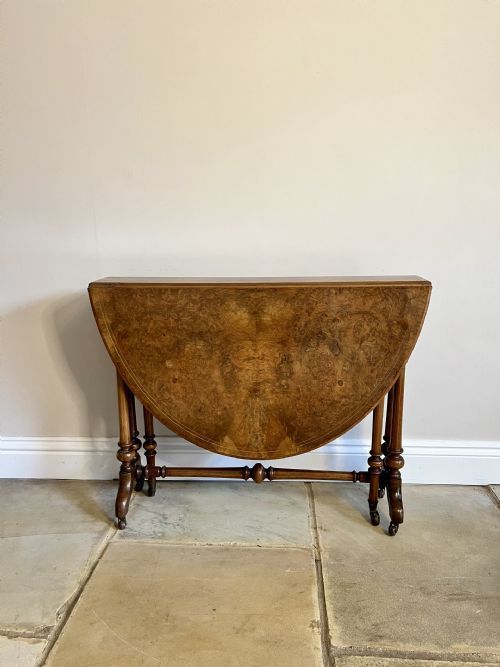
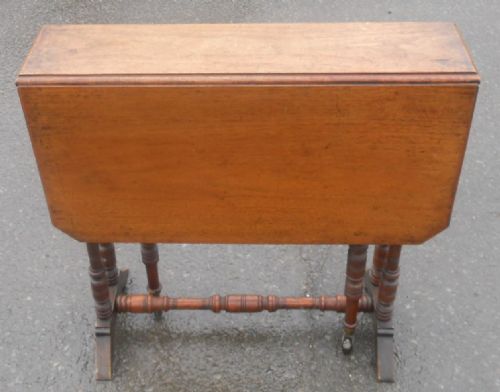
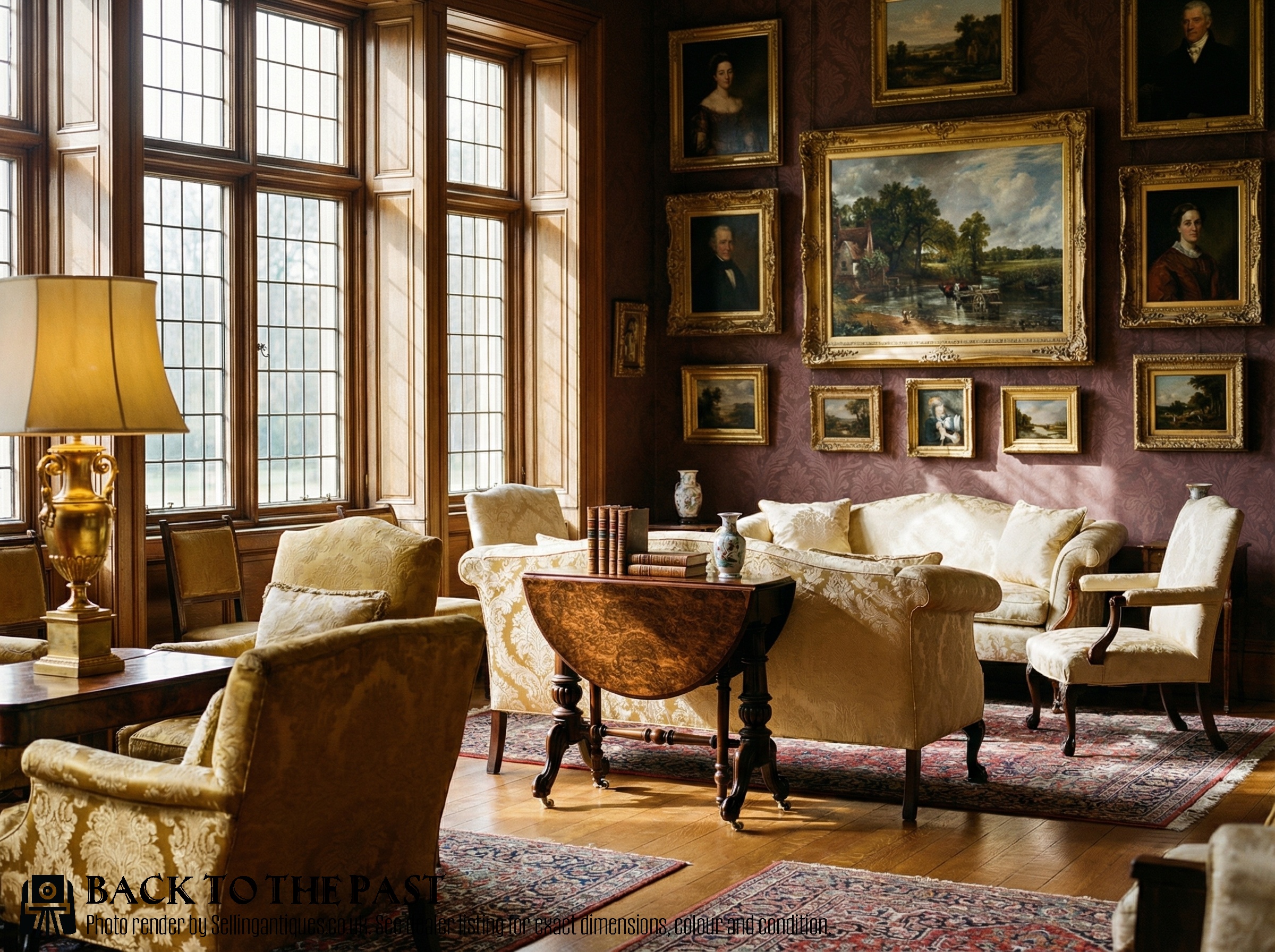
A walnut sutherland table is a narrow drop-leaf folding table designed to occupy minimal space when closed and expand quickly for serving tea or general use. The examples you encounter on this page span the Victorian and Edwardian periods, with nineteenth-century items forming the vast majority of the selection.
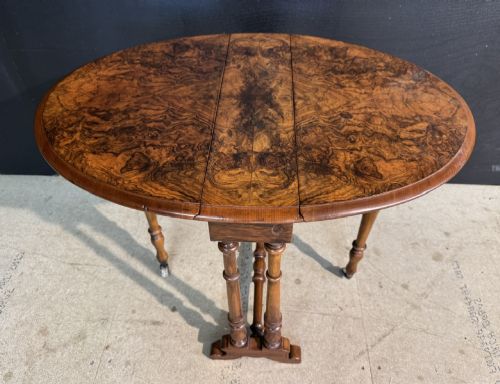
Most pieces seen here are smaller formats often described as baby or miniature sutherland tables, alongside standard occasional, coffee, and tea variations. They appear primarily in figured walnut and burr walnut, frequently featuring oval tops supported by gate legs.
How they were made
Joiners built these tables using walnut and burr walnut veneers applied to stable subsidiary woods, often highlighting the distinctive swirling grain figures on the folding flaps. Boxwood and other contrasting timbers appear as stringing or inlays for floral marquetry details.
Makers integrated brass hinges and hardware to secure the pivoting gate legs that support the drop leaves when extended. Ceramic elements or metal castors occasionally feature on the base to aid movement across carpets and flooring.
Walnut Sutherland Table Retail Price Guide 2026
Typical asking prices for walnut sutherland table among the pieces listed under this phrase on Sellingantiques today, from the lower quarter to the upper quarter. They describe what is for sale here now, not the wider market.
Victorian makers designed these tables to fold thin enough to slide away quietly when tea was finished.
What varies in quality
Quality rests upon the selection of the burr walnut veneer and the crispness of any inlaid marquetry or boxwood stringing. Tables exhibiting rich, highly figured grain patterns and finely carved gate leg supports sit at the upper end of the scale.
Structural integrity of the pivoting mechanism and the alignment of the drop leaves when opened determine how successfully a piece has survived decades of folding and unfolding.
The Walnut Sutherland Table Glossary
- Sutherland table
- A narrow drop-leaf table with hinged flaps that fold down almost vertically, supported by pivoting gate legs. It was invented in the nineteenth century and named after the Duchess of Sutherland.
- Burr walnut
- Wood taken from a walnut tree growth or burl, yielding a swirling, highly decorative grain pattern used for veneers on fine furniture tops.
- Gate leg
- A leg hinged to a swing-out gate frame that moves outward to support a drop leaf when the table is opened.
- Marquetry
- Decorative patterns created by fitting together small pieces of wood veneer, boxwood, and other materials onto a solid carcase surface.
- Drop leaf
- A hinged section of a table top that can be folded down to save space or raised and supported when extra surface area is needed.
Walnut Sutherland Table: Frequently Asked Questions
How do you fold a sutherland table?
To close the table, you lift each drop leaf slightly to release the weight from the supporting gate legs. Then you swing each gate leg inward toward the central underframe until it rests flush, allowing the leaves to drop downward.
Opening the table reverses the sequence. You swing the gate leg outward to its locking position and lower the leaf so it rests flat upon the wooden support.
Where were sutherland tables used?
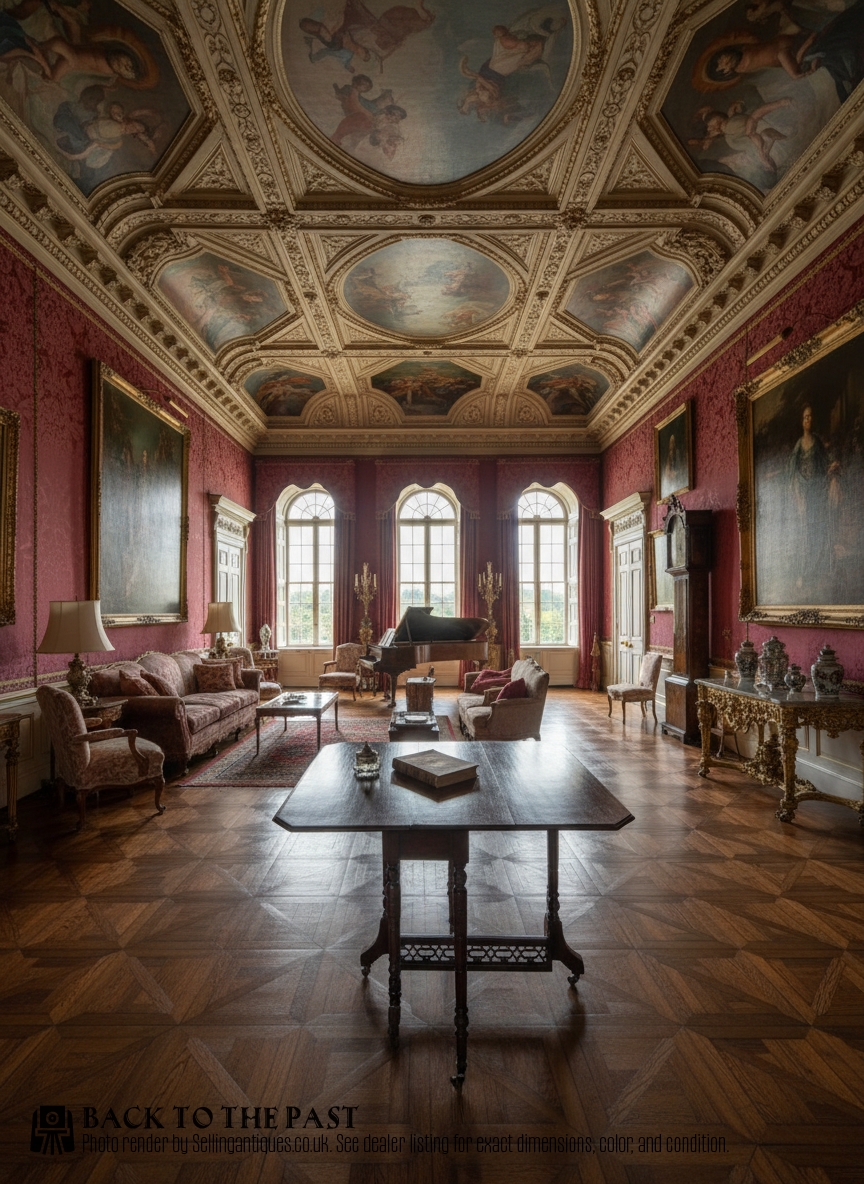
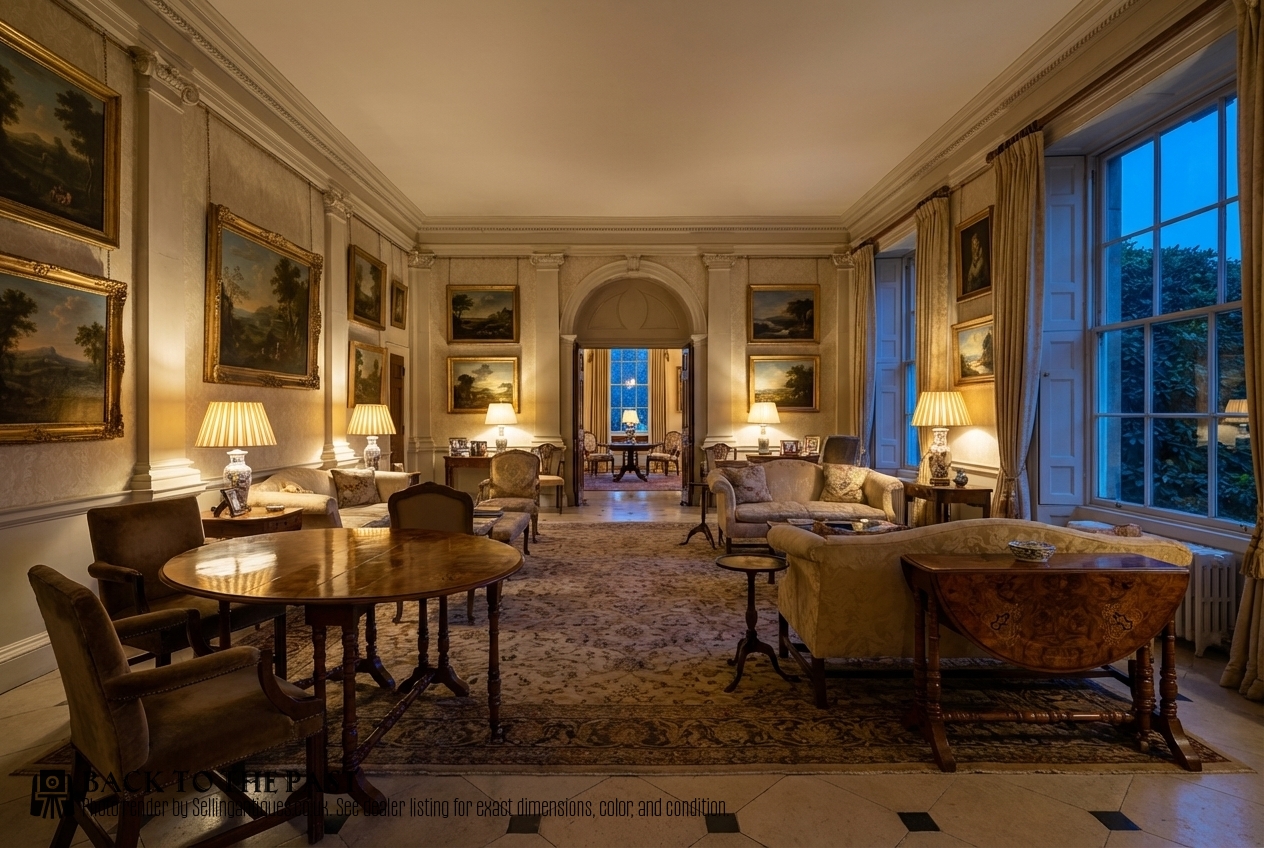
These tables were designed primarily for Victorian drawing rooms and parlours where space-saving furniture was essential for entertaining. Their narrow profile when folded meant they could stand against a wall until needed for afternoon tea.
Today, buyers utilise smaller baby variations as coffee tables, lamp tables, or bedside stands in modern living spaces.
What is a baby sutherland table?
A baby sutherland table is simply a smaller scale version of the standard nineteenth-century design. These compact pieces offer the same folding drop-leaf action in a reduced footprint.
Cabinet makers produced them for tighter Victorian rooms, making them particularly well-suited as modern coffee or occasional tables.
How can you tell a Victorian table?
Victorian walnut furniture typically displays characteristic timber selections, such as figured or burr walnut veneers, combined with nineteenth-century construction methods like hand-cut dovetails and brass hinge fixings. Stylistic details such as boxwood stringing and floral marquetry point directly to this era.
Later Edwardian examples tend to feature lighter framing and more restrained decoration while retaining the core drop-leaf mechanism.