

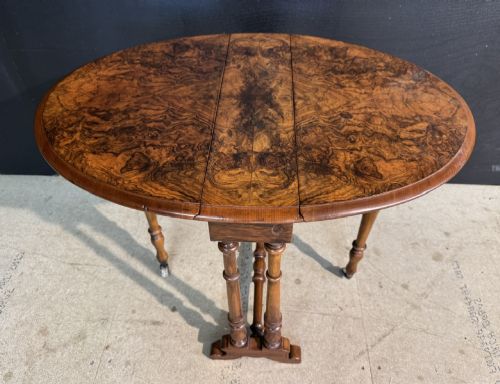
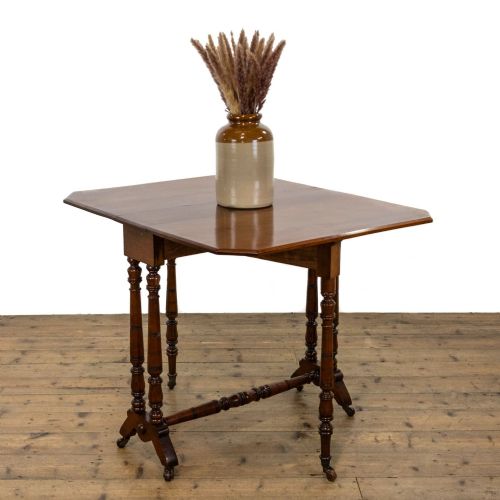
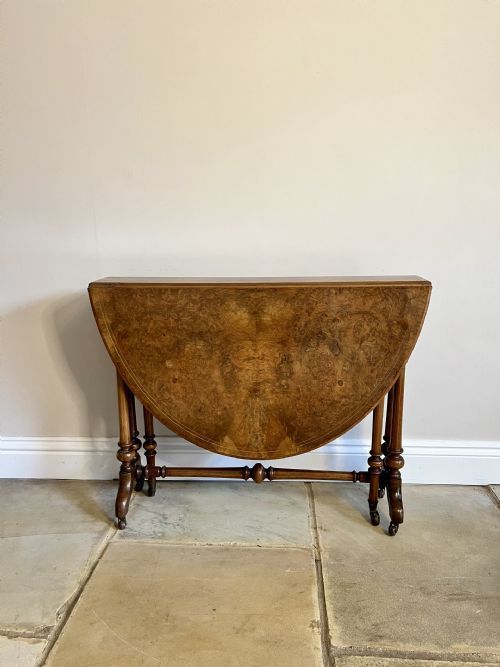


19th Century Sutherland Table
A 19th century sutherland table gives you a narrow drop-leaf surface that opens wide on pivoting rule-joints.
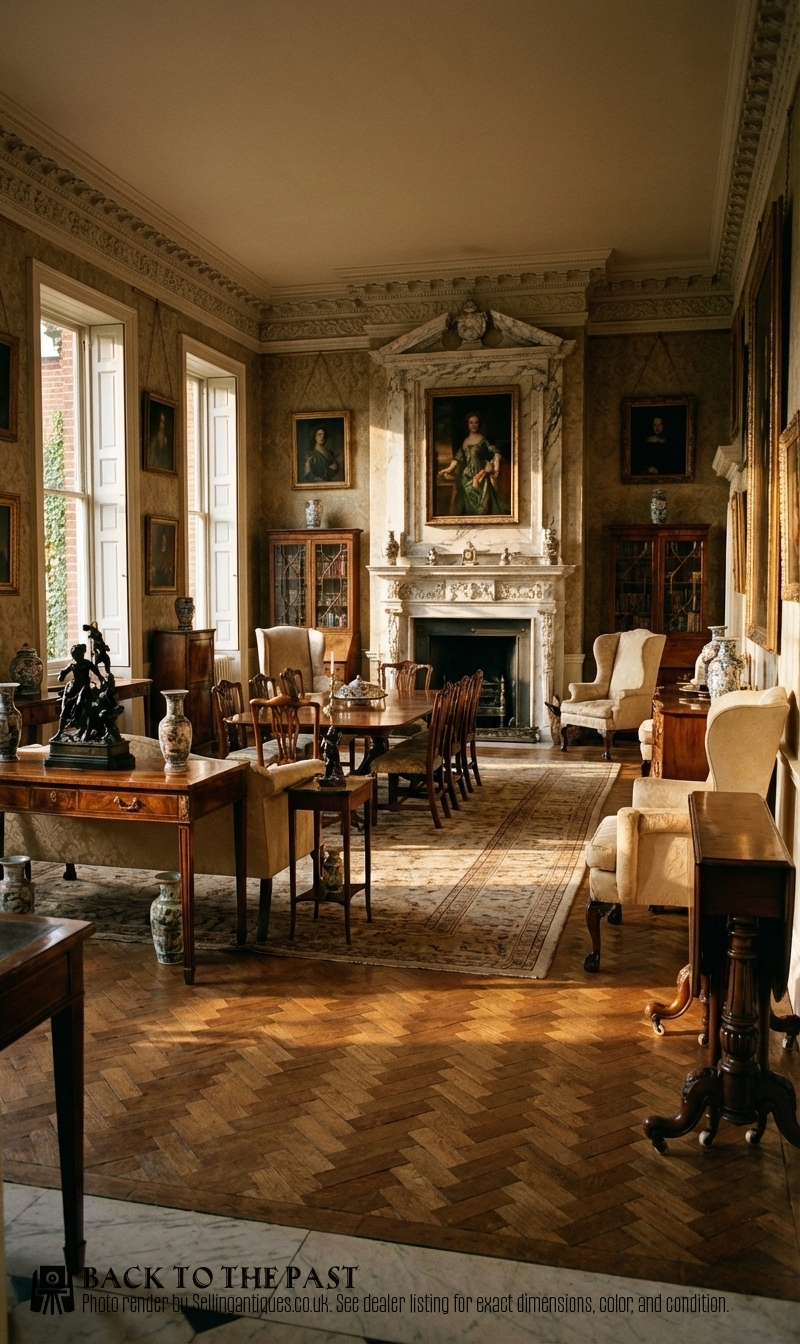
19th Century Sutherland Table
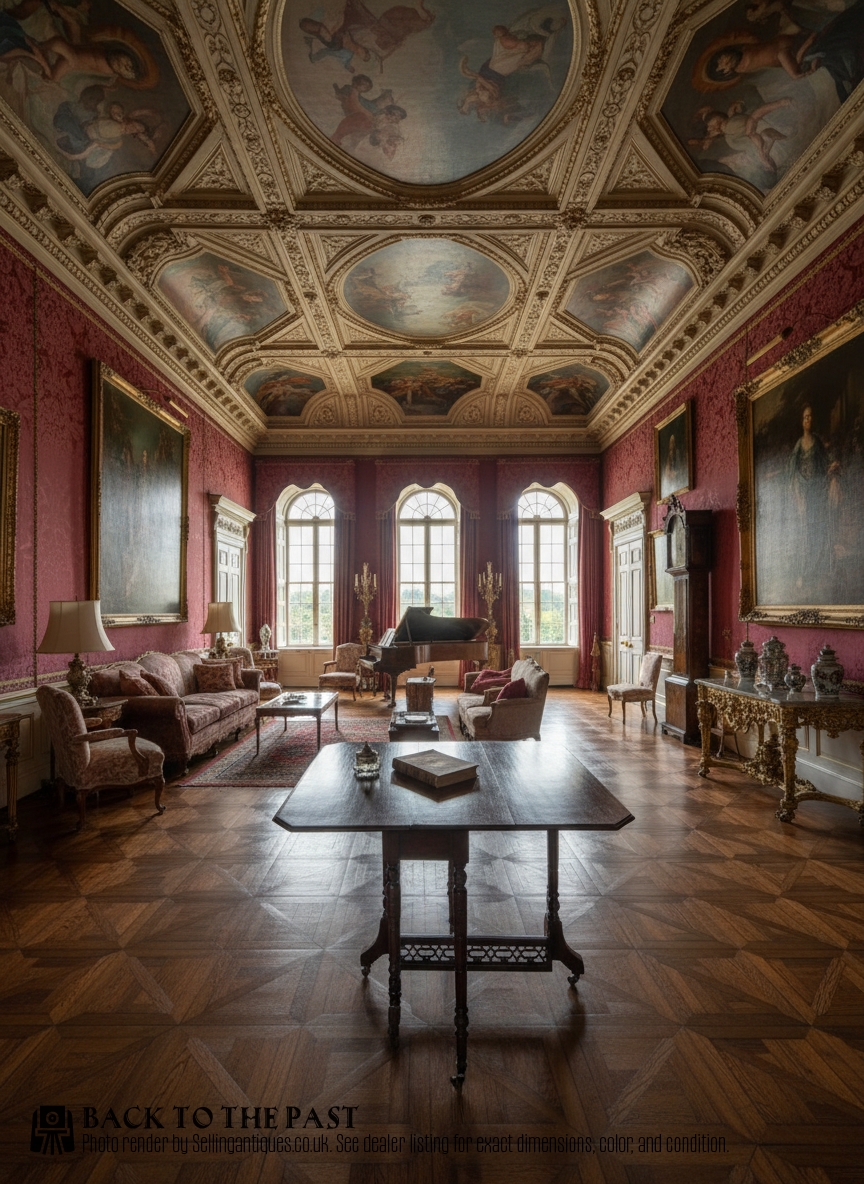
A 19th century sutherland table is a narrow drop-leaf design that sits flat against a wall until its two hinged flaps are lifted on pivoting gate-legs. These versatile tables appear in Victorian and William IV iterations, serving as occasional, side, coffee or dining tables.
The version you are most likely to meet on this page is constructed from burr walnut or plain walnut, often built in small, baby, or miniature proportions. Other iterations emerge in mahogany, rosewood, oak, and Chinoiserie styles.
Makers shaped these drop-leaf pieces with oval or D-sided tops, supported by standard legs, bobbin-turned legs, or ceramic castors with brass mounts. They function well in compact spaces where surface area must expand or contract at a moment's notice.
How they were made
Cabinet makers utilised solid timbers and applied veneers, selecting burr walnut, mahogany, rosewood, and oak for the primary structures. Boxwood stringing and floral marquetry decorated the tabletops of finer examples.
The folding mechanism relied on rule-joints paired with pivoting gate-legs that swing outward to support the weighted drop-leaves. Brass fittings, metal hinges, and ceramic castors completed the undercarriage and mobility of the pieces.
19th Century Sutherland Table Retail Price Guide 2026
Typical asking prices for 19th century sutherland table among the pieces listed under this phrase on Sellingantiques today, from the lower quarter to the upper quarter. They describe what is for sale here now, not the wider market.
Makers built baby and miniature versions just large enough to hold a single teacup or lamp.
What varies in quality
The choice of timber creates a fundamental distinction, moving from plain walnut or mahogany up to highly figured burr walnut and rosewood. Surface decoration scales from simple polished wood to elaborate floral marquetry and boxwood inlay.
Structural refinement separates standard production from superior craftsmanship, visible in the precision of the rule-joints and the stability of the pivoting gate-legs. The presence of original brass hardware and ceramic castors elevates the integrity of the piece.
The 19th Century Sutherland Table Glossary
- Sutherland table
- A narrow drop-leaf table with exceptionally wide leaves supported by swinging gate-legs. It folds flat to save space when not in use.
- Rule-joint
- A moulded hinge joint connecting a table top to its drop-leaf. It conceals the gap and provides continuous support when the leaf is raised.
- Gate-leg
- A swinging leg attached to a hinged frame that pivots outward to support a drop-leaf. This allows the narrow frame to hold a wide surface.
- Burr walnut
- A prized timber veneer showing swirling knot growths and intricate grain patterns. Cabinet makers selected it for decorative table tops.
- Marquetry
- Inlaid wood veneers forming decorative patterns or floral pictures on a surface. Craftsmen cut contrasting timbers like boxwood into the base wood.
19th Century Sutherland Table: Frequently Asked Questions
What is a sutherland table used for?
These folding tables serve as flexible side, lamp, or occasional surfaces that expand when extra space is required. Dropping the leaves allows the frame to rest compactly against a wall.
Historically, they adapted easily to Victorian drawing rooms for tea or needlework. Today, their small footprint suits them to modern rooms as compact coffee or side tables.
How do you fold a sutherland table?
You lift each drop-leaf upward while swinging the corresponding gate-leg outward from the centre base. The pivoting leg slots underneath to support the weight of the extended leaf.
To close the table, you swing the gate-leg back toward the narrow central underframe and let the leaf drop downward. The piece then assumes its slim, space-saving profile.
What woods were used for these tables?
Walnut and burr walnut dominate the surviving examples, often paired with contrasting boxwood stringing or floral marquetry. Mahogany and rosewood appear frequently across the period.
Less common timber choices include oak and exotic varieties finished with fine polishes. Makers matched these woods to the prevailing Victorian and William IV aesthetic preferences.
How do I date a sutherland table?
You examine the overarching style indicators, such as William IV rosewood framing or Victorian Gothic Revival motifs. The presence of bobbin-turned legs or specific marquetry patterns also points toward distinct decades.
Hardware details like ceramic castors and brass fittings help anchor the piece within the nineteenth century. Cabinet-making techniques and timber selection provide further clues to the manufacturing date.