



Burr Walnut Sutherland Table
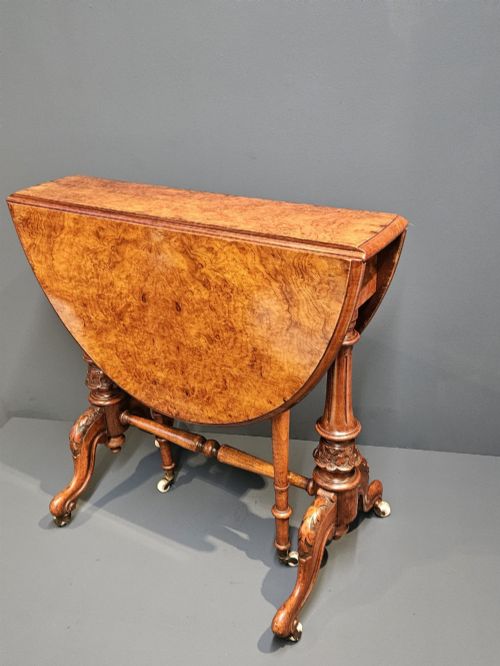
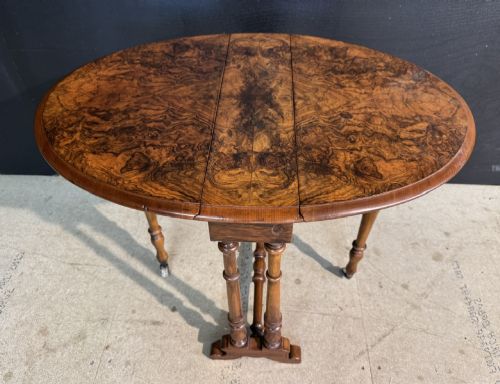
A burr walnut sutherland table is a slender, drop-leaf occasional piece defined by figured timber and clever folding leaves.
Burr Walnut Sutherland Table
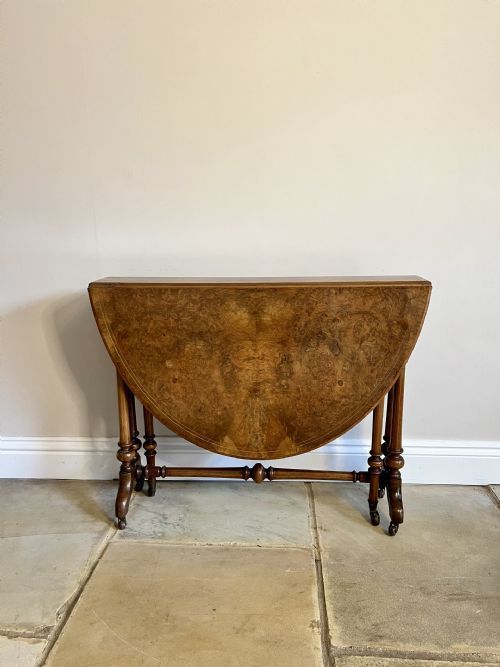
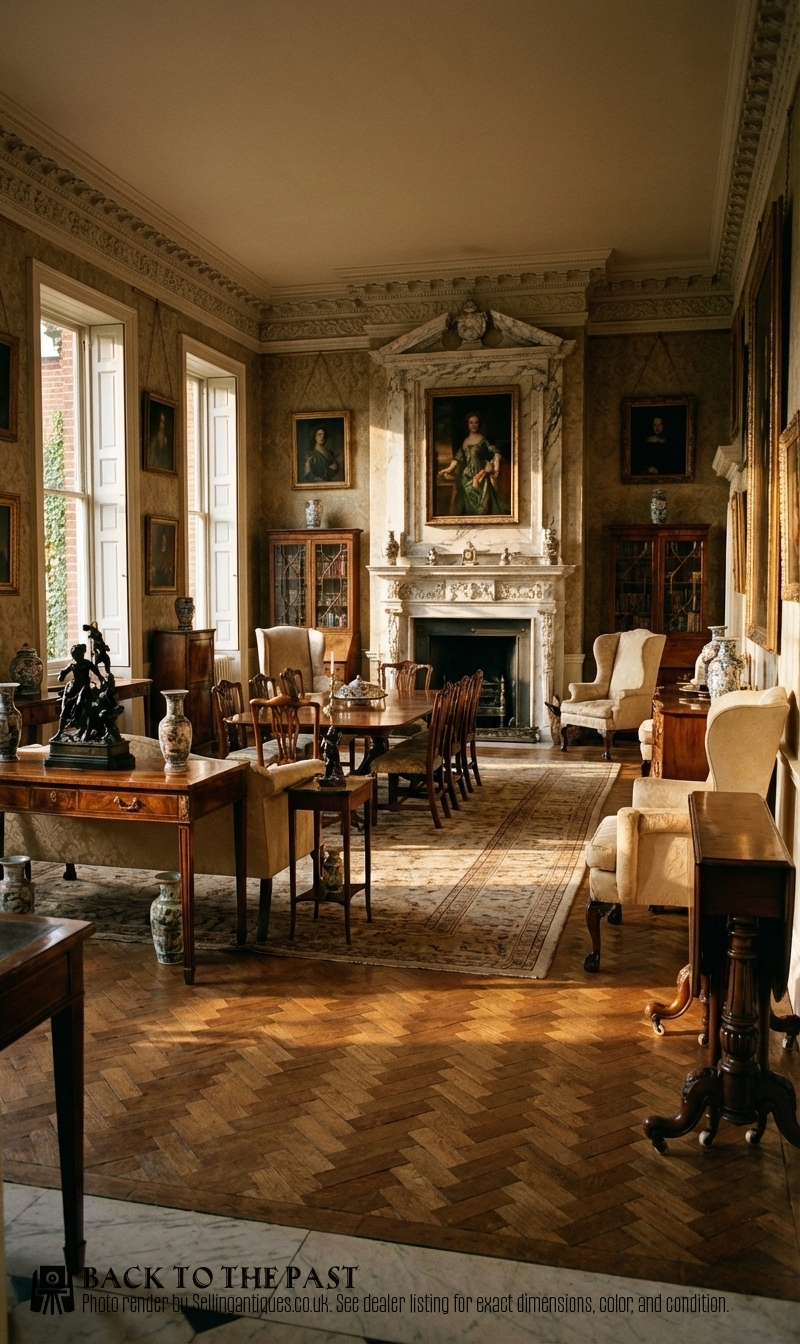
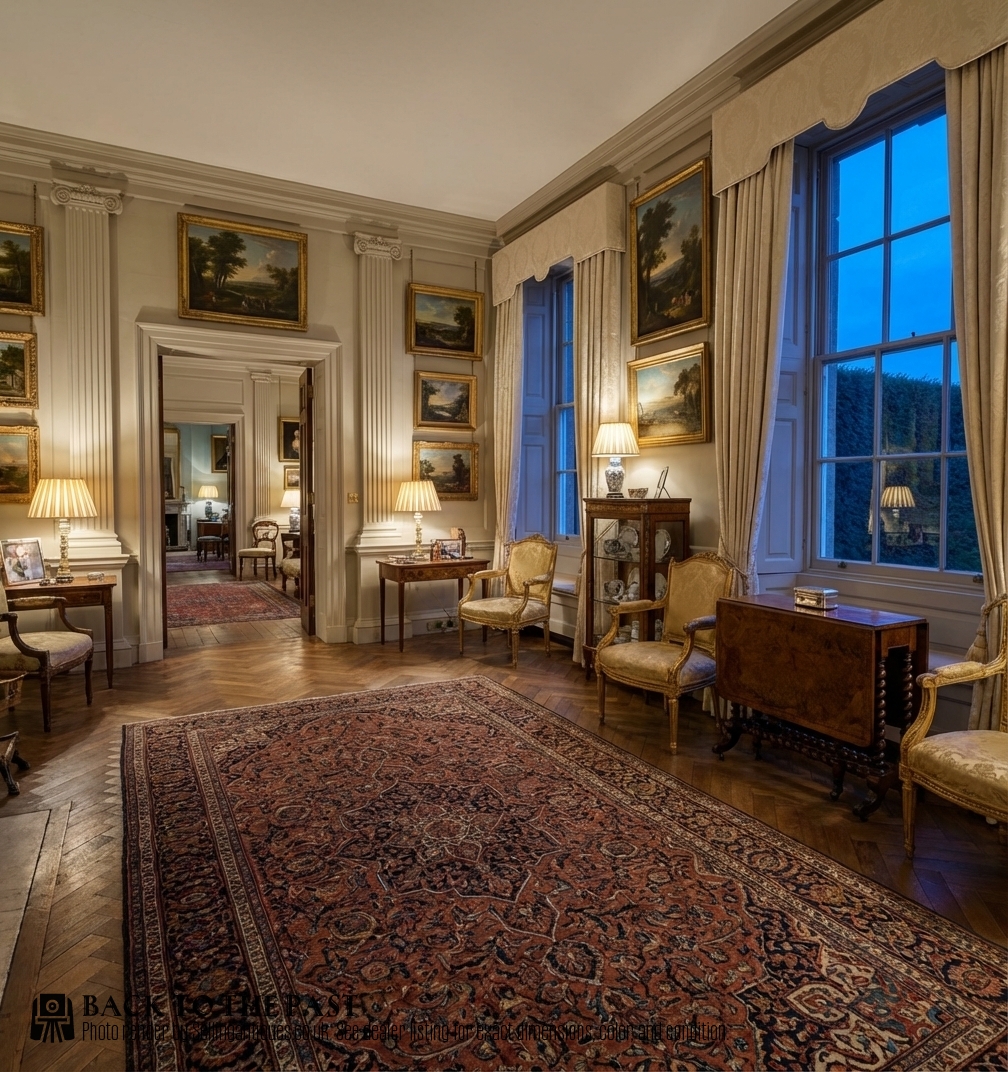
A burr walnut sutherland table is a narrow drop-leaf occasional table designed to occupy minimal space when folded and open out for tea or writing. You will encounter these predominantly as Victorian examples alongside a small number of Edwardian pieces, spanning the nineteenth and early twentieth centuries.
The form appears in various sizes, ranging from standard proportions to miniature, baby, or three-quarter formats often adapted for modern coffee table use. Most examples take an oval or rectangular shape with characteristic hinged flaps supported by swinging gate legs.
How they were made
Cabinet makers utilised highly figured burr walnut veneers across the table tops and drop flaps to create rich, swirling grain patterns. These veneers were frequently accented with delicate boxwood stringing, floral marquetry, or wood inlay.
The structural framework relied on solid walnut for the legs and folding supports, often fitted with small ceramic castors and brass hardware to allow the drop leaves to operate smoothly.
Burr Walnut Sutherland Table Retail Price Guide 2026
Typical asking prices for burr walnut sutherland table among the pieces listed under this phrase on Sellingantiques today, from the lower quarter to the upper quarter. They describe what is for sale here now, not the wider market.
Materials recorded across the inventory include burr walnut, walnut, boxwood, ceramic, brass, and assorted wood inlays.
What varies in quality
The visual appeal of a burr walnut sutherland table rests heavily on the selection and matching of the veneer, with dense, symmetrical grain patterns commanding greater visual presence. Craftsmanship shows in the tightness of the joinery at the hinges and the stability of the gate leg action when the leaves are raised.
Secondary enrichment distinguishes finer examples, such as crisp floral marquetry inlay or precise boxwood stringing rather than plain timber surfaces. Proportions also play a role, as smaller baby and miniature formats demand particular skill from the cabinet maker.
The Burr Walnut Sutherland Table Glossary
- Sutherland table
- A narrow drop-leaf table with hinged flaps that drop nearly vertically, supported by swinging legs. It was invented in the nineteenth century and named after the Duchess of Sutherland.
- Burr walnut
- Timber taken from a tree growth or burl, yielding intricate, swirling grain patterns highly prized for decorative veneer. It forms the primary visual characteristic of these tables.
- Drop leaf
- A table top configuration featuring a fixed centre section and hinged flaps that can be raised or lowered. This allows the furniture to expand for use and contract for storage.
- Marquetry
- Decorative patterns formed by fitting together small pieces of wood veneer onto a structure. Floral motifs in this technique appear frequently on Victorian tabletop surfaces.
- Boxwood stringing
- Thin inlay lines of pale boxwood set into contrasting darker walnut surfaces. This detail outlines table edges and panels to frame the grain.
Burr Walnut Sutherland Table: Frequently Asked Questions
What is a sutherland table?
A sutherland table is a type of narrow drop-leaf occasional table where the leaves fold down almost vertically. They are supported by pivoting gate legs that swing out from the centre frame.
Originally designed for Victorian drawing rooms, the narrow profile allows the piece to stand against a wall when folded. Raising the leaves creates a larger surface suitable for afternoon tea or casual use.
How do I date a sutherland table?
Dating relies on stylistic clues and construction methods visible in the wood, hardware, and legs. Most examples date from the Victorian and Edwardian eras, spanning the nineteenth and early twentieth centuries.
Victorian pieces often display rich burr walnut veneers and marquetry inlay, whilst Edwardian versions may feature simpler lines or canted corners. Ceramic castors and brass fittings also help place the piece within its period.
Can I use a baby sutherland table as a coffee table?
Smaller versions, often described as baby or miniature sutherland tables, fit modern living spaces well. Their low profile makes them practical as occasional or coffee tables.
The drop leaves allow you to adjust the surface area depending on your needs, though care should be taken with the folding gate leg supports during daily use.
What wood is used in these tables?
The primary decorative surface uses burr walnut veneer, celebrated for its complex, swirling grain patterns. Solid walnut forms the structural elements, including the legs and framework.
Finer examples incorporate additional materials such as boxwood stringing for fine lines and lighter woods for floral marquetry inlay on the top.