


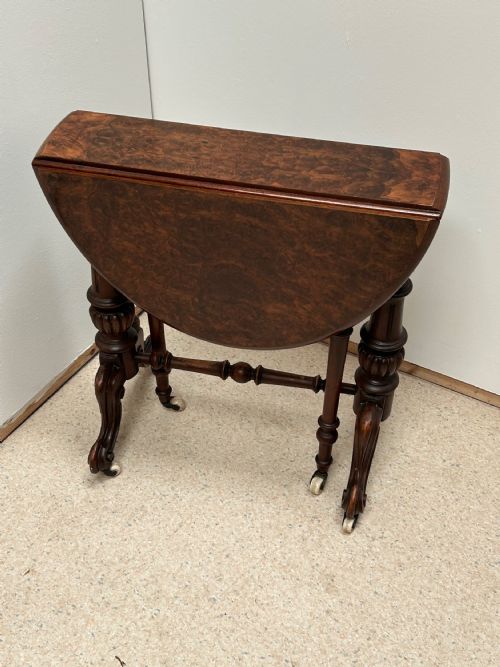


Baby Sutherland Table
These baby sutherland table examples offer compact drop-leaf utility scaled for smaller rooms.
What a baby sutherland table is
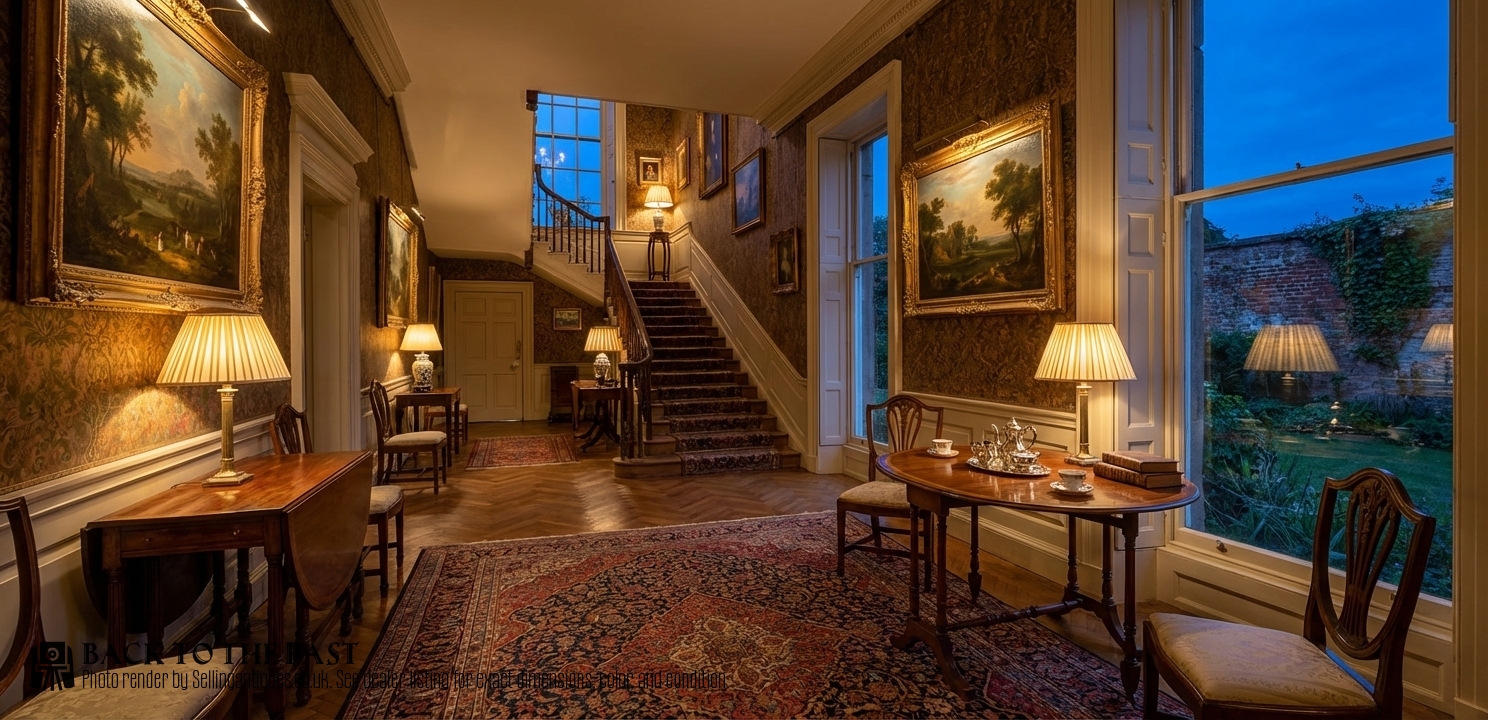
A baby sutherland table is a scaled-down version of the traditional gateleg drop-leaf table, designed for occasional use in tighter spaces.
Most pieces seen here date from the Victorian and Edwardian periods, stretching from the mid nineteenth century into the early twentieth century.
These items function primarily as side tables or low coffee tables when the leaves are dropped, opening quickly to provide surface area.
What separates the tiers of quality
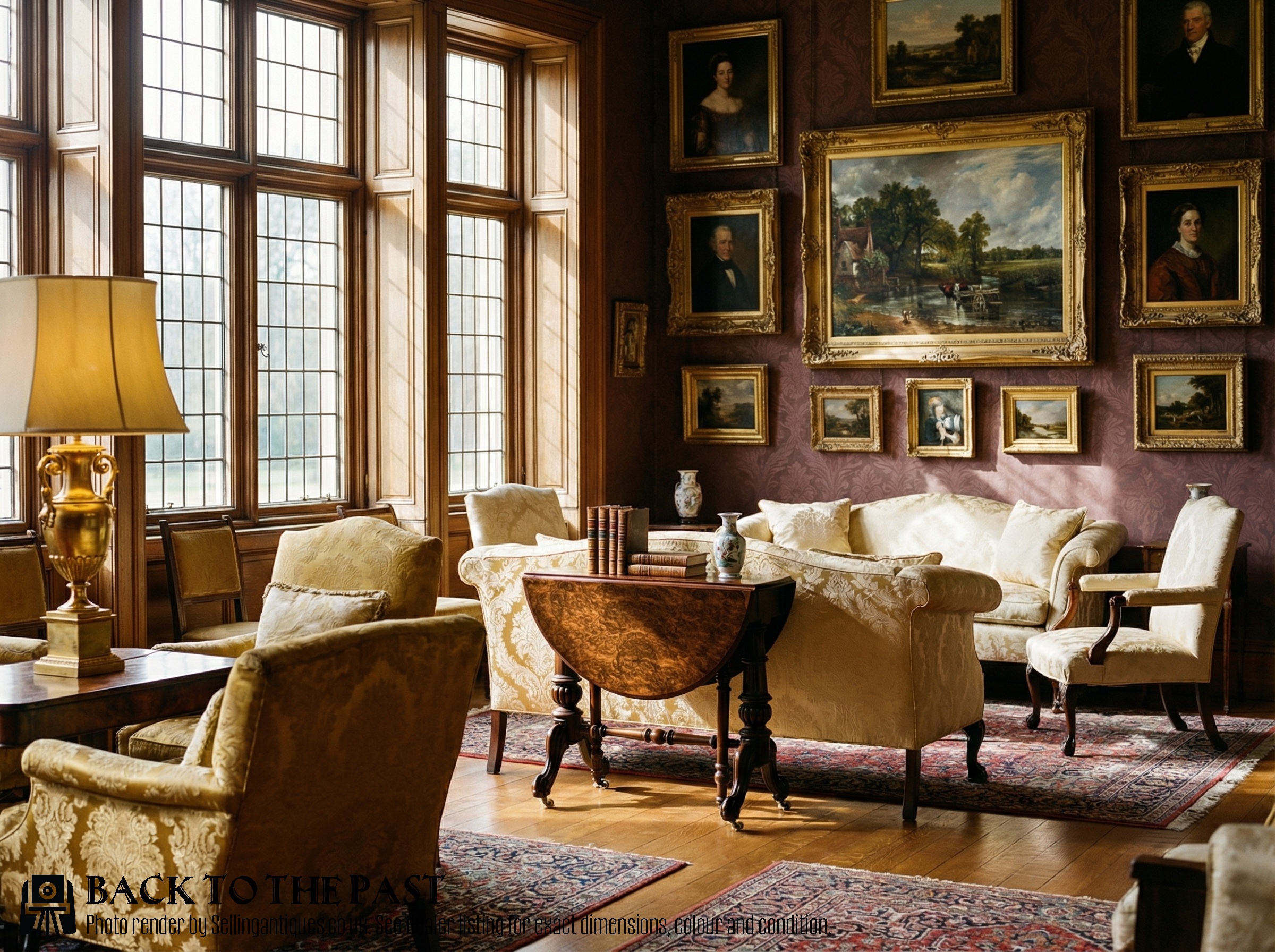
Quality rests upon the selection of timber figures, particularly the grain complexity found in burr walnut surfaces.
Refinement shows in the execution of inlaid decoration and the stability of the narrow gateleg folding mechanism.
Retail Price Guide 2026
Typical UK retail prices for baby sutherland table, calculated from the Sellingantiques database of over a million retail prices indexed since 2003. This retail price guide relies exclusively on Sellingantiques data; no external sources or auction records are used, so the figures do not describe the wider market.
Listings feature walnut, burr walnut, mahogany, satinwood and ceramic materials across Victorian and Edwardian periods.
The Baby Sutherland Table Glossary
- Sutherland table
- A narrow drop-leaf table with hinged flaps supported by pivoted gate legs. The design allows the leaves to fold down almost vertically.
- Burr walnut
- Timber taken from a tree growth or wart, showing intricate and swirling grain patterns. Cabinet makers prize this for decorative table tops.
- Marquetry
- The art of applying pieces of veneer to a structure to form decorative patterns. Craftsmen use contrasting woods to achieve pictorial detail.
- Cabriole leg
- A furniture leg that bends outward and then tapers downward. This form appears frequently on nineteenth-century tables.
Frequently Asked Questions
How do you use a baby sutherland table?
These tables sit beside chairs or sofas as compact surfaces for books or cups. Dropping the side leaves reduces their footprint when floor space is tight.
Lifting the hinged flaps transforms the top into a wider surface for serving or display. The pivoting gate legs swing outward to support the extended leaves securely.
What woods were used for these tables?
Cabinet makers relied heavily on walnut and burr walnut veneers for their rich, figured grain patterns. Mahogany and occasional satinwood or rosewood also appear in the record.
Internal framing and secondary timbers provide structural support beneath the decorative veneers. Brass components often feature on the castors and hinges.
How can you tell a Victorian table?
Victorian examples display characteristic nineteenth-century timber choices such as figured walnut and mahogany. Construction details often include turned uprights or cabriole legs.
Many pieces incorporate marquetry inlay work typical of mid to late Victorian cabinet making. Dating relies on these combined material and stylistic markers.
Are these tables good for small rooms?
The reduced scale of a baby sutherland table makes it suitable for restricted spaces. Lower coffee table heights and narrow profiles suit sitting rooms.
Folding leaves allow the furniture to hug a wall when not in use. Opening the flaps provides temporary surface area without dominating the room.