

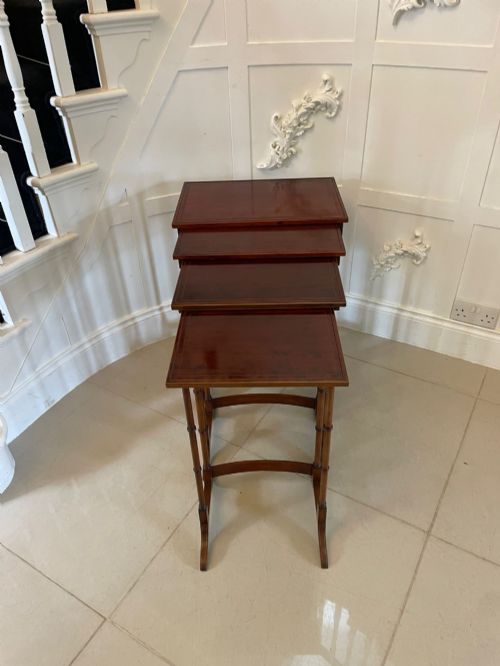
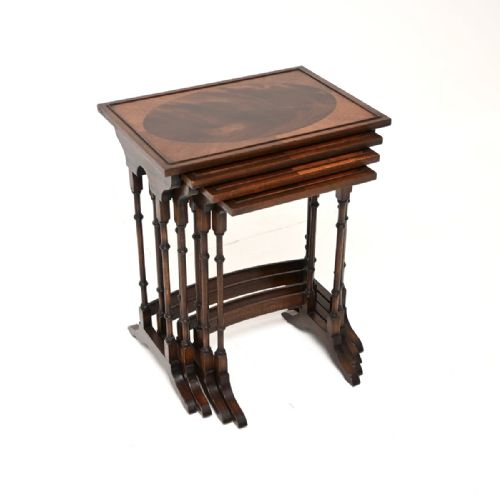
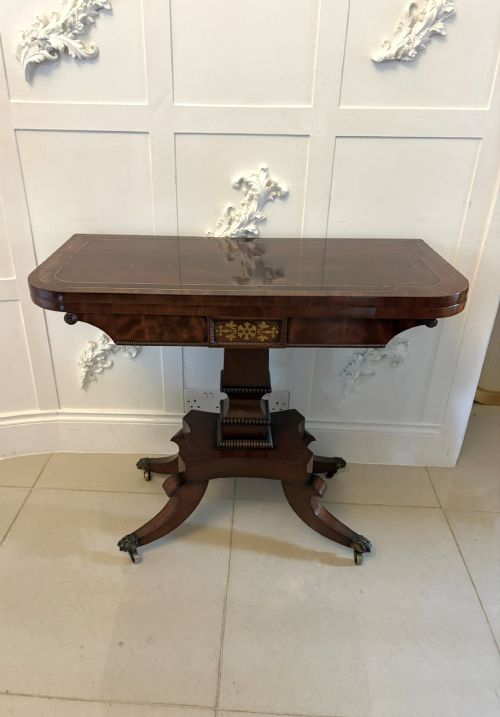
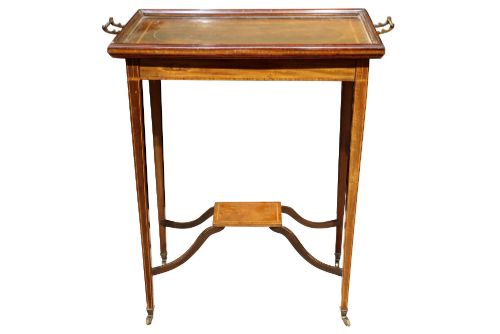
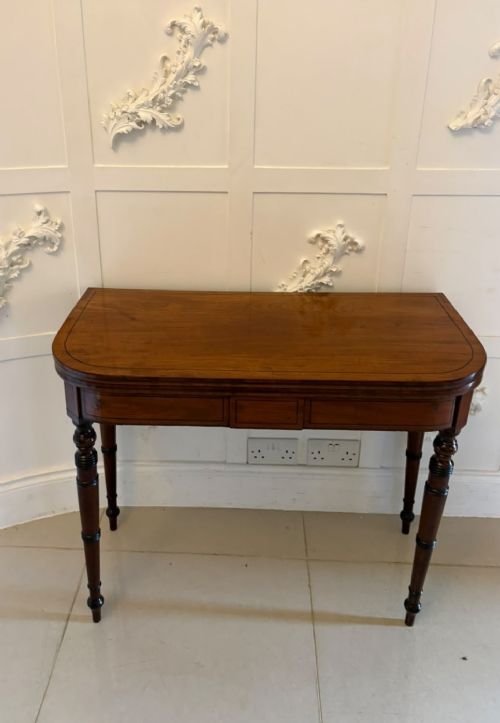
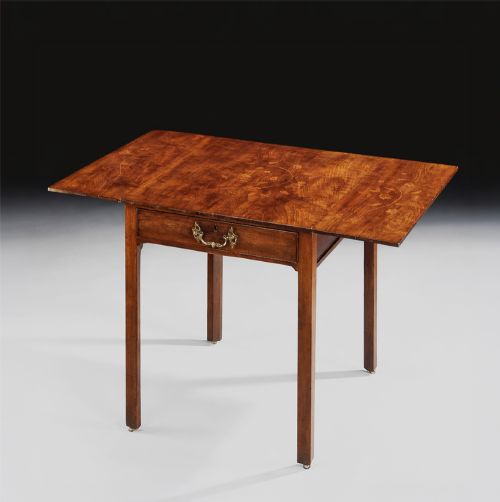
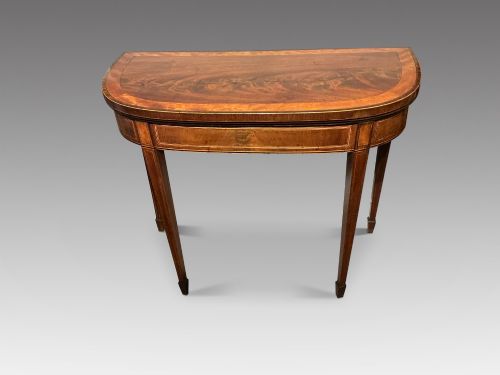
Inlaid Mahogany Tea Table
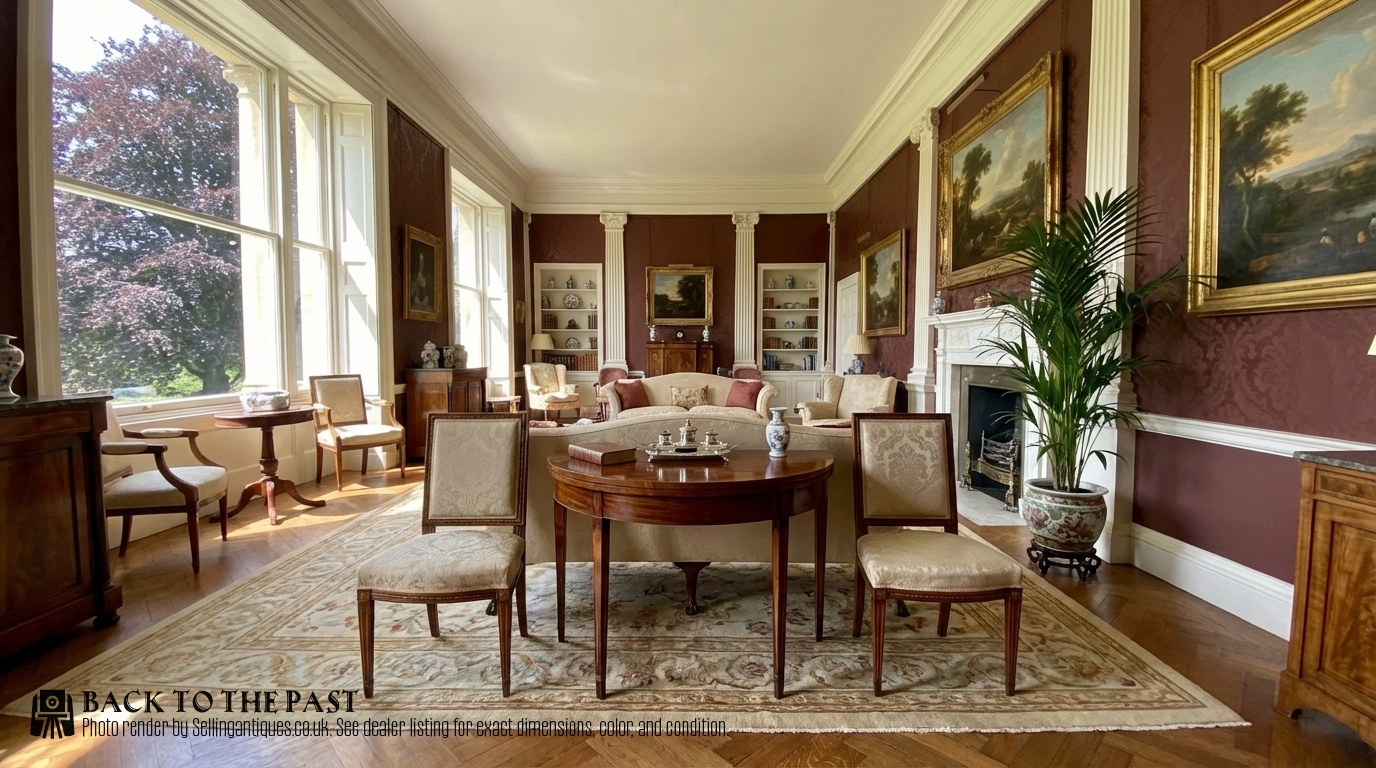
An inlaid mahogany tea table offers a refined focal point for a reception room, combining practical folding surfaces with delicate decorative woodwork.
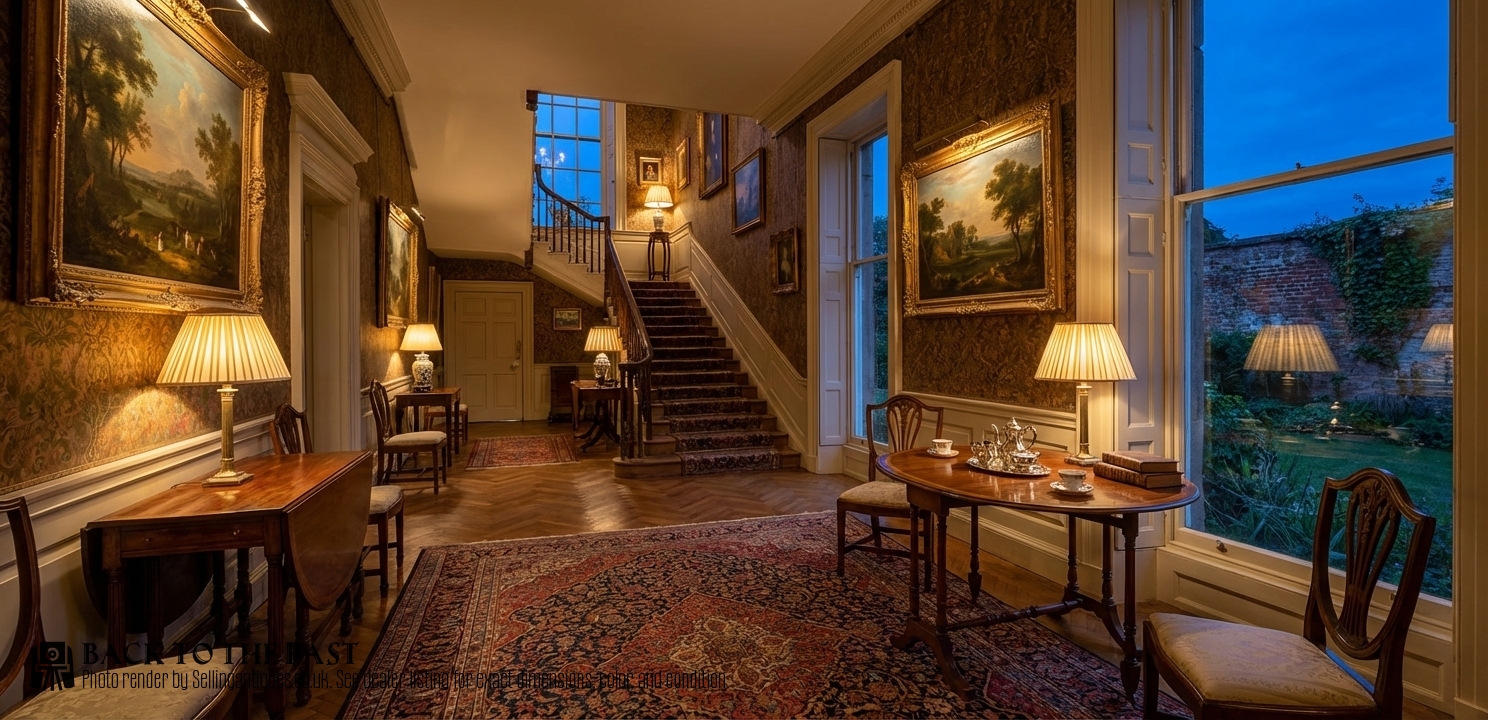
Inlaid Mahogany Tea Table
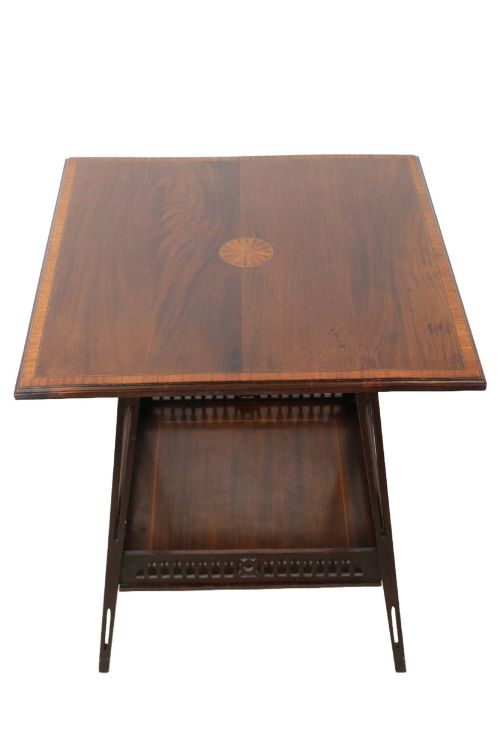
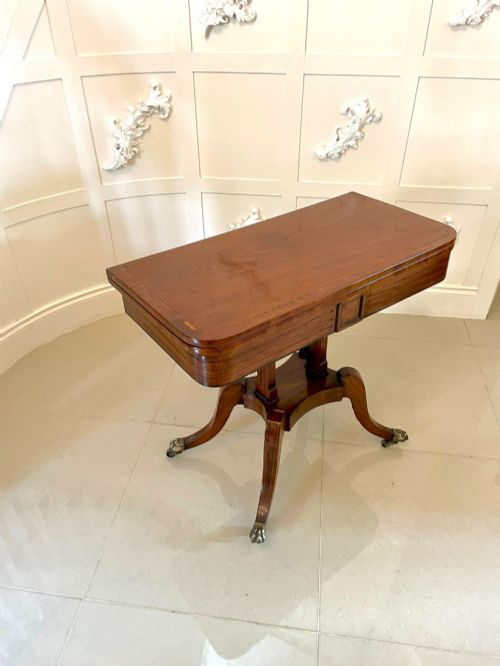
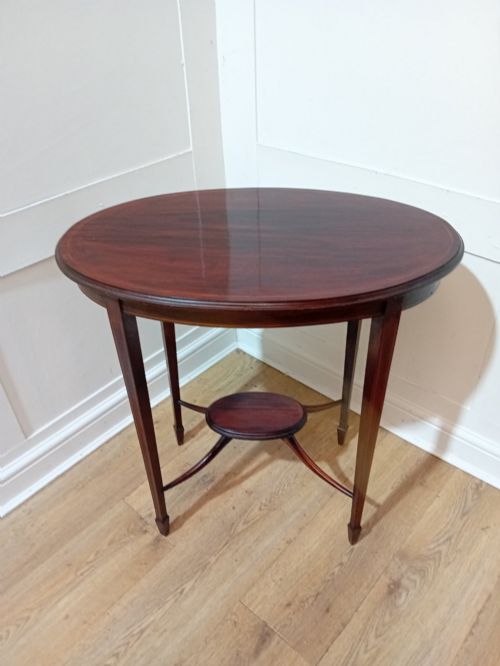
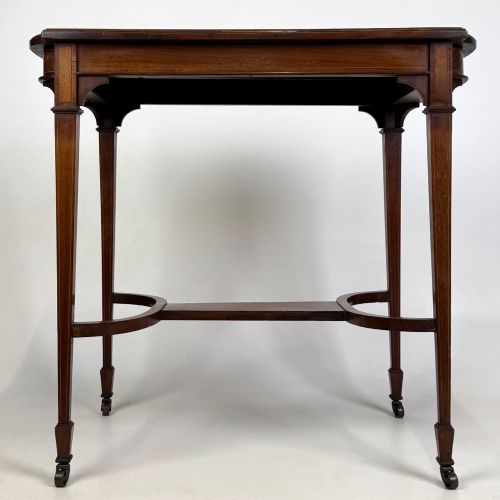
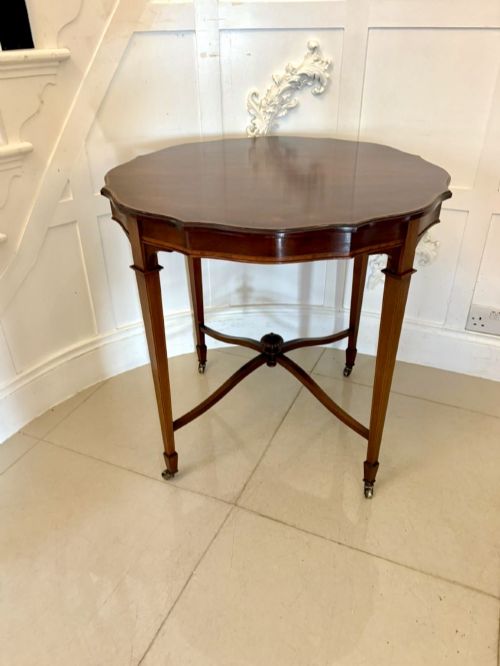
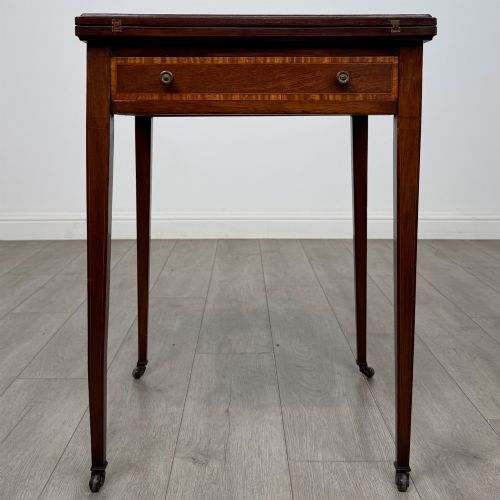
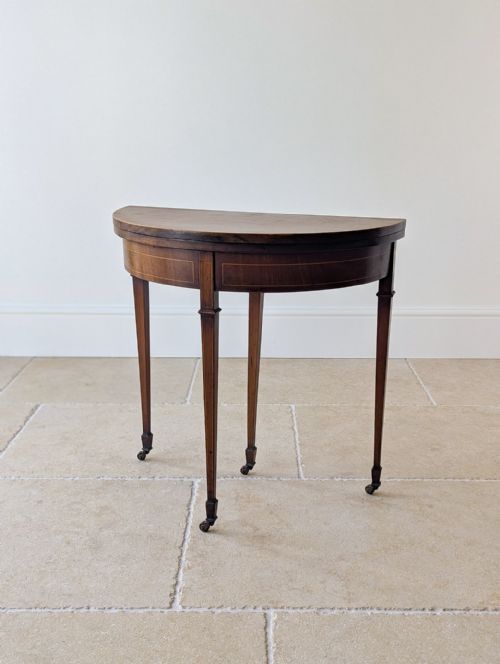
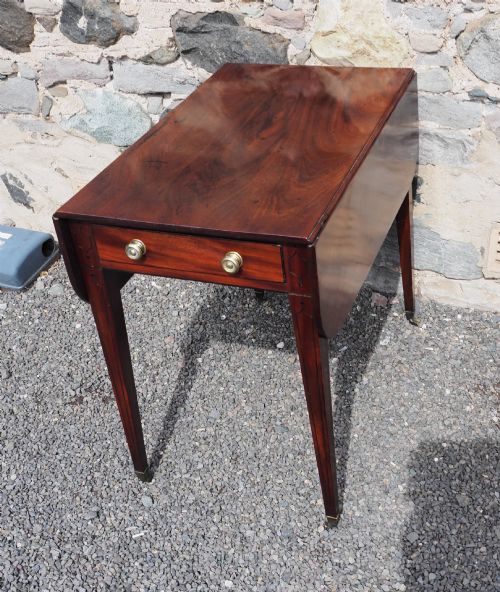
An inlaid mahogany tea table represents a staple form of domestic furniture designed primarily to serve tea in Georgian, Regency, and Edwardian parlours. The evidence shows these pieces appearing frequently as demi-lune or D-shaped fold-over tables, alongside rectangular Pembroke and occasional formats.
Makers across the eighteenth, nineteenth, and early twentieth centuries adapted the form to changing social habits, producing folding card and games tables alongside dedicated tea tables. Surviving examples span simple provincial workshops to sophisticated urban cabinet makers operating in Edinburgh and London.

Materials and Technique
Cabinet makers utilised dense Honduras mahogany as the primary structural timber, often selecting pieces with rich figuring for the principal surfaces. This was combined with contrasting timber veneers, most notably satinwood, rosewood, and yew wood.
Decoration relied heavily on precise woodworking techniques, incorporating boxwood, ebony, and general wood inlay to create geometric borders, scrolling foliage, and central paterae. Certain Regency and later pieces also integrated fine brass inlay and stringing into the top surfaces and friezes.
Inlaid Mahogany Tea Table Retail Price Guide 2026
Typical asking prices for inlaid mahogany tea table among the pieces listed under this phrase on Sellingantiques today, from the lower quarter to the upper quarter. They describe what is for sale here now, not the wider market.
Listings feature mahogany, satinwood, and rosewood combined with brass, boxwood, and ebony inlay across Georgian, Regency, and Edwardian periods.
Craftsmanship and Proportion
Quality rests principally in the selection and matching of timber veneers, where superior examples display symmetrical figuring and harmonious contrast between the mahogany ground and the lighter inlay borders. The precision of the joinery around the fold-over mechanisms and leg attachments similarly marks the distinction between standard production and master craftsmanship.
Proportion and restraint in ornament define the finer end of the range, avoiding excessive decoration in favour of clean architectural lines and crisp, sharp cutting of the stringing and floral marquetry.
Trevor Page And Co·Bruce And Burns Of Edinburgh
The Inlaid Mahogany Tea Table Glossary
- Demi-lune
- Having a half-moon shape with a curved front and a straight back edge, frequently seen in folding tea tables designed to stand against a wall.
- Crossbanded
- Featuring a border of veneer laid with the grain running perpendicular to the main panel, creating a distinct framing effect around the table top.
- Marquetry
- The art of forming decorative patterns using thin pieces of wood veneer applied to a structural surface to depict foliage, urns, or geometric motifs.
- Pembroke table
- A small rectangular table featuring two hinged drop leaves on opposing sides, often fitted with a single drawer.
- Stringing
- Thin lines of contrasting light or dark wood inlaid into grooves on the table surface or legs to create delicate linear borders.
Inlaid Mahogany Tea Table: Frequently Asked Questions
How did people use an inlaid mahogany tea table?
These tables stood against the wall of a parlour until tea time, when servants or family members folded out the top leaf to create a stable surface for porcelain tea services. The hinged design allowed households to maximise floor space during the day while retaining a presentable console or side table.
Beyond serving tea, many examples functioned as games or card tables, adapting easily to different forms of evening hospitality. Their versatility made them essential items in fashionable eighteenth and nineteenth-century domestic interiors.
How do I tell a Georgian tea table from an Edwardian copy?
Georgian tables typically exhibit heavier timber scantlings, hand-cut joinery marks, and a deeper, darker patina developed through centuries of natural oxidation. The species of mahogany and the character of the secondary woods inside the frame also point directly to eighteenth-century workshop practices.
Edwardian Sheraton Revival pieces often reveal machine-sawn components, brighter modern adhesives, and lighter, more uniform satinwood highlights. Examining the underside and the interior hinge mechanisms generally clarifies the true period of manufacture.
Can I use an antique tea table for daily dining?
While the surfaces are sturdy enough to hold cups, books, or lamps, the delicate hinges and pivoting legs of a fold-over tea table are not engineered to withstand heavy downward pressure or daily family meals. Regular use requires care to protect the antique polish from heat and moisture rings.
Placing coasters beneath hot drinks and keeping the timber conditioned preserves the delicate boxwood and satinwood inlay. Treating the piece as a side table or occasional display surface ensures it remains undamaged.
What does brass inlay indicate about the age?
Brass inlay integrated with mahogany typically points towards the Regency period or the late nineteenth-century revival styles. Craftsmen of the early nineteenth century favoured brass stringing and mounts to create sharp contrast against dark figured mahogany.
Later Victorian and Edwardian makers revived this aesthetic, sometimes combining brass with intricate marquetry. Assessing the fastening pins and the oxidation around the metal channels helps determine whether the brasswork belongs to the Regency era or a later revival.