


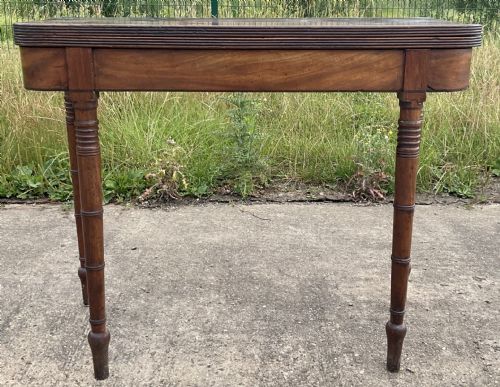
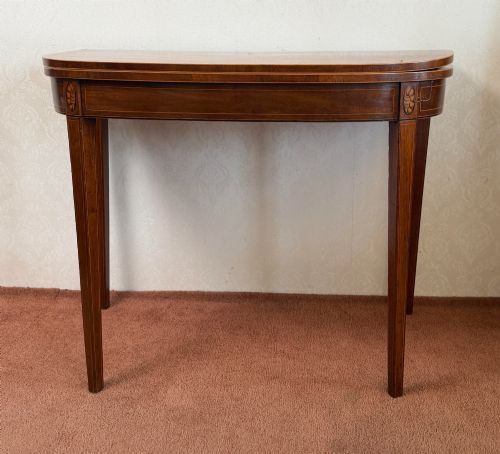
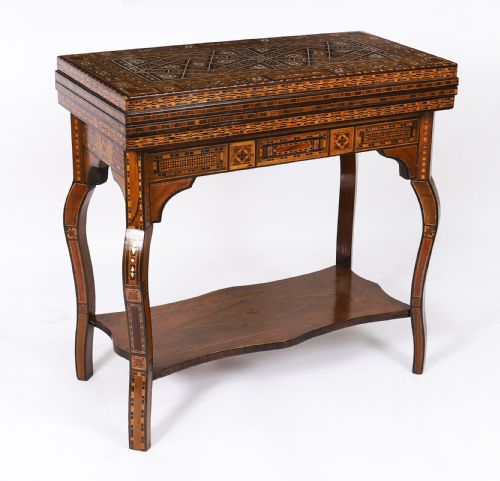
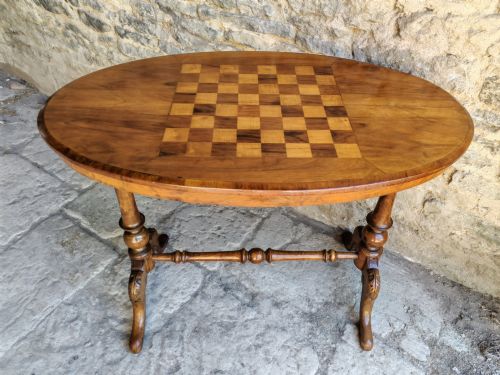
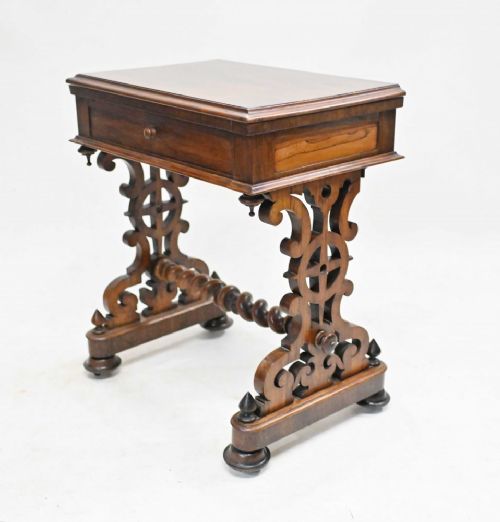
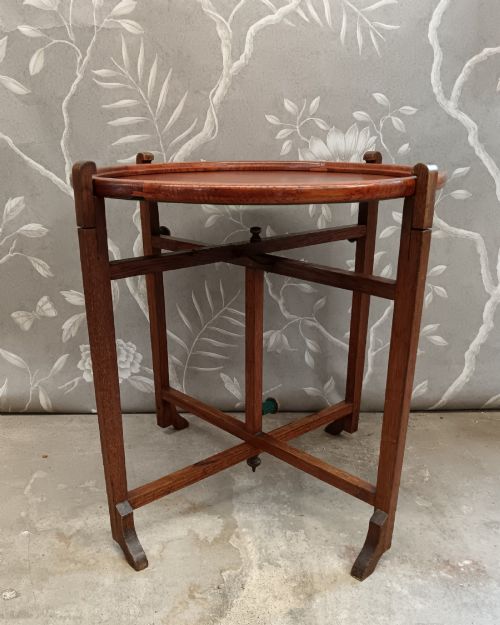
Brown Wooden Games Table
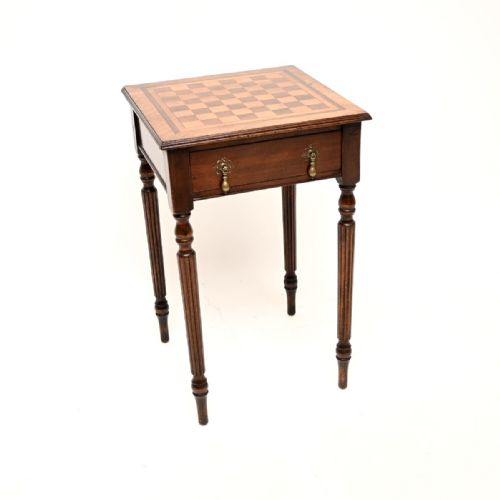
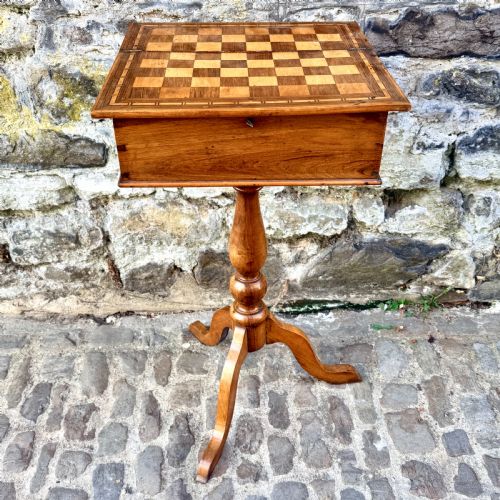
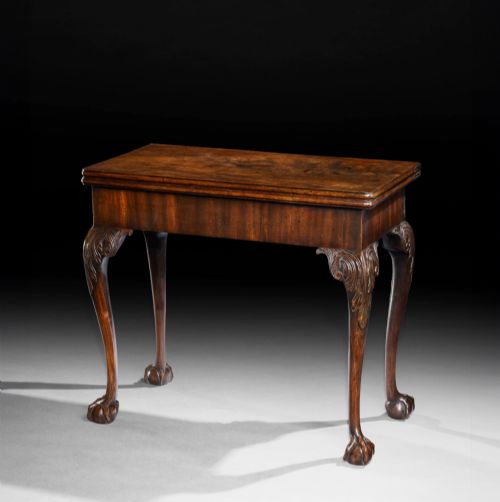
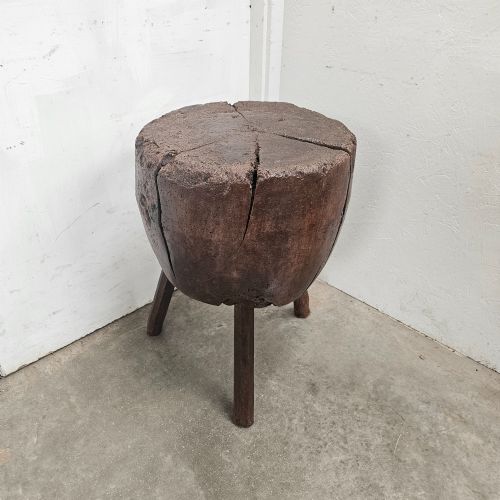
A brown wooden games table brings clever engineering and social history together, offering a versatile surface that transforms from a console or sofa table into a dedicated board or card arena.
Identifying a brown wooden games table
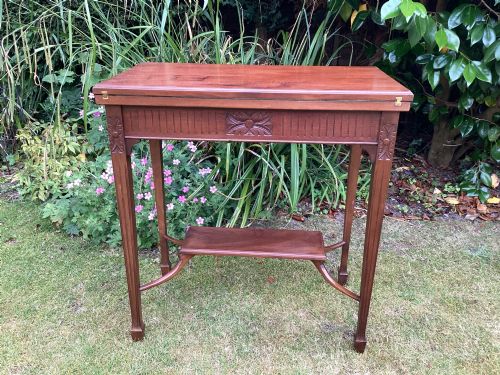
A brown wooden games table is a functional piece of antique furniture designed for leisure, featuring specialised tops or compartments for pastimes like chess, backgammon and card games. Buyers browsing this page will encounter versatile designs ranging from early nineteenth century Regency models to Edwardian and later twentieth century interpretations.
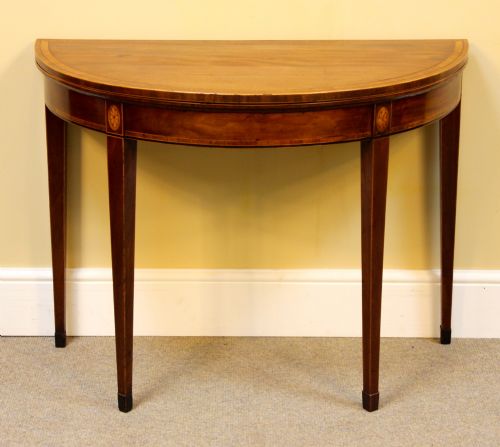
The dominant material across these listings is mahogany, often accented with walnut, satinwood, boxwood and fruitwood inlays. Forms vary from fold-over card tables and D-shaped surfaces to complex multi-game Levantine folding tables and combined sofa tables.
Origins span distinct historical periods including the Regency era, Victorian period, Edwardian years and the nineteen thirties. Each piece reflects the social habits of its time, providing a compact surface that adapts easily to modern domestic interiors.
Materials and construction
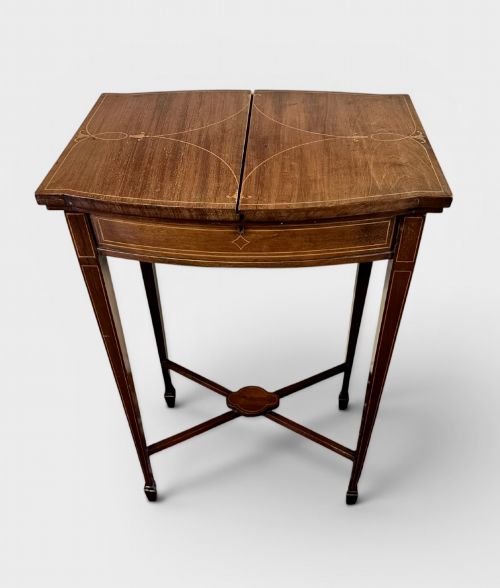
Cabinet makers utilised dense timbers like mahogany as the primary structural body, pairing them with decorative veneers such as walnut and satinwood. Inlays of boxwood and fruitwood created sharp contrasts for chess boards and decorative borders, while bone and mother-of-pearl added tactile detail to playing surfaces.
Construction techniques focus on mechanical transformation, employing clever hinges, swivel tops and fold-over mechanisms to conceal playing wells or secret compartments. Carved wooden supports, brass fittings and sturdy pedestals provided the stability required for rigorous card play and social gatherings.
Retail Price Guide 2026
Typical UK retail prices for brown wooden games table, calculated from the Sellingantiques database of over a million retail prices indexed since 2003. This retail price guide relies exclusively on Sellingantiques data; no external sources or auction records are used, so the figures do not describe the wider market.
Many a Victorian card player relied on hidden wells beneath the tabletop to stash illicit winnings or spare counters out of sight.
Assessing quality and execution
Quality rests upon the precision of the mechanical action and the integration of secondary timbers. Superior examples display seamless movement in their fold-over leaves and hidden compartments, operating smoothly without structural strain.
The refinement of the surface decoration further distinguishes the range. Finely executed boxwood and fruitwood stringing, meticulous mother-of-pearl inlay and crisp carving separate standard production pieces from masterwork furniture.
The Brown Wooden Games Table Glossary
- Card table
- A folding table specifically engineered with a baize or wood surface for playing cards. These pieces typically feature a swivelling or fold-over top supported by a rear leg or gateleg mechanism.
- Levantine
- A design style originating from the Eastern Mediterranean, known for intricate geometric inlay using contrasting woods and shell. Pieces from this tradition often incorporate multiple gaming boards into a single folding construction.
- Sofa table
- A rectangular table designed to stand directly in front of a sofa, frequently adapted to include gaming surfaces or drawers. They generally feature drop leaves on either side.
- Stringing
- A narrow strip of contrasting wood inlaid into the surface of furniture to create decorative borders and geometric patterns. Boxwood and fruitwood are common choices for this delicate work.
- D-shaped
- A tabletop configuration where the front edge is curved into a semi-circle resembling the letter D. This form was particularly popular during the Regency period for card and console tables.
Frequently Asked Questions
What is a brown wooden games table?
A brown wooden games table is a piece of antique furniture designed with a dual purpose, functioning as an everyday side or console table and opening up to reveal a dedicated surface for cards or board games.
These tables often feature clever folding mechanisms, swivelling tops or removable panels that conceal chess boards, backgammon layouts or storage wells for gaming pieces.
How were games tables used historically?
In past centuries, these tables served as the centrepiece for evening entertainment, hosting games of whist, chess and backgammon in formal drawing rooms.
When not in use for gaming, the tables were folded down and placed against a wall or behind a sofa to serve as standard furniture for holding lamps or decorative items.
Can I use an antique games table daily?
Yes, these tables adapt very well to contemporary living spaces as versatile surfaces for drinks, reading or occasional dining.
Care should be taken to protect antique polished wood and delicate inlays from excessive moisture, direct sunlight and heavy daily wear.