




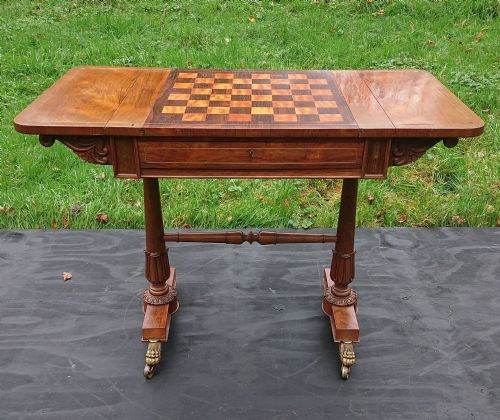


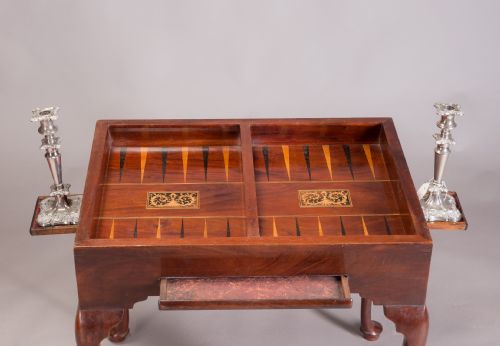
Antique Backgammon Table
An antique backgammon table brings centuries of social play into your room, combining fine cabinetmaking with a board ready for the dice.
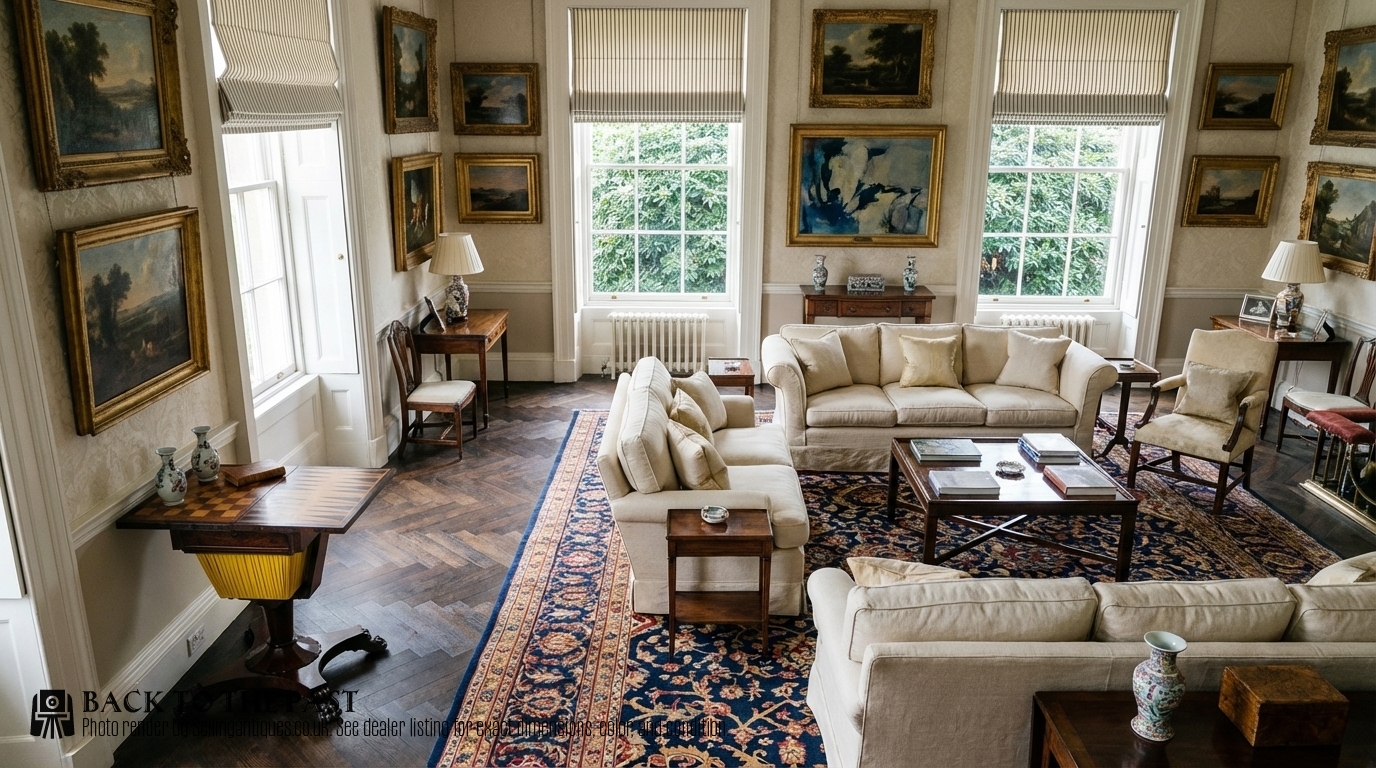
Antique Backgammon Table
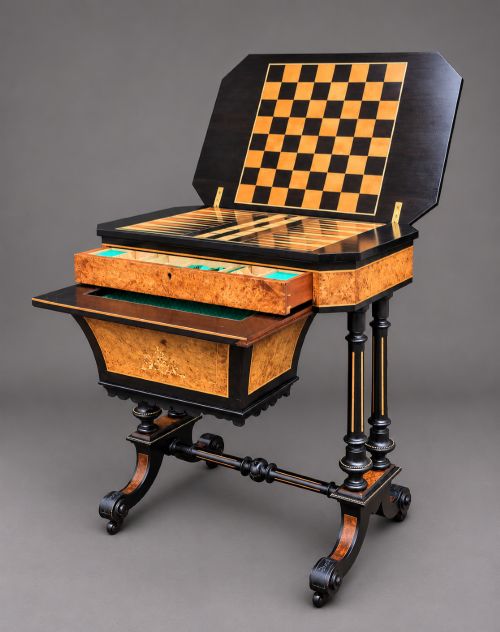
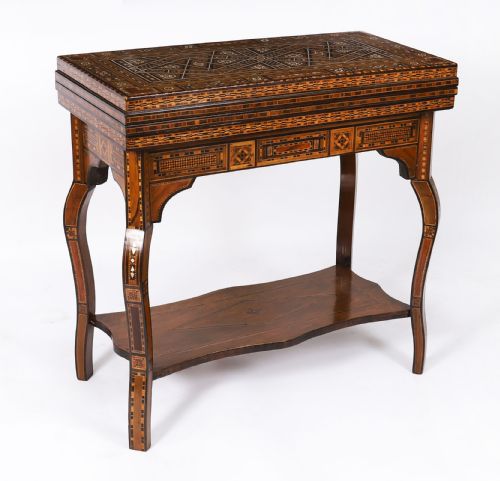
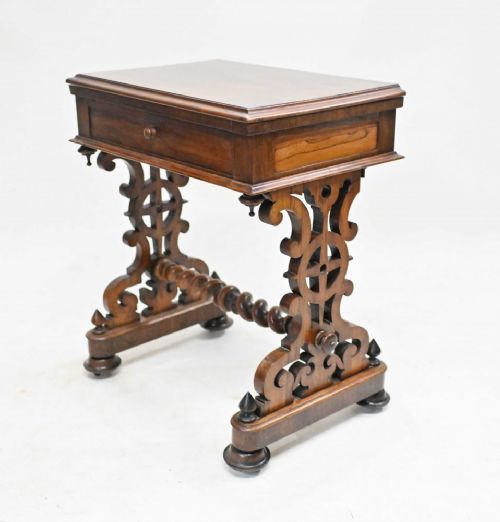
When you search for an antique backgammon table, you encounter versatile pieces designed for social pastimes, frequently doubling as sewing tables, card tables, or chess boards. The selection spans Victorian, Regency, and Edwardian periods alongside intricate Levantine and Syrian Ottoman designs.
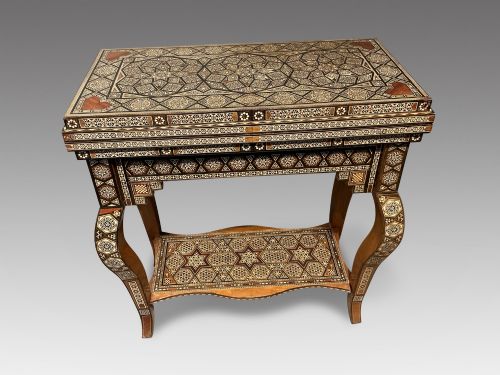
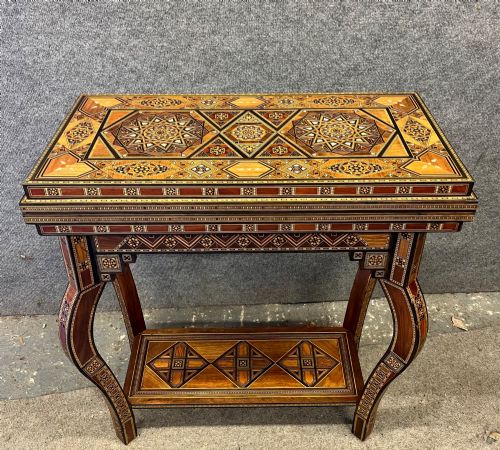
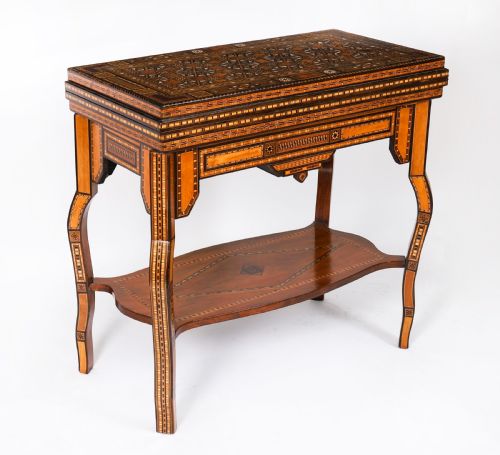
The most common forms on this page include walnut and rosewood foldover tables from the nineteenth century, alongside heavily inlaid Damascus pieces featuring geometric patterns. Many examples incorporate compartments for counters, sewing equipment, or removable playing boards to accommodate multiple games.
Origins range widely from English workshops, including pieces attributed to Gillows, to Middle Eastern centres renowned for intricate woodwork. These tables served as central hubs for domestic entertainment in parlours and drawing rooms.
How they were made
Cabinetmakers utilised rich timber veneers such as burr walnut, rosewood, and fruitwood applied to sturdy structural woods. Surfaces frequently display elaborate wood inlay, parquetry, and marquetry depicting floral motifs or geometric tessellation.
Middle Eastern pieces incorporated bone, brass, and mother-of-pearl into intricate mosaic patterns across the surfaces. Folding mechanisms, swivelling tops, and sliding drawers relied on precise joinery and brass hardware to ensure smooth operation during play.
Antique Backgammon Table Retail Price Guide 2026
Typical asking prices for backgammon table among the pieces listed under this phrase on Sellingantiques today, from the lower quarter to the upper quarter. They describe what is for sale here now, not the wider market.
Some nineteenth-century tables doubled as sewing stations, meaning your backgammon opponent could pause a game to mend a stocking.
What varies in quality
The standard of a piece depends heavily on the precision of its marquetry and the choice of burl or burr veneers. Superior examples display seamless alignment in complex wood inlay and retain their original swivelling or folding mechanisms without sagging.
Material richness sets finer tables apart, particularly those incorporating genuine mother-of-pearl, bone, and detailed brass work rather than simpler painted surfaces. The integrity of internal compartments and the presence of matching games counters further distinguish higher-grade pieces.
The Antique Backgammon Table Glossary
- Burr walnut
- A distinctive timber cut from the growth warts of walnut trees, prized for its swirling, highly figured grain patterns. It frequently covers the tops of high-end Victorian games tables.
- Marquetry
- Decorative veneer work arranged in pictorial or floral patterns across a wooden surface. Craftsmen cut various woods to fit together like a puzzle.
- Parquetry
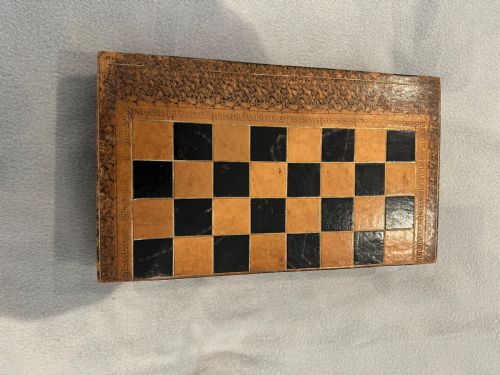
- Geometric wood inlay forming repeating patterns such as cubes or stripes. This technique often decorates the playing surfaces of chess and backgammon boards.
- Swivelling top
- A table top designed to rotate on a central pivot before folding open. This mechanism reveals hidden compartments for games boards and counters underneath.
- Levantine
- Pertaining to the eastern Mediterranean region, describing furniture featuring intricate mosaic inlay of wood, bone, and mother-of-pearl.
Antique Backgammon Table: Frequently Asked Questions
How do I use an antique backgammon table?
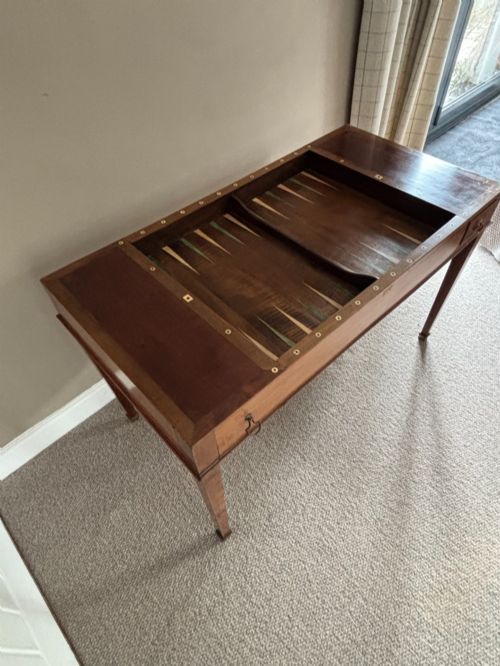
Most of these pieces function as regular occasional tables when closed, sitting quietly in a drawing room or study until evening recreation begins. Opening the top usually reveals a dedicated playing surface lined for backgammon, chess, or cards.
Many examples include built-in drawers or compartments beneath the surface to store dice, shakers, and games counters safely when not in use.
Were these tables made for backgammon only?
Combination pieces dominate the market, offering multi-use surfaces designed for several pastimes within a single piece of furniture. A typical top might feature a chess or backgammon board on one side and a smooth leather or baize surface for cards on the reverse.
Interior trays often lift out to expose compartments originally intended for sewing equipment or writing materials, reflecting nineteenth-century desires for multifunctional household objects.
How do I tell Victorian from Regency examples?
Regency tables, dating from the early nineteenth century, generally favour dark rosewood with brass stringing, sabre legs, and classical architectural proportions. They often feature pedestal bases with platform feet.
Victorian pieces, emerging after eighteen thirty-seven, frequently showcase burr walnut, heavier carved cabriole legs, and elaborate floral marquetry. Sewing-table combinations with hanging silk bags become much more common in this later era.
What is Syrian or Levantine work?
Levantine and Damascus tables originate from the Middle East and are instantly recognisable by dense mosaic inlay. Craftsmen constructed these surfaces using intricate geometric arrangements of wood, bone, and mother-of-pearl.
These imported pieces arrived in European drawing rooms during the later nineteenth century as trade and travel expanded, offering a striking contrast to traditional British cabinetmaking.