



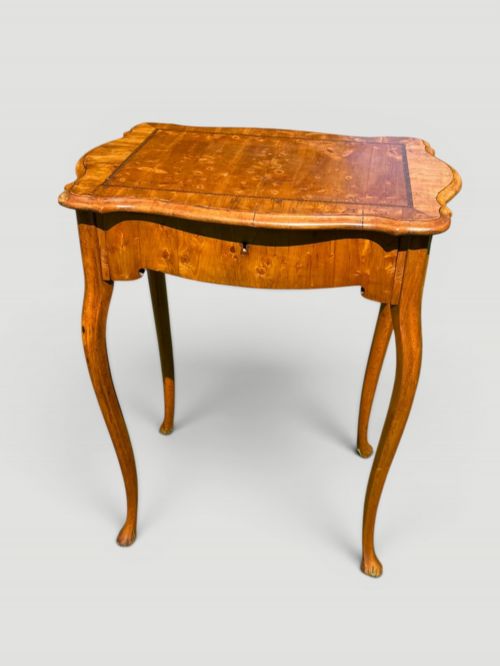
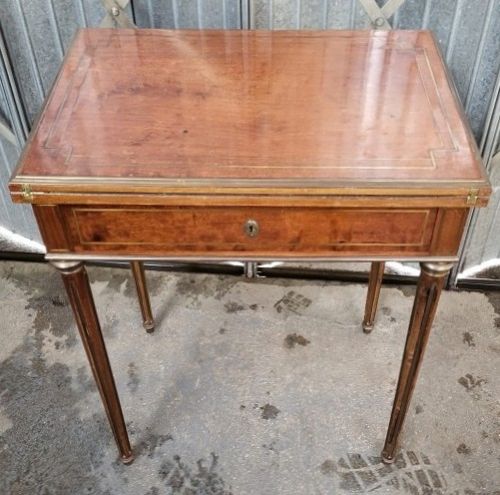


Brown Walnut Work Table
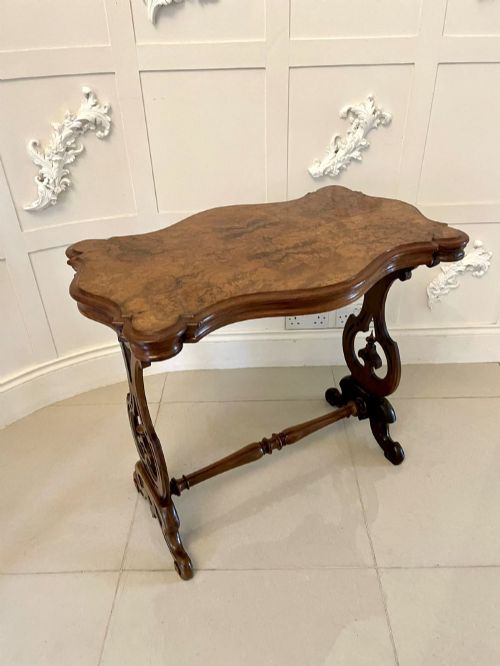
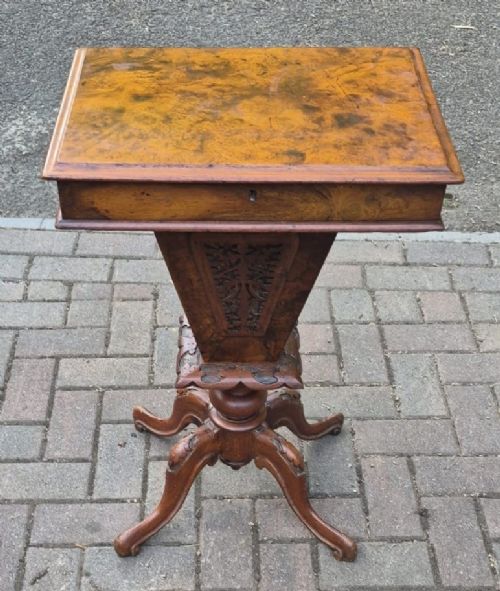
A brown walnut work table brings practical nineteenth-century craftsmanship into a room with rich timber grain and clever hidden storage.
Brown Walnut Work Table
When you search for a brown walnut work table, you are looking at nineteenth-century domestic furniture designed for needlework, writing, and small pastimes. These pieces combine a useful surface with internal compartments or hanging fabric bags for sewing materials, making them both decorative and functional.
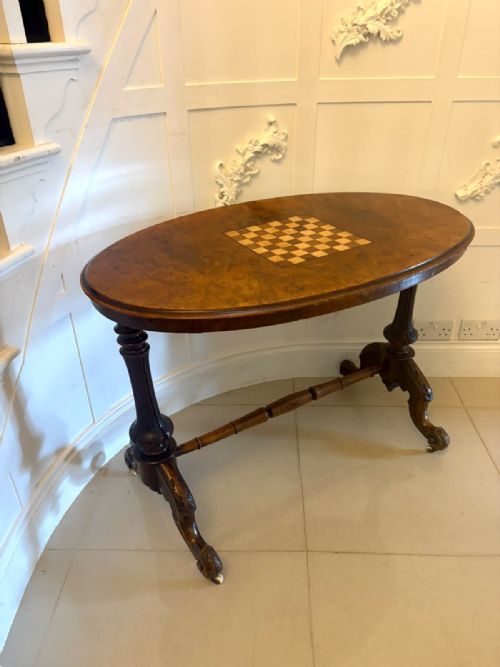
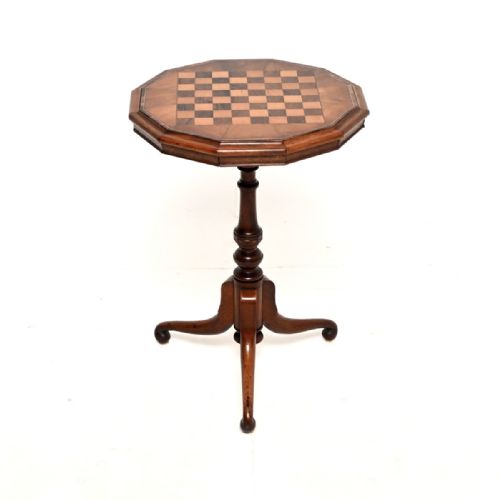
The versions you are most likely to meet on this page date from the Victorian era, particularly the middle decades of the nineteenth century. They appear in forms that double as games tables with chess or backgammon boards, or as occasional lamp tables with fitted interior trays.
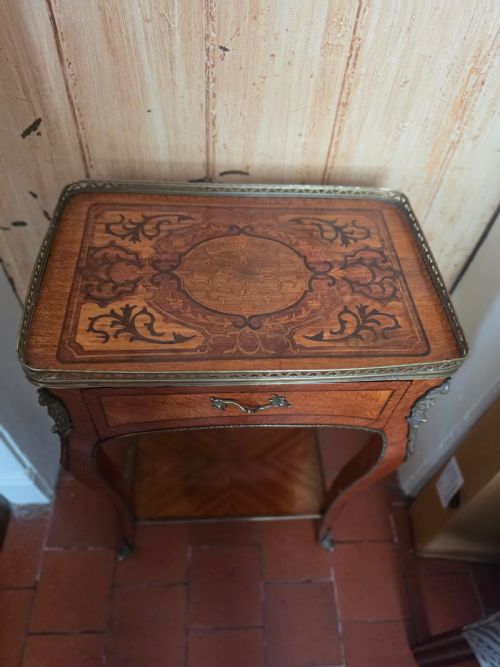
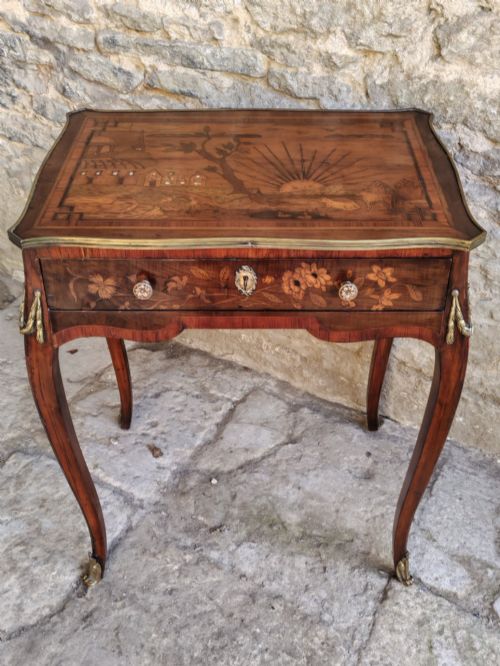
Most examples originate from British workshops or draw upon French styles such as Rococo Revival and Louis XV. Their proportions suit smaller sitting rooms, where timber colour and figuration provide warmth.
How they were made
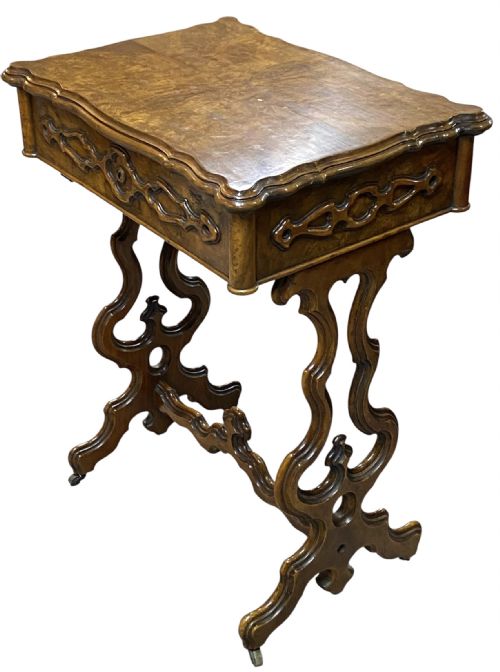
Cabinet makers built these tables using solid timber frames faced with burr walnut or figured walnut veneers to display dramatic grain patterns. Workshops employed secondary timbers like fruitwood alongside boxwood and brass for detailed stringing and marquetry floral motifs.
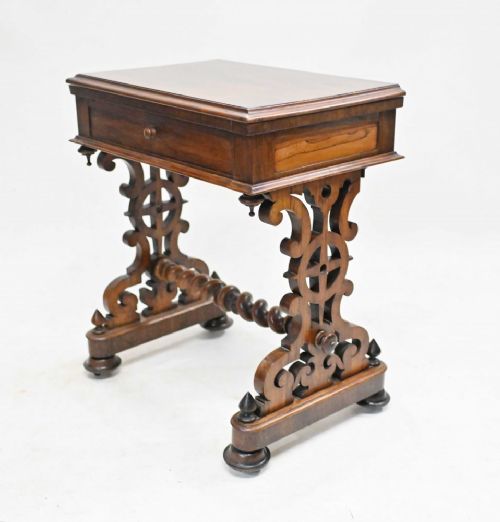
Working surfaces lift or slide to reveal fitted compartments lined for sewing, while internal boxes often feature turning and carving executed by hand. French and Dutch examples incorporate elaborate marquetry work, contrasting lighter woods into darker walnut backgrounds.
Materials recorded across the selection include solid walnut, burr walnut, fruitwood, boxwood, brass, ormolu, and inlaid wood marquetry.
What varies in quality
The distinction between ordinary and exceptional pieces lies in the choice of veneer and the depth of carving. Tables utilising highly figured burr walnut across the entire top display greater ambition than those relying on plain timber.
Construction details such as dovetailed drawers, crisp brass fittings, and intact interior work bags separate standard production items from pieces made for high-end Victorian retailers.
The Brown Walnut Work Table Glossary
- Burr walnut
- A veneer taken from the warted growths of walnut trees, yielding a swirling, highly decorative grain pattern.
- Marquetry
- The art of forming decorative patterns on a wooden surface by fitting together small pieces of different coloured veneers.
- Canterbury
- A small piece of furniture fitted with upright partitions for holding sheet music, books, or papers beneath a work top.
- Ormolu
- Gilded bronze mounts applied to furniture edges and feet, frequently seen on French-influenced nineteenth-century pieces.
- Tunbridge ware
- Small wooden objects decorated with intricate mosaic patterns made from many tiny pieces of naturally coloured local woods.
Brown Walnut Work Table: Frequently Asked Questions
What is inside a work table?
A work table typically contains a shallow drawer fitted with small compartments for cotton reels, needles, and pins. Many examples also suspend a fabric or silk gathering bag below to hold ongoing sewing projects.
Beneath the primary lid, some incorporate integrated writing slopes or folding boards marked out for chess and backgammon.
How do I date a walnut table?
Dating relies upon stylistic clues, construction methods, and secondary woods. Mid-nineteenth-century Victorian pieces often feature heavy carved pedestals and burr walnut veneers, while later Edwardian examples show lighter framing and simpler satin walnut.
Cabinet construction techniques inside the drawers provide further confirmation of the decade of manufacture.
Where should I place it?
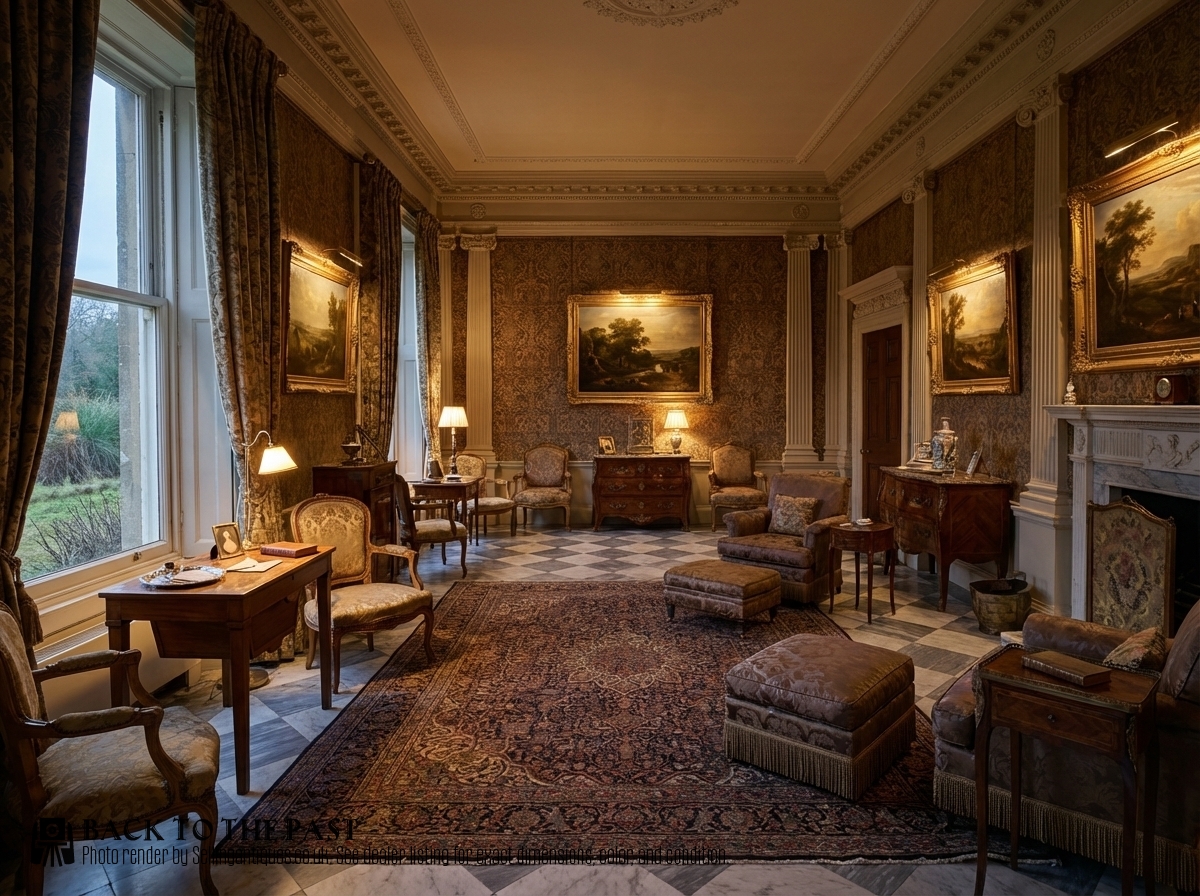
These compact tables sit comfortably beside a sofa or armchair as an occasional surface for a lamp or book. Their finished backs and polished sides mean they look correct when placed freestanding in the centre of a room.
The enclosed storage makes them practical for tidying away small modern items.
Are these tables sturdy enough for daily use?
Nineteenth-century walnut tables were built for daily domestic service using solid internal framing. While the veneered top requires care regarding moisture and heat, the structural joints remain robust for normal placement.
Lifting mechanisms and folding game tops operate smoothly when aligned properly.