




Walnut Needlework Table
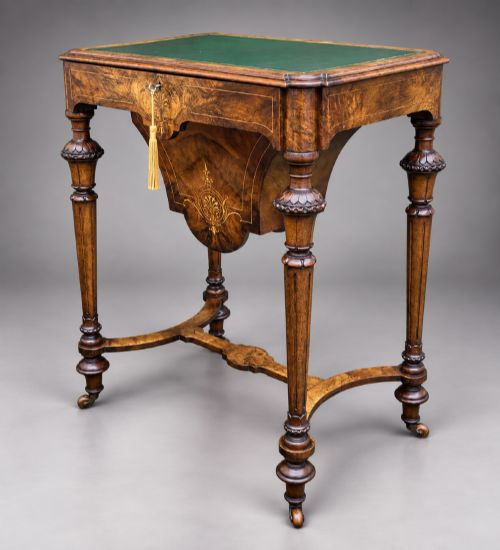
A walnut needlework table is a dual-purpose Victorian or Edwardian piece designed for domestic crafts, combining a work box with a display or writing surface.
Walnut Needlework Table
When you search for a walnut needlework table, you encounter pieces primarily from the Victorian and Edwardian eras, spanning the mid-nineteenth century into the early twentieth century. These furnishings function as sewing tables, work tables, and occasional tables, often incorporating specialised compartments for thread, needles, and fabric.

How they were made
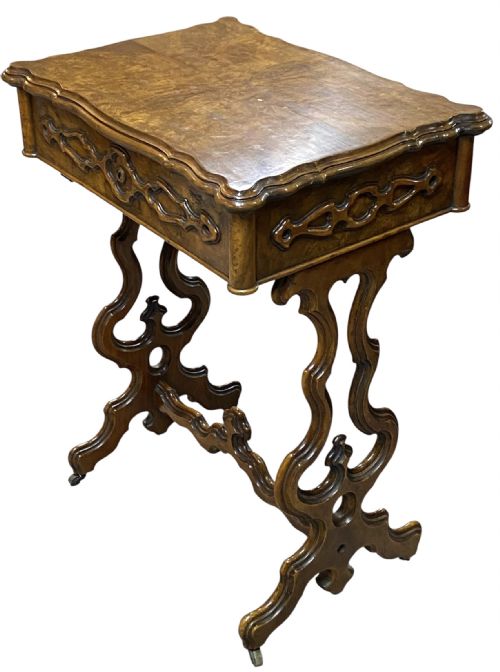
Cabinetmakers constructed these tables using solid walnut and decorative veneers like burr walnut and figured walnut, supported by carved and turned wooden structures. Surfaces were frequently embellished with wood inlay and marquetry inlay to create geometric or floral patterns.
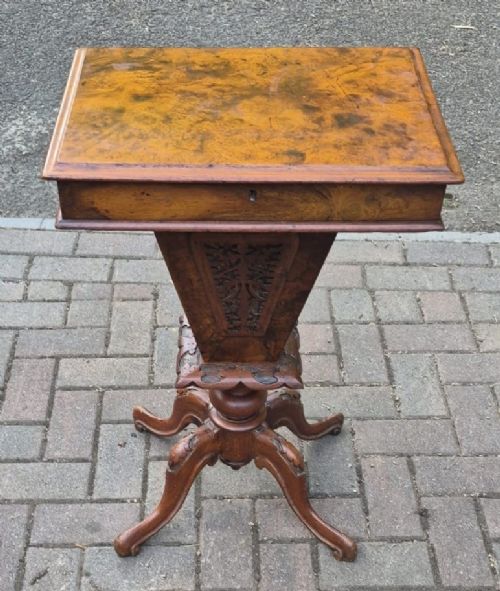
Internal components relied on fine joinery to form compartmentalised sewing boxes and fitted interiors, occasionally incorporating brass hardware and fabric linings. Structural support often took the form of trumpet-shaped pedestals or carved uprights.
Walnut Needlework Table Retail Price Guide 2026
Typical asking prices for walnut needlework table among the pieces listed under this phrase on Sellingantiques today, from the lower quarter to the upper quarter. They describe what is for sale here now, not the wider market.
Victorian craftspeople concealed miniature velvet-lined compartments inside trumpet tables so secrets could travel invisibly beneath the sewing threads.
What varies in quality
The distinction between standard examples and the finest pieces rests upon the selection of timber veneers, such as richly figured burr walnut and intricate marquetry. Superior craftsmanship reveals itself in the precision of the wood inlay and the complexity of the fitted interior beneath the lid.
Overall structural integrity and the refinement of carved and turned supports dictate the standing of a piece within the period. Tables that combine multiple functions, such as integrated chess boards and elaborate sewing compartments, demonstrate higher workshop ambition.
Waring & Gillow
The Walnut Needlework Table Glossary
- Burr walnut
- A veneer taken from the wart-like growths on walnut trees, prized for its swirling, highly figured grain patterns. It forms the primary decorative surface on many high-end nineteenth-century examples.
- Marquetry inlay
- The art of applying pieces of veneer to a structure to form decorative patterns and pictorial designs. This technique frequently decorates the lids of nineteenth-century work tables.
- Trumpet work table
- A form characterised by an octagonal or round body expanding downwards on a pedestal base, resembling the bell of a musical instrument. The interior typically conceals a fabric sewing bag.
- Fitted interior
- A compartmented wooden tray or insert placed beneath the table lid to organise sewing tools, threads, and small accessories. Better examples feature lidded compartments and miniature turned ivory or wooden pulls.
- Occasional table
- A small, versatile piece of furniture designed for specific, intermittent domestic tasks rather than permanent placement. In this context, it often doubles as a sewing or lamp table.
Walnut Needlework Table: Frequently Asked Questions
What is a walnut needlework table used for?
These tables served as dedicated pieces of furniture for storing sewing supplies, threads, and needlework projects while providing a stable surface for handcrafts.
The hinged top opens to reveal a fitted interior, often sitting above an integrated fabric bag designed to hold wools and unfinished textiles.
How do I date a walnut sewing table?
Dating relies on stylistic markers, timber choices, and construction methods characteristic of specific reigns and decades.
Victorian pieces frequently display rich burr walnut veneers and heavy carved supports, while Edwardian examples often utilise lighter satin walnut and simpler forms.
Are these tables only for sewing?
Many examples were built to serve multiple domestic functions within the nineteenth-century parlour.
It is common to find models with reversible or rotating tops that incorporate chessboards, draughts boards, or smooth surfaces for writing and occasional use.
How do I care for antique walnut furniture?
Maintenance involves protecting the timber and delicate veneers from direct sunlight, extreme temperature fluctuations, and excessive moisture.
Applying a traditional beeswax polish helps preserve the lustre of the walnut grain without building up synthetic residues on the polished surface.