






Burr Walnut Sewing Box
A burr walnut sewing box delivers striking timber figuring and practical compartments tailored for nineteenth-century needlework.
Identifying Burr Walnut Sewing Boxes
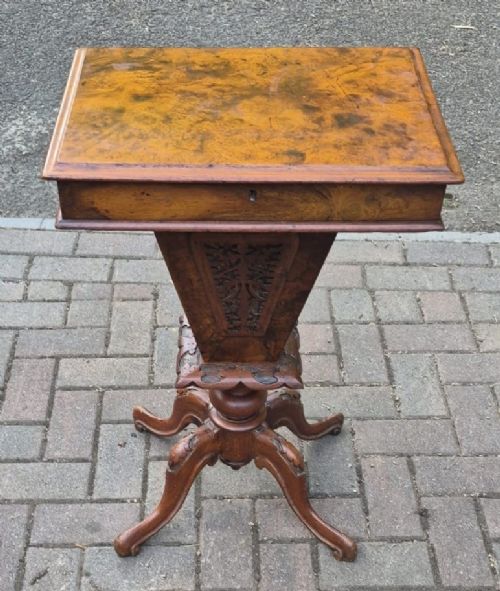
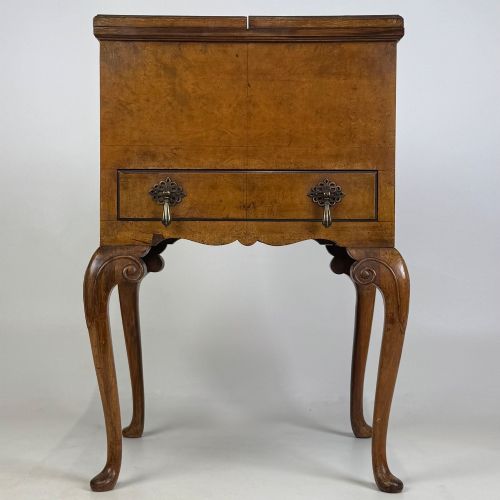
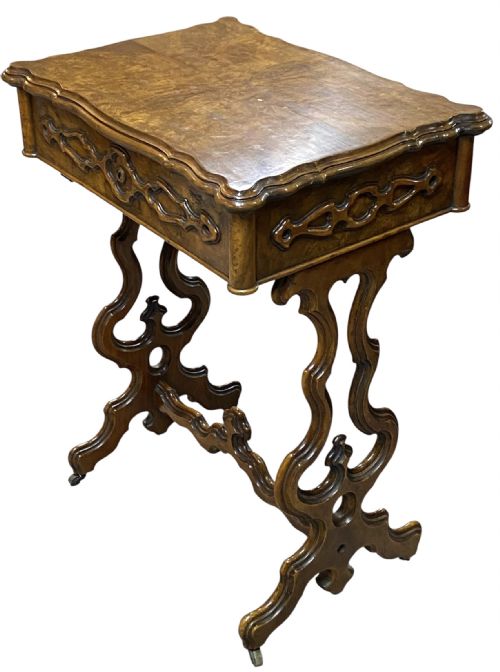
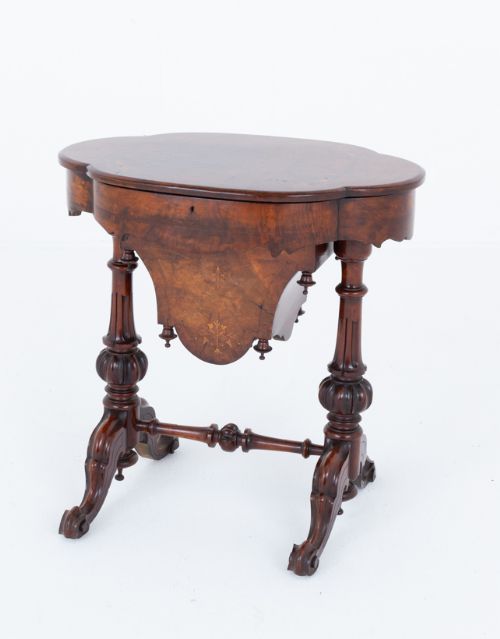
A burr walnut sewing box combines decorative timber veneers with compartments designed for ladies' work and small valuables. These pieces appear frequently as tabletop caskets or freestanding work tables from the Victorian era.
The archive records variations ranging from compact desk-top caskets to pedestal trumpet tables and side tables. Most examples date from the nineteenth century, spanning periods from the Regency era through to the late Victorian decades.
Forms include shaped lids, dome tops, and fitted interiors containing trays and mother of pearl accessories. Some instances incorporate multi-purpose functions such as writing slopes or games compendiums alongside sewing storage.
Materials and Construction
Craftsmen utilised burr walnut and plain walnut veneers over solid secondary timbers to create highly figured surfaces. Marquetry inlay, ebony, and satinwood occasionally appear as decorative banding or geometric borders.
Hardware such as brass hinges, escutcheons, and locks secure the lids and internal trays. Silk linings and fitted compartments complete the interior architecture of the boxes and tables.
Retail Price Guide 2026
Typical UK retail prices for burr walnut sewing box, calculated from the Sellingantiques database of over a million retail prices indexed since 2003. This retail price guide relies exclusively on Sellingantiques data; no external sources or auction records are used, so the figures do not describe the wider market.
Some boxes hide tiny secret drawers behind the main compartment walls, waiting for centuries to reveal misplaced sewing pins.
Assessing Quality and Execution
The density and swirling pattern of the burr walnut veneer dictate the visual impact of the exterior. Richly figured grain matched symmetrically across the lid separates superior examples from plain surfaces.
Internal complexity marks the distinction between standard caskets and fully fitted luxury boxes. Complete sets of matching mother of pearl fittings and intact silk linings elevate the status of a piece.
The Burr Walnut Sewing Box Glossary
- Burr walnut
- A wood veneer taken from the wart-like growths on walnut trees. This material yields complex, swirling grain patterns highly prized for decorative furniture.
- Work table
- A freestanding piece of furniture incorporating a storage bag or box beneath the top. These items served ladies for needlework and textile pursuits.
- Writing slope
- A box featuring an angled lid that folds out to form a writing surface. Some nineteenth-century examples combine this function with sewing compartments.
- Marquetry
- The art of applying decorative pieces of veneer to a structure to form designs. Geometric patterns and floral motifs appear on select walnut boxes.
- Escutcheon
- A flat plate of brass surrounding a keyhole. This hardware protects the surrounding wood and secures the locking mechanism.
Frequently Asked Questions
What is inside a sewing box?
Interiors typically contain lift-out wooden trays divided into small compartments for thread, needles, and thimbles. Many feature covered sections and dedicated slots for accessories.
Finer examples include matching mother of pearl tools such as winders, bodkins, and small knives nestled securely in velvet or silk lined channels.
How do I date a box?
dating relies on construction methods, hardware styles, and timber choices recorded across the Victorian period. Pieces from the middle of the century often feature elaborate marquetry and fitted velvet trays.
Later nineteenth-century examples tend toward simpler architectural lines or pedestal table formats. Marked design shifts like Empire Revival or Art Deco provide further chronological markers.
Are these boxes waterproof?
Nineteenth-century polished wood surfaces resist light moisture but tolerate no standing liquid. Spills can damage the delicate French polish and warp the underlying veneer.
Internal silk linings and paper components suffer permanent staining if exposed to damp environments. Care requires dry dusting and occasional wax maintenance.
Can I use it for modern sewing?
The internal compartments accommodate modern threads, buttons, and smaller sewing tools comfortably. The shallow trays suit current haberdashery items as effectively as nineteenth-century supplies.
Free-standing work tables offer larger capacity for wools and fabrics in a domestic setting. Casket models function well on desks or dressing tables for daily organisation.