



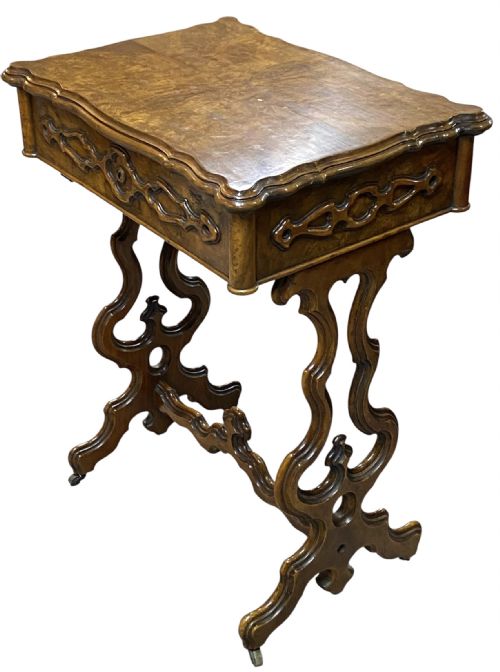

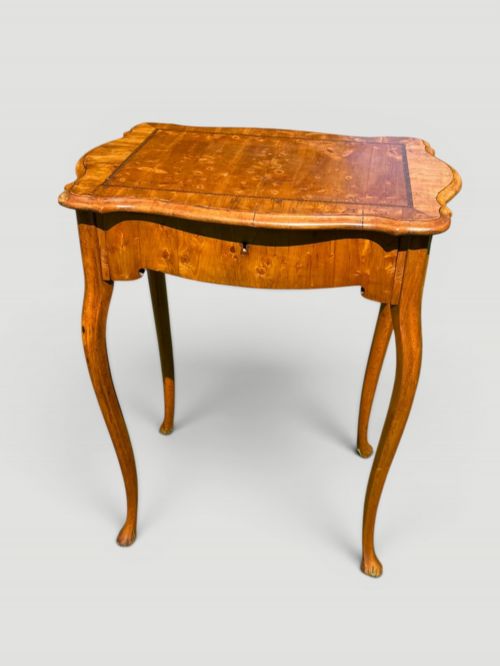

Carved Walnut Work Table
A carved walnut work table offers a practical surface combined with fitted compartments, making it a favourite for collectors of functional nineteenth-century furniture.
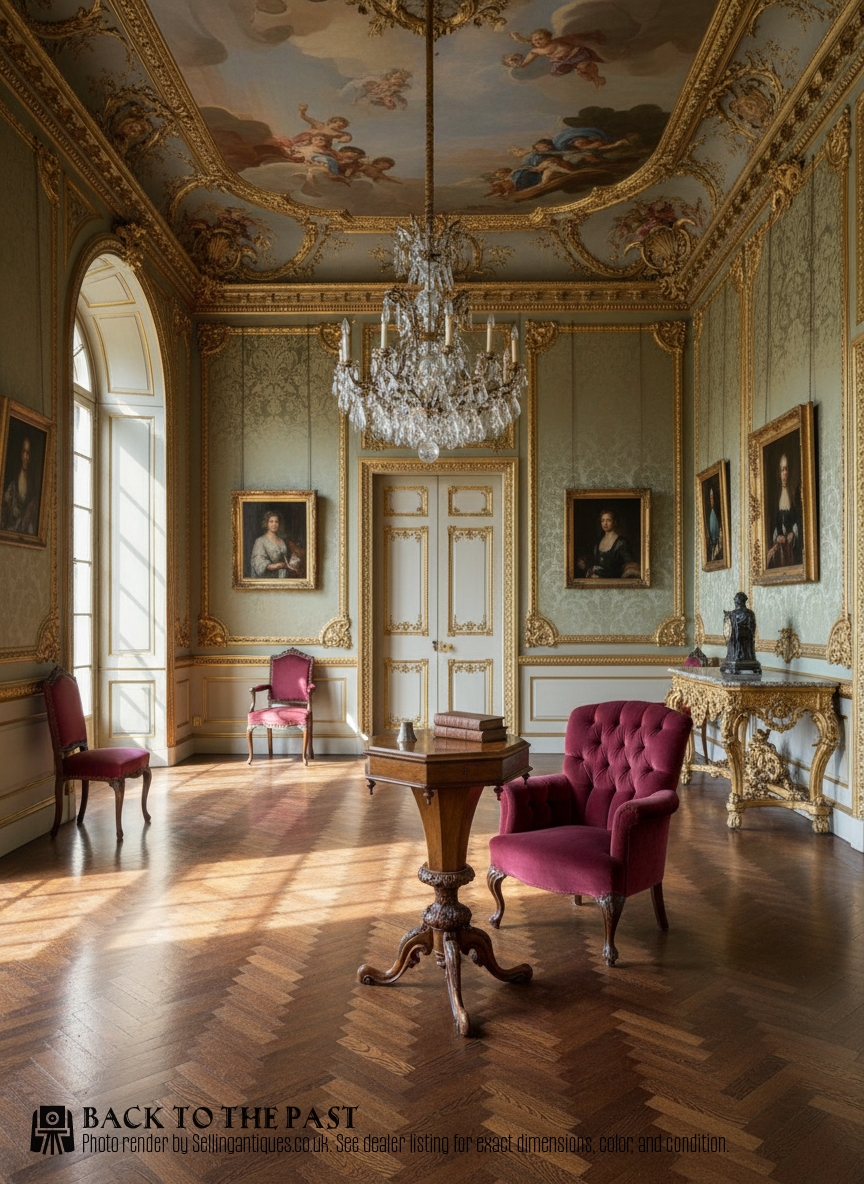
Carved Walnut Work Table
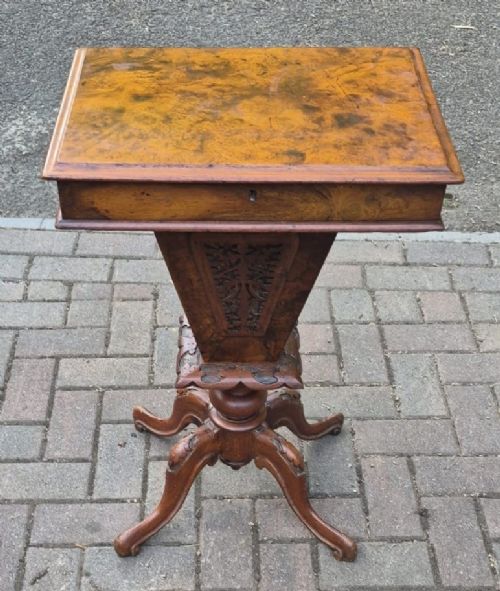
A carved walnut work table is a versatile domestic piece designed primarily for sewing, games, and needlework, appearing most frequently from the Victorian era. These tables combine a display or writing surface with internal compartments, often taking the form of sewing tables, games tables, or trumpet tables.
The pieces on this page span several centuries, reaching back through seventeenth, eighteenth, and nineteenth-century examples. Alongside standard work tables, buyers will encounter occasional tables, centre tables, and occasional writing pieces originating from English Victorian workshops and continental European makers.
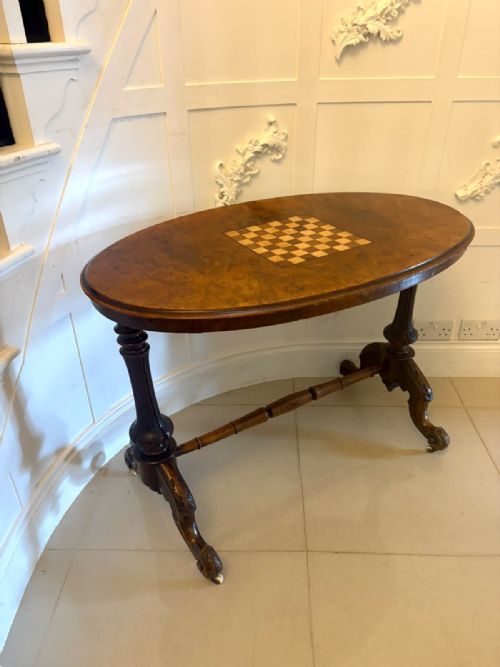
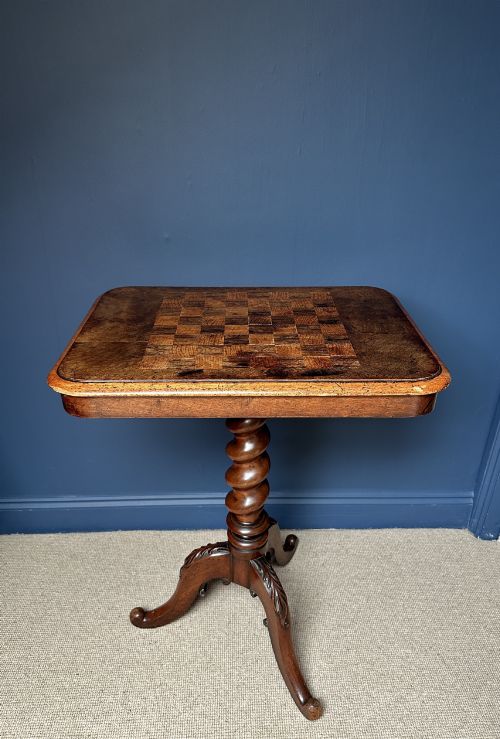
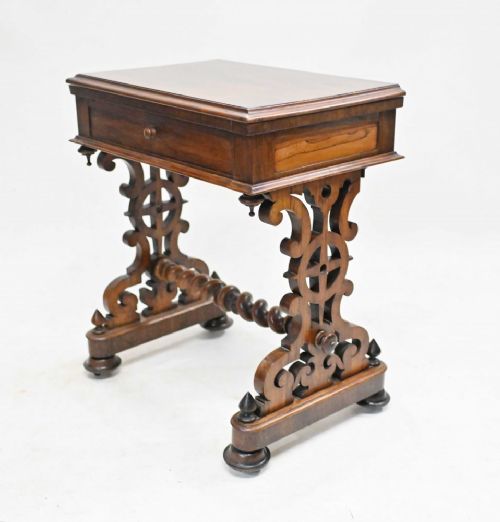
Victorian examples dominate the selection, showcasing specific forms such as chess tops, backgammon boards, and fitted interiors beneath the main lid. The construction frequently incorporates turned supports, carved pedestals, and compartmented trays designed to hold sewing implements and textiles.
What varies in quality
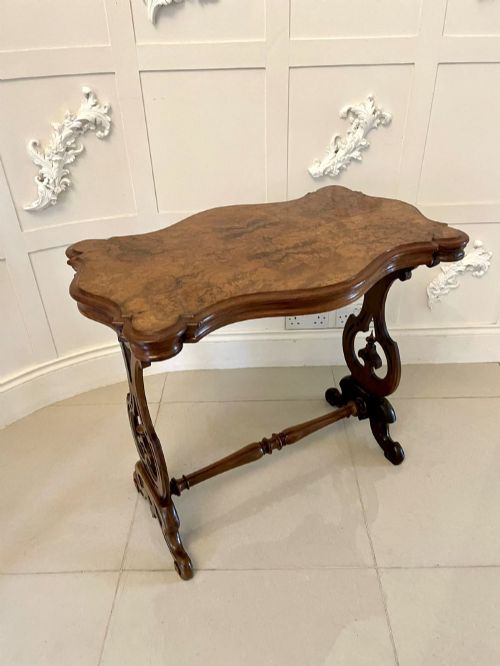
Quality rests significantly on the selection of the timber, particularly the grain figuration in burr walnut veneers and the crispness of the hand-carved details. Superior examples display balanced proportions, clean marquetry inlay, and well-executed turning on the support columns.
The sophistication of the interior mechanism and fitted compartments also distinguishes finer work tables from standard production pieces. Original hardware, intact fabric linings, and retaining functional chess or backgammon boards elevate the standing of an individual table.
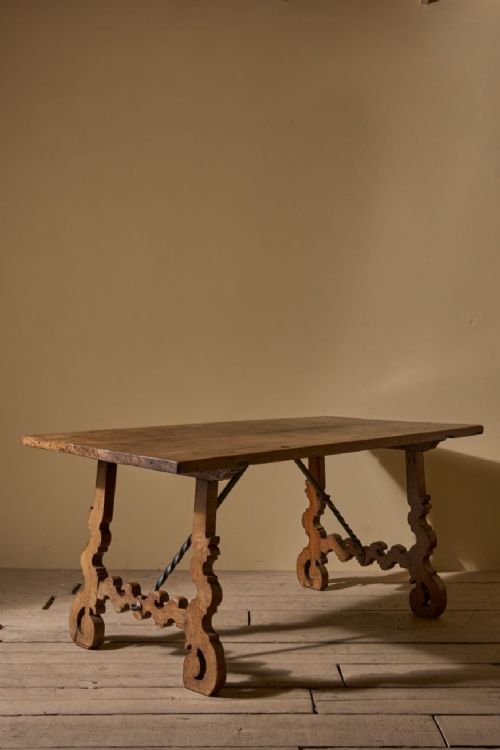
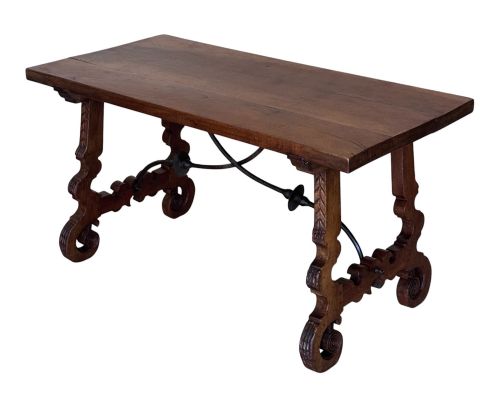
Listings on this page span four centuries, featuring Spanish Baroque and French styles alongside dominant Victorian examples.
The Carved Walnut Work Table Glossary
- Burr walnut
- A veneer sliced from the knotty growths of a walnut tree, prized for its swirling, highly figured grain patterns.
- Trumpet table
- A work table featuring a flared, octagonal or circular body resembling a musical instrument, set on a carved pillar base.
- Marquetry
- The art of applying decorative veneer pieces in wood, fruitwood, or other materials to form geometric or pictorial designs.
- Pokerwork
- A method of decorating wood surfaces by burning designs with a heated tool, sometimes seen on Victorian occasional tables.
Carved Walnut Work Table: Frequently Asked Questions
What is a carved walnut work table?
A carved walnut work table is a multi-functional piece of furniture designed for domestic needlework, crafts, and tabletop games. These tables typically feature a hinged lid opening to reveal fitted compartments and storage wells.
Originating largely in the Victorian period, they combine decorative wood veneers with practical storage solutions for the home. Examples often incorporate chess boards or sewing bags suspended beneath the main body.
How were these tables used originally?
In nineteenth-century parlours, these tables served as a convenient spot for ladies to keep sewing materials, threads, and small crafting projects close at hand. Many designs doubled as games tables, featuring inlaid chess or backgammon boards on the reverse or sliding surface.
The writing and occasional surfaces also allowed them to function as compact desks or lamp tables in reception rooms. Their versatility made them central pieces for leisure activities in period homes.
How do I identify a Victorian work table?
Victorian work tables are typically constructed from walnut or burr walnut, often displaying rich figuring and elaborate carved pedestal supports. They frequently include internal fitted trays, silk catch bags, or dual-purpose game boards.
Examining the construction methods, secondary timbers, and the style of the carving helps confirm the nineteenth-century origins of the piece. The presence of traditional hand-cut joinery and period hardware provides further indication of age.
How should I care for antique walnut furniture?
Protect antique walnut from direct sunlight and extreme humidity fluctuations to prevent the burr veneer from drying out or splitting. Dust the carved surfaces regularly with a soft, dry cloth and apply a quality wax polish sparingly to maintain the finish.
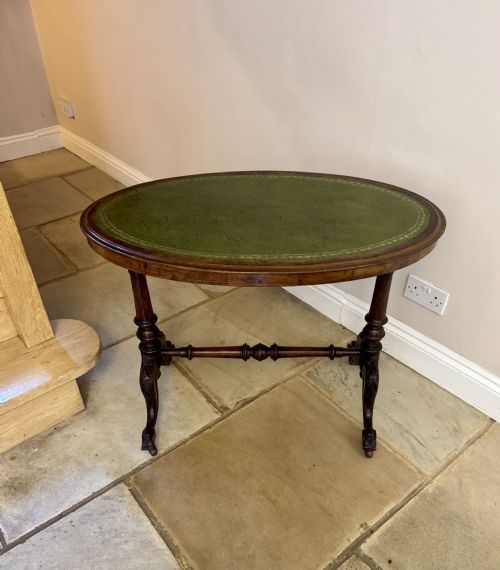
Avoid placing hot items or liquids directly onto the wood or leather tops to preserve the original patina. Maintaining a stable indoor climate ensures the timber and internal joinery remain stable over time.