
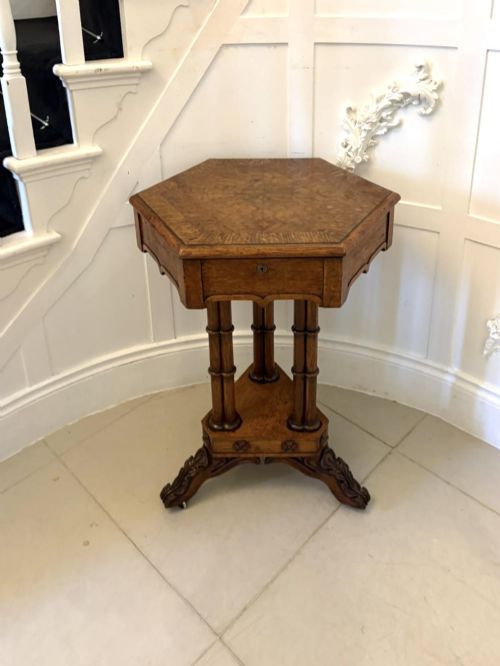
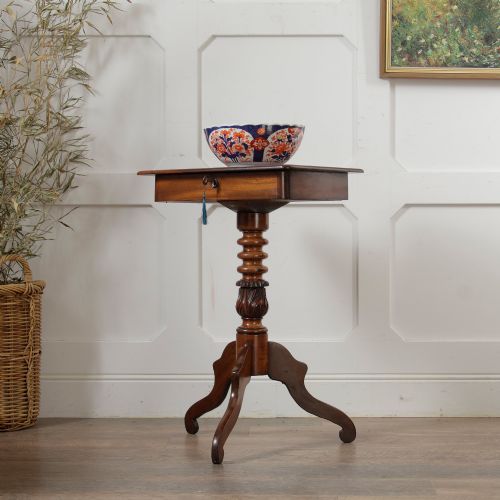
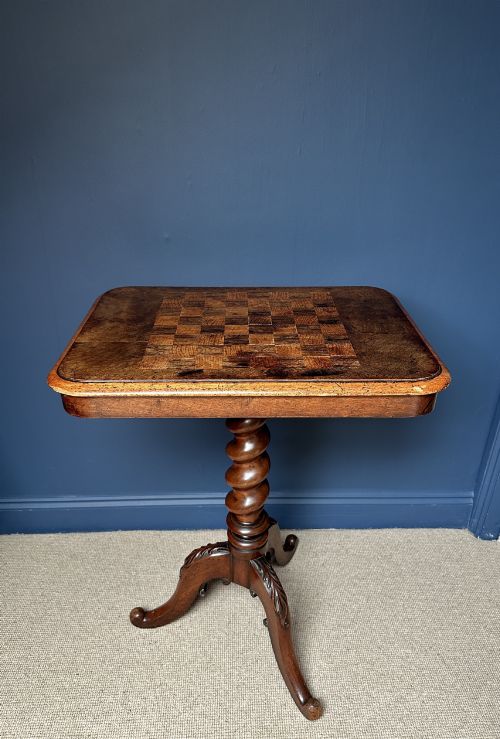


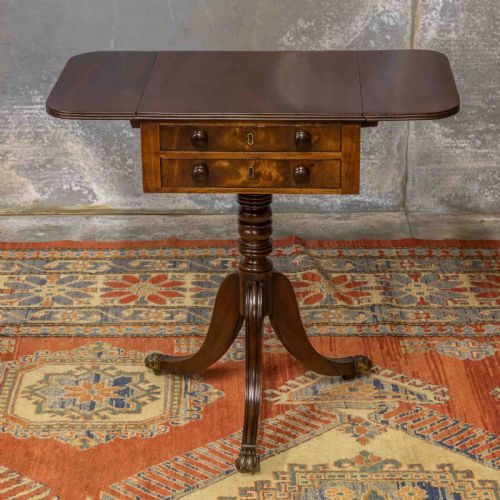
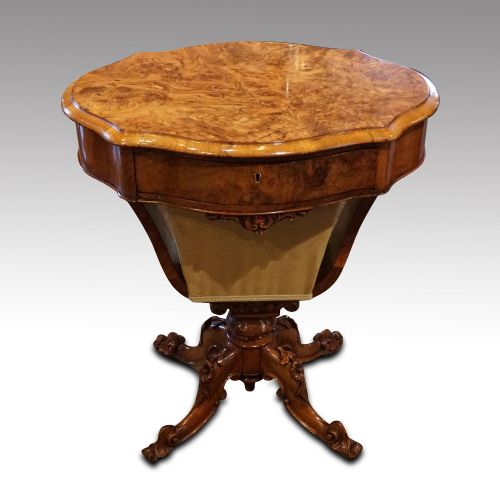


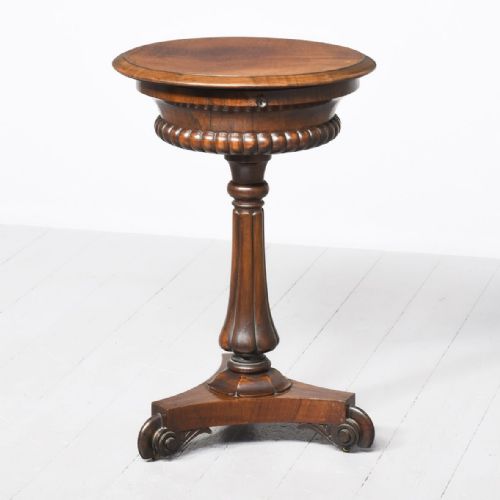

Carved Tripod Sewing Table
A carved tripod sewing table brings together ingenious interior compartments and timber skill, offering a neat centrepiece that conceals everyday trifles.
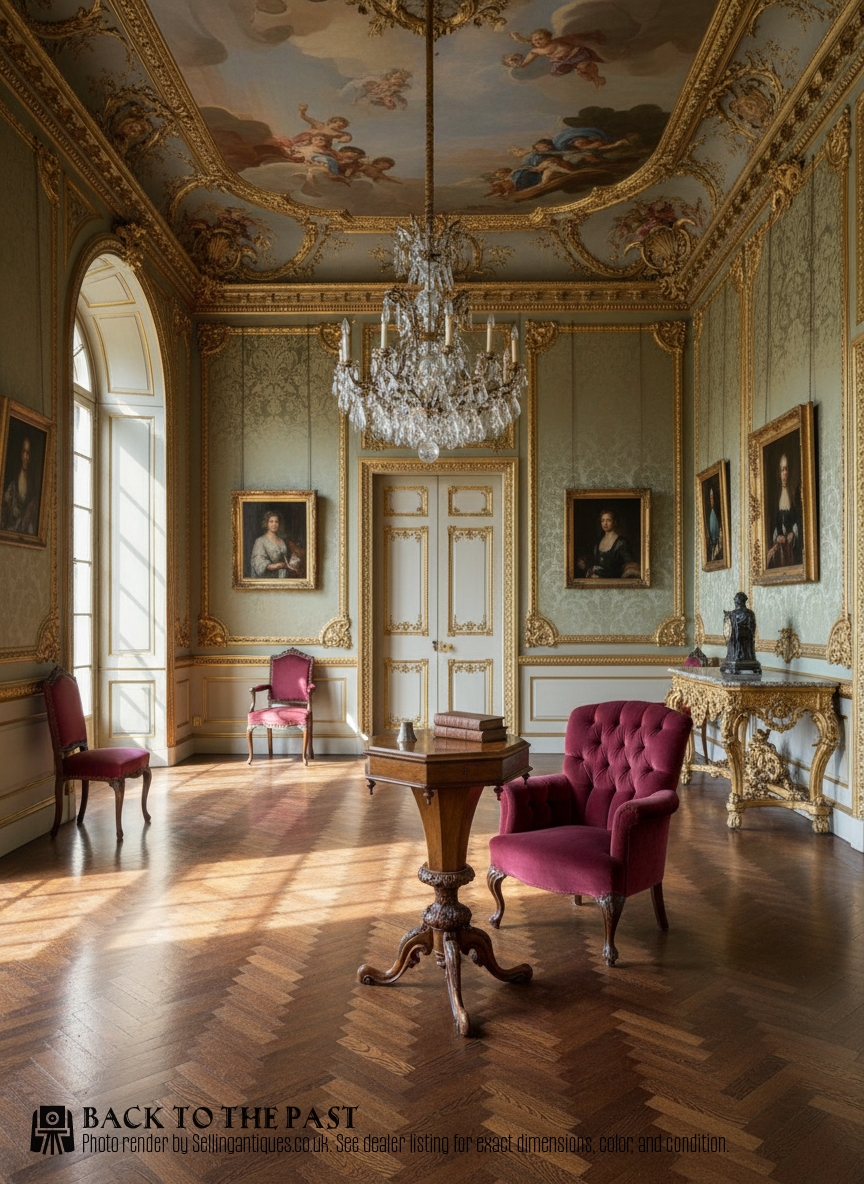
Carved Tripod Sewing Table
A carved tripod sewing table combines a raised compartment for needlework with a slender pedestal base supported by three legs. These pieces emerge chiefly from the Victorian and Regency eras, spanning the nineteenth century in various domestic forms.
The most common version met on this page is the trumpet-shaped work table or workbox in burr walnut or rosewood, often featuring an octagonal or circular hinged lid. Alongside these, simpler pedestal tables and occasional pieces appear under alternative designations like work tables or games tables.
Materials and construction
Cabinet makers utilised rich timbers such as mahogany, rosewood, and burr walnut, frequently applying intricate marquetry or inlaid timber to the lids and surfaces. Turning and carving shape the central pedestals and tripod legs, while brass fittings and fabric interiors complete the construction.
Trumpet forms rely on curved staves joined to form the body, topped with fitted compartments designed to hold cottons, needles, and sewing implements securely.
Object forms on this page include sewing tables, trumpet workboxes, tea poys, and occasional side tables.
Judging quality and craftsmanship
Quality rests upon the choice of timber veneer and the crispness of the carving on the tripod base and pedestal column. Fine examples display carefully matched burr walnut or delicate marquetry inlay that remains flush and undisturbed.
The interior fitments and the precision of the joinery within the workbox distinguish superior pieces from standard domestic furniture of the period.
The Carved Tripod Sewing Table Glossary
- Tripod base
- A support structure comprising three legs radiating from a central pillar. This configuration provides stability on uneven floors.
- Trumpet work table
- A sewing table featuring a body that flares outward from the base towards the lid, resembling a wind instrument. It usually conceals a fitted interior tray.
- Marquetry
- The art of applying pieces of veneer to a structure to form decorative patterns. Craftsmen use varied timber tones to create pictures or geometric designs.
- Pollard oak
- Timber taken from oak trees that have been pollarded, producing a gnarled grain pattern filled with small knots. It yields a distinctive decorative surface when polished.
- Tea poy
- A small stand or table fitted with containers for storing tea. These occasionally share forms with sewing tables.
Carved Tripod Sewing Table: Frequently Asked Questions
What were sewing tables used for?
These tables served as functional furniture for ladies to store needlework, threads, and small personal items close to hand in the drawing room.
The fitted interior compartments kept spools and thimbles organised while the hinged lid concealed the work when visitors called.
How do I date a sewing table?
Dating relies on observing the timber choice, the style of the tripod carving, and the overall silhouette of the pedestal. Regency pieces tend to show leaner lines, whereas Victorian examples often embrace trumpet shapes and heavier burr walnut veneers.
Secondary woods inside the compartments and the construction methods of the internal trays also offer clues to the decade of manufacture.
Can I use one as a lamp table?
Many of these pieces adapt easily to modern rooms as lamp tables or side tables beside a sofa or armchair.
The flat top accommodates lighting while the enclosed body provides hidden storage for small contemporary items.
What is the difference between a work table and a workbox?
A work table generally stands on a taller pedestal with distinct legs, whereas a workbox might refer to a more compact form resting on a tripod base.
Both types share the internal compartments designed for sewing paraphernalia.