



Antique Fabric Well Table
An antique fabric well table combines everyday utility with refined nineteenth-century craftsmanship, offering a tidy compartment to conceal needlework while serving as a practical occasional table.
Antique Fabric Well Table
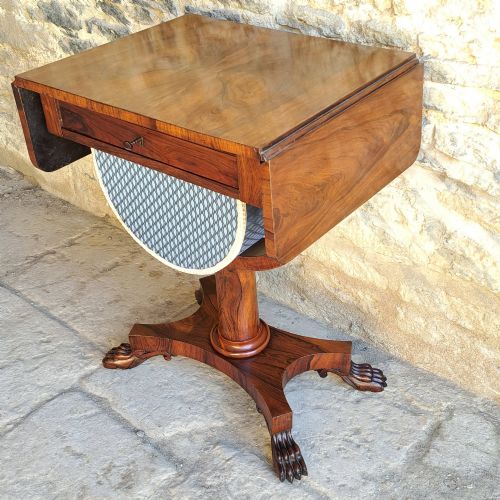
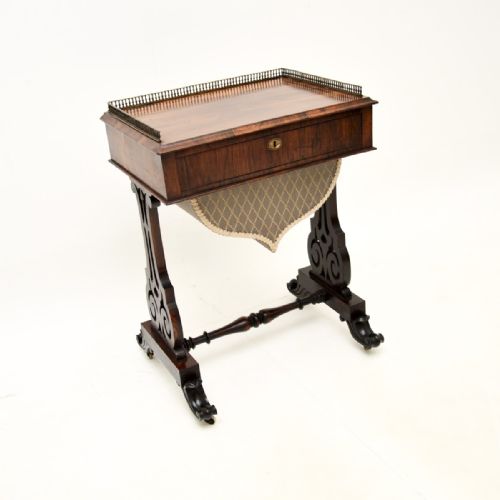
An antique fabric well table, more commonly designated in the trade as a work table or sewing table, is a small occasional piece designed to hold textiles, threads, and implements within an integrated cloth bag suspended beneath the top. These pieces date from the Regency period through the Victorian era, appearing in a range of compact forms suited to nineteenth-century drawing rooms and parlours.
The versions most frequently met on this page are constructed from rosewood, mahogany, and burr walnut, often featuring a fitted interior compartments above the fabric drop. Alongside dedicated sewing and work tables, the selection includes related side tables and occasional tables from the nineteenth century that share similar proportions and function.
How they were made
Cabinet makers utilised dense native and exotic timbers including mahogany, rosewood, and burr walnut to construct the primary carcase and legs, employing stable framing techniques for the tops and drop-flap surfaces. These woods were typically polished to a deep lustre that highlighted the natural grain patterns.
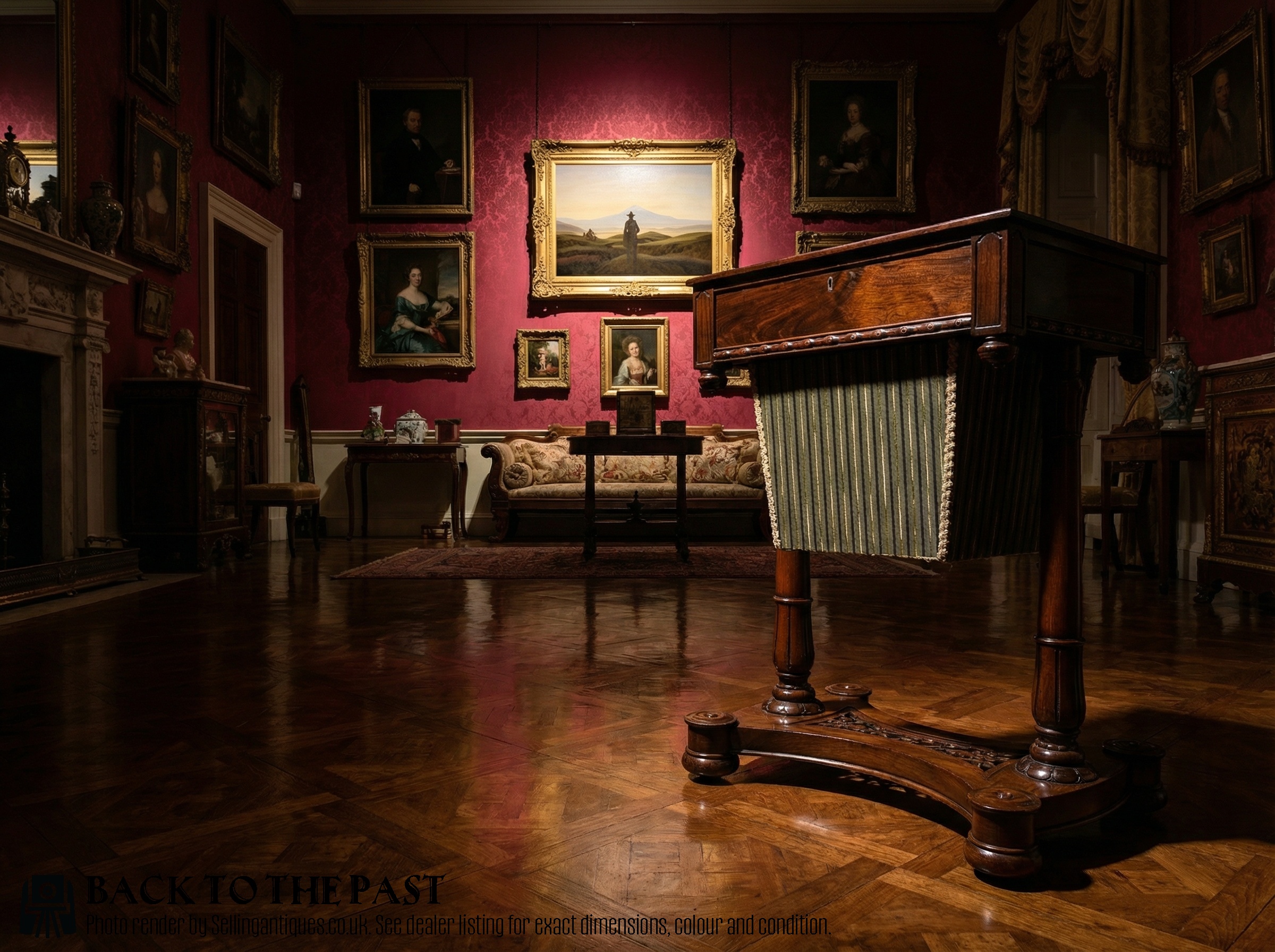
The characteristic fabric well relies on a suspended textile pouch, often velvet or coordinated fabric, attached to a wooden frame or sliding runners beneath the main drawer or compartment. Brass castors and mounts frequently appear on Regency and Victorian examples to facilitate movement across carpeted drawing rooms.
Antique Fabric Well Table Retail Price Guide 2026
Typical asking prices for fabric well table among the pieces listed under this phrase on Sellingantiques today, from the lower quarter to the upper quarter. They describe what is for sale here now, not the wider market.
Many of these sewing tables hide miniature lidded compartments inside, originally meant for tiny bone spools and gossip.
What varies in quality
The grade of timber selection largely distinguishes the superior examples, particularly where figured burr walnut or richly grained rosewood veneer covers the primary surfaces. Finer pieces demonstrate meticulous matching of grain across drawers and tops, whereas simpler utilitarian versions rely on plain mahogany with minimal ornamentation.
Internal arrangement and secondary joinery also indicate distinction, seen in fitted compartments with lidded boxes for bobbins and pins inside the drawer. The execution of the turned or carved supports and the integration of the suspended fabric well further separate standard production from workshop pieces.
The Antique Fabric Well Table Glossary
- Work table
- A small nineteenth-century table designed specifically to hold sewing equipment, textiles, and needlework accessories, often incorporating a fabric well or hanging bag.
- Burr walnut
- A highly decorative wood veneer taken from the knotted growths of the walnut tree, prized for its swirling, mottled grain patterns on Victorian furniture.
- Drop flap
- A hinged leaf on the side of a table that can be raised to extend the surface area or lowered when space is required.
- Regency
- A British design period spanning the early nineteenth century, characterised by classical restraint, elegant proportions, and classical revival motifs.
- William IV
- A transitional stylistic period spanning the 1830s, known for heavier proportions and bold scrollwork bridging Regency elegance and Victorian elaboration.
Antique Fabric Well Table: Frequently Asked Questions
What is a fabric well table?
A fabric well table is a nineteenth-century sewing or work table featuring a suspended textile pouch beneath the top. This bag was designed to hold ongoing needlework, wool, and sewing implements.
These pieces served as practical furniture for domestic sitting rooms. They allowed ladies to keep their sewing tidy yet immediately accessible beside an armchair.
How do I date an antique work table?
Dating relies on timber choice, construction methods, and stylistic details. Regency and William IV pieces often display classical columns or heavy pedestal bases, while Victorian examples frequently utilise burr walnut and serpentine edges.
Examining the interior secondary woods and drawer construction also helps establish the era. Older nineteenth-century pieces generally show hand-cut dovetails and traditional joinery.
Can I use a work table as a lamp table?
Yes, many nineteenth-century work and sewing tables function well as lamp tables beside a sofa or bed. Their compact footprint and useful surface area suit modern living spaces.
When using them for lighting, ensure the table top dimensions can safely accommodate the lamp base. The internal compartment remains useful for storing small items like books or remote controls.
What woods were used for sewing tables?
Cabinet makers predominantly used rosewood and mahogany during the Regency and early Victorian periods. These timbers provided strong structural frames and polished to a rich finish.
By the mid-nineteenth century, burr walnut became extremely popular for its decorative grain. Simpler pieces were occasionally constructed from mahogany or other native hardwoods.