


Victorian Trumpet Work Table
A victorian trumpet work table combines practical sewing storage with elegant, flared pedestals suited for period interiors.
Victorian Trumpet Work Table
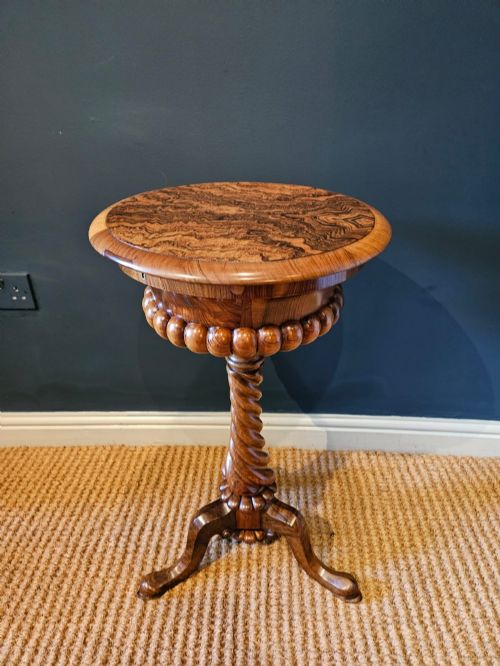
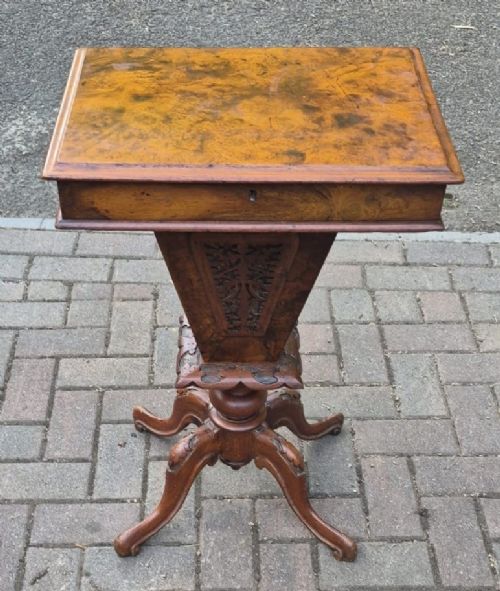
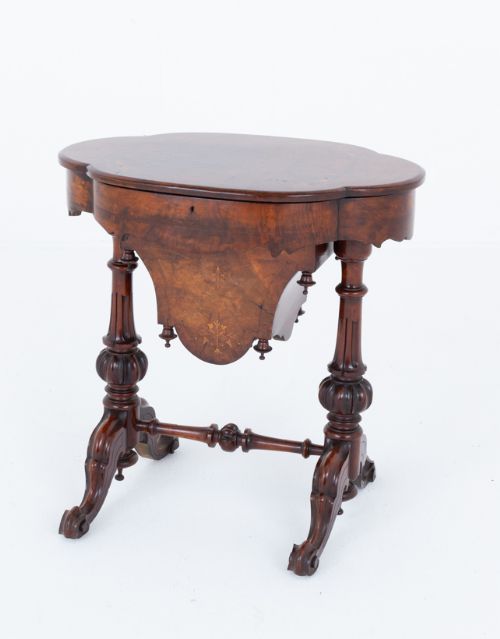
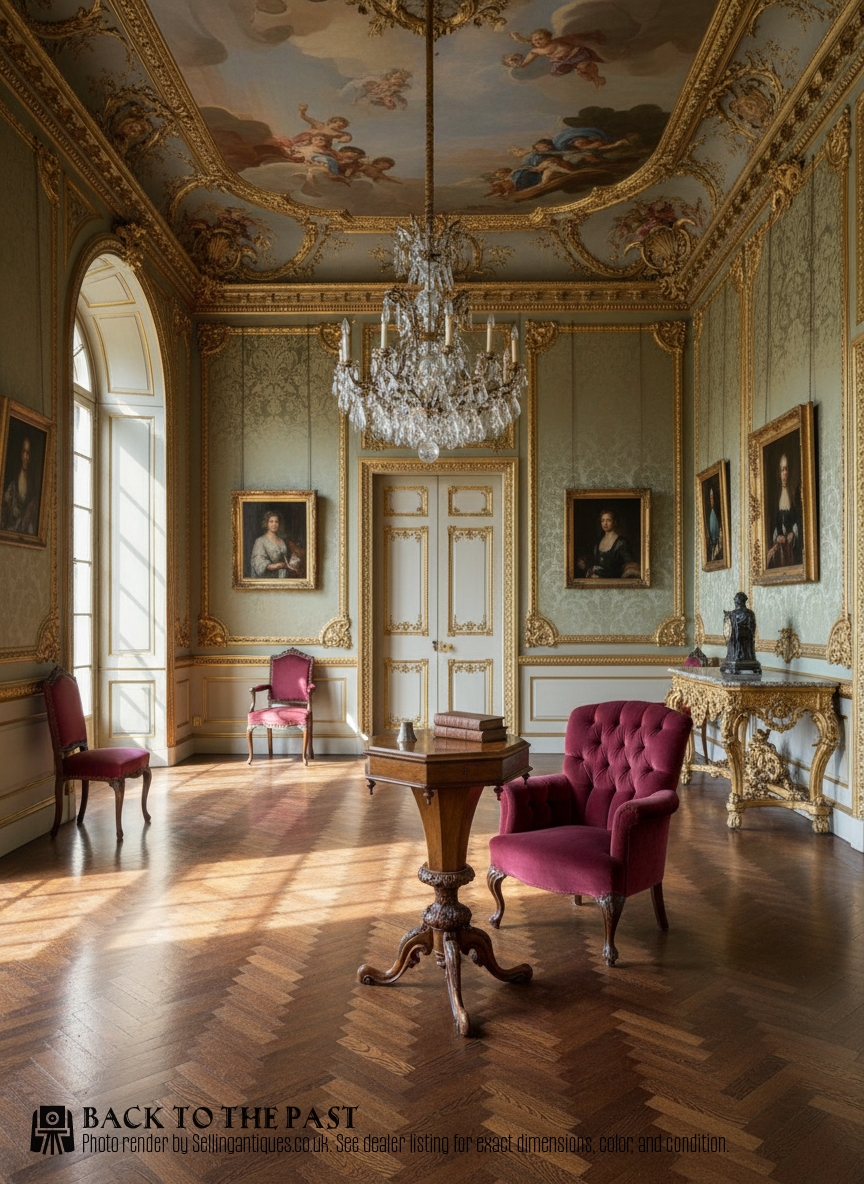
A victorian trumpet work table is a specialised piece of nineteenth-century furniture designed for needlework, sewing and games. These tables typically feature an octagonal or cone-shaped body that widens toward the base, supported on a tripod or pedestal foot. The version you are most likely to meet on this page is constructed from burr walnut with marquetry inlay and an octagonal hinged lid.
Beyond standard sewing tasks, many examples incorporate a chess or backgammon board within the top surface, functioning as dual-purpose games tables. Interiors often reveal fitted compartments and a fabric bag suspended underneath for wool and threads. Dating predominantly from the mid to late nineteenth century, they reflect the domestic hobbies of the period.
Materials and construction
Cabinet makers utilised rich timbers such as burr walnut, rosewood and mahogany, often applying intricate wood inlay, boxwood details and marquetry to the exterior surfaces. The distinctive trumpet shape was achieved through shaped staves or turned solid timber sections forming the tapering body.
Lids are typically hinged to reveal fitted interiors containing lidded compartments and small trays for sewing implements. Below the body, turned columns rest upon carved tripod legs, providing stability to the flared structure.
Victorian Trumpet Work Table Retail Price Guide 2026
Typical asking prices for victorian trumpet work table among the pieces listed under this phrase on Sellingantiques today, from the lower quarter to the upper quarter. They describe what is for sale here now, not the wider market.
The suspended fabric bag beneath the table was originally designed to resemble the flared bell of a musical instrument.
Distinctions in quality
Quality rests upon the choice of timber figure, particularly the richness and grain intensity of the burr walnut or rosewood veneers selected for the top and body. Finer examples display precise boxwood and marquetry inlay rather than simpler surface decoration.
The sophistication of the internal fittings and the crispness of the carved tripod base differentiate standard workshop production from superior cabinet work. Original condition of the fitted interior compartments and internal structure also elevates the standing of a piece.
The Victorian Trumpet Work Table Glossary
- Burr walnut
- A figured timber harvested from walnut tree growths, prized for its swirling grain patterns. It forms the primary decorative veneer on high-end nineteenth-century sewing tables.
- Marquetry
- Elaborate veneer work forming decorative pictures or geometric patterns using various coloured woods. Craftsmen applied this technique to the lids of needlework tables.
- Tripod base
- A three-legged support stand underneath the central pedestal column. This configuration ensures stability on uneven floors.
- Tunbridge inlay
- Micro-mosaic woodwork utilising tiny coloured wood blocks to create pictorial or geometric motifs. It appears on specific regional nineteenth-century sewing boxes.
- Workbox
- A lidded container designed for sewing materials and small valuables. These compartments form the upper section of needlework tables.
Victorian Trumpet Work Table: Frequently Asked Questions
What was a trumpet work table used for?
These tables served as designated stations for nineteenth-century needlework, embroidery and sewing supplies. The internal compartments kept threads, needles and fabric organised during domestic pastimes.
Many examples also doubled as games tables by incorporating inlaid chess or backgammon boards on the reverse of the lid. The suspended fabric bag below collected scraps and held balls of wool.
How do I date a victorian trumpet work table?
Dating relies on timber choices, stylistic markers and construction methods recorded across the nineteenth century. Earlier mid-century examples frequently feature rosewood and elaborate marquetry.
Later pieces from the 1870s and 1880s lean heavily toward burr walnut with octagonal bodies and Tunbridge or boxwood inlay. The intricacy of the pedestal carving also provides chronological clues.
Where should I place it in a room?
Their compact footprint makes them suitable as occasional tables beside seating in a drawing room or study. The decorative top surfaces allow them to function visually as display pieces when closed.
Interior spaces benefit from positioning them where natural light highlights the burr walnut grain or marquetry details. They also suit corners or beside side chairs without overwhelming floor space.
Are all trumpet tables octagonal?
While the octagonal form is common, variations include cone-shaped bodies and rounded oval formats. The tapering silhouette remains the defining characteristic across all versions.
Pedestal designs also vary from plain turned columns to heavily carved tripod legs supporting the main body.