

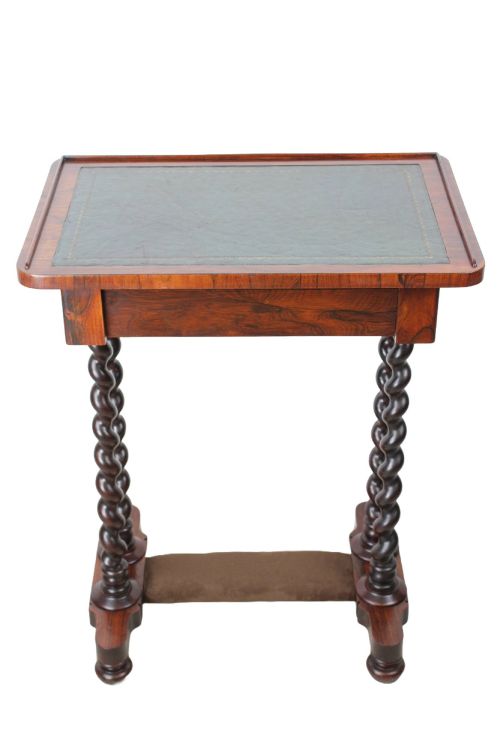
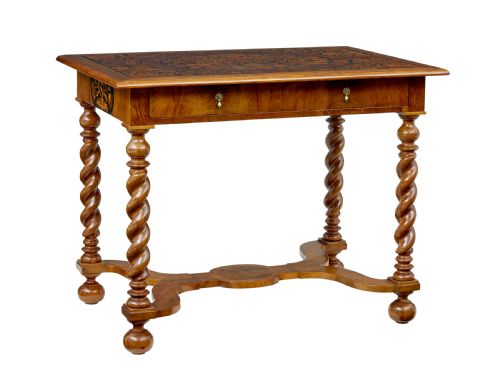
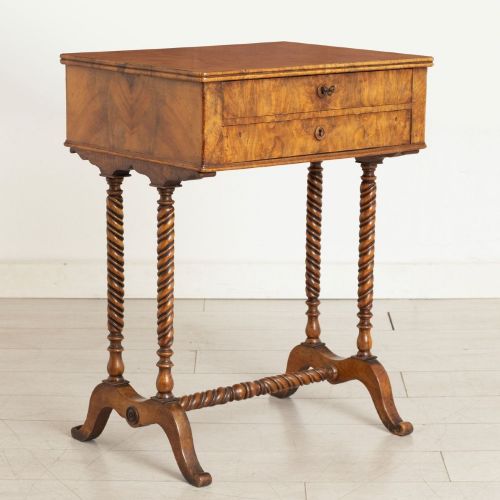
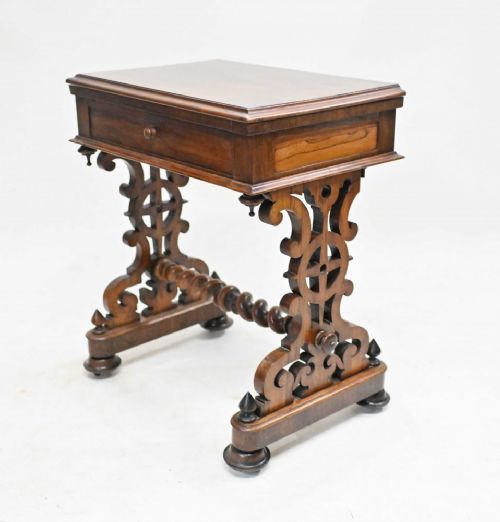




Barley Twist Work Table
A barley twist work table brings tactile timber and clever domestic utility to any room, combining spiral turned supports with fitted compartments.
Barley Twist Work Table
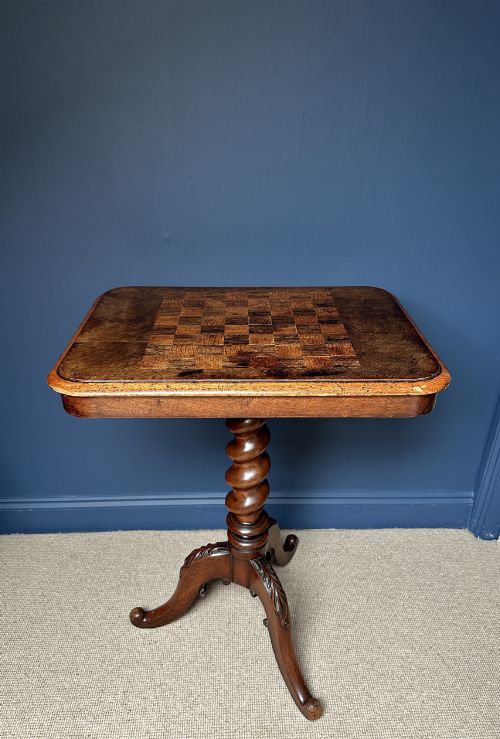
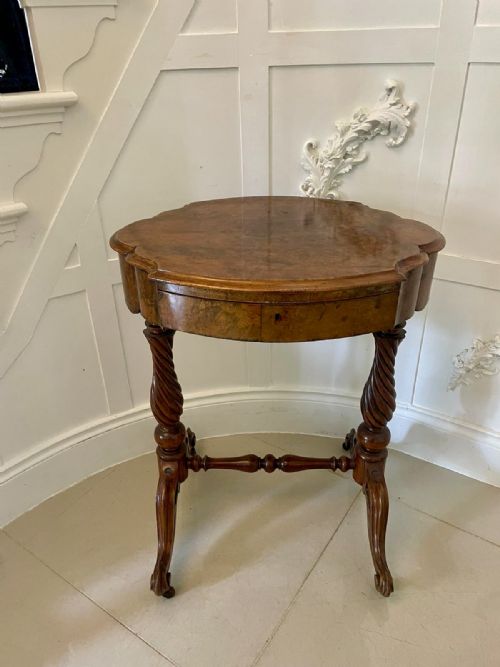
A barley twist work table combines spiral turned legs with a specialised domestic surface for sewing, games, and occasional use. These pieces surface primarily from the Victorian and Regency periods, spanning walnut, rosewood, and burr walnut timbers.
The primary forms on this page include work tables, sewing tables, and occasional lamp tables, alongside games tables featuring inlaid chess boards and backgammon boards. Many items incorporate fitted compartments beneath the top for storage.
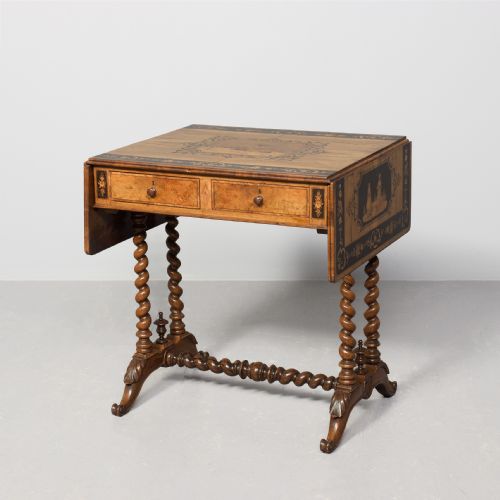
Makers and makers' workshops of the nineteenth century produced these tables in various configurations, including oval sewing work tables and occasional tea poy designs. Italian Sorrento olivewood inlaid sofa tables also appear among the selections.
How they were made
Craftsmen shaped solid timbers like rosewood, walnut, and mahogany into spiral turns for the structural legs and supports. Burr walnut veneers provided rich patterning for table tops and lids.
Surfaces frequently incorporated decorative techniques such as marquetry inlay and Italian Sorrento olivewood work. Secondary materials like brass, fabric, and leather added functional detail to interiors and hinges.
Barley Twist Work Table Retail Price Guide 2026
Typical asking prices for barley twist work table among the pieces listed under this phrase on Sellingantiques today, from the lower quarter to the upper quarter. They describe what is for sale here now, not the wider market.
Listings feature pieces spanning the Regency and Victorian periods, constructed from rosewood, walnut, burr walnut, and olivewood.
What varies in quality
Quality rests in the precision of the spiral turning and the selection of timber veneer, such as figured burr walnut or rosewood. Superior examples display crisp joinery and well-preserved internal compartments.
The complexity of integrated functions, such as inlaid chess and backgammon boards or specialised sewing wells, distinguishes finer production. Intricate marquetry inlay and Italian Sorrento work also elevate the craftsmanship of a piece.
The Barley Twist Work Table Glossary
- Barley twist
- A spiral turning resembling a twisted rope, used extensively for table legs and supports during the nineteenth century. This decorative carving adds texture and movement to the furniture silhouette.
- Work table
- A small domestic table designed for needlework and sewing, typically equipped with an internal compartment or bag. These pieces gained immense popularity during the Victorian era for domestic hobbies.
- Tea poy
- A small cabinet or table on a pedestal base designed to store loose tea leaves in internal caddies. They often doubled as elegant occasional or lamp tables in nineteenth-century drawing rooms.
- Marquetry inlay
- The art of applying decorative pieces of veneer to a structure to form ornamental designs and pictures. Artisans utilised contrasting timbers to create geometric and pictorial scenes on table tops.
Barley Twist Work Table: Frequently Asked Questions
What is a barley twist work table?
A barley twist work table is a nineteenth-century small table featuring spiral turned legs and compartments designed for sewing or domestic tasks.
These pieces often include hinged tops revealing fitted interiors for crafting materials, alongside occasional surfaces for lamps or games.
How were these tables used?
Victorian households utilised these tables for needlework, sewing, and leisure activities like chess and backgammon.
The fitted compartments kept threads and playing pieces organised, while the compact size allowed easy movement around the drawing room.
What woods were commonly used?
Cabinetmakers worked with rich hardwoods such as rosewood, walnut, and solid mahogany for structural and turned elements.
Figured burr walnut veneer and olivewood appeared on table tops, often enhanced by marquetry inlay or specialised Sorrento work.
How do I date these tables?
Dating relies on stylistic markers, timber choices, and construction methods characteristic of the Regency and Victorian periods.
Nineteenth-century examples frequently exhibit specific turning profiles, brass hardware, and fitted interior configurations typical of the era.