


Rosewood Trestle Side Table
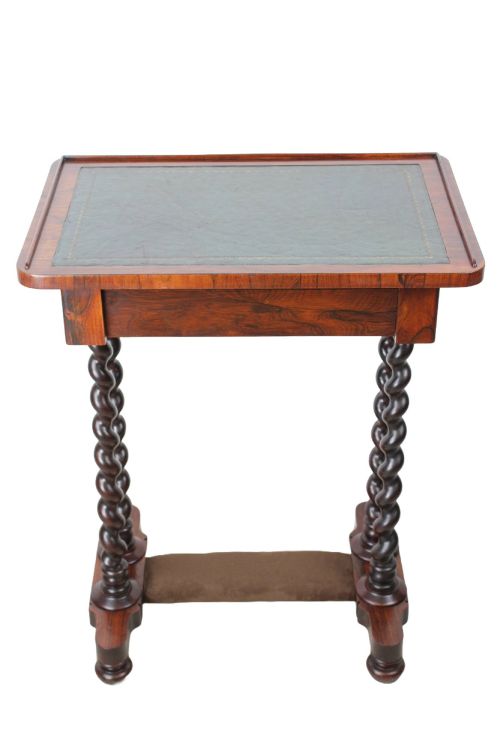
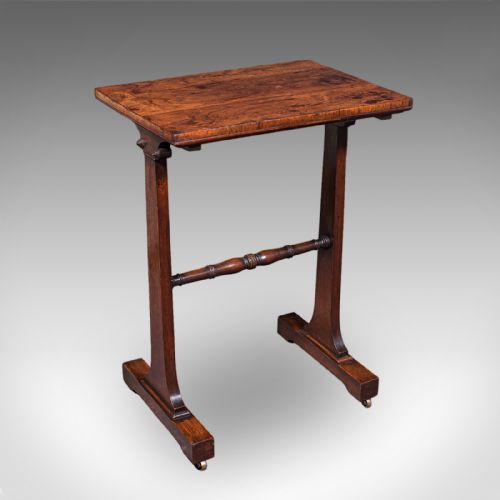
These rosewood trestle side table pieces bring dark timber and steady framing into a room.
Rosewood Trestle Side Table
A rosewood trestle side table brings together dark exotic timber and framed supports, appearing most often from the Regency, George IV, and Victorian periods. These pieces serve various domestic roles, ranging from small occasional surfaces and lamp tables to writing desks and nested quartetto sets.
The selections on this page span several decades of the nineteenth century, including Late Georgian and early Victorian examples. Buyers encounter side tables alongside related forms like sofa tables, sewing tables, and library tables.
How they were made
Cabinet makers utilised dense rosewood and palisander timber, frequently highlighting natural grain figures across the main surfaces. Secondary materials such as brass, mahogany, leather, and fabric appear in specific mounts, inlays, and writing surfaces.
Construction techniques include marquetry inlay for decorative top panels and solid framing for structural trestle supports. Workshops also employed simulated faux rosewood finishes on certain nested table sets.
Several nesting tables hide under grander names, proving that nineteenth-century Victorians loved a neat trick.
What varies in quality
The standard of timber selection and figuring distinguishes different examples, with highly marked grain commanding greater attention. The precision of brass inlay and marquetry work further separates standard utility pieces from finer cabinet work.
Attribution to known makers or specific regional workshops elevates certain tables above standard production items. The structural integrity of the trestle supports and the preservation of original surfaces also govern the standing of individual pieces.
Gillows of Lancaster·W&C Wilkinson London·George Smith
The Rosewood Trestle Side Table Glossary
- Rosewood
- A dense, dark timber prized for its rich grain patterns and heavy weight. It served as the primary material for high-status nineteenth-century occasional and library furniture.
- Trestle
- A structural support system utilising lateral bracing connected to upright feet. This design provides stable footing for side tables and library desks.
- Quartetto tables
- A set of four graduated occasional tables designed to slide neatly beneath one another. They gained popularity during the Regency period for tea and card games.
- Palisander
- A term applied to certain exotic dark rosewood timbers imported from South America and India. Cabinet makers valued it for its dramatic colour variation.
- Sofa table
- A rectangular occasional table traditionally placed in front of or beside a sofa. These pieces typically feature drop leaves and double trestle bases.
Rosewood Trestle Side Table: Frequently Asked Questions
How do I identify a Regency rosewood table?
Look for classical proportions, dark figured rosewood timber, and brass inlay details that reflect early nineteenth-century design tastes.
These characteristics appear frequently across side tables, sofa tables, and occasional stands from the period.
What were quartetto tables used for?
Quartetto tables served as flexible surfaces for tea, writing, or holding small items in a drawing room.
The graduated set allowed owners to pull out individual tables as needed while saving floor space when stored.
How do I care for nineteenth-century rosewood?
Keep rosewood furniture away from direct sunlight and extreme temperature shifts to protect the dense timber and polished surfaces.
Regular dusting with a dry cloth maintains the natural lustre without damaging the original finish.
What is the difference between a side table and a library table?
Side tables are generally smaller and designed to stand against a wall or beside seating furniture for occasional use.
Library tables are larger, often freestanding, and built with deeper proportions to accommodate writing and book storage.