

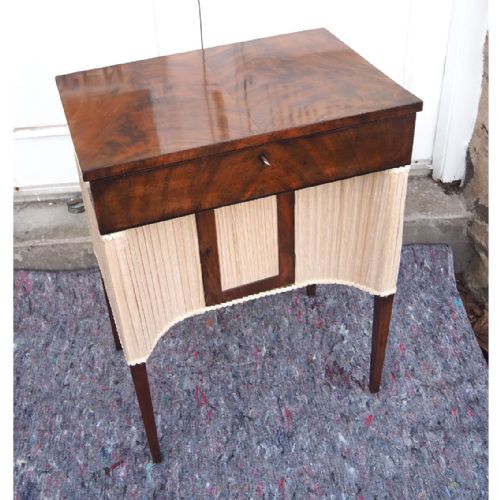
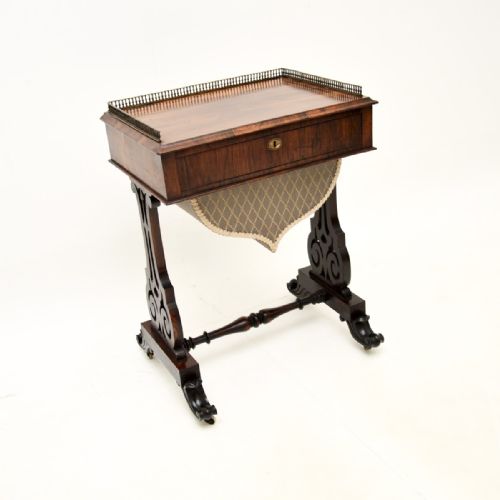


Victorian Fabric Sewing Table
These nineteenth-century pieces are practical occasional items designed for needlework, offering fitted interiors and hanging silk bags beneath.
Victorian Fabric Sewing Table
A victorian fabric sewing table is an ingenious nineteenth-century hybrid piece that combines a compact surface with integrated storage for textiles and threads. These versatile tables appear across the Victorian, William IV, and Regency periods in various timber forms.
Most examples function simultaneously as occasional, side, or lamp tables alongside their primary sewing purpose. Some integrate games boards into the top surface, housing fabric bags or wooden compartments underneath.
The dominant timbers recorded in the evidence are rosewood, mahogany, and burr walnut. Interior fittings typically include compartmentalised trays and textile components designed to hold sewing equipment.
Assessing quality and craftsmanship
The choice of timber veneer significantly elevates the visual standard, particularly figured burr walnut and flame mahogany matched across the top and sides. Superior examples display meticulous attention to the internal compartments and drawer construction.
Design complexity marks the distinction between standard side pieces and more elaborate models featuring combined games boards and carved pillar supports. The integration and condition of the original fabric components also influence the overall standard.
Current listings demonstrate that rosewood, mahogany, and burr walnut are the primary timbers used for Victorian sewing tables.
The Victorian Fabric Sewing Table Glossary
- Work table
- A multi-functional nineteenth-century piece containing compartments and a fabric bag for sewing materials. It served as a domestic station for needlework and small crafts.
- Burr walnut
- A highly decorative wood veneer taken from the wart-like growths on walnut trees. It yields swirling, organic patterns prized by Victorian cabinet makers.
- Drop-leaf
- A table design featuring hinged flaps that fold down to save space or lift up to extend the surface area. These leaves are typically supported by swing brackets.
- Occasional table
- A small, movable piece of furniture designed for specific, intermittent tasks rather than permanent placement. They appear frequently in nineteenth-century sitting rooms.
- Flame mahogany
- A distinctive wood grain figure displaying feather-like patterns resembling flickering flames. It was achieved by cutting timber at a specific angle to the branch.
Victorian Fabric Sewing Table: Frequently Asked Questions
What is a sewing table used for?
These pieces provided a dedicated domestic station for nineteenth-century needlework, embroidery, and small crafts. The integrated boxes and fabric bags kept threads, needles, and cloth tidy within the living space.
Beyond handwork, the top surface doubled as an occasional table for lamps, books, or drinks. Some examples incorporated folding tops that concealed chess or backgammon boards for evening entertainment.
How do I date a Victorian work table?
Dating relies on stylistic shifts and timber preferences recorded across the nineteenth century. Early examples from the 1830s often display William IV or Regency influences with heavier pillar supports and rosewood veneers.
Pieces from the 1850s and 1860s frequently showcase burr walnut with shaped friezes and carved cabriole legs. Construction methods, such as hand-cut dovetails inside the drawers, also indicate the period of manufacture.
Are these tables sturdy enough for daily use?
Nineteenth-century cabinet makers built these pieces from solid hardwoods and stable veneers intended for active domestic environments. Their robust frames handle normal placement of lamps and decorative objects without difficulty.
The internal storage compartments and hanging fabric bags require gentler handling, particularly when dealing with original silk linings. Checking the castor mountings ensures safe movement across carpeted or wooden floors.
How do I care for antique rosewood and walnut?
Timber surfaces respond best to regular dusting with a dry, soft cloth and occasional treatment with quality beeswax to nourish the grain. Direct sunlight and excessive heat from radiators should be avoided to prevent veneer cracking.
Original silk or textile bags require careful vacuuming through a mesh screen if fragile. Metal fittings like brass castors benefit from dry cleaning rather than abrasive metal polishes.