


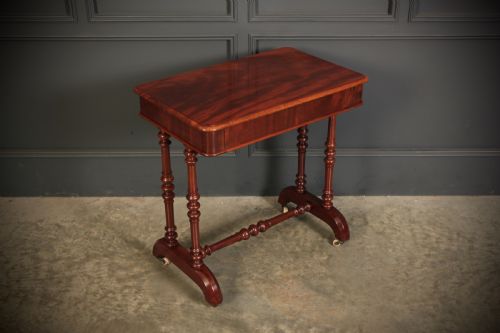


Victorian Trestle Work Table
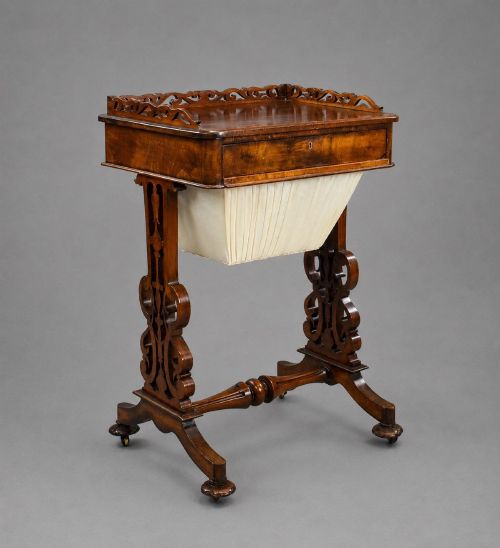
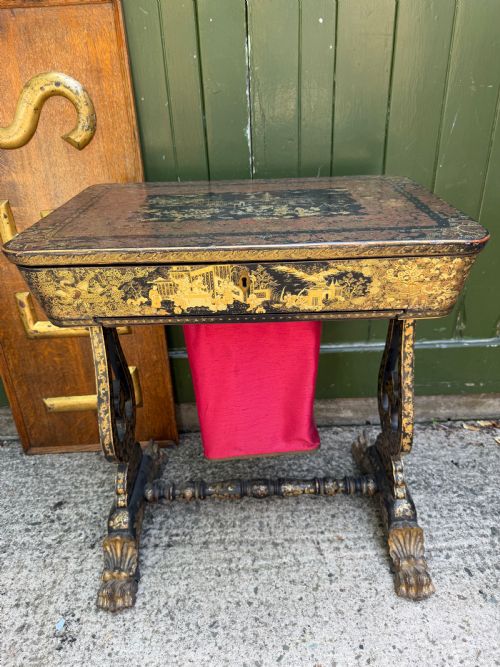
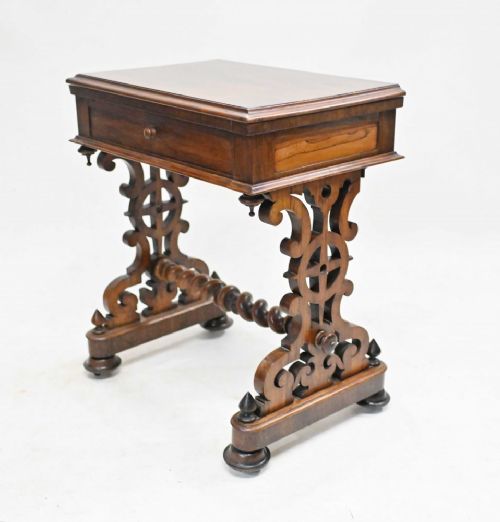
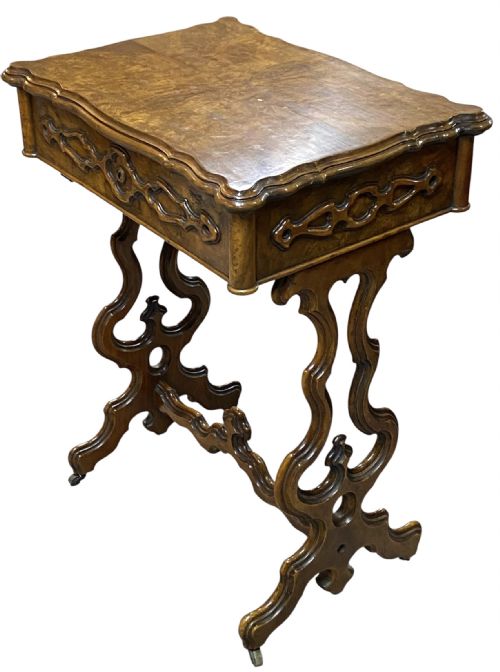
A victorian trestle work table provides a practical surface and fitted compartments, designed for sewing, writing, or informal games.
Victorian Trestle Work Table
A victorian trestle work table represents a functional group of nineteenth-century furniture, often designed for sewing, needlework, or games. These pieces typically combine a sturdy support framework with a fitted top compartment or drawer.
The selections available here span the wider nineteenth century, drawing from the Victorian era and adjacent periods like the Regency. Forms vary from dedicated sewing tables to occasional, side, and garden tables.
Makers utilised various regional interpretations, producing pieces in mahogany, rosewood, walnut, and cast iron. Buyers encounter both British craftsmanship and imported styles such as Anglo-Indian and Chinese export pieces.
Assessing craftsmanship
Quality rests in the selection of timber veneers and the precision of internal compartment fittings. Fine examples demonstrate careful attention to grain matching on surfaces such as figured walnut and burr walnut.
Structural integrity of the base framework separates standard utility pieces from finer parlour furniture. The presence of original hardware, working locks, and intact interior sewing trays elevates the standing of an individual table.
Available forms range from domestic sewing and writing tables to heavy industrial foundry and garden pieces.
Heal And Son
The Victorian Trestle Work Table Glossary
- Trestle
- A support structure consisting of a horizontal beam balanced on vertical or slanted legs. This design provides stability while allowing legroom underneath.
- Work table
- A multi-purpose nineteenth-century table equipped with drawers or fabric bags for sewing and needlework supplies. These pieces often doubled as writing or occasional surfaces.
- Burr walnut
- Timber taken from the gnarled growths of a walnut tree, yielding complex, swirling grain patterns. Cabinet makers prized this material for decorative table tops.
- Padouk
- A heavy, durable tropical hardwood with reddish tones, frequently utilised in Anglo-Indian furniture production. It accepts intricate carved details exceptionally well.
Victorian Trestle Work Table: Frequently Asked Questions
What is a work table used for?
A work table served nineteenth-century households as a dedicated station for sewing, needlework, and small crafts. Fitted interiors kept threads, needles, and tools organised beneath the lid.
Beyond needlework, these versatile surfaces functioned as writing desks, card tables, or bedside stands in domestic parlours and bedrooms.
How do I identify a Victorian table?
Nineteenth-century tables utilise traditional hardwoods like mahogany, rosewood, and walnut, often finished with hand-rubbed French polish. Construction methods rely on dovetail joints in drawers and solid timber framing rather than modern manufactured boards.
Design motifs reflect specific nineteenth-century tastes, ranging from plain functional forms to elaborate carved ornamentation and burr walnut veneers.
Are these tables suitable for modern rooms?
Compact proportions and practical storage make these pieces well-suited for contemporary living spaces. They function effectively as hall tables, lamp stands, or bedside surfaces.
Fitted compartments also provide convenient storage for small modern items like stationery, keys, or electronic accessories without altering the original appearance.