


Antique Needlework Storage
Antique needlework storage keeps your threads and silks orderly inside mahogany, walnut, and rosewood boxes or tables.
Antique Needlework Storage
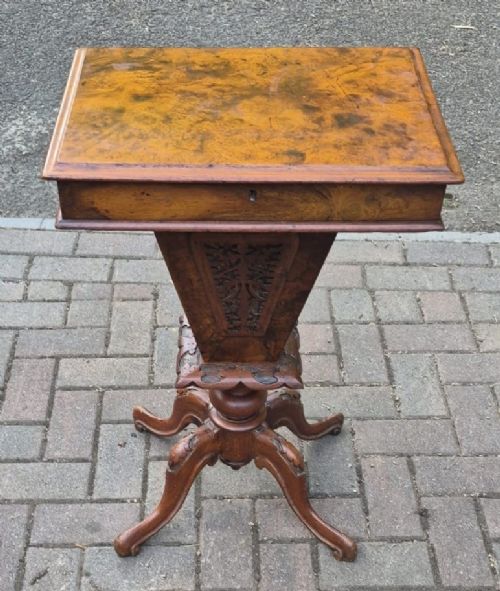
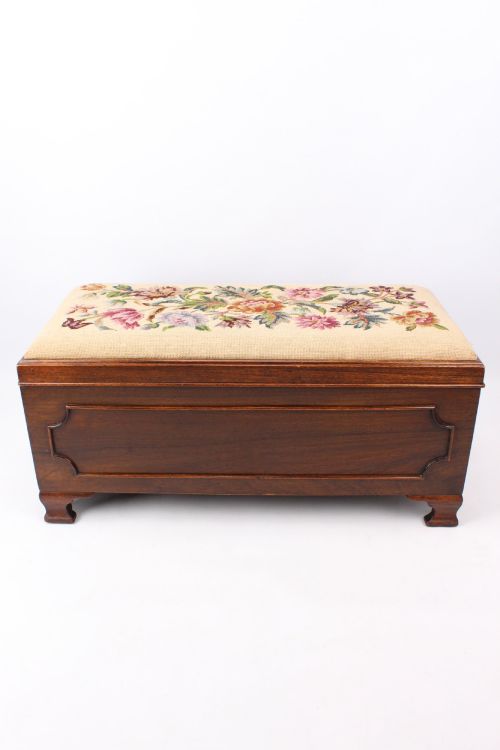
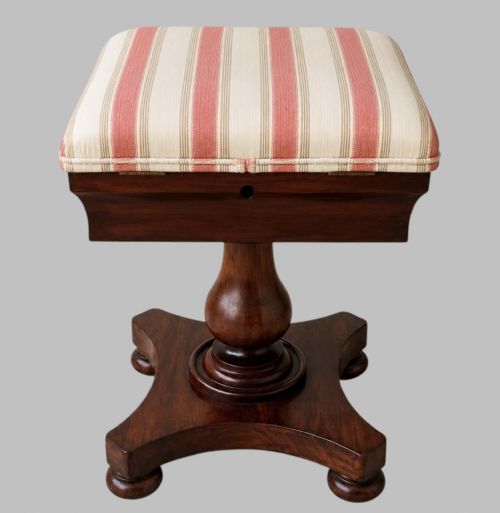
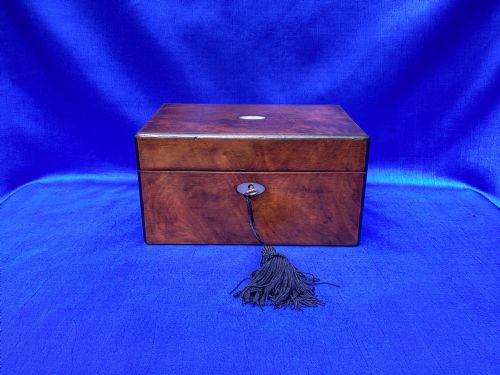
Antique needlework storage encompasses sewing boxes, work tables, and ottomans designed to hold textiles and sewing implements. These pieces range from tabletop work boxes to substantial tables with fitted compartments for cottons and needles.
The versions most commonly met on this page are Victorian and Regency pieces made from woods such as mahogany, walnut, and rosewood. They often feature hinged lids or drop bags underneath to receive materials.
How they were made
Cabinetmakers constructed these pieces using solid timbers and veneers like mahogany, walnut, burr walnut, and rosewood. Brass hardware provided hinges, locks, and handles, while bone frequently appeared in small interior fittings.
Surfaces were shaped into work boxes, sewing tables, and ottomans, occasionally incorporating decorative techniques such as Tunbridge Ware mosaic work. Needlework seats utilised wool fabric in stitches like gros-point.
The listings show periods ranging from the Regency era through to the 1920s, constructed in mahogany, walnut, rosewood, and oak.
What varies in quality
The choice of timber creates a distinct separation in the range, where figured walnut and rosewood sit above plainer woods. Timber selection dictates the visual depth of the grain across lids and tabletops.
Interior complexity marks the higher tiers of these pieces. Fitted compartments with bone details and specialised trays demonstrate superior execution compared to basic lined cavities.
Waring & Gillow
The Antique Needlework Storage Glossary
- Work table
- A small table fitted with drawers or a fabric bag underneath designed for sewing materials. These items combine a surface for working with storage for ongoing projects.
- Tunbridge Ware
- A type of woodworking featuring tiny wood mosaics that form geometric or pictorial patterns. This decorative technique appears on the exterior of specialised boxes.
- Gros-point
- A type of needlepoint embroidery worked on canvas using a counted thread technique. It frequently covers the upholstered tops of ottomans and stools.
- Burr walnut
- Walnut timber taken from a growth on the tree that produces intricate, swirling grain patterns. Cabinetmakers used these veneers on prominent surfaces of boxes and tables.
Antique Needlework Storage: Frequently Asked Questions
What is an antique work table?
An antique work table is a piece of furniture designed specifically to hold sewing supplies, patterns, and textiles.
They usually feature internal compartments under the lid or a hanging fabric bag beneath the main surface to collect stray threads and unfinished projects.
How do I date a sewing box?
Dating a sewing box involves looking at the timber species, construction joints, and internal fittings used by the maker.
Mahogany and rosewood point towards Regency and early nineteenth-century production, while burr walnut and specific Tunbridge Ware decorations align with the Victorian era.
What materials were used?
Cabinetmakers utilised dense hardwoods such as mahogany, walnut, burr walnut, and rosewood for the main structures of these storage pieces.
Internal details often incorporated bone for winders or small tools, while brass provided structural hinges and locks.
Where should I place a sewing table?
These tables function well as occasional side pieces next to seating in a living room or study.
The hinged lids and internal compartments allow them to store modern odds and ends just as easily as they once held threads and needles.