
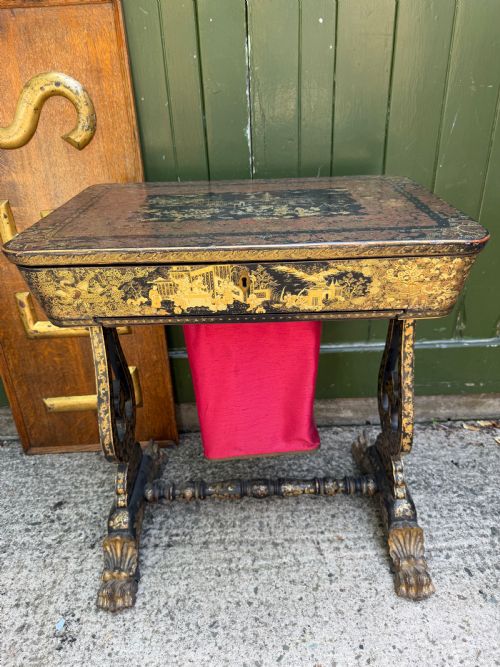
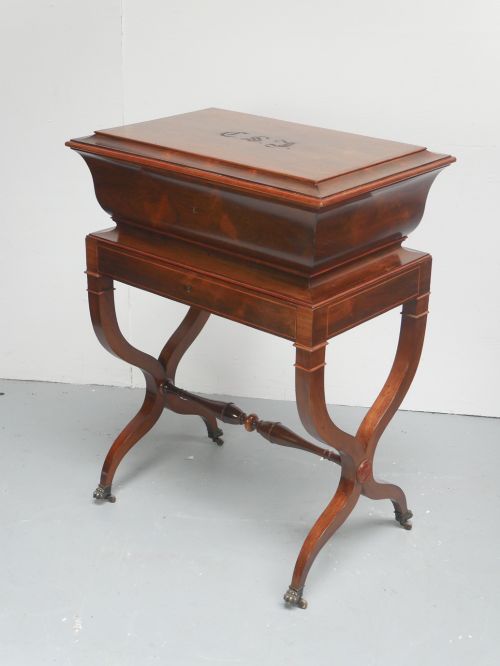


Sewing Box on Stand
A sewing box on stand brings together a dedicated work box and a supportive pedestal or frame to keep materials close at hand.
Sewing Box on Stand
A sewing box on stand combines a fitted storage container for needles and threads with a stable wooden base or legs, making it both practical and decorative. Buyers search for these pieces to bring traditional craftsmanship and organised storage into a sitting room or bedroom.
The selections available range from Regency and Victorian drop-leaf work tables to Edwardian inlaid examples and Anglo-Indian variants. Walnut, mahogany, and rosewood appear frequently alongside lighter satin walnut and oak.
Many of these items feature internal compartments, fitted trays, and fabric bags designed specifically for needlework and textile crafts. The form serves equally well as a compact occasional table when the lid is closed.
Materials and construction methods
Cabinet makers utilised dense hardwoods such as mahogany, walnut, and rosewood to build the main bodies and stands, frequently adding wood inlay or brass details for visual contrast. Interiors often include velvet, fabric linings, and delicate compartments designed to hold small tools securely.
Construction techniques involve sturdy joinery for the stands, paired with hinged lids and fitted internal trays that lift out to reveal deeper storage wells. Drop-leaf extensions and tripod bases provide stability and flexibility in smaller domestic spaces.
Listings feature woods such as rosewood, mahogany, walnut, burr walnut, and oak, spanning the Regency, Victorian, and Edwardian periods.
Distinguishing quality and execution
The standard of a sewing box on stand depends heavily on the crispness of the timber grain, the precision of any inlay work, and the structural integrity of the stand. Pieces finished in burr walnut or detailed rosewood often display superior cabinet work.
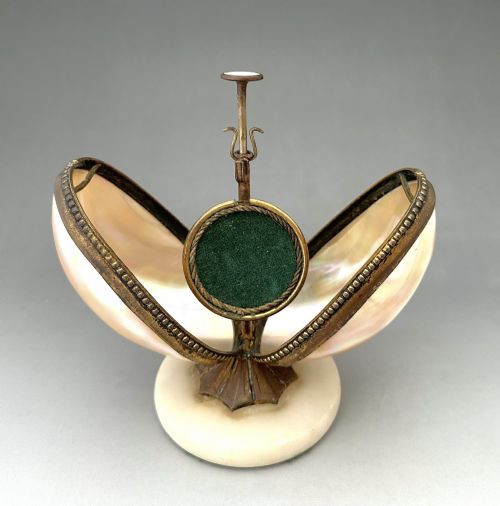
Internal fittings also indicate the grade of the piece, with intact silk pockets, fitted mother-of-pearl etuis, and original brass hardware reflecting a higher tier of original manufacture.
Lesage·Artificer's Guild
The Sewing Box on Stand Glossary
- Work table
- A small furniture piece designed primarily for sewing and needlework, incorporating drawers, compartments, or hanging fabric bags beneath the top. It serves as both a functional workbench and a side table.
- Teapoy
- A small stand or table originally used to hold tea caddies, which often overlaps in form with work boxes and sewing stands from the Regency and William IV periods. They frequently include internal compartments for storage.
- Etui
- A small ornamental case used for holding needles, scissors, and other small implements. These delicate accessories are often found inside fitted work boxes.
- Drop-leaf
- A table top with hinged flaps on one or two sides that can be raised to extend the surface area or lowered when space is limited. This mechanism allows the stand to adapt to different rooms.
Sewing Box on Stand: Frequently Asked Questions
What is a sewing box on stand?
A sewing box on stand is a self-contained cabinet or box mounted on legs or a pedestal, designed to hold sewing implements and materials.
These pieces combine furniture and storage, allowing needlework to be kept neatly contained yet accessible in a living space.
How were work tables used historically?
Work tables served as mobile stations for ladies to carry out embroidery, mending, and lace-making during the eighteenth and nineteenth centuries.
When not in use for crafts, the closed top allowed the piece to function as an ordinary occasional table for lamps or books.
How do I identify a Victorian sewing table?
Victorian examples frequently utilise rosewood or walnut, often featuring turned pedestals, carved supports, and fitted interior trays lined with fabric or velvet.
They commonly include drop leaves and a fabric work bag suspended beneath the main compartment.
Are these stands suitable for modern use?
These pieces integrate easily into modern interiors as bedside tables, side tables, or dedicated storage for contemporary craft supplies.
The fitted internal compartments remain practical for organising small household items or modern sewing gear.