


Rosewood Drop Well Table
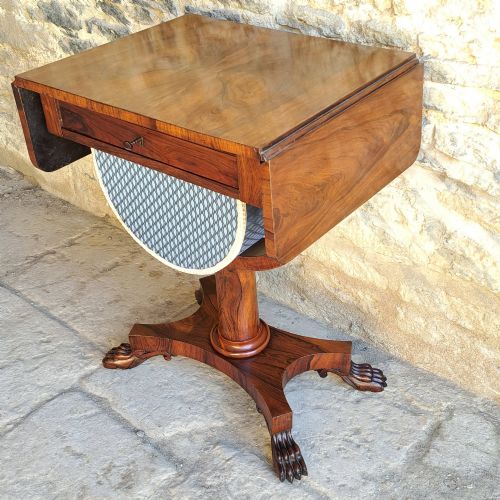
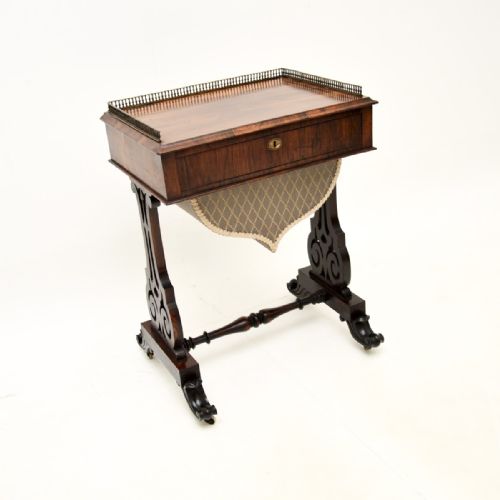
These rosewood drop well table examples are refined occasional pieces designed for needlework and small pastimes, combining deep tropical timbers with clever compartmented storage.
Rosewood Drop Well Table
A rosewood drop well table is a specialised piece of domestic furniture primarily utilised as a sewing or work table during the nineteenth century. These items appear across Victorian, Regency, and William IV styles, alongside Georgian classifications.
Most examples function as occasional tables or side tables, featuring integrated workboxes beneath the surface. The form centres on a recessed well or fabric bag designed to hold textiles, thread, and needlework accessories.
Irish workshops contributed distinctive variants to this category during the early nineteenth century. Buyers encounter these versatile pieces serving as compact writing desks, games tables, or refined bedside supports.
How they were made
Cabinet makers constructed these pieces primarily from dense rosewood, occasionally incorporating secondary timbers such as mahogany into the internal framework. Surfaces frequently received a polished finish to highlight the rich grain patterns of the primary wood.
Brass fittings appear as structural hardware, hinges, and decorative castors supporting the base. Fabric and velvet line the internal compartments and drop wells, providing a soft receptacle for delicate sewing materials.
Listings span the 19th Century, Victorian, Georgian, Regency, and William IV periods, constructed primarily from rosewood with brass and velvet.
What varies in quality
The sophistication of the internal compartment layout distinguishes finer workboxes from simpler variants. Cabinet makers who invested greater skill in the fitted interiors created superior pieces that commanded higher regard.
The selection and bookmatching of the rosewood veneer dictate the visual appeal of the top surface. Superior examples display carefully chosen grain alignments that elevate the overall presence of the side table.
The Rosewood Drop Well Table Glossary
- Rosewood
- A dense, heavily figured tropical timber prized for its dark colour and distinct aroma. Cabinet makers utilised this material for its exceptional polishing qualities and durability.
- Work table
- A specialised domestic table containing fitted compartments and a fabric bag for sewing and needlecraft. These pieces gained immense popularity throughout the nineteenth century.
- Drop-leaf
- A table design featuring hinged flaps that fold down to reduce the footprint or lift to expand the surface area. This mechanism allowed furniture to adapt easily to domestic spaces.
- William IV
- A transitional design period spanning the 1830s characterised by robust proportions and restrained classical ornamentation. Furniture from this era often employs heavy scrolling supports.
Rosewood Drop Well Table: Frequently Asked Questions
What is a drop well table?
A drop well table is a nineteenth-century sewing or work table featuring a lowered central compartment or fabric bag suspended beneath the tabletop. This compartment provided convenient storage for needlework, threads, and small personal items while keeping the main surface clear.
Cabinet makers designed these pieces for ladies' boudoirs and drawing rooms, combining decorative elegance with practical utility. They frequently double as occasional or side tables in modern settings.
How do I date a rosewood table?
Dating relies upon stylistic markers, structural proportions, and secondary materials recorded in the piece's construction. Regency and William IV examples display distinct classical or scrolling supports, whereas mid-nineteenth-century Victorian pieces often feature heavier turning.
Examining the internal drawer construction and the character of the rosewood grain offers further clues to the manufacturing decade. Comparing these details against known nineteenth-century workshop practices establishes the chronological origin.
Where were these tables made?
These pieces originated primarily in English and Irish workshops during the Georgian and Victorian eras. Regional cabinet makers adapted contemporary design trends, producing distinctive variations in proportion and ornamentation.
Irish makers contributed notable examples around 1830, whilst English workshops maintained steady production throughout the mid-nineteenth century. Each piece reflects the prevailing aesthetic preferences of its specific geographic origin.
How do I use one today?
These tables function exceptionally well as bedside stands, compact side tables, or hallway display surfaces. The internal compartments remain useful for storing small household items, stationery, or modern accessories out of sight.
Placing them in a drawing room or study preserves their historical character while utilising their modest footprint. Their rich rosewood surfaces complement both traditional and contemporary interior schemes.