

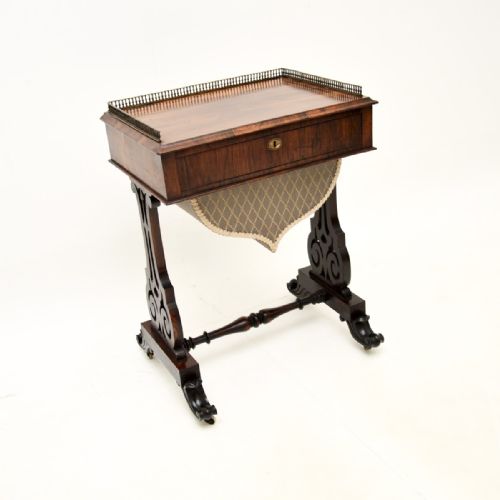


Rosewood Work Box
When you search for a rosewood work box, you are looking at tactile nineteenth-century containers designed for needles, thread, and letters.
Rosewood Work Box
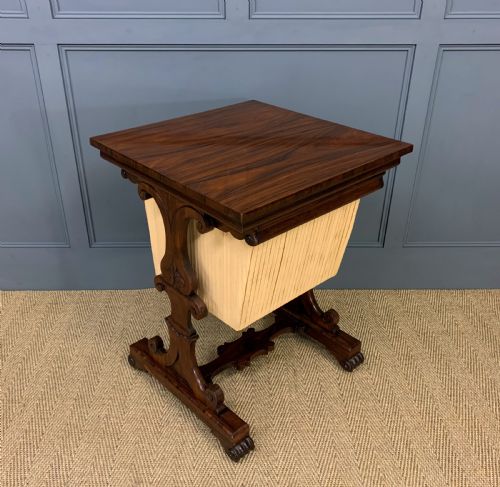
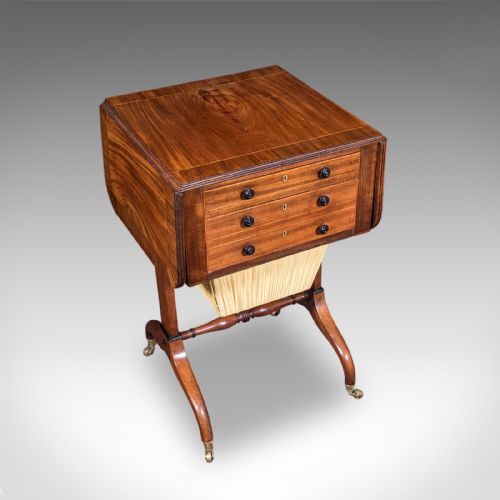
A rosewood work box encompasses small portable receptacles, larger table-top boxes, and freestanding sewing or occasional tables from the nineteenth century. These pieces served upper-class and middle-class households as dedicated storage for needlework, letters, jewellery, and writing materials.
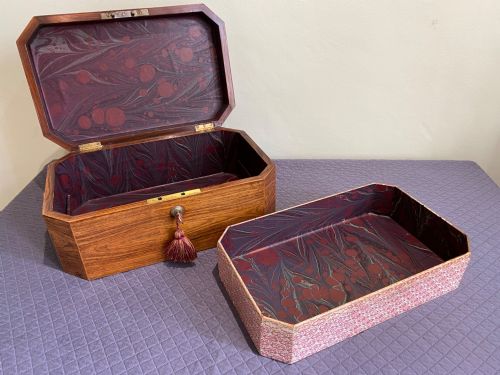
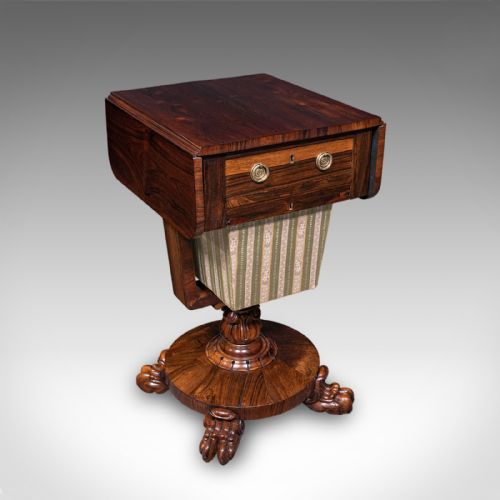
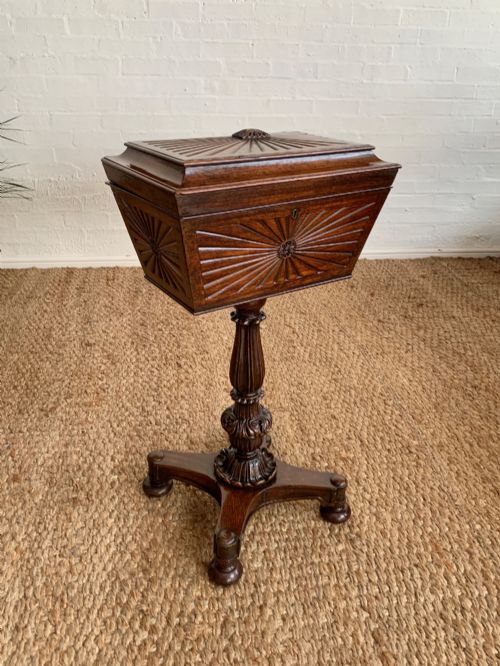
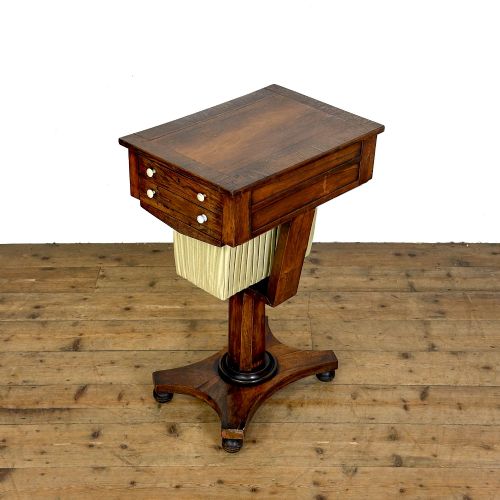
The versions most commonly met on this page are compact table-top boxes from the Regency and Victorian eras alongside drop-leaf or trumpet-shaped work tables. Many retain fitted internal trays, compartments, and pincushions intended to keep sewing tools organised during parlour use.
How They Were Made
Cabinet makers utilised dense, richly grained rosewood veneers laid over secondary timbers like pine or mahogany to construct the carcase. This dark timber provided a stable, handsome canvas for decorative embellishment.
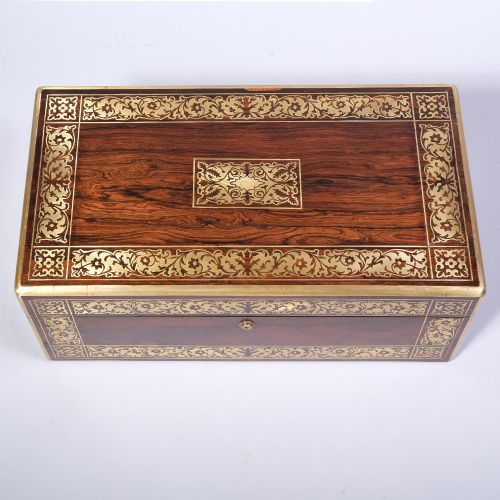
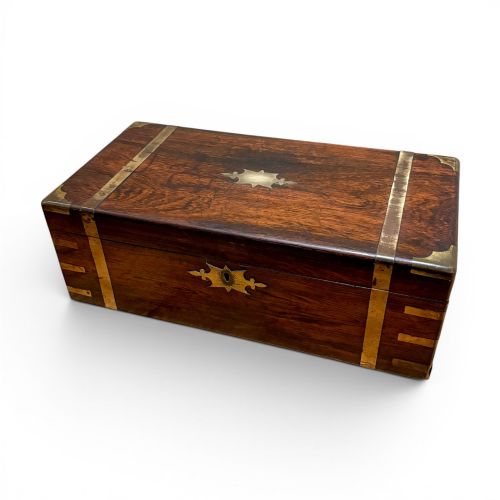
Surface decoration frequently incorporated brass banding, boxwood stringing, mother-of-pearl inlay, and geometric wood marquetry. Tunbridge Ware elements and intricate fretwork also appear across the surviving pieces on this page.
Rosewood Work Box Retail Price Guide 2026
Typical asking prices for rosewood work box among the pieces listed under this phrase on Sellingantiques today, from the lower quarter to the upper quarter. They describe what is for sale here now, not the wider market.
The listings show work boxes spanning the Georgian, Regency, William IV, and Victorian periods, utilising brass, mother-of-pearl, and boxwood inlay.
What Varies in Quality
The distinction between standard and superior examples lies in the precision of the cabinet work and the ambition of the decoration. Master makers employed complex sarcophagus profiles, elaborate mother-of-pearl pictorial motifs, and meticulous brass inlay rather than simple surface finishes.
Internal organisation heavily influences desirability. Superior boxes feature fully fitted compartments with lidded sections, original silk or velvet linings, and working locks with matching keys, whereas lesser examples lack internal trays.
The Rosewood Work Box Glossary
- Rosewood
- A dense, heavy tropical timber prized for its dark purple-brown hue and contrasting black grain patterns. It was the favoured exterior veneer for high-end nineteenth-century decorative boxes and tables.
- Sarcophagus
- A box shape featuring a domed or sloping lid reminiscent of an ancient stone coffin. This architectural profile was particularly popular during the Regency and William IV periods.
- Marquetry
- The art of creating decorative pictures or patterns by fitting together thin veneers of different coloured woods. Craftsmen used boxwood and fruitwoods to achieve floral and geometric designs.
- Tunbridge Ware
- Small wooden objects decorated with mosaic patterns made from thousands of tiny tinted wood blocks. This specialised craft originated in Tunbridge Wells.
- Trumpet Table
- A freestanding sewing table featuring an octagonal or faceted bag-like body widening toward the top. It typically rests on a pillar and carved tripod base.
Rosewood Work Box: Frequently Asked Questions
What was a work box used for?
These containers held sewing implements, threads, pins, and small personal valuables for ladies in the nineteenth century. They sat on parlour tables or dressing chests for daily needlework tasks.
Many contained specialised compartments, removable trays, and velvet-lined spaces to store thimbles, scissors, and bobbins securely while not in use.
How do I tell Regency from Victorian boxes?
Regency boxes often display architectural forms like the sarcophagus shape, alongside restrained brass inlay or classical card-cut mounts. They date roughly from the early decades of the nineteenth century.
Victorian examples tend to incorporate heavier ornamentation, including mother-of-pearl floral plaques, marquetry, and trumpet-shaped pedestal bases which became popular after the mid-century mark.
Did these boxes come with keys?
Original working locks and keys were standard for better quality boxes because owners stored jewellery and private correspondence inside them. Surviving keys add considerable interest for collectors today.
Many locks bear small brass escutcheons around the keyhole, which sometimes featured engraved initials or decorative cartouches.
How do I care for rosewood furniture?
Keep wooden boxes and tables away from direct sunlight and radiators to prevent the rosewood veneer from drying out and splitting. Maintain a stable room humidity.
Apply occasional traditional wax polish to nourish the grain, rubbing it gently with a soft cloth to preserve the natural lustre of the timber.