


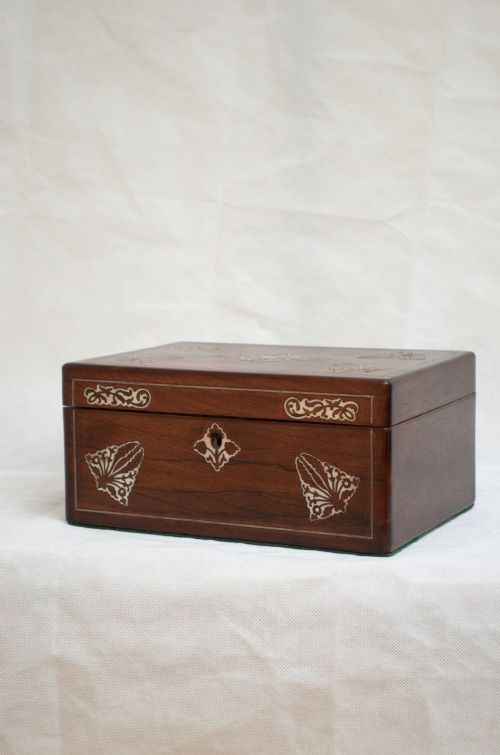


Rosewood Vanity Box
When you examine a rosewood vanity box, you hold a piece of 19th-century travelling craftsmanship designed to hold personal treasures and grooming gear.
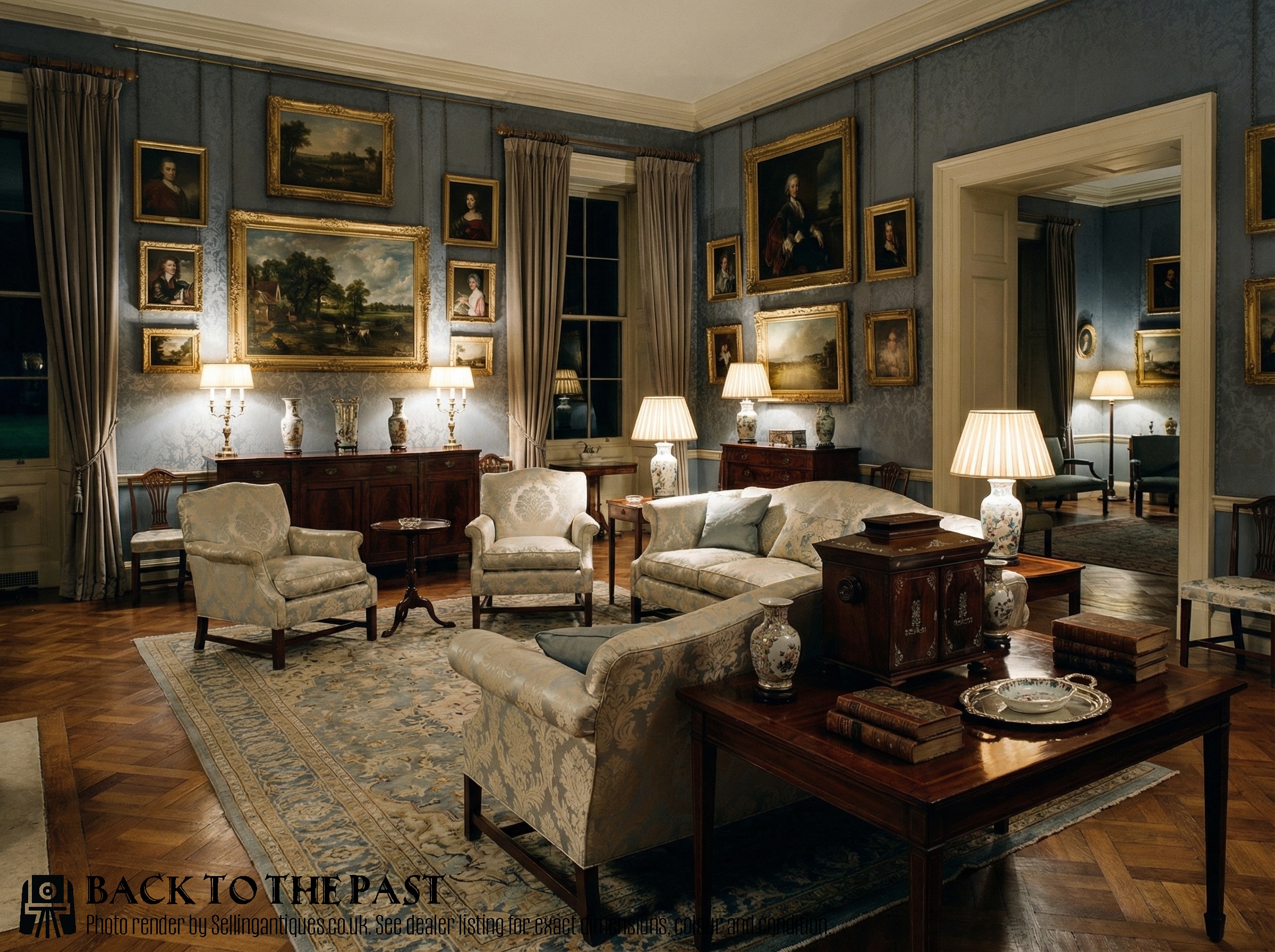
Rosewood Vanity Box
A rosewood vanity box is a portable chest designed to hold personal grooming items, jewellery, and writing materials during travel or for use on a dressing table. These pieces span the Georgian, Regency, William IV, and Victorian periods, with the Victorian era supplying the largest share of examples on this page.
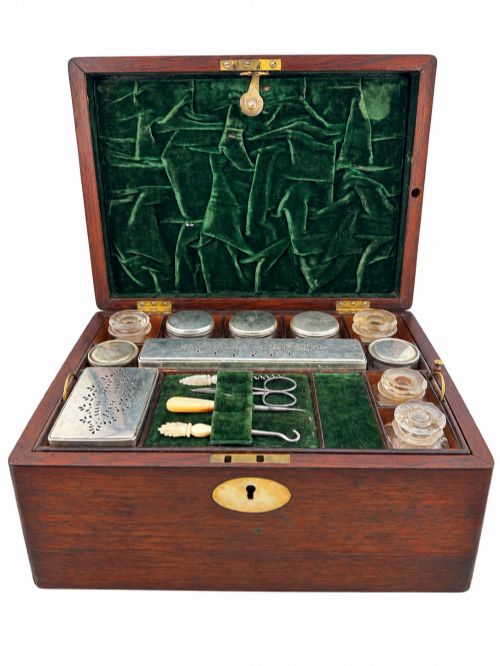
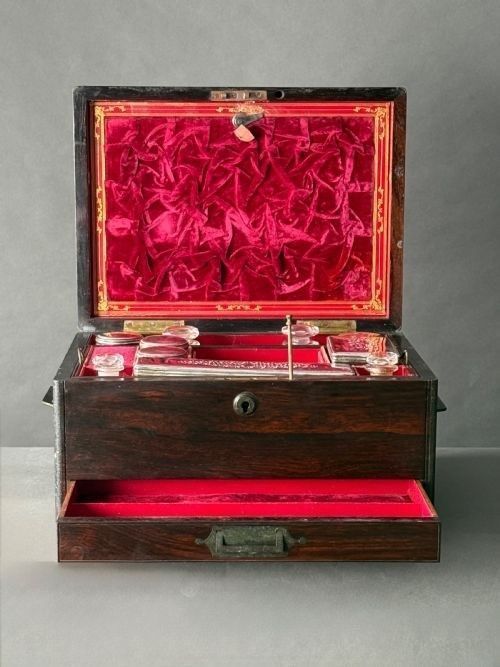
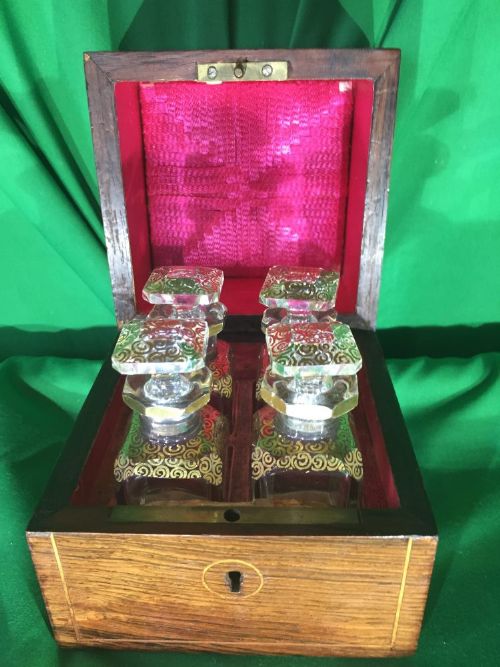
The form typically presents as a rectangular wooden carcass, frequently opening to reveal fitted interiors with compartments, trays, and sometimes scent bottles or silver-plated fittings. Alongside standard table boxes, variations include campaign styles, sarcophagus shapes, and workboxes intended for needlework or correspondence.
Makers utilised the dense, dark grain of rosewood as the primary exterior medium, often augmenting the surfaces with contrasting inlays of mother-of-pearl, brass banding, or delicate stringing. Surviving examples demonstrate how these objects served both a utilitarian function for affluent travellers and a decorative role in domestic interiors.
How they were made
Carpenters constructed the structural carcasses from solid timbers or applied thick rosewood veneers over secondary woods, employing tight corner joints to withstand the rigours of travel. Surfaces received intensive sanding and polishing to bring out the deep reddish-brown tones and dark figuring characteristic of the wood.
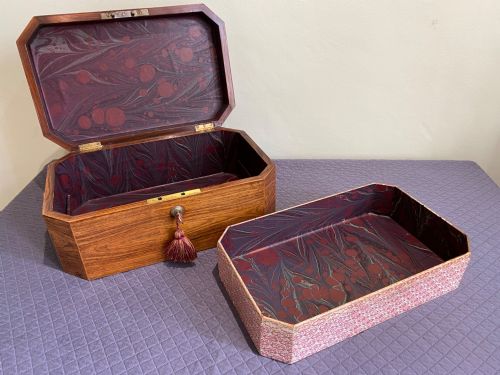
Workers embedded decorative elements directly into the wood using brass stringing, escutcheons, and intricate mother-of-pearl cartouches or geometric motifs. Interiors were lined with velvet, fabric, or leather, incorporating fitted wooden trays and specialised recesses for glass bottles with silver-plated or sterling silver caps.
Rosewood Vanity Box Retail Price Guide 2026
Typical asking prices for rosewood vanity box among the pieces listed under this phrase on Sellingantiques today, from the lower quarter to the upper quarter. They describe what is for sale here now, not the wider market.
Secret drawers occasionally hide beneath false bottoms, waiting for someone to discover where an ancestor tucked away their most private notes.
What varies in quality
The standard of construction often shows in the precision of the brass banding and the intricacy of the mother-of-pearl inlay, where superior examples display flush, tightly fitted metalwork without gaps in the timber. The complexity of the internal fitments also separates standard boxes from finer pieces, particularly those retaining complete sets of original glass bottles, silver hardware, and working lock mechanisms.
The selection of the rosewood veneer itself dictates visual impact, with top-tier specimens exhibiting rich, highly figured grain patterns that have retained their deep lustre over time. Furthermore, the presence of specialised techniques such as Tunbridge Ware mosaic detailing elevates the artistry of the piece beyond a simple utilitarian container.
PARKINS & OTTO, LONDON
The Rosewood Vanity Box Glossary
- Rosewood
- A dense, heavily figured timber valued for its deep brown and reddish hues, frequently used in high-end 19th-century cabinet making. It takes a high polish and provides a durable, striking exterior for portable boxes.
- Mother-of-Pearl
- The iridescent inner layer of certain mollusc shells, sliced thin and inlaid into wood surfaces to create geometric patterns or floral motifs. It catches the light and offers a bright contrast against dark rosewood.
- Campaign Box
- A portable chest or vanity case designed for military officers or travellers, featuring recessed brass handles, reinforced corners, and robust construction. These pieces prioritize durability and efficient internal packing.
- Tunbridge Ware
- A form of decorative woodworking originating in Kent, utilising thousands of tiny dyed wood blocks to create mosaic pictorial or geometric designs. Boxes featuring this work display immense patience and miniature craftsmanship.
- Sarcophagus Shape
- A box design characterised by a stepped, sloping lid and a heavy profile resembling an ancient stone coffin. This architectural silhouette was particularly popular during the Regency and William IV periods.
- Escutcheon
- A flat plate of brass or bone surrounding a keyhole to protect the surrounding wood from wear. On these boxes, it often serves as a subtle decorative focal point on the front panel.
Rosewood Vanity Box: Frequently Asked Questions
What did people keep inside a rosewood vanity box?
Owners stored a variety of personal grooming accessories, including glass scent bottles, small brushes, cosmetic jars, and razors. The lower sections and removable trays also provided secure space for rings, brooches, and loose trinkets.
Many examples included dedicated compartments for writing implements, sealing wax, and correspondence paper, reflecting the dual purpose of personal care and desk organisation during travel.
How do I date a rosewood vanity box?
Dating relies heavily on stylistic cues, hardware design, and structural forms. Regency and William IV pieces often feature sarcophagus silhouettes and heavy brass lion-paw feet or recessed ring handles.
Victorian variants frequently incorporate extensive mother-of-pearl inlay, Tunbridge Ware banding, or fitted silk and velvet trays. Maker marks stamped on locks or interior paper labels can also narrow down the production decade.
Were these boxes used by men or women?
Both gentlemen and ladies utilised these portable containers, though the internal fittings usually reveal the intended user. Boxes designed for men typically feature compartments sized for heavy razors, shaving soap containers, and simpler glass bottles.
Ladies' variants tend to prioritize smaller velvet-lined jewellery trays, delicate needlework tools, and multiple small scent vials with silver or plated stoppers.
Can I use a vintage vanity box for daily storage?
These boxes function effectively for holding modern jewellery, small keepsakes, or desk accessories in a contemporary home. The original velvet linings and wooden dividers help keep items organised and protected against scratching.
Care should be taken to place them away from direct sunlight and extreme humidity changes to preserve the delicate rosewood veneer and internal fabric integrity.