



19th Century Vanity Box
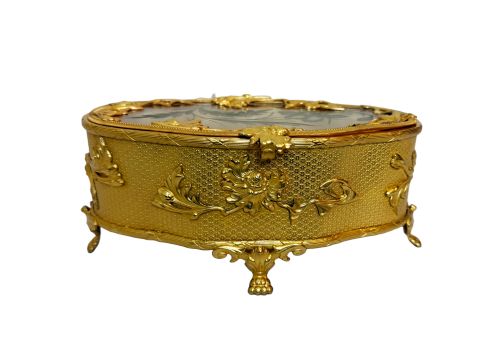
A 19th century vanity box brings together fine cabinet work and fitted compartments to keep personal belongings secure on a dressing table or during travel.
19th Century Vanity Box
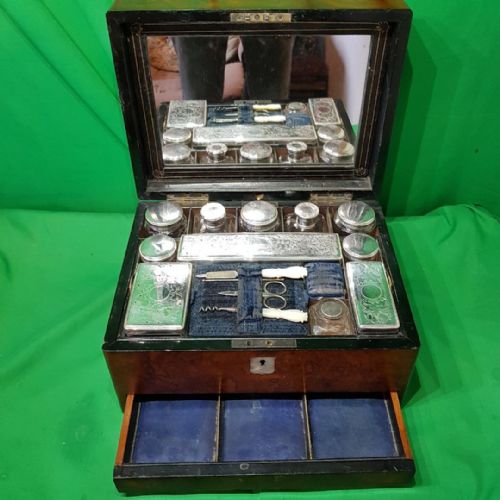
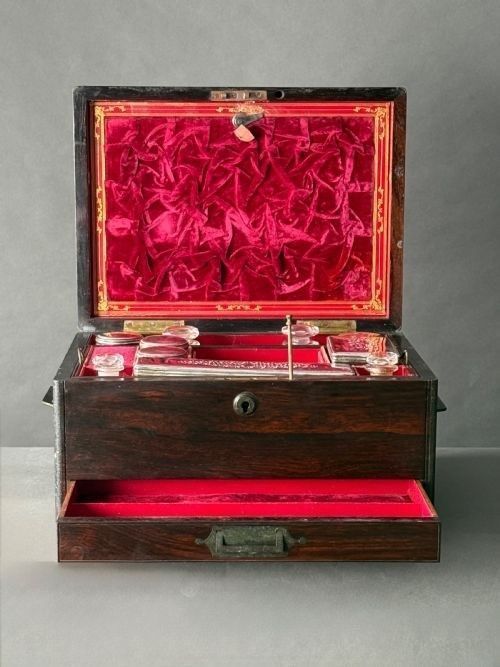
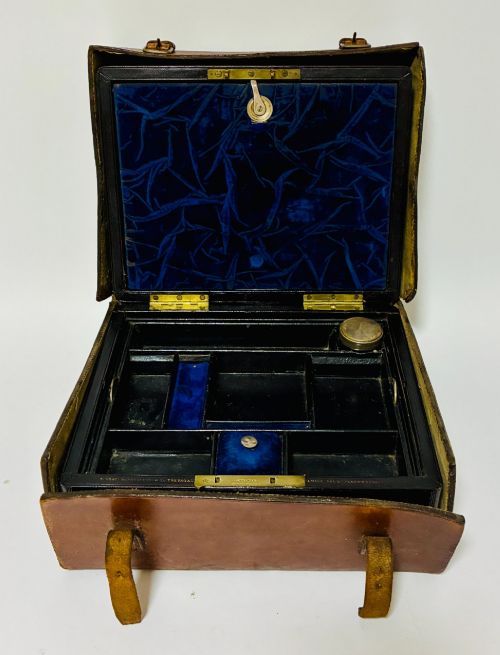
A 19th century vanity box encompasses a variety of fitted containers designed for grooming items, jewellery, and writing materials. These pieces range from simple mahogany or rosewood caskets to elaborate travelling sets lined with velvet and fitted with glass bottles.
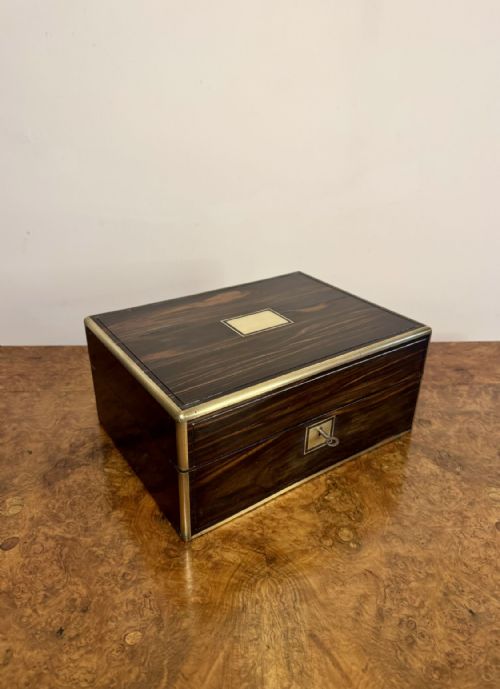
The version most commonly met on this page is the Victorian or Regency box, often constructed from dense timbers and enhanced with brass mounts, mother-of-pearl inlay, or silver-gilt details.
Makers produced these items for both gentlemen and ladies, incorporating secret drawers, mirrors, and compartments for perfume bottles or writing implements into the design.
Materials and Construction
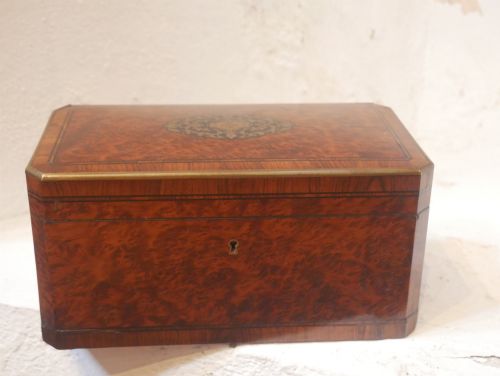
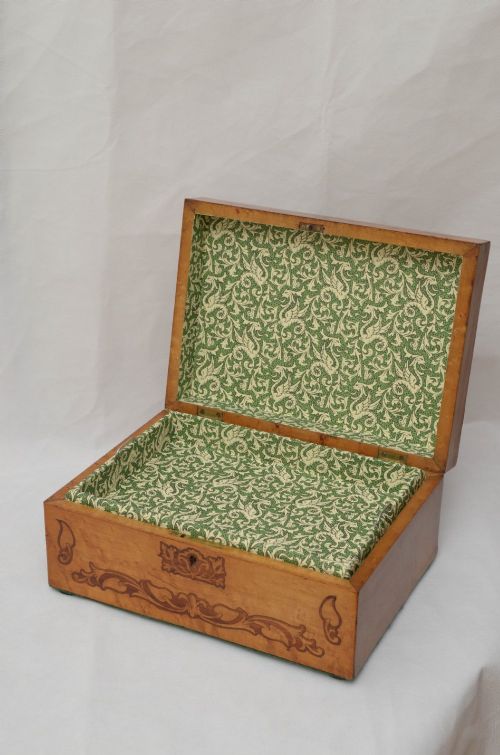
Cabinet makers utilised choice hardwoods such as rosewood, mahogany, burr walnut, and coromandel, often applying them as veneers over a sturdy secondary timber. These woods were chosen for their rich grain and ability to take a high polish.
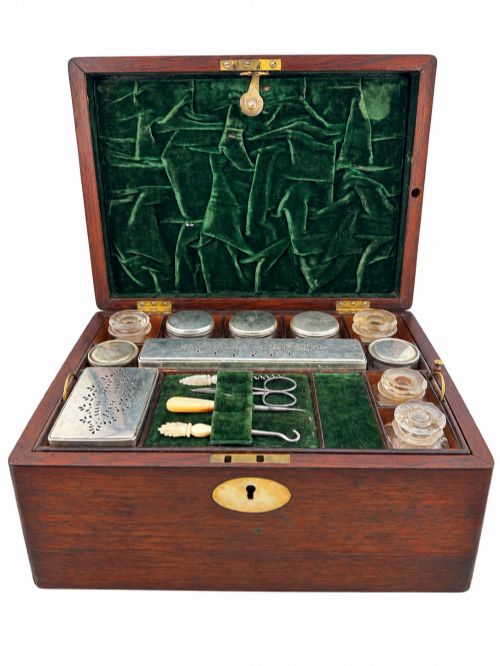
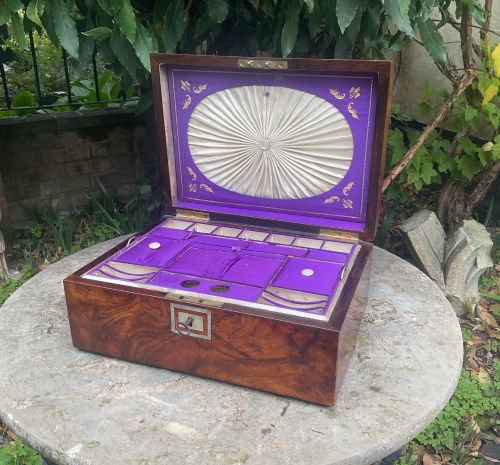
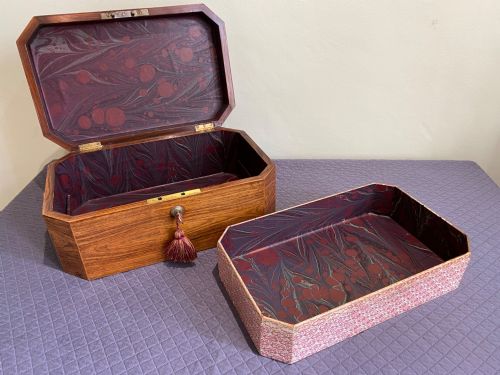
Interiors typically combined velvet, leather, and silk linings with fitted compartments to secure glass scent bottles, silver boxes, and steel tools. Brass binding, stringing, and mother-of-pearl inlay were frequently applied to exterior surfaces for reinforcement and decoration.
19th Century Vanity Box Retail Price Guide 2026
Typical asking prices for 19th century vanity box among the pieces listed under this phrase on Sellingantiques today, from the lower quarter to the upper quarter. They describe what is for sale here now, not the wider market.
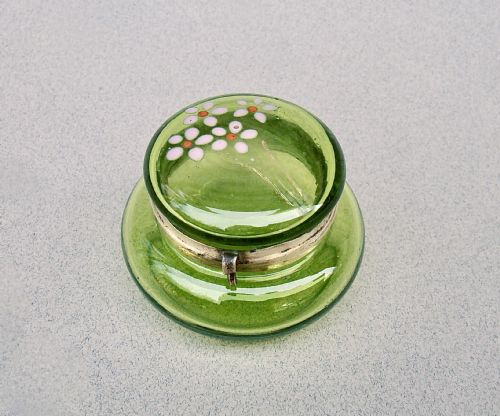
Several boxes still contain their original glass medicine bottles and perfume flasks, waiting quietly for a scent they have not held in a century.
Assessing Quality and Execution
The standard of a 19th century vanity box rests upon the precision of its joinery, the choice of timber figure, and the completeness of its internal fittings. Superior examples retain their original velvet linings, matched glass bottles, and functioning locks with keys.
Finer pieces display intricate marquetry, such as tulipwood inlay or carefully fitted mother-of-pearl work, alongside heavy cast brass mounts. Simpler containers lack these decorative embellishments and internal accessories, serving a more utilitarian function.
Tahan Paris·Tonnel Paris·F. West·H Mitchell·Edward Smith·Drew & Sons·Posen
The 19th Century Vanity Box Glossary
- Coromandel
- A dense, heavily figured timber imported from Asia, often utilised for high-end Victorian boxes. Its dark brown colour and striking grain made it a favourite for luxury dressing cases.
- Vinaigrette
- A small ornamental box containing a perforated grill, used to hold a sponge soaked in aromatic vinegar. These silver pieces are frequently found inside dressing cases or as standalone items.
- Writing slope
- A hinged box that opens to form an angled desk surface, often combined with compartments for stationery and jewellery. Many Regency and Victorian examples integrate these functions into a single portable case.
- Marquetry
- The art of applying decorative pieces of veneer to a structure to form intricate patterns or pictures. Craftsmen utilised contrasting woods and shell to adorn box lids.
- Tantalus
- A locking drink cabinet frame that holds decanters securely while displaying their contents. Versions appear in larger Victorian travelling boxes and caskets.
19th Century Vanity Box: Frequently Asked Questions
What is inside a typical vanity box?
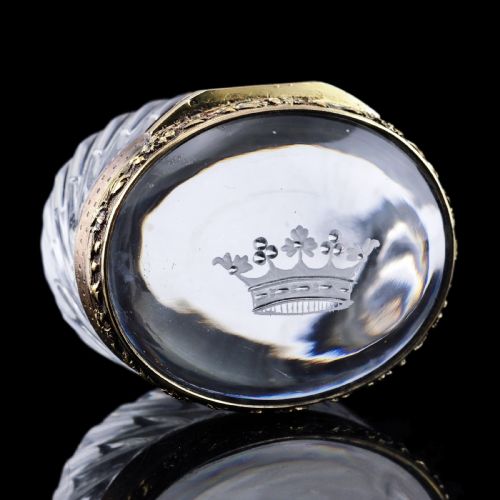
These boxes typically contain a fitted interior with compartments designed for grooming tools, jewellery, and small accessories. Many include lift-out trays, hidden drawers, and glass bottles with silver or gilt lids.
Finer examples also feature built-in mirrors on the underside of the lid and dedicated spaces for writing implements or sewing gear.
How do I identify a Regency period box?
Regency boxes often display clean architectural lines, premium mahogany or rosewood veneers, and restrained brass inlay rather than heavy carving. They frequently date from the early decades of the nineteenth century.
Interior layouts in these pieces tend to focus on document storage, writing slopes, or simpler compartmentalised trays for small personal items.
Were these boxes used for travel?
Many examples served as travelling cases for wealthy individuals on extended journeys. Robust woods, leather outer cases, and secure brass locks protected delicate glass and silver fittings during transit.
Other versions remained stationary on dressing tables, functioning primarily as elegant caskets for daily jewellery and cosmetics storage.
How do I care for the wood and interior?
Maintenance requires keeping the timber away from direct sunlight and extreme humidity to prevent the veneer from lifting. Occasional light dusting and gentle cleaning preserve the polished finish.
Original velvet and silk linings should be treated with care, avoiding moisture and harsh cleaning agents that might damage fragile historic fabrics.