



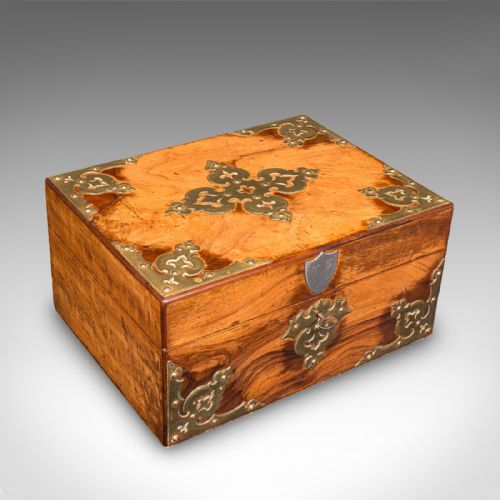


Victorian Vanity Case
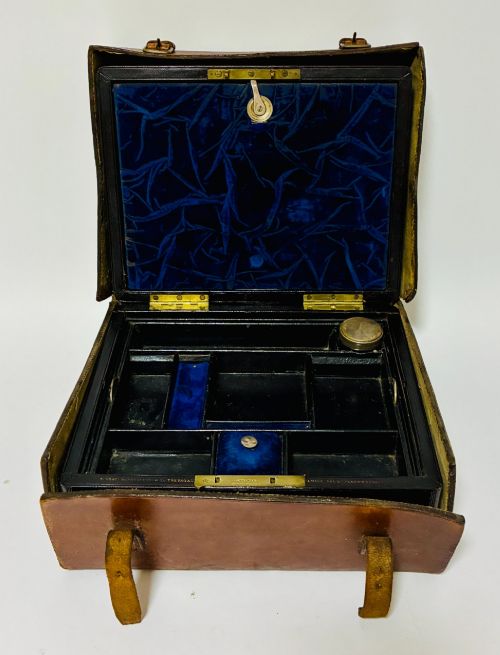
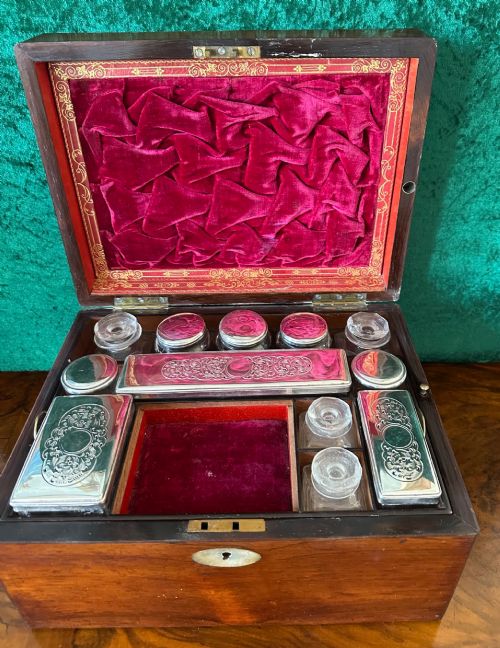
These pieces unite solid timber construction with intricate interior fittings, bringing a Victorian vanity case into daily service for jewellery, cosmetics, and small treasures.
Victorian Vanity Case
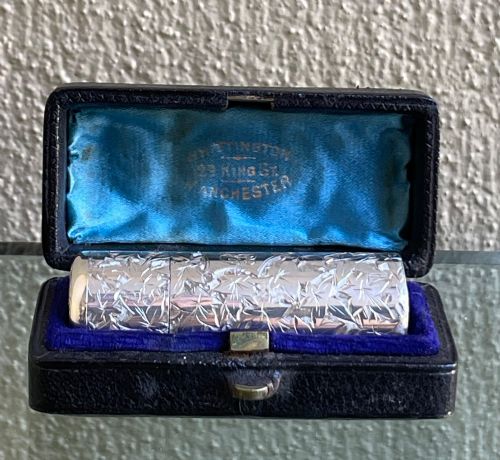
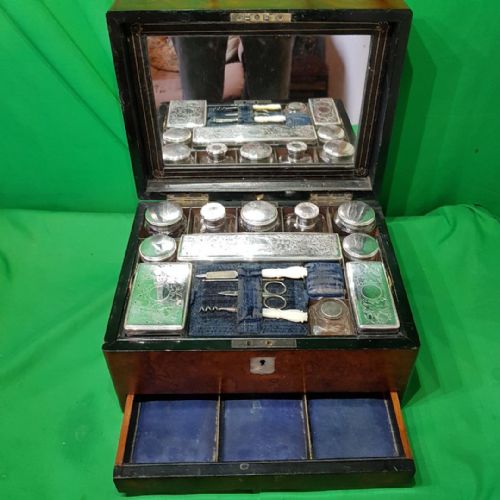
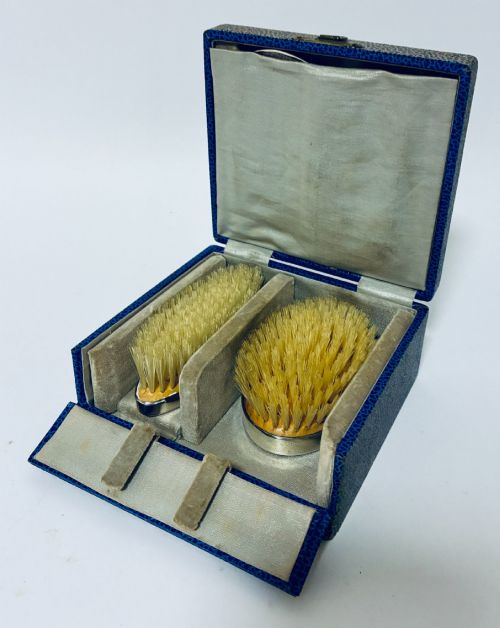
A Victorian vanity case serves as a portable dressing station designed for nineteenth-century travel and domestic use. The items on this page combine compartments, lift-out trays, and fitted interiors intended to hold grooming tools, bottles, and personal ornaments securely.
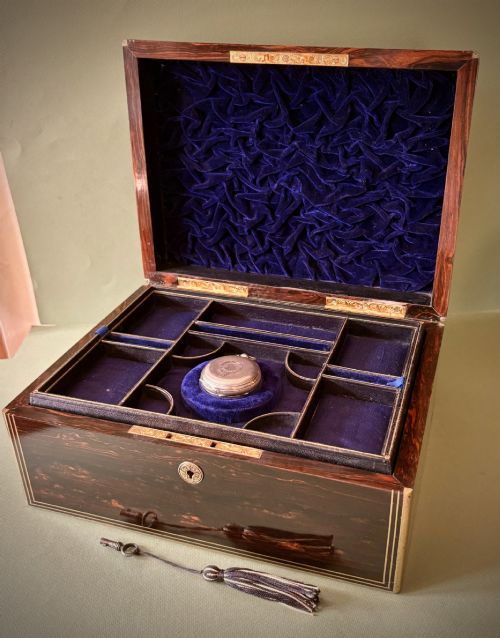
The versions most commonly met here rely on dense hardwoods like rosewood, walnut, and coromandel, frequently augmented by brass mounts or mother-of-pearl inlay. Many examples integrate leather exteriors or silver-mounted glass containers within their compartments.
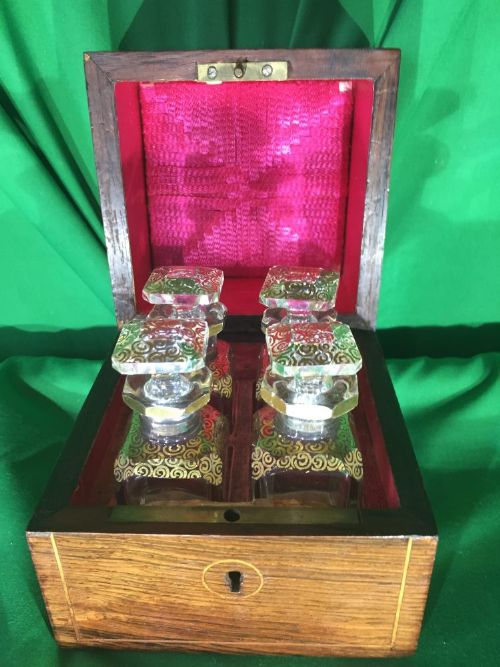
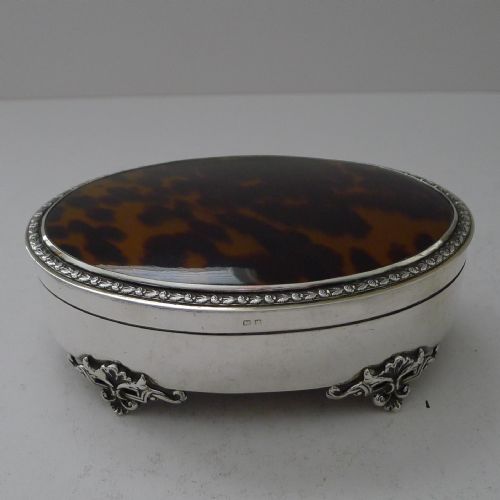
These boxes span travelling sets and stationary boudoir pieces, often combining jewellery storage with dedicated spaces for scent bottles and manicure implements. They reflect a period when personal care items required custom-built, secure enclosures.
Materials and Construction
Cabinet makers constructed these cases using durable foundation timbers such as mahogany or pine, overlaid with decorative veneers of burr walnut, rosewood, or exotic coromandel. These timber surfaces received multiple applications of polish to highlight the natural grain.
Internal layouts relied on precision joinery, velvet linings, and custom leather compartments to hold glass bottles, sterling silver lids, and steel implements. Brass banding and flush handles reinforced the exterior corners for travel durability.
Victorian Vanity Case Retail Price Guide 2026
Typical asking prices for victorian vanity case among the pieces listed under this phrase on Sellingantiques today, from the lower quarter to the upper quarter. They describe what is for sale here now, not the wider market.
Listings feature coromandel, rosewood, and walnut timbers alongside sterling silver fittings and opaline glass scent bottles.
Distinctions in Quality
Quality rests upon the density of the primary timber, the precision of the veneer work, and the completeness of the internal fitments. Cases retaining their original matching cut-glass bottles, silver mounts, and working locks command greater appreciation.
Finer examples display hand-cut brass inlay, concealed secret drawers activated by hidden spring mechanisms, and robust structural joinery that withstands opening and closing over generations. Lower grades typically rely on simpler pine carcasses with minimal internal compartments.
Horton & Allday·F. West·H Mitchell·Jane Brownett Alexander Jones·Drew & Sons·Asprey·Mappin Brothers·Promoli & Hausburg
The Victorian Vanity Case Glossary
- Coromandel
- A dense, heavily figured Southeast Asian timber prized for dark striping and used for high-end nineteenth-century box construction. It provides an exceptionally durable and decorative exterior surface.
- Guilloche
- A mechanical engraving technique producing intricate geometric patterns beneath a translucent enamel or silver-gilt surface. This decorative finish appears frequently on late nineteenth-century silver lids.
- Tantalus
- A locking security frame holding decanters or scent bottles so they cannot be removed without a key. In portable boxes, this mechanism protected glass vessels during transit.
- Etui
- A small ornamental case holding needles, cosmetics, or writing implements. These compact containers often form part of a larger fitted dressing set.
- Fitted Interior
- An internal arrangement of partitions, lift-out trays, and velvet-lined slots designed to secure specific grooming tools and bottles. Complete fittings demonstrate the original design intent of the maker.
Victorian Vanity Case: Frequently Asked Questions
What is the difference between a vanity box and a dressing case?
A vanity box generally focuses on cosmetics, jewellery, and small personal items, while a dressing case often incorporates a more comprehensive array of glass bottles, razors, and grooming tools.
Both terms frequently overlap in nineteenth-century listings depending on how many original internal compartments and glass vessels survive.
How do I identify coromandel wood?
Coromandel displays a distinctive dark chocolate background crossed with dramatic black or greenish-brown streaks, giving it a heavier and more exotic appearance than rosewood.
It was reserved for superior-grade nineteenth-century boxes and remains instantly recognizable by its rich grain contrast.
How should I clean the velvet interior?
Velvet linings require gentle dry dusting with a soft brush to remove accumulated surface dust without damaging the pile.
Moisture and modern chemical cleaners should be avoided to prevent staining the historic fabric and underlying wooden structure.