


Walnut Document Box
A walnut document box provides secure storage for correspondence, bringing tactile warmth and figured grain to any desk.
Walnut Document Box
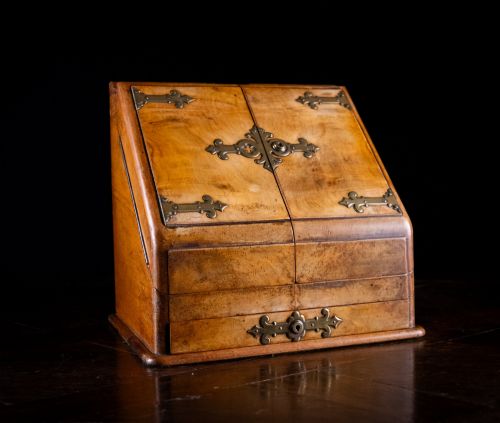
When you search for a walnut document box, you enter a field populated primarily by Victorian examples alongside Georgian, Regency, and seventeenth-century pieces. These items range from domed stationery chests and correspondence boxes to fitted writing slopes featuring secret drawers, brass binding, and internal compartments.
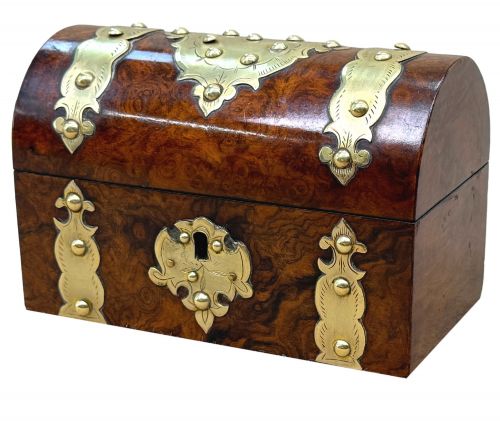
The objects served practical domestic and professional needs, functioning as portable desks or secure repositories for letters and valuables. On this page, Victorian burr walnut stationery boxes and brass-bound writing slopes appear most frequently, reflecting the period's demand for handsome desk accessories.
How they were made
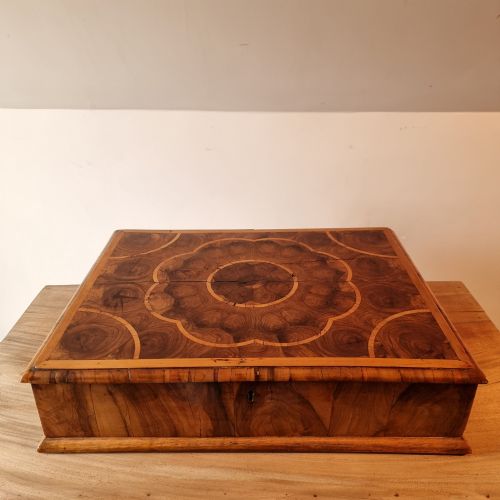
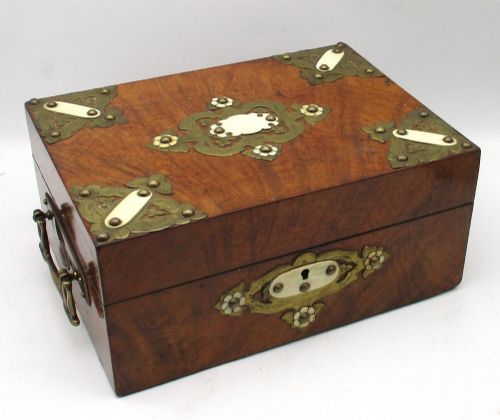
Cabinet makers utilised solid walnut and decorative burr veneers applied to secondary woods, often incorporating contrasting stringing in boxwood or fruitwood. Metalwork played a structural and decorative role, with brass corners, straps, and campaign mounts reinforcing the corners and edges of the lids.
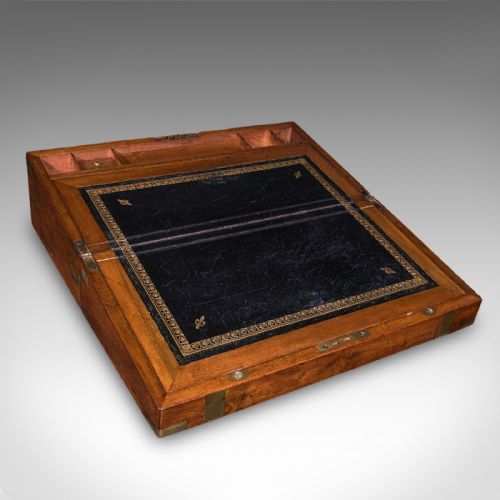
Internal fittings required precise woodworking, particularly for writing slopes that fold down to form a writing surface. Locks by makers such as Bramah secured the contents, while specialised techniques like Tunbridge ware mosaic, marquetry, and bone inlay decorated the exterior surfaces of finer examples.
Walnut Document Box Retail Price Guide 2026
Typical asking prices for walnut document box among the pieces listed under this phrase on Sellingantiques today, from the lower quarter to the upper quarter. They describe what is for sale here now, not the wider market.
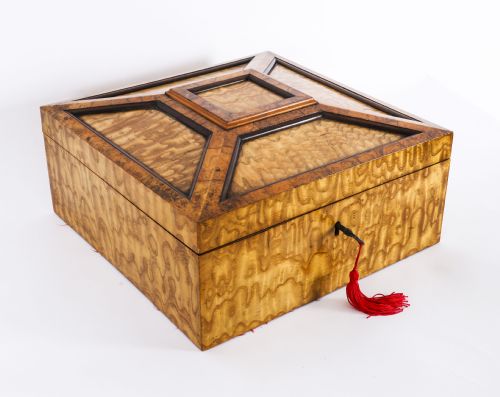
Several boxes still retain their original working keys tucked neatly inside, sparing the next owner a trip to the locksmith.
What varies in quality
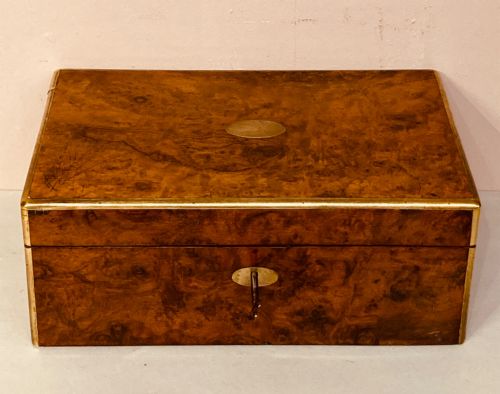
The distinction between ordinary and superior pieces rests largely on the choice of timber and the liveliness of the grain. Highly figured burr walnut displays rich, swirling patterns that require skilled veneer selection and matching across the lid and sides.
Construction details differentiate the output of standard workshops from that of notable makers. Heavy brass mounts, flush-fitting campaign handles, well-executed marquetry inlay, and the retention of original working locks with keys elevate a piece above standard utility items.
Edmund Nye·Austin·George Austin of Dublin·Mappin & Webb
The Walnut Document Box Glossary
- Burr walnut
- A growth deformity on the walnut tree that produces highly figured, swirling veneer patterns highly prized by cabinet makers. It creates a decorative, mottled surface across the lid of a box.
- Writing slope
- A portable box with a hinged, sloping lid that opens to reveal a writing surface, inkwell compartments, and storage space for paper. Many examples include hidden compartments or secret drawers.
- Bramah lock
- A high-security barrel lock patented by Joseph Bramah in the eighteenth century, commonly fitted to quality nineteenth-century boxes. They require a tubular key and denote a superior standard of manufacture.
- Tunbridge ware
- A form of mosaic woodwork originating in Kent, using thousands of tiny coloured wood blocks to create pictorial or geometric designs. It frequently decorates the lids of Victorian trinket and stationery boxes.
- Marquetry
- The art of applying pieces of veneer to a structure to form decorative patterns and pictures. Seventeenth-century and Italian grand tour examples often utilise this technique with floral or architectural motifs.
Walnut Document Box: Frequently Asked Questions
What is a walnut document box used for?
These boxes served to store important papers, letters, and writing materials securely in the home or office. Their hinged lids and compartmentalised interiors kept correspondence organised before the era of modern filing.
Today, they function well on desks or side tables for holding modern stationery, photographs, or keepsakes while adding period character to a room.
How do I identify a Victorian walnut box?
Victorian examples frequently display richly figured burr walnut veneers, often enhanced with brass banding, corner mounts, or inlaid escutcheons. They commonly take the form of writing slopes, stationery cabinets with domed or gabled lids, or correspondence chests.
Interior fittings such as velvet-lined writing surfaces, pen trays, and secret drawers operated by hidden wooden pins further point towards the nineteenth-century date of manufacture.
What are secret drawers in a writing slope?
Secret drawers are concealed storage compartments built into the interior framework of a box, usually tucked behind removable panels or false partitions. Makers designed them to safeguard valuables, jewellery, or confidential letters.
To access them, an owner often has to lift out a pen tray or slide a specific divider within the stationery section.
What is campaign furniture?
Campaign boxes and writing slopes were built for travel, particularly for military officers on the move during the eighteenth and nineteenth centuries. They feature protective brass corners, strapwork, and recessed flush handles to withstand rough handling.
These additions prevented the wood from splitting during transport and made the boxes heavier and more robust than standard domestic pieces.
How should I care for antique walnut wood?
Keep wooden boxes out of direct sunlight and away from radiators to prevent the walnut veneer from drying out or splitting. Maintaining a stable indoor temperature protects both the external polish and the internal fabric linings.
Apply a traditional beeswax polish sparingly on occasion to nourish the grain and preserve the lustre of the timber.